Western Gorilla vs Eastern Gorilla: Understanding the Differences Between Africa’s Great Apes
Gorillas are the largest living primates and among humanity’s closest relatives. Scientists divide gorillas into two species: the Western Gorilla (Gorilla gorilla) and the Eastern Gorilla (Gorilla beringei). Although they share many similarities, these species differ in physical appearance, habitat, distribution, population size, and conservation status.
The Western Gorilla includes the Western Lowland Gorilla and the Cross River Gorilla, while the Eastern Gorilla includes the Mountain Gorilla and the Eastern Lowland Gorilla (Grauer’s Gorilla). Understanding these differences helps travelers, conservationists, and wildlife enthusiasts appreciate the diversity of Africa’s great apes.
Classification of Western and Eastern Gorillas
The gorilla family consists of two species and four recognized subspecies.
The Western Gorilla species includes the Western Lowland Gorilla and the Cross River Gorilla. The Eastern Gorilla species includes the Mountain Gorilla and the Eastern Lowland Gorilla.
Although all gorillas belong to the same genus, geographical separation and environmental adaptation have created distinct characteristics within each species.
Geographic Distribution
Where Western Gorillas Live
Western Gorillas occupy a much larger geographic range than Eastern Gorillas. They inhabit several Central African countries, including Gabon, Cameroon, Equatorial Guinea, the Republic of Congo, the Central African Republic, and parts of Angola.
Western Lowland Gorillas account for the majority of the western gorilla population. They thrive in tropical rainforests, swamp forests, and lowland habitats.
The Cross River Gorilla occupies a much smaller area along the border between Nigeria and Cameroon and represents the rarest gorilla subspecies in the world.
Where Eastern Gorillas Live
Eastern Gorillas have a more restricted distribution. They occur only in eastern Democratic Republic of Congo, Uganda, and Rwanda.
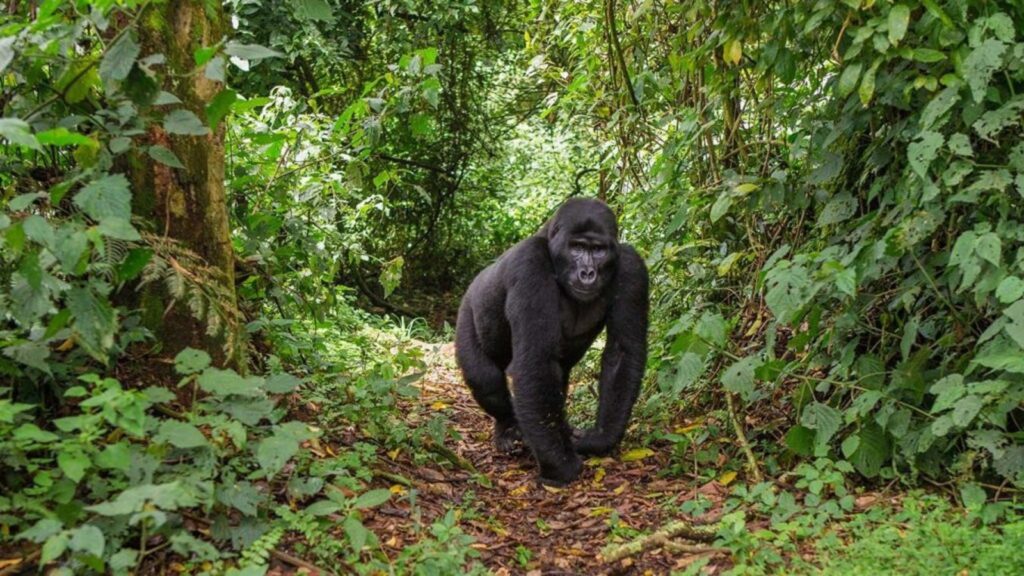
Mountain Gorillas live in Bwindi Impenetrable National Park and the Virunga Mountains, while Eastern Lowland Gorillas inhabit the rainforests of eastern Congo, particularly within Kahuzi-Biega National Park.
This limited range makes Eastern Gorillas more vulnerable to habitat loss and political instability.
Physical Differences
Size and Build
Eastern Gorillas are generally larger than Western Gorillas.
The Eastern Lowland Gorilla is the largest gorilla subspecies and the largest living primate. Adult males can exceed 200 kilograms in weight and possess broad chests, powerful arms, and massive hands.
Western Gorillas tend to have a slightly smaller and more slender build. Their bodies appear leaner, and they typically weigh less than their eastern relatives.
Fur Characteristics
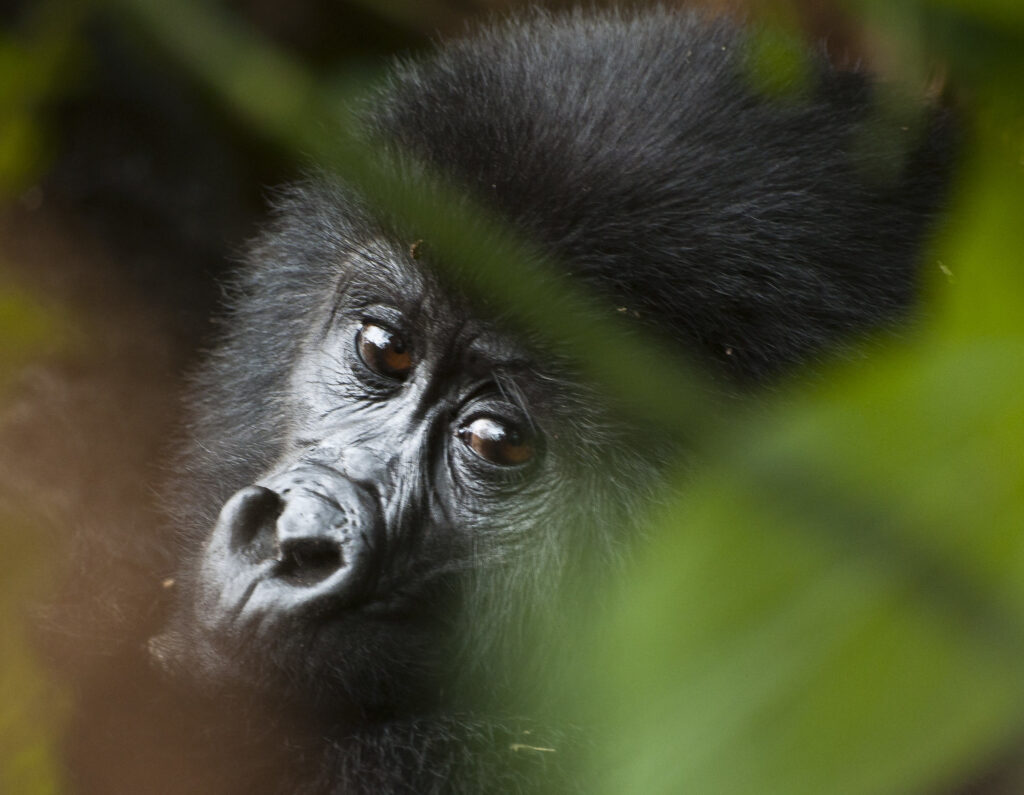
Mountain Gorillas, which belong to the Eastern Gorilla species, have thick and dense fur adapted to cold high-altitude environments.
Western Gorillas have shorter and finer coats because they inhabit warmer tropical forests.
Eastern Lowland Gorillas also possess shorter fur than Mountain Gorillas but generally appear darker and more robust than Western Lowland Gorillas.
Facial Features
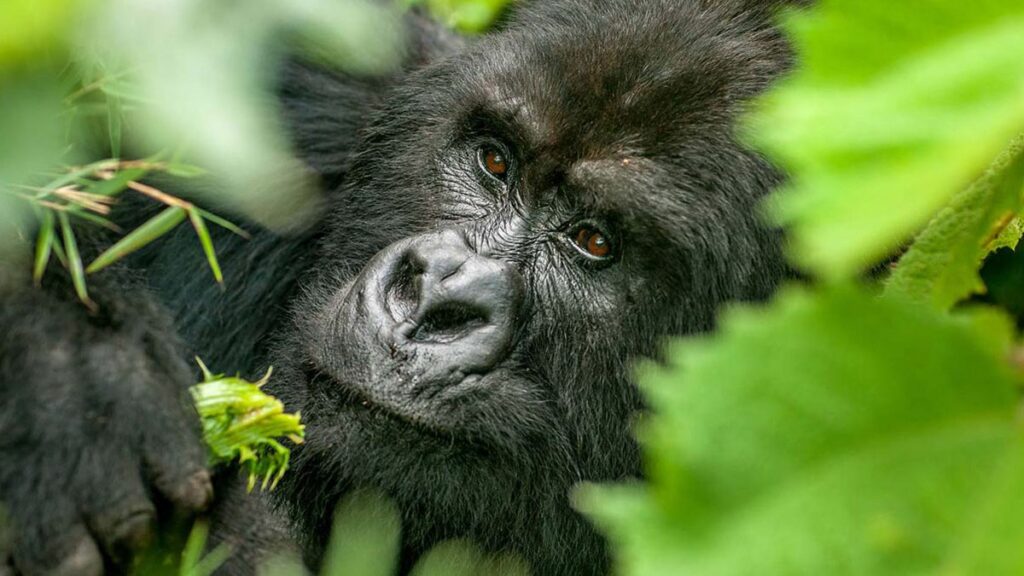
Western Gorillas often display slightly lighter-colored faces and more prominent brow ridges. Their heads appear narrower compared to Eastern Gorillas.
Eastern Gorillas typically have broader faces, larger bodies, and more powerful jaw structures.
Habitat Differences
Western Gorilla Habitat
Western Gorillas inhabit lowland tropical forests rich in fruit-bearing trees. Their habitat often includes swamp forests, riverine forests, and dense rainforest ecosystems.
The abundance of fruit significantly influences their feeding behavior and movement patterns.
Eastern Gorilla Habitat
Eastern Gorillas occupy a wider variety of habitats. Mountain Gorillas live in montane forests at elevations exceeding 2,000 meters, while Eastern Lowland Gorillas inhabit dense lowland and mid-altitude rainforests.
These habitats contain different vegetation types and food resources compared to western gorilla territories.
Diet and Feeding Habits
Western Gorilla Diet
Western Gorillas consume large amounts of fruit whenever it is available. They also eat leaves, bark, shoots, roots, and various forest plants.
Fruit availability often determines their movement patterns and home ranges.
Eastern Gorilla Diet
Eastern Gorillas consume more vegetation than fruit, particularly Mountain Gorillas. Their diet consists mainly of leaves, stems, shoots, roots, and bamboo.
Eastern Lowland Gorillas eat more fruit than Mountain Gorillas but generally rely on a broader range of vegetation than Western Gorillas.
These dietary differences reflect the ecological conditions of their respective habitats.
Social Structure and Behavior
Both Western and Eastern Gorillas live in family groups led by a dominant silverback.
A typical group includes adult females, juveniles, infants, and occasionally subordinate males. The silverback provides protection, leadership, and social stability.
Both species display strong family bonds and spend much of their time feeding, resting, grooming, and caring for young.
Researchers have observed remarkable intelligence, emotional depth, and social complexity in both species.
While their social structures remain similar, habitat differences influence group movement and feeding behavior.
Population and Conservation Status
Western Gorilla Population
Western Lowland Gorillas represent the most numerous gorilla subspecies. Despite their relatively larger population, they face significant threats from habitat destruction, poaching, and disease outbreaks such as Ebola.
The Cross River Gorilla remains critically endangered, with only a few hundred individuals surviving in isolated forest fragments.
Eastern Gorilla Population
Eastern Gorillas face more severe conservation challenges.
Mountain Gorillas have experienced encouraging population growth due to intensive conservation efforts and regulated tourism. Their population now exceeds 1,000 individuals.
Eastern Lowland Gorillas continue to experience population declines due to armed conflict, illegal mining, habitat destruction, and poaching within parts of eastern Congo.
As a result, Eastern Gorillas remain among the most threatened great apes in the world.
Gorilla Trekking Opportunities
Trekking Eastern Gorillas
Eastern Gorillas offer the most accessible gorilla trekking experiences.
Mountain Gorilla trekking takes place in Uganda, Rwanda, and the Democratic Republic of Congo. Visitors hike through mountain forests to spend one hour with habituated gorilla families.
Eastern Lowland Gorilla trekking occurs primarily in Kahuzi-Biega National Park in eastern Congo, where visitors can observe Grauer’s Gorillas in their rainforest habitat.
Viewing Western Gorillas
Western Gorilla tourism exists in several Central African countries, particularly in the Republic of Congo and Gabon.
These experiences often involve tracking habituated Western Lowland Gorilla groups in remote rainforest environments. However, tourism infrastructure remains less developed than that found in major Mountain Gorilla destinations.
Which Gorilla Is Larger?
When comparing the two species, Eastern Gorillas clearly hold the size advantage.
The Eastern Lowland Gorilla ranks as the largest gorilla subspecies in the world. Mountain Gorillas also tend to outweigh most Western Gorillas.
Western Gorillas remain impressive animals, but Eastern Gorillas generally possess more massive builds and stronger physical features.
The Importance of Protecting Both Species
Both Western and Eastern Gorillas play essential roles in maintaining healthy rainforest ecosystems. As they travel through forests and disperse seeds, they contribute to plant regeneration and biodiversity.
Their survival also supports broader conservation efforts that protect countless other species sharing the same habitats.
Tourism, scientific research, community engagement, and habitat protection continue to provide hope for the future of gorilla conservation across Africa.
Conclusion
Western Gorillas and Eastern Gorillas share a common ancestry but have adapted to different environments across Central and East Africa. Western Gorillas inhabit lowland tropical forests and rely heavily on fruit, while Eastern Gorillas occupy both mountainous and lowland habitats and generally grow larger in size.
Mountain Gorillas and Eastern Lowland Gorillas represent the Eastern Gorilla species, while Western Lowland Gorillas and Cross River Gorillas belong to the Western Gorilla species.
Despite their differences, all gorillas face conservation challenges that require continued protection. Whether encountered in the forests of Uganda, Rwanda, Congo, Gabon, or Cameroon, gorillas remain among the most extraordinary wildlife species on Earth.