Western Gorilla: Africa’s Most Widespread Great Ape
The Western Gorilla (Gorilla gorilla) represents one of Africa’s two gorilla species and plays a vital role in the rich biodiversity of Central Africa’s rainforests. It lives across a wide range of countries and occupies more diverse habitats than any other gorilla species.
Although the Western Gorilla appears strong and dominant, it faces serious conservation threats. Habitat loss, hunting, and disease outbreaks continue to affect its survival. Despite these pressures, it remains the most numerous gorilla species and offers important opportunities for wildlife tourism and conservation research.
Western Gorillas include two subspecies: the Western Lowland Gorilla, which forms the vast majority of the population, and the Cross River Gorilla, the rarest and most endangered gorilla subspecies on Earth.
Classification and Scientific Identity
Scientists classify Western Gorillas under the species Gorilla gorilla. This species differs from the Eastern Gorilla (Gorilla beringei) in genetics, physical traits, and ecological adaptation.
Within the Western Gorilla species, two subspecies exist. The Western Lowland Gorilla occupies most of the range and represents the most common gorilla type in the world. The Cross River Gorilla lives in a small fragmented region between Nigeria and Cameroon and remains critically endangered.
Geographic Distribution
Western Gorillas inhabit a large portion of Central Africa. Their range stretches across countries such as Cameroon, Gabon, Equatorial Guinea, Republic of Congo, Central African Republic, and parts of Angola.
The Western Lowland Gorilla dominates lowland rainforests, swamp forests, and dense jungle ecosystems. These forests provide year-round food resources and dense vegetation cover.
The Cross River Gorilla occupies a very restricted range in forested hills along the Nigeria-Cameroon border. This limited distribution makes it extremely vulnerable to habitat fragmentation and human activity.
Compared to Eastern Gorillas, Western Gorillas occupy a broader and more continuous forest landscape.
Physical Characteristics
Body Size and Structure
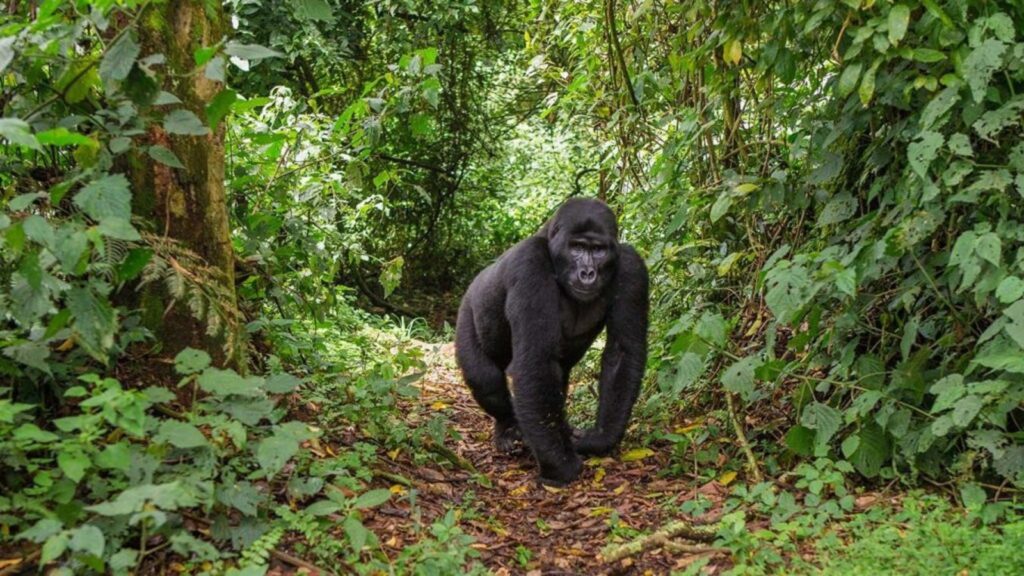
Western Gorillas generally appear slightly smaller and more slender than their eastern relatives. Adult males still grow to impressive sizes, often weighing between 140 and 180 kilograms.
Females remain significantly smaller, typically weighing between 60 and 90 kilograms.
Despite their size differences, Western Gorillas remain extremely powerful animals with strong arms and muscular builds.
Facial Features
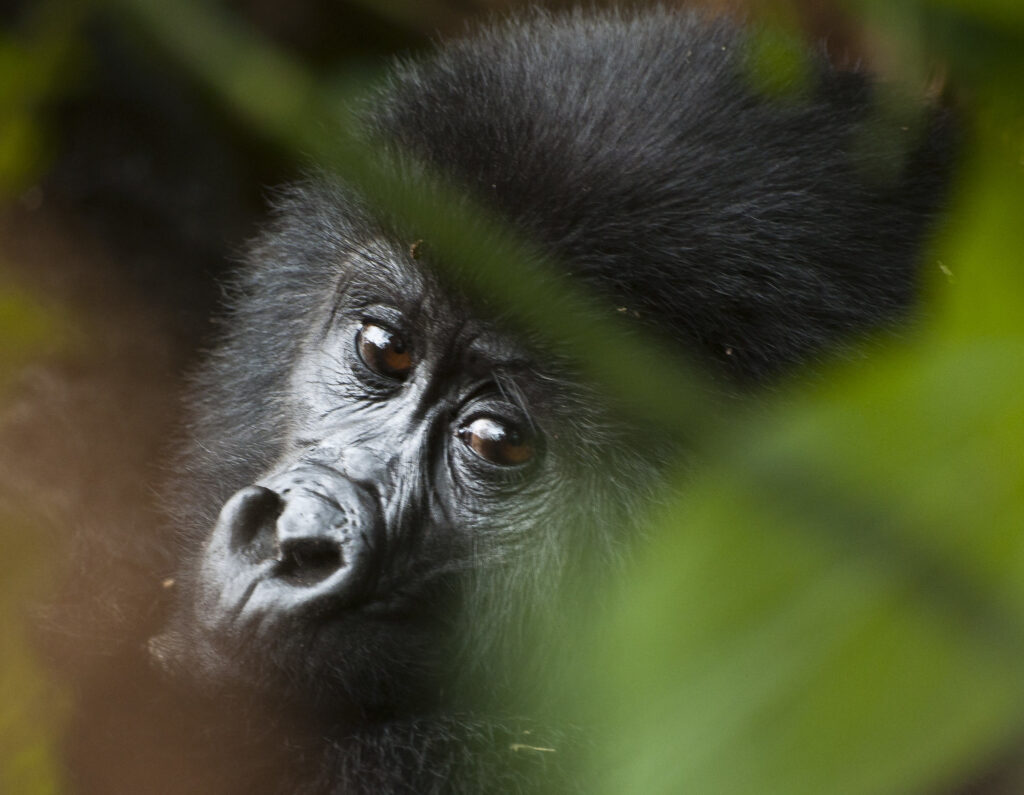
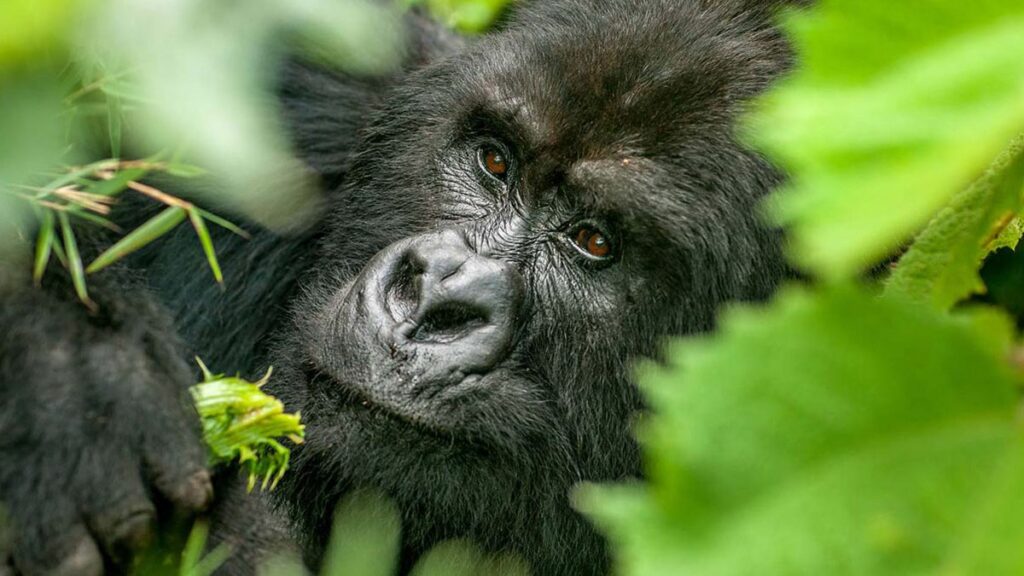
Western Gorillas often display narrower faces and more pronounced brow ridges. Their heads appear slightly smaller compared to Eastern Gorillas.
Their facial expressions remain highly expressive, allowing clear communication within social groups.
Fur and Coloration
Western Gorillas have shorter and finer fur because they live in warm, humid tropical forests. Their coats often appear lighter in tone, especially on the head and back.
This adaptation helps them regulate body temperature in consistently warm environments.
Habitat and Environment
Western Gorillas thrive in lowland tropical rainforests rich in biodiversity. These forests include dense vegetation, swampy areas, and river systems that support a wide range of plant and animal life.
The Western Lowland Gorilla often inhabits secondary forests and disturbed areas as well, showing adaptability to different forest conditions.
Fruit trees dominate many parts of their habitat, influencing movement patterns and feeding behavior throughout the year.
Diet and Feeding Behavior
Western Gorillas consume a diverse diet dominated by plant material. Fruit plays a major role in their nutrition, especially when available in large quantities.
They also feed on leaves, stems, bark, roots, and flowers. Their diet changes seasonally depending on food availability within their environment.
Because fruit availability varies, Western Gorillas often travel long distances in search of feeding sites. This movement pattern helps shape their large home ranges compared to some Eastern Gorilla populations.
Their role as seed dispersers makes them essential for forest regeneration and ecosystem balance.
Social Structure and Group Life
Western Gorillas live in stable family groups led by a dominant silverback male. The silverback provides protection, leadership, and social structure for the group.
A typical group includes several females, offspring, and occasionally subordinate males. Group sizes vary depending on habitat quality and food resources.
Strong social bonds define Western Gorilla behavior. Individuals spend much of their time feeding together, resting in close proximity, and grooming one another.
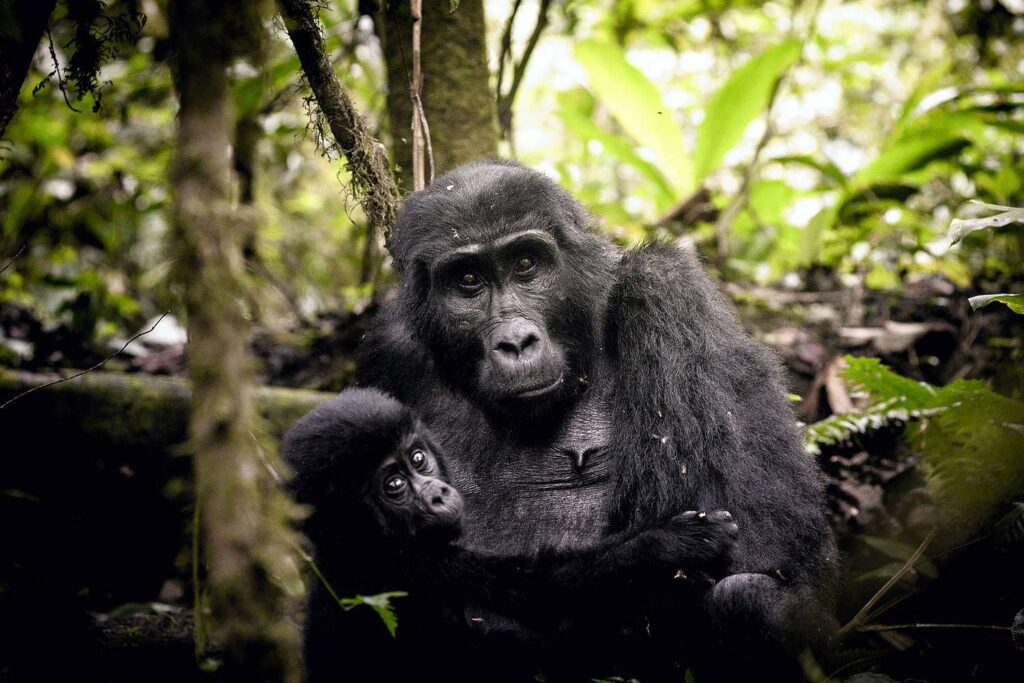
Infants remain close to their mothers for several years, gradually gaining independence as they mature.
Behavior and Communication
Western Gorillas display complex communication systems that include vocal sounds, facial expressions, gestures, and body movements.
Soft grunts help maintain contact between group members during movement. Alarm calls signal danger and prompt defensive behavior. Playful interactions strengthen bonds among younger gorillas.
The iconic chest-beating display often communicates dominance or confidence rather than aggression. Silverbacks use this behavior to assert presence or respond to external stimuli.
Research continues to reveal advanced cognitive abilities in Western Gorillas, including memory, learning, and problem-solving skills.
Daily Life in the Forest
A Western Gorilla’s daily routine revolves around feeding and resting.
The day begins shortly after sunrise with active foraging. The group moves slowly through the forest while searching for fruiting trees and edible vegetation.
Midday brings extended rest periods. Gorillas groom one another, play, and relax during these hours.
In the evening, each gorilla constructs a sleeping nest from leaves and branches. Adults usually build nests on the ground, while juveniles may sleep in trees.
This cycle repeats daily and supports the social stability of the group.
Western Gorilla vs Eastern Gorilla Context
Western Gorillas differ from Eastern Gorillas in several important ways.
They tend to rely more heavily on fruit, occupy lower elevations, and live in warmer and more humid forests. Eastern Gorillas, by contrast, often live in higher elevations and consume more fibrous vegetation.
Western Gorillas also occupy a wider geographic range but include one of the rarest subspecies in the world, the Cross River Gorilla.
Conservation Status
Western Gorillas face serious conservation challenges despite being the most widespread gorilla species.
The Western Lowland Gorilla is classified as critically endangered due to rapid population decline caused by habitat loss, poaching, and disease outbreaks such as Ebola.
The Cross River Gorilla remains one of the rarest primates on Earth, with only a few hundred individuals surviving in fragmented forest habitats.
Human activities continue to shrink and isolate gorilla populations across Central Africa.
Conservation Efforts
Governments, conservation organizations, and local communities actively work to protect Western Gorillas.
Protected areas, anti-poaching patrols, and habitat conservation programs help reduce direct threats. Scientific research improves understanding of gorilla behavior and population trends.
Ecotourism also plays a growing role in conservation. In countries such as Gabon and the Republic of Congo, tourists can track habituated Western Lowland Gorillas in protected forest reserves.
These experiences generate revenue that supports conservation programs and local livelihoods.
Ecological Importance
Western Gorillas serve as key species within rainforest ecosystems. They disperse seeds across large areas, helping forests regenerate and maintain biodiversity.
Their feeding behavior influences plant distribution and forest structure over time.
Without gorillas, many rainforest ecosystems would lose important ecological balance.
Why Western Gorillas Matter
Western Gorillas represent both the richness and fragility of Central Africa’s forests. Their survival reflects the health of some of the most biodiverse ecosystems on Earth.
They also provide a powerful connection between humans and the natural world. Their intelligence, social behavior, and emotional depth continue to inspire scientific research and conservation action.
Protecting Western Gorillas ensures the survival of entire rainforest ecosystems and countless other species that depend on them.