Mountain Gorilla vs Lowland Gorilla: Understanding the Key Differences
Gorillas are the largest living primates and share more than 98% of their DNA with humans. Although all gorillas belong to the same genus, scientists recognize several subspecies that differ in appearance, habitat, behavior, and distribution. Among the most famous are the Mountain Gorilla and the Eastern Lowland Gorilla, also known as Grauer’s Gorilla.
Both species face significant conservation challenges, yet they live in very different environments and display distinct physical characteristics. Understanding these differences helps travelers appreciate the unique experiences offered by gorilla trekking destinations across East and Central Africa.
Classification and Scientific Background
Mountain Gorillas and Eastern Lowland Gorillas belong to the eastern gorilla species (Gorilla beringei). They represent two separate subspecies that evolved to adapt to different habitats.
The Mountain Gorilla carries the scientific name Gorilla beringei beringei, while the Eastern Lowland Gorilla is known as Gorilla beringei graueri. Although closely related, thousands of years of adaptation have produced noticeable differences between them.
Physical Appearance
Body Size
The most obvious difference between the two gorillas lies in their size. Eastern Lowland Gorillas are the largest gorillas in the world. Adult males can weigh between 140 and 210 kilograms and often appear longer and more muscular than their mountain counterparts.
Mountain Gorillas generally weigh between 135 and 195 kilograms. While still enormous animals, they usually have a more compact build.
Fur Characteristics
Mountain Gorillas live in high-altitude forests where temperatures remain relatively cool throughout the year. To survive these conditions, they developed thick, long fur that provides insulation against cold weather.
Eastern Lowland Gorillas inhabit lower-elevation tropical rainforests with warmer temperatures. Their fur appears shorter, finer, and less dense because they do not require as much protection from cold conditions.
Facial Features
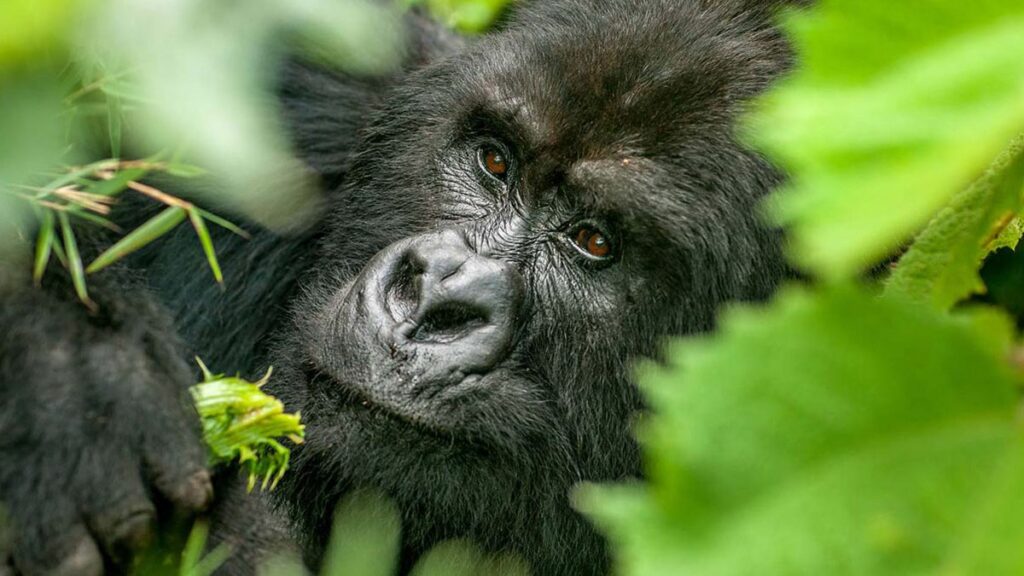
Eastern Lowland Gorillas often have broader faces, slightly more prominent noses, and larger hands. Their body shape appears leaner and longer.
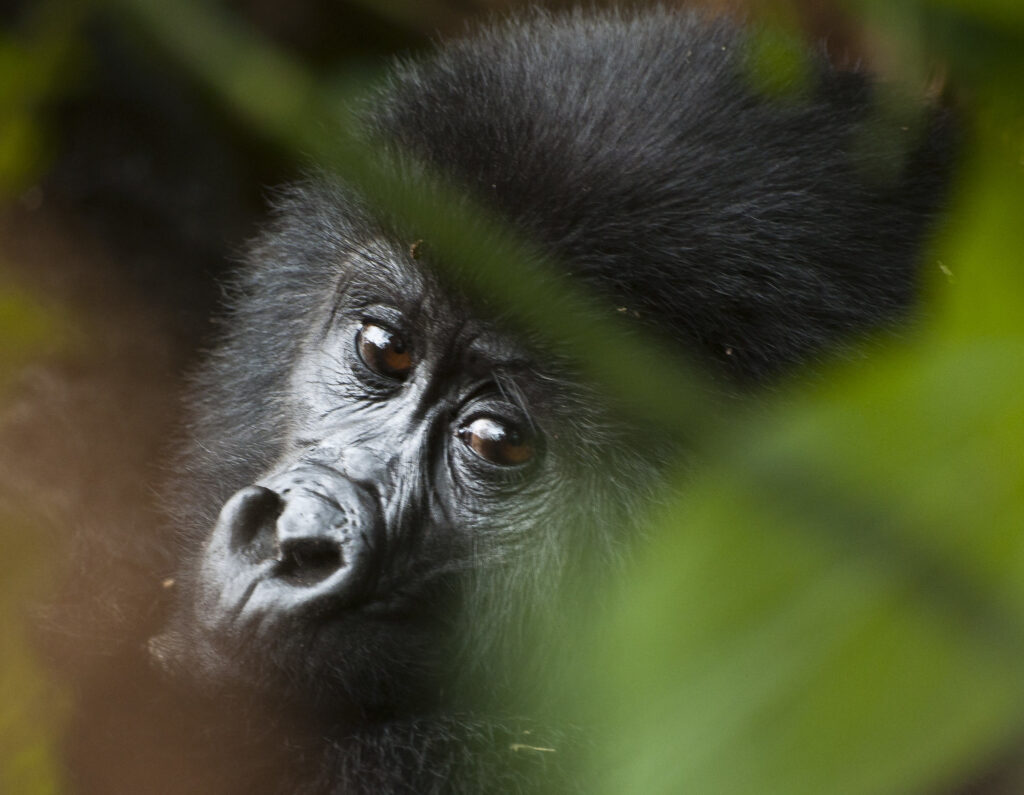
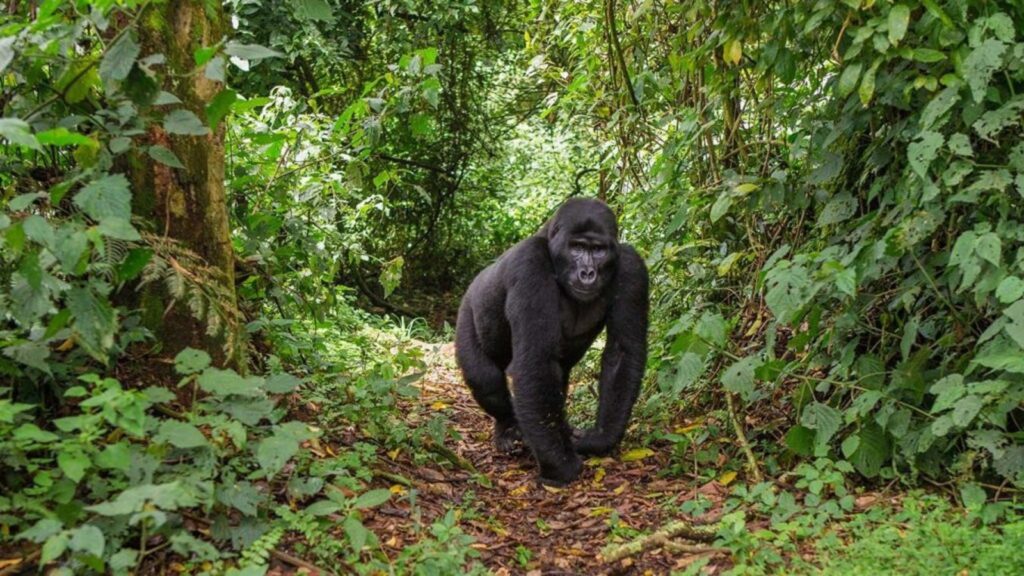
Mountain Gorillas generally display a stockier build, wider chest, and thicker shoulders. Their dense fur also makes them appear larger than they actually are.
Habitat and Distribution
Mountain Gorilla Habitat
Mountain Gorillas occupy high-altitude forests ranging from approximately 2,200 to 4,300 meters above sea level. They live in three protected regions of East Africa.
The largest populations occur in Bwindi Impenetrable National Park in Uganda and the Virunga Conservation Area, which includes Volcanoes National Park in Rwanda, Virunga National Park in the Democratic Republic of Congo, and neighboring protected areas.
Their environment consists of bamboo forests, montane forests, and mist-covered mountain slopes.
Eastern Lowland Gorilla Habitat
Eastern Lowland Gorillas inhabit lowland and mid-altitude tropical rainforests in eastern Democratic Republic of Congo.
The most important stronghold for this subspecies is Kahuzi-Biega National Park, although smaller populations exist in other protected forest areas.
Their habitat features dense rainforest vegetation, lower elevations, warmer temperatures, and extensive forest canopies.
Diet and Feeding Habits
Mountain Gorilla Diet
Mountain Gorillas mainly consume vegetation. Their diet includes leaves, stems, shoots, bamboo, roots, and wild fruits when available.
Because fruit remains less abundant in their mountain environment, these gorillas rely heavily on fibrous plant material. Adults may spend several hours each day feeding.
Eastern Lowland Gorilla Diet
Eastern Lowland Gorillas enjoy greater access to fruit-bearing trees. As a result, fruit forms a larger portion of their diet compared to Mountain Gorillas.
They also eat leaves, bark, stems, flowers, and various forest plants. Their feeding patterns often follow seasonal fruit availability within the rainforest ecosystem.
Social Structure
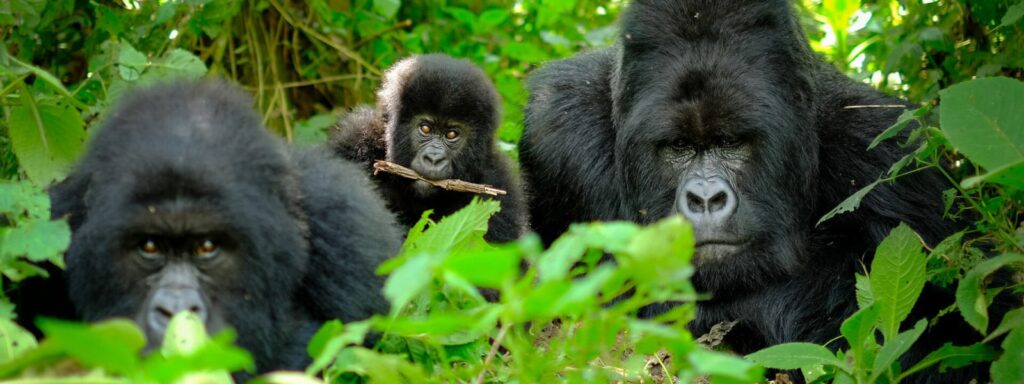
Both gorilla subspecies live in family groups led by a dominant silverback.
The silverback protects the group, resolves conflicts, determines movement patterns, and mates with females within the family. A typical group may include several adult females, juveniles, infants, and subordinate males.
Although social structures remain similar, Eastern Lowland Gorilla groups sometimes travel over larger areas because food resources spread across wider rainforest landscapes.
Mountain Gorilla groups often maintain more concentrated home ranges due to the abundance of vegetation within their habitat.
Gorilla Trekking Experience
Trekking Mountain Gorillas
Mountain Gorilla trekking has become one of Africa’s most famous wildlife experiences. Uganda and Rwanda attract thousands of visitors each year who come to observe habituated gorilla families.
Treks often involve hiking through steep mountain terrain, dense vegetation, and forest trails. Once visitors locate the gorillas, they spend one hour observing their behavior.
The experience offers exceptional opportunities for photography because Mountain Gorillas frequently remain in relatively open vegetation.
Trekking Eastern Lowland Gorillas
Eastern Lowland Gorilla trekking primarily takes place in Kahuzi-Biega National Park.
The trekking experience differs because visitors explore lowland rainforest environments rather than mountainous terrain. Trails often pass through dense tropical vegetation and forest clearings.
Many travelers find Eastern Lowland Gorilla trekking particularly rewarding because fewer tourists visit the region. Encounters often feel more exclusive and remote.
The larger size of Grauer’s Gorillas also creates an impressive viewing experience.
Population Status
Mountain Gorilla Population
Mountain Gorillas represent one of conservation’s greatest success stories. Intensive protection efforts, veterinary programs, anti-poaching initiatives, and tourism revenue have helped increase their numbers.
Recent estimates place the global Mountain Gorilla population at over 1,000 individuals. Although they remain endangered, their population continues to show positive growth.
Eastern Lowland Gorilla Population
Eastern Lowland Gorillas face more severe conservation challenges. Habitat destruction, illegal mining, armed conflict, and poaching have significantly reduced their numbers.
Scientists estimate that their population has declined dramatically over recent decades. Despite conservation efforts, Eastern Lowland Gorillas remain critically threatened.
Protected areas such as Kahuzi-Biega National Park play a vital role in ensuring their survival.
Behavior and Temperament
Both gorilla subspecies display peaceful and highly social behavior. They spend much of their day feeding, resting, grooming, and interacting with family members.
Mountain Gorillas often appear calm and relaxed around habituated tourism groups due to decades of successful conservation and tourism management.
Eastern Lowland Gorillas exhibit similar behavior but may appear slightly more cautious because fewer groups have undergone habituation for tourism and research.
In both cases, gorillas rarely show aggression unless they perceive a threat to their family group.
Conservation Importance
Protecting either gorilla subspecies benefits entire ecosystems. Gorillas act as seed dispersers, helping forests regenerate and maintain biodiversity.
Mountain Gorilla conservation supports the protection of East Africa’s montane forests, while Eastern Lowland Gorilla conservation safeguards large sections of the Congo Basin rainforest.
Tourism revenue contributes directly to ranger salaries, community projects, habitat management, and anti-poaching operations. Every gorilla trekking permit helps fund ongoing conservation work.
Which Gorilla Experience Should You Choose?
The answer depends on your travel goals.
Mountain Gorilla trekking in Uganda, Rwanda, or Virunga offers a highly developed tourism experience with excellent infrastructure, established trekking programs, and strong conservation success stories.
Eastern Lowland Gorilla trekking in Kahuzi-Biega National Park provides a rarer and less crowded adventure. Travelers experience the world’s largest gorilla subspecies while exploring one of Central Africa’s most important rainforest ecosystems.
Both encounters rank among the greatest wildlife experiences on Earth. Whether you choose Mountain Gorillas or Eastern Lowland Gorillas, you will witness remarkable animals whose survival depends on continued conservation efforts.