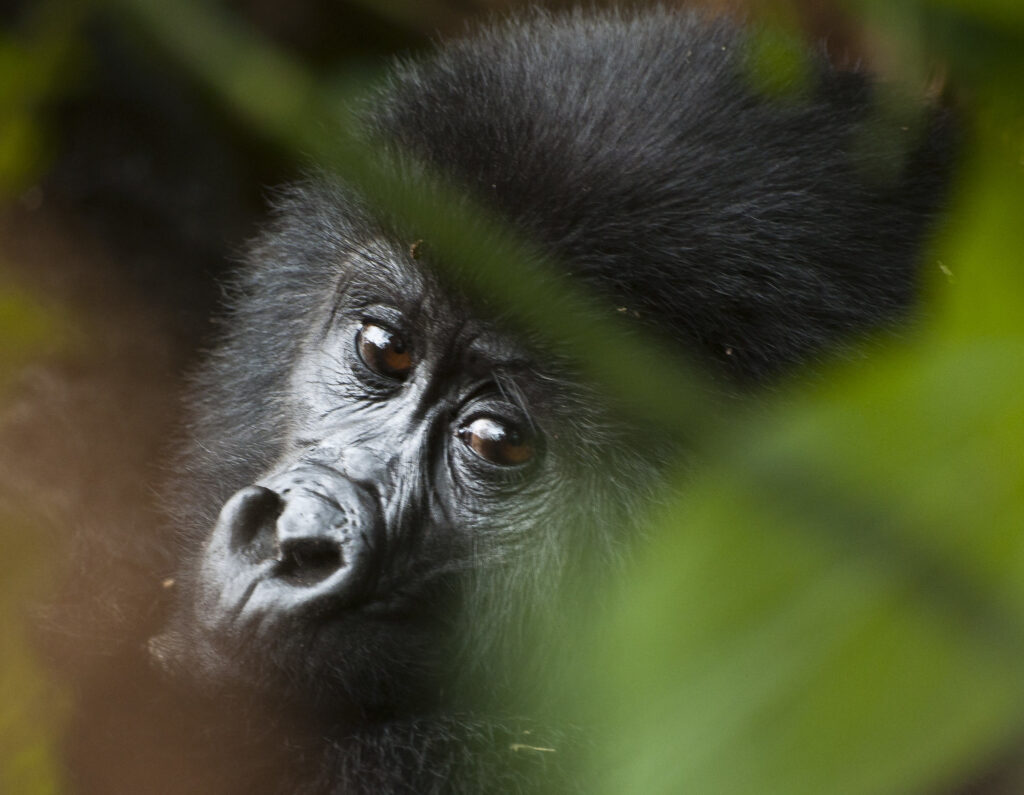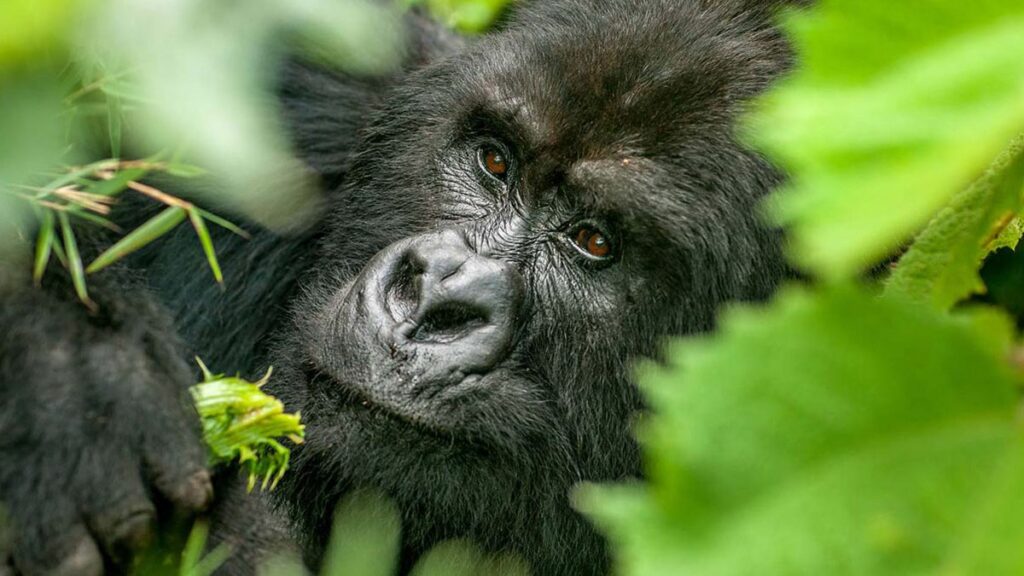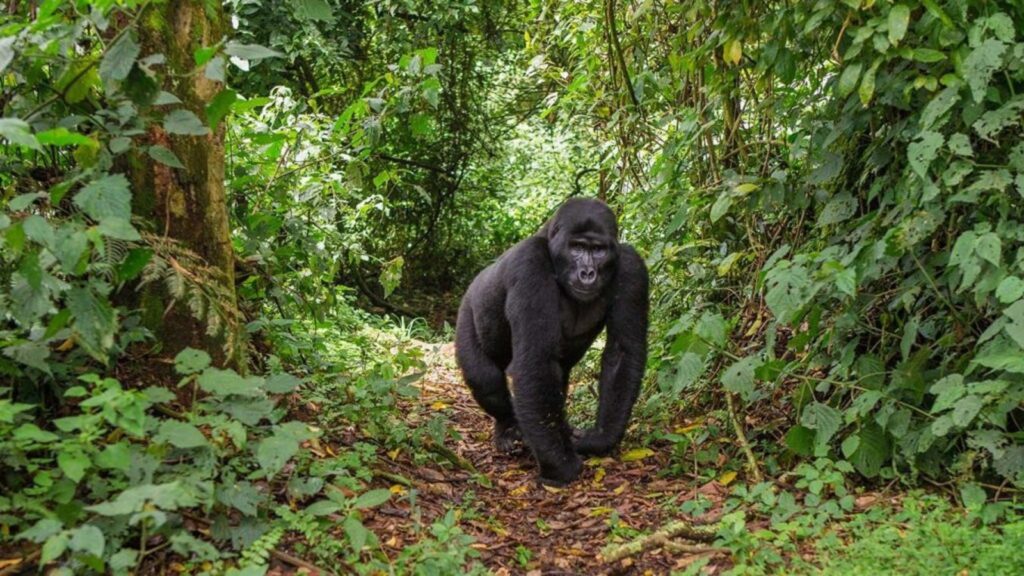
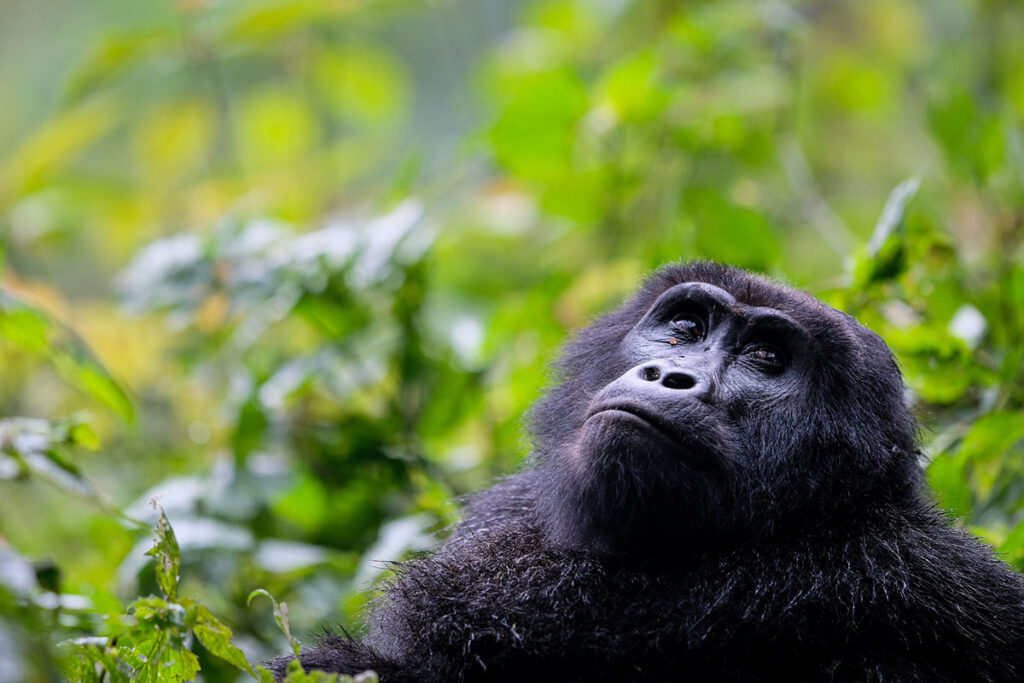
Eastern Lowland Gorilla vs Mountain Gorilla.
The Eastern Lowland Gorilla and the Mountain Gorilla belong to the same species, the Eastern Gorilla (Gorilla beringei), yet they show clear differences in size, habitat, diet, and behavior. Both subspecies live in Central and East Africa, and both attract global attention through gorilla trekking tourism.
The Mountain Gorilla survives in high-altitude volcanic and montane forests, while the Eastern Lowland Gorilla inhabits dense lowland rainforests in the Democratic Republic of Congo. These environmental differences shape how each subspecies looks, behaves, and survives in the wild.
Understanding these differences helps travelers choose the right gorilla trekking destination and appreciate the diversity within Africa’s great apes.
Classification and Scientific Identity
Both gorillas belong to the Eastern Gorilla species (Gorilla beringei), but they represent two distinct subspecies.
The Mountain Gorilla carries the scientific name Gorilla beringei beringei. The Eastern Lowland Gorilla is known as Gorilla beringei graueri.
Although they share a common ancestor, geographical separation and adaptation to different environments created noticeable physical and behavioral differences.
Size and Physical Strength
Eastern Lowland Gorilla: The Largest Gorilla
The Eastern Lowland Gorilla holds the title of the largest gorilla subspecies in the world. Adult males can weigh between 140 and over 200 kilograms. Their bodies appear longer, broader, and more muscular compared to Mountain Gorillas.
Their large frame helps them move through vast lowland forests and access a wide variety of vegetation.
Mountain Gorilla: Compact but Powerful
Mountain Gorillas also grow large, but they typically appear more compact. Adult males weigh between 135 and 195 kilograms.
Their stockier build supports movement through steep mountain terrain. Despite slightly smaller size, they still possess extraordinary strength.
Fur and Climate Adaptation
Mountain Gorillas live in cold, high-altitude environments ranging from 2,200 to over 4,000 meters above sea level. To survive these conditions, they developed thick, dense fur that provides insulation against cold, rain, and mist.
Eastern Lowland Gorillas live in warmer, humid lowland rainforests. Their fur appears shorter, finer, and less dense because they do not require protection from cold temperatures.
This difference in fur clearly reflects how each subspecies adapted to its environment.
Habitat and Distribution
Mountain Gorilla Habitat
Mountain Gorillas live in two isolated regions: the Virunga Volcanoes and Bwindi Impenetrable Forest.
These areas include Uganda, Rwanda, and the Democratic Republic of Congo. The environment consists of bamboo forests, montane vegetation, and volcanic slopes.
Eastern Lowland Gorilla Habitat
Eastern Lowland Gorillas live mainly in eastern Democratic Republic of Congo, especially within Kahuzi-Biega National Park.
They inhabit lowland and mid-altitude tropical rainforests filled with dense vegetation and high biodiversity.
Compared to Mountain Gorillas, their habitat is warmer, flatter, and more extensive.
Diet Differences
Mountain Gorilla Diet
Mountain Gorillas rely heavily on leaves, stems, shoots, and bamboo. Their high-altitude habitat offers limited fruit availability, so they depend more on fibrous vegetation.
They spend many hours each day feeding to meet their energy needs.
Eastern Lowland Gorilla Diet
Eastern Lowland Gorillas enjoy a more diverse diet. Fruit makes up a significant portion of their nutrition when available.
They also consume leaves, bark, roots, flowers, and various forest plants.
This difference in diet reflects the richer fruit availability in lowland rainforests.
Behavior and Movement
Both subspecies live in family groups led by a dominant silverback.
Mountain Gorillas often remain in more compact territories due to dense vegetation and concentrated food sources. Their movement tends to follow predictable mountain forest paths.
Eastern Lowland Gorillas travel over larger areas because food resources spread more widely across the rainforest.
Both groups display strong social bonds, grooming behavior, and cooperative care of young.
Social Stru|cture
Both Mountain and Eastern Lowland Gorillas live in stable family units.
A group usually includes one silverback, several females, juveniles, and infants. The silverback leads, protects, and makes decisions for the group.
Social behavior remains similar across both subspecies, although group movement patterns differ due to habitat structure.
Intelligence and Communication
Both gorillas demonstrate high intelligence and complex communication systems.
They use vocalizations, facial expressions, gestures, and body language to communicate. Soft grunts maintain contact, while alarm calls signal danger.
Chest-beating displays occur in both subspecies and serve as communication tools rather than purely aggressive behavior.
Conservation Status
Mountain Gorilla Conservation Success
Mountain Gorillas represent one of the world’s greatest conservation success stories. Their population has increased to over 1,000 individuals due to strict protection, tourism regulation, and strong conservation partnerships.
They remain endangered but show a positive recovery trend.
Eastern Lowland Gorilla Challenges
Eastern Lowland Gorillas face a much more serious situation. Their population continues to decline due to habitat loss, illegal mining, poaching, and armed conflict in eastern Congo.
They are classified as critically endangered and require urgent conservation attention.
Gorilla Trekking Experience
Mountain Gorilla Trekking
Mountain Gorilla trekking takes place in Uganda, Rwanda, and the Democratic Republic of Congo. Visitors hike through mountainous terrain to observe habituated gorilla families.
The experience is well-organized and highly popular, attracting thousands of tourists each year.
Eastern Lowland Gorilla Trekking
Eastern Lowland Gorilla trekking occurs mainly in Kahuzi-Biega National Park in Congo.
The experience feels more remote and less crowded. Visitors trek through dense rainforest to encounter the world’s largest gorilla subspecies.
Many travelers find this experience more exclusive and adventurous.
Which Gorilla Offers the Bigger Experience?
Eastern Lowland Gorillas are physically larger, but Mountain Gorillas offer more established tourism infrastructure.
Mountain Gorilla trekking provides easier access and higher chances of seeing multiple habituated groups.
Eastern Lowland Gorilla trekking offers fewer crowds and a more remote rainforest experience.
Both experiences remain unforgettable and deeply impactful.
Conclusion
Eastern Lowland Gorillas and Mountain Gorillas share a common ancestry but live very different lives shaped by their environments. The Eastern Lowland Gorilla dominates lowland rainforests with its massive size and wide-ranging movement, while the Mountain Gorilla thrives in cold mountain forests with thick fur and strong social stability.
Both remain endangered, yet both continue to survive thanks to conservation efforts and responsible tourism. Whether encountered in Bwindi, Virunga, Volcanoes National Park, or Kahuzi-Biega, these gorillas represent one of Africa’s greatest natural treasures.