Why Do Gorillas Chest-Beat? Understanding Gorilla Chest-Beating Behavior
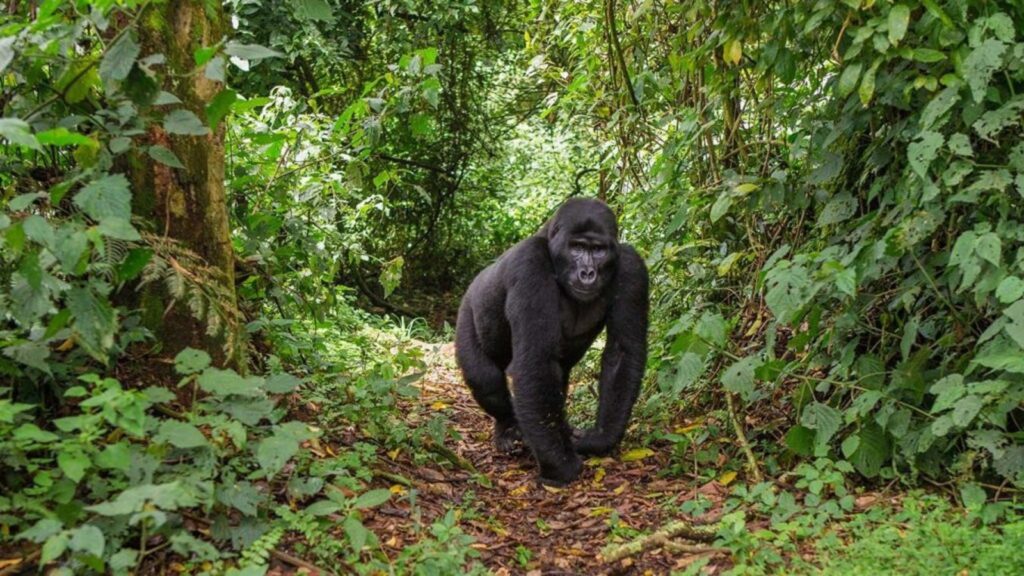
Why do gorillas chest-beat? This is one of the most common questions travelers ask after seeing a mountain gorilla during a trekking experience. Chest beating is one of the most recognizable behaviors associated with gorillas, but it does not simply mean that a gorilla is angry or preparing to attack.
Mountain gorillas use chest beating as part of their communication and social behavior. A gorilla may beat its chest when displaying strength, responding to another gorilla, attracting attention, showing excitement, or communicating its location. The behavior can occur in different social situations and does not always indicate aggression.
For visitors on a gorilla trekking safari in Uganda or Rwanda, understanding chest beating helps make the encounter more meaningful. It also helps travelers respond appropriately when a gorilla displays this behavior.
What Is Gorilla Chest Beating?
Gorilla chest beating occurs when a gorilla strikes or taps its chest with its hands, producing a distinctive sound.
The display can be performed by males and females, although it is particularly associated with adult male gorillas.
A gorilla may perform the behavior while standing, sitting, or moving.
The sound can travel through dense forest vegetation, allowing the display to communicate information over a considerable distance.
Chest beating is therefore more than a dramatic physical display. It forms part of the gorilla’s communication system.
Why Do Gorillas Chest-Beat?
Gorillas chest beat for several reasons.
The behavior can communicate information about the gorilla’s size, strength, identity, emotional state, and location.
A silverback may use chest beating during interactions with other gorillas or when responding to something in the surrounding environment.
The behavior can also occur during play or excitement.
Because chest beating has different meanings depending on the situation, visitors should avoid assuming that every chest beat represents aggression.
Chest Beating as a Display of Strength
One important function of chest beating is displaying physical strength.
An adult male gorilla is extremely powerful, and a chest-beating display can make its size and presence obvious.
The sound and visual movement can communicate strength without requiring physical confrontation.
This can help gorillas establish social relationships and avoid unnecessary fights.
A powerful display may sometimes communicate a message without the gorilla needing to physically attack another animal.
Chest Beating and Communication
Gorillas use many forms of communication.
They combine vocalizations, facial expressions, body posture, movement, and physical displays.
Chest beating provides a particularly noticeable signal.
The sound can help another gorilla identify where the displaying animal is located.
In dense rainforest habitats, sound can be especially useful because vegetation can limit visibility.
Chest Beating and Social Interactions
Mountain gorillas live in social groups.
Interactions between group members can involve feeding, grooming, resting, playing, and displays.
A silverback may beat its chest during an interaction with another gorilla.
The behavior can communicate confidence or reinforce social relationships.
The surrounding circumstances are important when interpreting the display.
Do Only Male Gorillas Chest-Beat?
No.
Although chest beating is strongly associated with adult male gorillas, females and younger gorillas can also display chest-beating behavior.
However, the context and intensity may differ.
Adult silverbacks are particularly well known for powerful chest-beating displays.
Visitors should therefore avoid assuming that chest beating automatically identifies a dominant male.
Do gorillas chest beat when angry?
Sometimes chest beating can occur during an agitated or defensive situation, but it does not always mean that a gorilla is angry.
This distinction is important.
A gorilla can beat its chest during excitement, communication, social interaction, or display behavior.
Visitors should look at the entire context rather than interpreting the behavior in isolation.
Guides and trackers are trained to understand gorilla behavior and can explain what is happening.
Does Chest Beating Mean a Gorilla Will Attack?
Not necessarily.
A chest-beating gorilla is not automatically preparing to attack.
The display may actually help prevent physical confrontation by communicating strength and confidence.
However, visitors should never treat chest beating as an invitation to move closer.
Gorillas remain wild animals, and defensive behavior can become more serious if an animal feels threatened.
Always follow the instructions of the guide.
Why Do Gorillas Beat Their Chest When They See Tourists?
A gorilla may sometimes beat its chest when visitors are nearby, but this does not necessarily mean the animal is reacting negatively to tourists.
Habituated gorillas are accustomed to seeing people during controlled trekking experiences.
The gorilla may be communicating with other members of its group, responding to movement, displaying excitement, or simply continuing normal behavior.
Visitors should remain calm and avoid trying to attract the animal’s attention.
Chest Beating and Gorilla Habituation
Habituated gorillas have become accustomed to the controlled presence of humans.
However, habituation does not make them domesticated.
They remain wild animals and can still display natural behaviors such as chest beating, vocalizing, feeding, grooming, and moving away from people.
This is one reason gorilla trekking is so fascinating.
Visitors are observing natural behavior rather than watching a trained performance.
What Does a Silverback Chest Beat Mean?
When a silverback beats his chest, the meaning depends on the circumstances.
The display may communicate strength, location, excitement, or social information.
A silverback may also respond to another gorilla’s display.
The behavior can therefore be part of a larger communication exchange.
Experienced trackers can often interpret the behavior by considering what happened immediately before and after the display.
Gorilla Chest Beating During Play
Chest beating can sometimes occur during playful interactions.
Young gorillas may experiment with different behaviors as they develop their physical and social skills.
A juvenile may imitate adults or use exaggerated movements during play.
This behavior demonstrates that chest beating is not exclusively an aggressive display.
Chest Beating and Dominance
Gorilla groups have complex social relationships.
Silverbacks often play important leadership roles, and displays can contribute to establishing or reinforcing social relationships.
Chest beating can communicate confidence and physical capability.
However, dominance is not determined by chest beating alone.
Relationships within a gorilla group involve many different behaviors and interactions.
Why Does Chest Beating Make Such a Loud Sound?
The sound produced by chest beating can be surprisingly powerful.
The gorilla’s large chest and physical structure help produce the distinctive sound.
The sound can carry through forest vegetation and communicate the presence of the animal.
For visitors standing nearby, the noise can be dramatic.
The sound is one reason chest beating has become such an iconic symbol of gorilla behavior.
Do gorillas chest beat in the wild?
Yes.
Chest beating is a natural behavior observed among wild gorillas.
It is not something created for tourists.
Gorillas use the display as part of their normal communication and social interactions.
This is why responsible trekking focuses on observing rather than encouraging the behavior.
What Should You Do If a Gorilla Chest Beats Near You?
Remain calm.
Do not run, shout, scream, or attempt to imitate the gorilla.
Follow the instructions of your guide or tracker.
Maintain the required distance and avoid sudden movements.
Even if the gorilla appears curious or relaxed, never attempt to touch it.
The guide understands how to respond to different behaviors and should direct the group.
Should tourists beat their chests back?
No.
Visitors should never imitate a gorilla’s chest beating or deliberately attempt to provoke a response.
Although it may seem entertaining, such behavior can interfere with the animals’ natural behavior and create an unnecessary interaction.
The best approach is quiet observation.
Chest Beating and Gorilla Conservation
Understanding natural gorilla behavior can increase appreciation for conservation.
Mountain gorillas face threats including habitat pressures, disease risks, and other human-related challenges.
Responsible tourism helps support conservation programs and communities surrounding protected areas.
Following trekking rules is an important part of responsible gorilla tourism.
Chest Beating and Photography
Chest beating can create an exciting photographic moment.
However, visitors should prioritize responsible observation over getting the perfect photograph.
Do not move closer to the gorilla.
Avoid flash photography where prohibited.
Keep your movements controlled and follow the guide’s instructions.
A good photograph should never come at the expense of the animal’s comfort or safety.
Why Understanding Chest Beating Matters
Knowing why gorillas chest beat helps travelers interpret one of the most recognizable behaviors they may witness during trekking.
Instead of automatically assuming that the gorilla is angry, visitors can understand chest beating as a flexible form of communication and display.
The behavior can occur in different social contexts, making it an important part of gorilla life.
This knowledge also helps visitors respond appropriately during an encounter.
Conclusion
So, why do gorillas chest-beat? Gorillas use chest beating as a form of communication and display. The behavior can communicate strength, location, excitement, social information, or a response to another gorilla. It does not automatically mean that the gorilla is angry or preparing to attack.
Adult silverbacks are particularly famous for chest beating, but other gorillas can also display the behavior. The meaning depends heavily on the surrounding circumstances.
During a gorilla trekking encounter, visitors should remain calm and never attempt to imitate or provoke a chest-beating gorilla. Following the guide’s instructions and maintaining the required distance allows the animals to continue their natural behavior.
For travelers, witnessing a gorilla beat its chest can be one of the most memorable moments of a safari. Understanding what the behavior means makes that moment even more fascinating.