Gorilla Eye Contact Rules: What to Know During Gorilla Trekking
Understanding gorilla eye contact rules while trekking is important for anyone preparing for a mountain gorilla encounter in Uganda or Rwanda. Seeing a gorilla at close range can be an emotional experience, but visitors must remember that these are wild animals with their own social behaviors and boundaries.
Eye contact is one part of gorilla communication. A gorilla may look directly at a visitor, briefly observe the group, or look away and continue feeding. These actions should not automatically be interpreted as signs of aggression.
During a gorilla trek, visitors should remain calm, avoid staring intensely at a gorilla, and follow the instructions of their guide and trackers. The goal is to observe the animals without interfering with their natural behavior.
This guide explains what gorilla eye contact can mean, how visitors should respond, and why respectful behavior matters during a trekking encounter.
Do Gorillas Make Eye Contact With Humans?
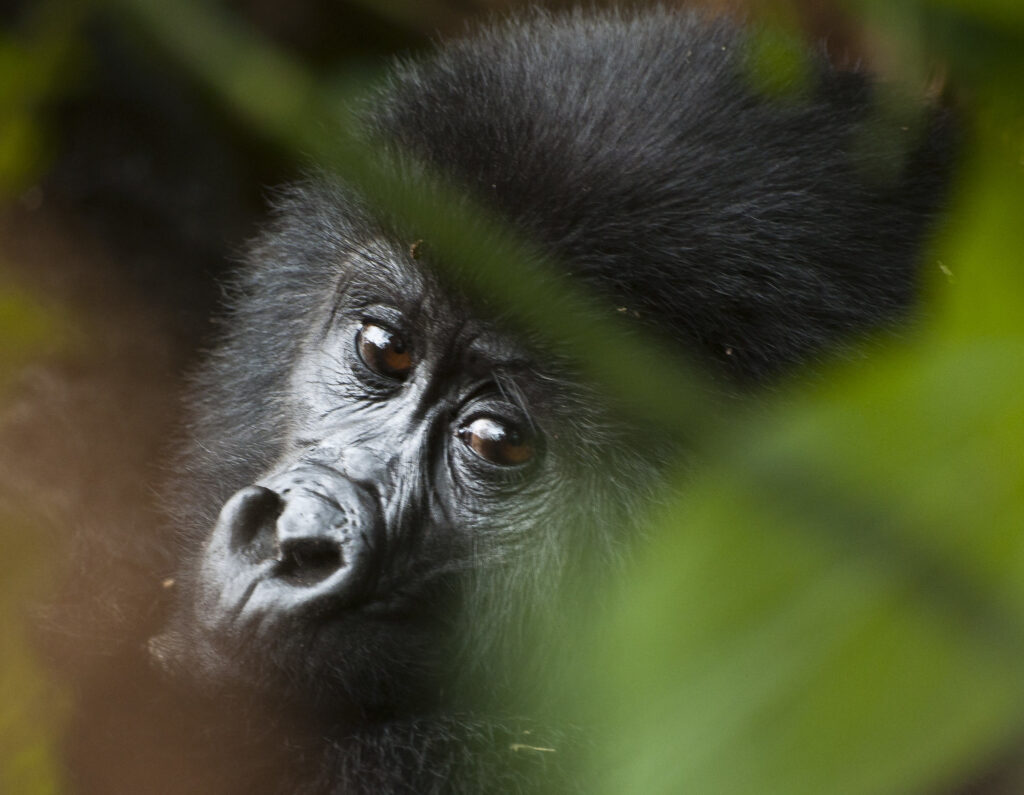
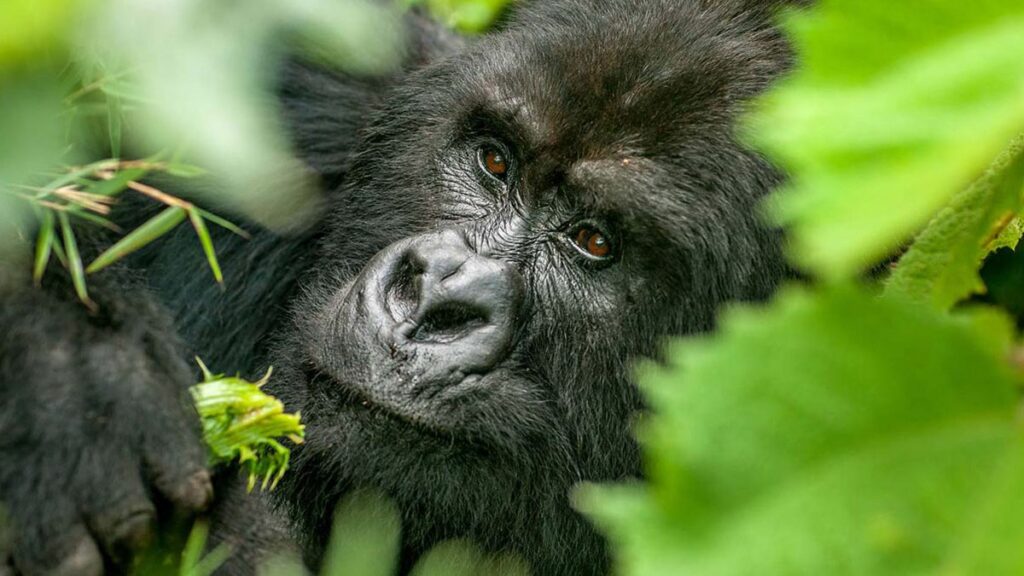
Yes, gorillas may look directly at humans.
A gorilla may notice visitors and briefly look toward them before returning to feeding, resting, grooming, or moving through the forest.
Habituated gorillas are accustomed to controlled human presence, so looking at visitors is not necessarily unusual.
However, visitors should not deliberately try to attract a gorilla’s attention or move closer to obtain eye contact.
The best approach is to allow the gorilla to decide where it looks while visitors quietly observe.
Does Gorilla Eye Contact Mean Aggression?
Not necessarily.
Direct eye contact alone does not mean that a gorilla is angry or preparing to attack.
Gorilla behavior must be interpreted within the wider context. Body posture, vocalizations, movement, facial expressions, and the animal’s interaction with other gorillas can provide more information.
A gorilla that briefly looks at a visitor and continues feeding is behaving very differently from an animal that becomes visibly agitated and begins displaying defensive behavior.
Visitors should therefore avoid interpreting one behavior in isolation.
Should You Look a Gorilla in the Eyes?
Visitors do not need to completely avoid looking at gorillas.
However, prolonged or intense staring should be avoided.
During a trekking encounter, use a relaxed gaze and allow the gorilla to look away naturally. Do not deliberately lock eyes with the animal or attempt to challenge it through prolonged staring.
Your guide may give specific instructions depending on the behavior of the gorilla at that moment.
Why Prolonged Staring Can Be a Problem
Intense staring can be interpreted as threatening behavior in many social animals.
Although gorillas that participate in tourism have undergone habituation, they remain wild animals.
A visitor who deliberately stares, moves closer, or behaves provocatively can create unnecessary stress.
Respectful observation reduces the chance of disturbing the gorillas.
What Should You Do If a Gorilla Looks Directly at You?
Stay calm.
Do not suddenly move backward or forward.
Avoid staring intensely at the gorilla.
Follow your guide’s instructions and allow the animal to continue its activity.
If the gorilla looks away, continue observing quietly rather than attempting to regain its attention.
A brief moment of eye contact can be a perfectly normal part of the encounter.
What If a Gorilla Comes Closer?
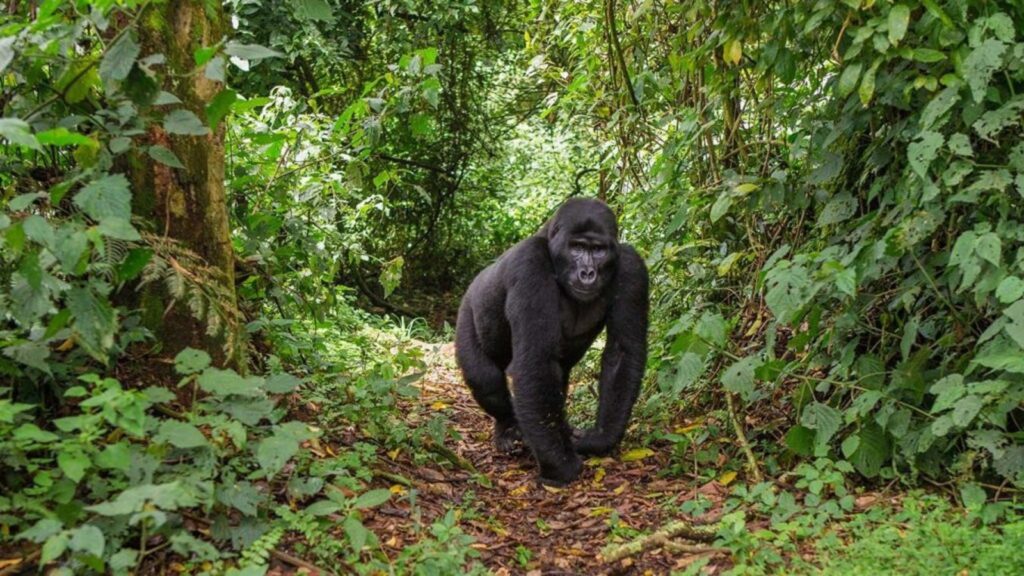
Sometimes a gorilla may move closer to visitors.
If this happens, do not reach out or attempt to touch the animal.
Remain calm and listen carefully to your guide.
The guide may instruct visitors to remain still, change position, or move away depending on the circumstances.
Visitors should never assume that a curious gorilla wants physical contact.
Can You Smile at a Gorilla?
Visitors should avoid deliberately making exaggerated facial expressions toward gorillas.
A natural, relaxed expression is preferable.
Do not bare your teeth, shout, make threatening gestures, or attempt to imitate gorilla displays.
The safest approach is quiet observation without attempting to communicate directly with the animal.
Should You Talk to a Gorilla?
Visitors should keep their voices low during a gorilla encounter.
Do not call out to the gorillas or attempt to attract their attention.
Your guide may speak softly when necessary to direct the group.
Keeping noise levels low allows the gorillas to continue their natural behavior and helps preserve the quality of the encounter.
What About Gorilla Chest Beating and Eye Contact?
Chest beating can occur during different social situations and does not automatically mean that a gorilla is preparing to attack.
However, if a silverback displays defensive behavior while looking toward visitors, the group should pay close attention to the guide.
Do not respond by staring, shouting, moving closer, or imitating the chest beating.
The guide and trackers understand gorilla body language and will advise the group.
Gorilla Body Language Matters More Than Eye Contact Alone
Eye contact should never be considered separately from other behaviors.
Visitors may also observe posture, movement, vocalizations, chest beating, feeding, grooming, and interactions between group members.
A relaxed gorilla may continue feeding or resting while occasionally looking at visitors.
An agitated gorilla may display several behaviors at once.
The guide’s interpretation is therefore more reliable than attempting to diagnose the animal’s mood from eye contact alone.
Gorilla Eye Contact During Feeding
Gorillas often spend substantial periods feeding.
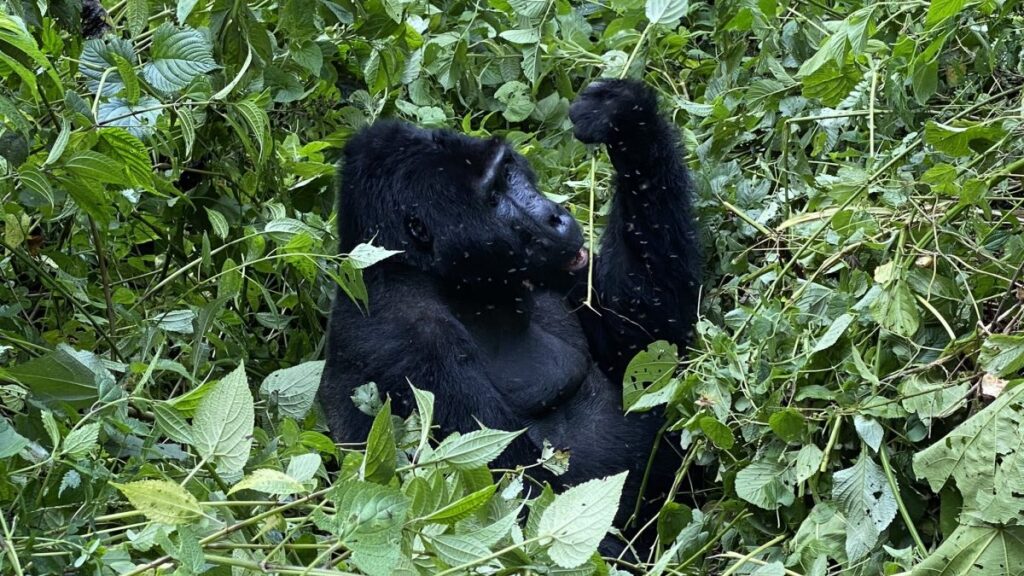
A gorilla may pause while feeding and look toward visitors before returning to the vegetation.
This behavior does not necessarily indicate concern.
Visitors should remain quiet and allow the gorilla to continue feeding naturally.
Avoid moving closer just because the gorilla appears interested in the group.
Gorilla Eye Contact During Resting
Resting gorillas may occasionally observe visitors.
They may look toward the group, change position, or simply continue resting.
Visitors should be particularly respectful when gorillas are resting.
Avoid unnecessary movement and noise.
The purpose of trekking is observation rather than interaction.
Gorilla Eye Contact Between Group Members
Gorillas also use visual signals when interacting with one another.
Eye contact can form part of social communication alongside posture, movement, vocalizations, and physical contact.
Observing these interactions can help visitors understand the complexity of gorilla social groups.
The silverback, females, juveniles, and infants all participate in different social relationships.
Gorilla Mothers and Infants
Mothers may closely monitor their infants while visitors are nearby.
A mother may look toward visitors while keeping an infant close.
Visitors should give the family space and avoid sudden movements.
Never attempt to attract an infant’s attention or encourage it to approach.
Protecting the natural behavior of mothers and young gorillas is especially important.
Gorilla Eye Contact and Habituation
Habituation allows selected gorilla groups to become accustomed to the controlled presence of humans.
It does not mean that gorillas become tame or domesticated.
Habituated gorillas may appear relaxed around visitors while still maintaining their natural behaviors and boundaries.
Visitors must therefore continue following all trekking rules even when the animals seem comfortable.
Why Guides Give Eye Contact Instructions
Experienced guides and trackers understand gorilla behavior and can recognize changes that visitors may overlook.
They may notice subtle changes in posture, movement, vocalizations, or interactions within the group.
If a gorilla becomes uncomfortable, the guide can instruct visitors to change their position or behavior.
Travelers should follow these instructions immediately.
Do Gorilla Eye Contact Rules Differ in Uganda and Rwanda?
The basic principle is the same in Uganda and Rwanda: visitors should respect gorillas, avoid disturbing them, maintain the required distance, and follow guide instructions.
Specific trekking regulations can vary according to park authorities and current conservation policies.
Travelers should therefore follow the rules provided during their briefing rather than relying only on general online advice.
Gorilla Trekking Distance and Eye Contact
Visitors should maintain the required viewing distance throughout the encounter.
Do not deliberately reduce the distance to obtain better eye contact or photographs.
If a gorilla approaches the group, allow the guide to determine how to respond.
Keeping a respectful distance protects both visitors and gorillas.
Eye Contact and Gorilla Conservation
Responsible behavior helps protect mountain gorillas.
Gorillas can be vulnerable to human diseases, particularly respiratory infections.
Maintaining distance and following trekking rules reduces unnecessary contact and helps protect the animals.
Responsible tourism also supports conservation programs and communities around gorilla habitats.
Eye Contact and Photography
A direct look from a gorilla can create an unforgettable photograph.
However, visitors should not prioritize photography over responsible behavior.
Do not move closer to obtain eye contact.
Avoid flash photography where prohibited.
Keep movements slow and controlled.
The best wildlife photographs often come from quietly observing rather than attempting to influence the animal.
Common Mistakes During Gorilla Eye Contact
One common mistake is staring continuously at a gorilla.
Another is moving closer because the animal appears curious.
Some visitors may also attempt to smile, gesture, make sounds, or imitate gorilla behavior.
These actions are unnecessary.
Quiet observation and following the guide’s instructions are always better choices.
Simple Gorilla Eye Contact Rules for Visitors
During a gorilla encounter, keep your behavior calm and predictable.
Look at the gorillas naturally, but avoid prolonged staring.
Do not attempt to attract their attention.
Do not imitate their sounds or displays.
Do not reach toward them.
Maintain the required distance.
Keep your voice low.
Follow your guide’s instructions immediately.
These simple practices help create a respectful encounter.
Why Respectful Eye Contact Matters
Understanding gorilla eye contact rules while trekking helps visitors avoid misinterpreting normal animal behavior.
A gorilla looking at you does not necessarily mean that it is angry. At the same time, visitors should never assume that a relaxed-looking animal wants interaction.
The safest approach is to observe without interfering.
This allows travelers to experience authentic gorilla behavior while minimizing stress for the animals.
Conclusion
Understanding gorilla eye contact rules while trekking can help visitors behave appropriately during one of Africa’s most extraordinary wildlife experiences.
Gorillas may look directly at visitors for several reasons, and brief eye contact does not automatically indicate aggression. However, travelers should avoid prolonged staring, deliberate attempts to attract attention, sudden movements, and any behavior that could appear threatening.
If a gorilla looks at you, remain calm and allow the animal to continue its natural activity. If it approaches, do not attempt to touch it or move closer. Instead, follow the instructions of your guide and trackers.
Respectful observation is the foundation of responsible gorilla tourism. By understanding gorilla behavior and maintaining appropriate boundaries, visitors can enjoy memorable encounters while helping protect these endangered mountain gorillas.