Mountain Gorilla Behavior During Trekking: What Travelers Should Know
Understanding mountain gorilla behavior during trekking can make a gorilla safari more meaningful and enjoyable. Mountain gorillas are highly social animals with complex relationships, recognizable personalities, and carefully organized groups. Observing their behavior in the forest gives visitors a rare opportunity to see how these endangered primates communicate, feed, rest, play, and interact with one another.
Gorilla trekking takes place in Uganda’s Bwindi Impenetrable National Park and Mgahinga Gorilla National Park, as well as Rwanda’s Volcanoes National Park. During a trek, visitors may encounter gorillas feeding quietly in vegetation, moving through the forest, grooming one another, playing, resting, or communicating through different vocalizations and body movements.
Because gorillas are wild animals, their behavior can change from one encounter to another. Visitors should never expect the animals to perform or behave in a particular way. The best approach is to remain calm, follow the guide’s instructions, maintain the required distance, and allow the gorillas to continue their natural activities.
Understanding Mountain Gorilla Social Behavior
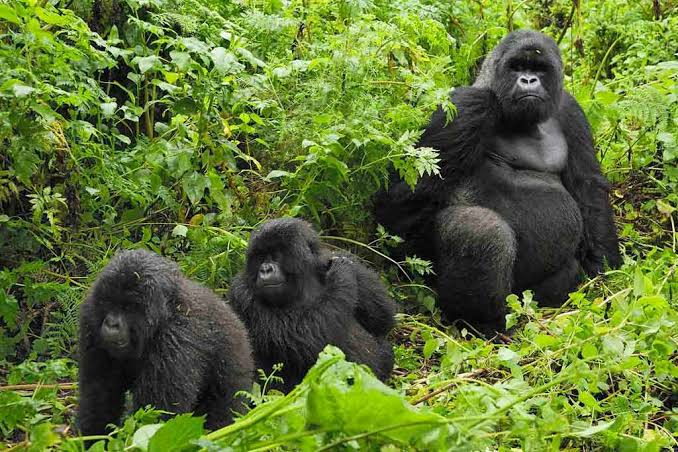
Mountain gorillas live in stable social groups known as troops or families. A typical group includes a dominant silverback, adult females, younger males, juveniles, and infants.
The silverback plays an important leadership role within the group. He may protect the family, make decisions about movement, respond to threats, and intervene during conflicts.
Gorilla groups can vary considerably in size and composition. Some groups contain only a few individuals, while others may include many members.
Social relationships are important to gorillas. Members often remain close together, communicate through sounds and body language, and engage in grooming.
Observing these relationships helps visitors understand that gorillas are not simply large forest animals. They have complex social lives and individual behaviors.
The Role of the Silverback
The silverback is usually the most recognizable individual in a gorilla family.
Adult male gorillas develop silver-colored hair across their back and shoulders as they mature. The silverback often serves as the dominant leader of the group.
During trekking, visitors may see the silverback resting, feeding, moving between vegetation, or monitoring the surrounding environment.
A silverback may also display defensive behavior if he perceives a threat.
Visitors should never interpret every movement toward them as aggression. Guides and trackers understand gorilla body language and can explain what is happening during the encounter.
Gorilla Feeding Behavior
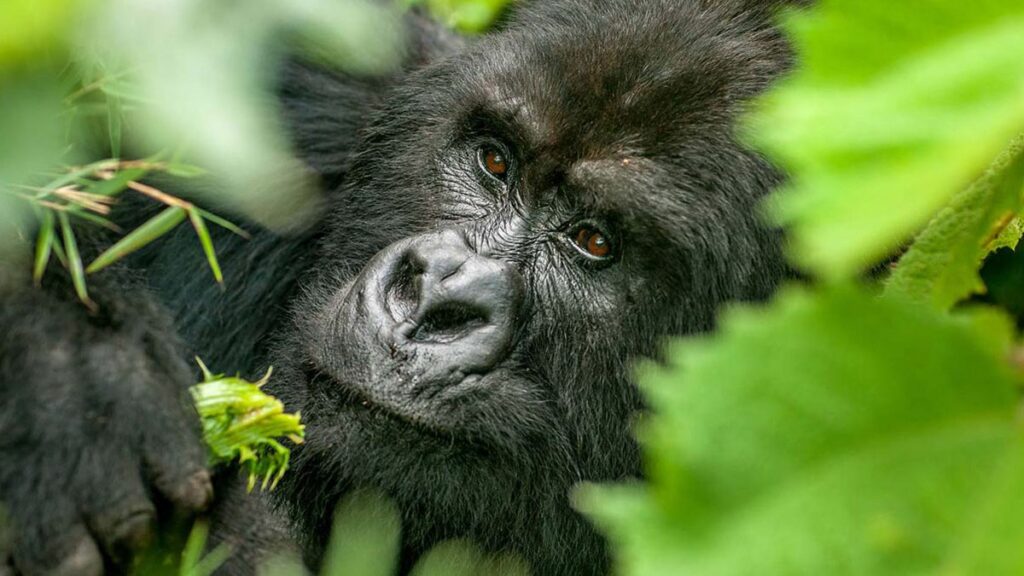
Feeding is one of the most common behaviors visitors observe during gorilla trekking.
Mountain gorillas consume large quantities of vegetation, including leaves, stems, shoots, flowers, and other plant material. Their diet varies according to what is available in their habitat.
A gorilla may spend considerable time searching for food, pulling vegetation, chewing leaves, or moving slowly through dense plants.
Visitors may notice that gorillas can appear completely focused on feeding and show little interest in the people watching them.
This is a positive sign because the animals are continuing their natural behavior rather than becoming overly focused on visitors.
Gorilla Grooming Behavior
Grooming is an important part of gorilla social life.
One gorilla may carefully pick through another’s fur, removing dirt, plant material, or parasites. Grooming also strengthens relationships between members of the group.
Visitors may see adults grooming one another while resting.
The behavior can appear simple, but it plays an important role in maintaining social bonds.
Watching grooming can therefore provide insight into the close relationships within a gorilla family.
Gorilla Communication
Mountain gorillas communicate using a combination of vocalizations, facial expressions, body movements, and physical interactions.
Some sounds are quiet and subtle, while others can be more noticeable.
Gorillas may make sounds while feeding, moving, interacting with group members, or responding to changes around them.
Visitors should avoid imitating gorilla sounds or deliberately trying to attract their attention.
Guides can explain different behaviors without encouraging visitors to interfere with the animals.
Gorilla Chest Beating
Chest beating is one of the most famous mountain gorilla behaviors.
A gorilla may beat its chest with open or cupped hands, producing a distinctive sound that can travel through the forest.
Chest beating does not always mean that a gorilla is preparing to attack.
Gorillas may use the behavior during displays, communication, excitement, play, or interactions between individuals.
When a silverback beats his chest during a trekking encounter, visitors should remain calm and listen to the guide’s instructions.
Gorilla Displays and Defensive Behavior
Gorillas may display defensive behaviors when they feel threatened or when another animal enters their space.
A gorilla may move toward a perceived threat, vocalize loudly, stand upright, beat its chest, or make other displays.
These behaviors are part of gorilla communication.
Visitors should never approach a gorilla, make sudden movements, shout, or attempt to touch it.
The guide’s instructions should always take priority.
Gorilla Movement During Trekking
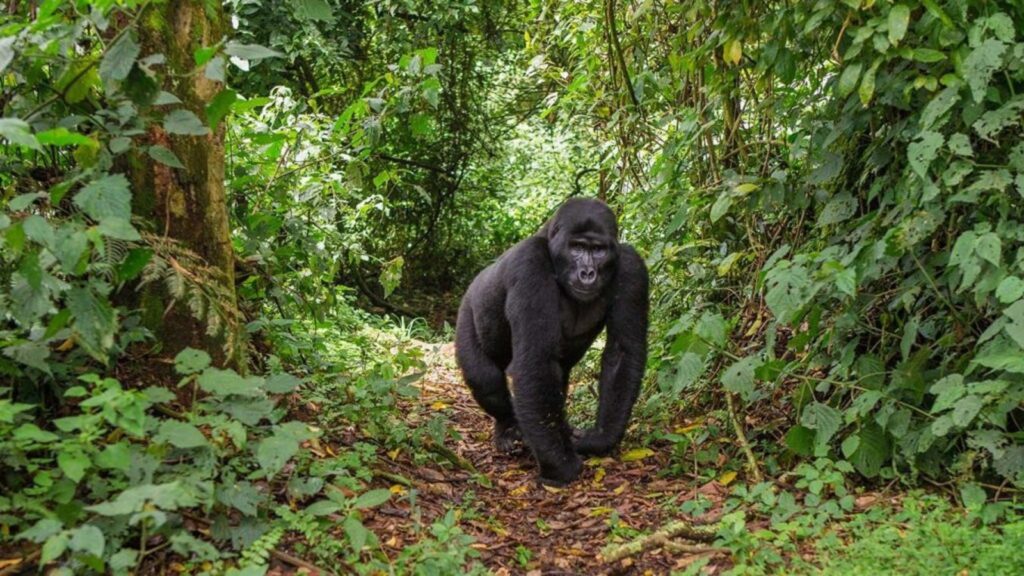
Gorillas do not remain in one location.
They move through their habitat searching for food, resting areas, and suitable vegetation.
This movement explains why trekking distances can vary considerably.
A group may be relatively close to the starting point on one day and much farther away on another.
Trackers often leave early to locate the gorilla family and communicate their position to the trekking group.
Gorilla Resting Behavior
Gorillas spend part of the day resting.
Visitors may encounter gorillas sitting, lying down, or remaining quietly among vegetation.
Resting periods can provide some of the best opportunities to observe social interactions.
You may see adults grooming each other while juveniles play nearby.
Visitors should remain quiet and avoid disturbing resting gorillas.
Gorilla Play Behavior
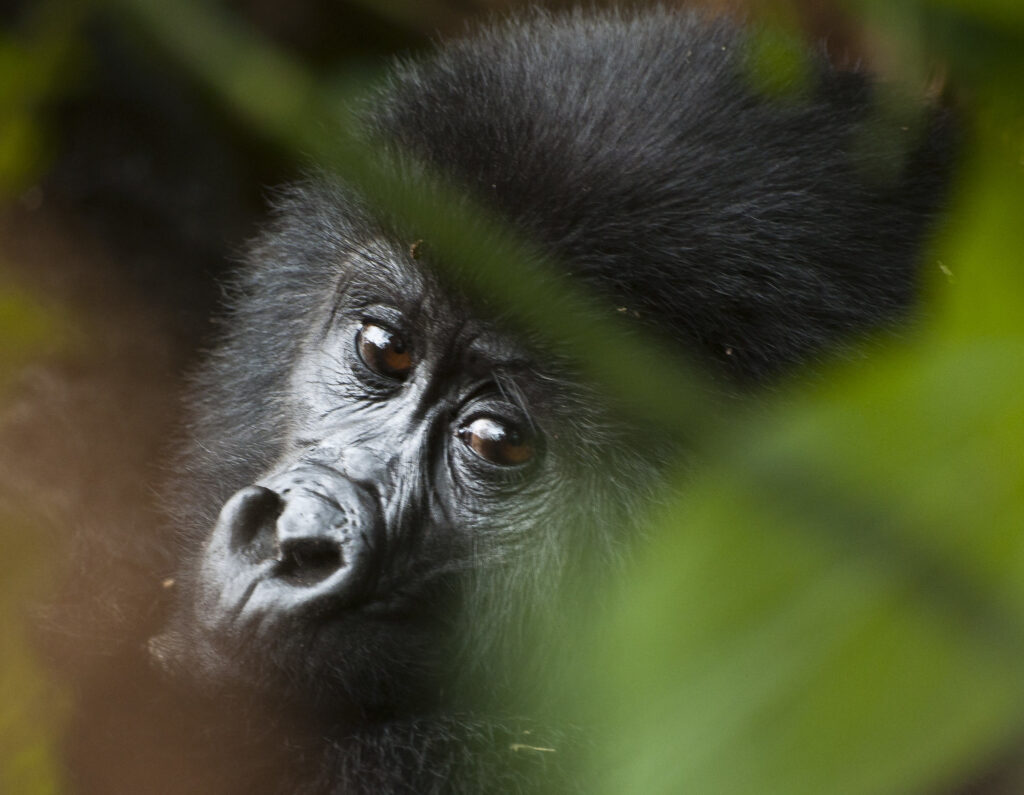
Young gorillas are often energetic and curious.
Juveniles may chase one another, climb vegetation, wrestle, roll around, or interact with adults.
Play helps young gorillas develop physical skills and social relationships.
Watching juvenile gorillas play can be one of the most memorable parts of a trekking experience.
However, visitors should never encourage the animals to approach or interact with them.
Gorilla Mother and Infant Behavior
Mother-infant relationships are particularly important within gorilla groups.
Infants remain close to their mothers and depend on them for protection and care.
A mother may carry an infant, hold it close, groom it, or allow it to explore nearby vegetation.
Visitors should give mothers and infants sufficient space and avoid sudden movements.
Protecting the natural behavior of young gorillas is an important part of responsible tourism.
Gorilla Curiosity Toward Visitors
Mountain gorillas may sometimes appear curious about people.
A gorilla may look toward visitors, move slightly closer, or observe the group.
This does not mean that visitors should approach the animal.
The required visitor distance exists to reduce stress and protect both people and gorillas.
If a gorilla moves closer, visitors should remain calm and follow the guide’s instructions.
Do Mountain Gorillas Attack Tourists?
Mountain gorillas generally do not seek conflict with visitors.
However, they remain wild animals and can respond defensively if they feel threatened.
Responsible trekking practices greatly reduce the likelihood of dangerous interactions.
Visitors should maintain the required distance, avoid sudden movements, keep voices low, and follow the instructions of guides and trackers.
The guide knows how to respond when gorilla behavior changes.
Why Visitors Must Maintain Distance
Maintaining an appropriate distance from gorillas is essential for conservation and visitor safety.
Gorillas are susceptible to many human respiratory illnesses.
Close contact can therefore expose gorillas to diseases that may have serious consequences for their populations.
Distance also gives gorillas enough space to continue their natural activities without feeling pressured.
Visitors should never attempt to touch a gorilla, even if the animal approaches them.
Gorilla Behavior and Habituation
Some gorilla groups visited by tourists have undergone a habituation process.
Habituation involves gradually introducing gorillas to the presence of humans so they become less likely to react strongly to visitors.
Habituation does not mean that gorillas become domesticated.
They remain wild animals with their own behaviors and boundaries.
Visitors should therefore respect the animals even when the gorillas appear relaxed around people.
How Guides Interpret Gorilla Behavior
Experienced guides and trackers play an important role during encounters.
They can recognize changes in body language, vocalizations, movement, and group dynamics.
If a gorilla becomes agitated, the guide may instruct visitors to change their position, remain still, lower their voices, or move away.
Visitors should avoid making their own decisions about approaching or responding to gorillas.
Following professional guidance helps protect everyone involved.
Gorilla Behavior During Rain
Rain can change how gorillas behave and move through the forest.
Gorillas may continue feeding during light rain or seek sheltered areas when conditions become heavier.
Their movement may also change depending on vegetation and weather.
Visitors should be prepared for rain because mountain gorilla habitats receive precipitation throughout the year.
Gorilla Behavior During Different Times of Day
Gorilla activity can vary throughout the day.
Groups may spend periods feeding, moving, resting, and interacting socially.
Because trekking schedules and gorilla locations vary, visitors cannot predict exactly what behavior they will see.
This unpredictability is part of what makes gorilla trekking special.
Every encounter provides a different glimpse into the animals’ daily lives.
Gorilla Behavior and Photography
Photography should never interfere with natural gorilla behavior.
Visitors should avoid using flash photography unless specifically permitted by the relevant authorities.
Keep cameras steady and avoid sudden movements.
A camera should never become more important than following the guide’s instructions.
Travelers should also avoid moving closer to obtain a better photograph.
What Visitors Should Do During a Gorilla Encounter
Visitors should remain calm, quiet, and observant.
Follow the guide’s instructions throughout the encounter.
Maintain the required distance and avoid sudden movements.
Do not touch, feed, call, or imitate the gorillas.
Allow the animals to move naturally through their environment.
Responsible observation creates a better experience while supporting gorilla conservation.
What Visitors Should Not Do
Visitors should never attempt to touch a gorilla.
Do not feed the animals or leave food behind.
Do not shout or make loud noises to attract attention.
Do not imitate gorilla vocalizations.
Do not use flash photography where prohibited.
Do not move closer simply because a gorilla appears relaxed.
These rules protect both visitors and mountain gorillas.
Why Understanding Gorilla Behavior Matters
Understanding mountain gorilla behavior during trekking helps visitors appreciate what they are seeing.
Instead of simply photographing an animal, travelers can recognize feeding, grooming, communication, social bonding, play, territorial displays, and protective behavior.
This deeper understanding can make the experience more educational and memorable.
It also encourages visitors to behave responsibly around the animals.
Responsible Gorilla Trekking
Responsible tourism depends on respecting the animals and their habitat.
Visitors should follow park regulations, listen to guides, avoid littering, and maintain the required distance.
Choosing responsible safari operators and supporting local communities can also contribute to the wider conservation system.
Gorilla tourism provides important economic benefits to communities around protected areas, helping connect tourism with conservation and livelihoods.
Conclusion
Understanding mountain gorilla behavior during trekking gives travelers a deeper appreciation of one of Africa’s most remarkable wildlife experiences.
Mountain gorillas display complex social behaviors, from grooming and feeding to communication, play, resting, and protective displays. The silverback plays an important leadership role, while mothers, juveniles, and other group members contribute to the social structure of the family.
Visitors should remember that gorillas remain wild animals even when they appear comfortable around people. Maintaining the required distance, remaining calm, avoiding sudden movements, and following the instructions of guides are essential throughout the encounter.
The greatest reward of gorilla trekking comes from observing these animals without interfering with their natural behavior. By respecting gorillas and their habitat, travelers help support responsible tourism and the long-term conservation of mountain gorillas