What Do Gorillas Think of Humans?
The question “what do gorillas think of humans?” sounds simple, but it touches one of the most fascinating areas of wildlife behavior. Gorillas do not “think” about humans in the abstract or philosophical way humans think about each other. Instead, they respond to humans based on experience, behavior, and familiarity.
Their reactions range from curiosity to caution, depending on whether they live in protected areas, have undergone habituation, or have had negative encounters with people. In general, gorillas do not see humans as prey or enemies. They usually treat humans as unfamiliar animals that they should either avoid or cautiously tolerate.
Understanding this perception helps explain why gorilla trekking works safely in places like Bwindi, Volcanoes National Park, and Kahuzi-Biega.
Gorillas Do Not See Humans as Prey
Gorillas are herbivores, meaning they feed mainly on leaves, shoots, stems, fruit, and vegetation. Because of this diet, they do not recognize humans as food sources.
In the wild, gorillas do not hunt or attack other animals for food. This removes one of the major reasons many predators would normally view another species as prey.
Instead, gorillas usually classify unfamiliar beings, including humans, as either neutral or potentially threatening depending on behavior.
First Encounters: Curiosity and Caution
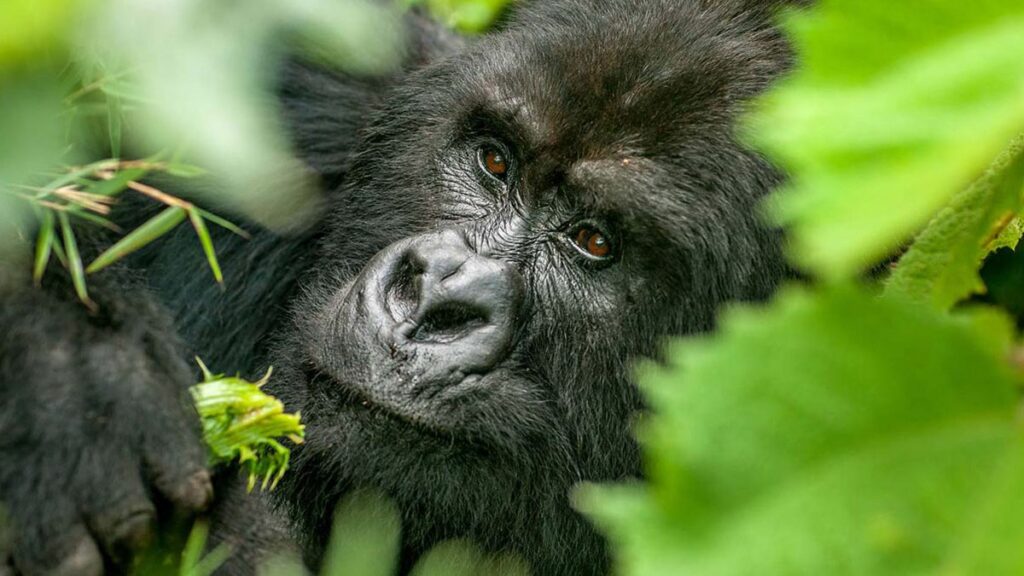
When gorillas encounter humans for the first time, their reaction is often a mix of curiosity and caution.
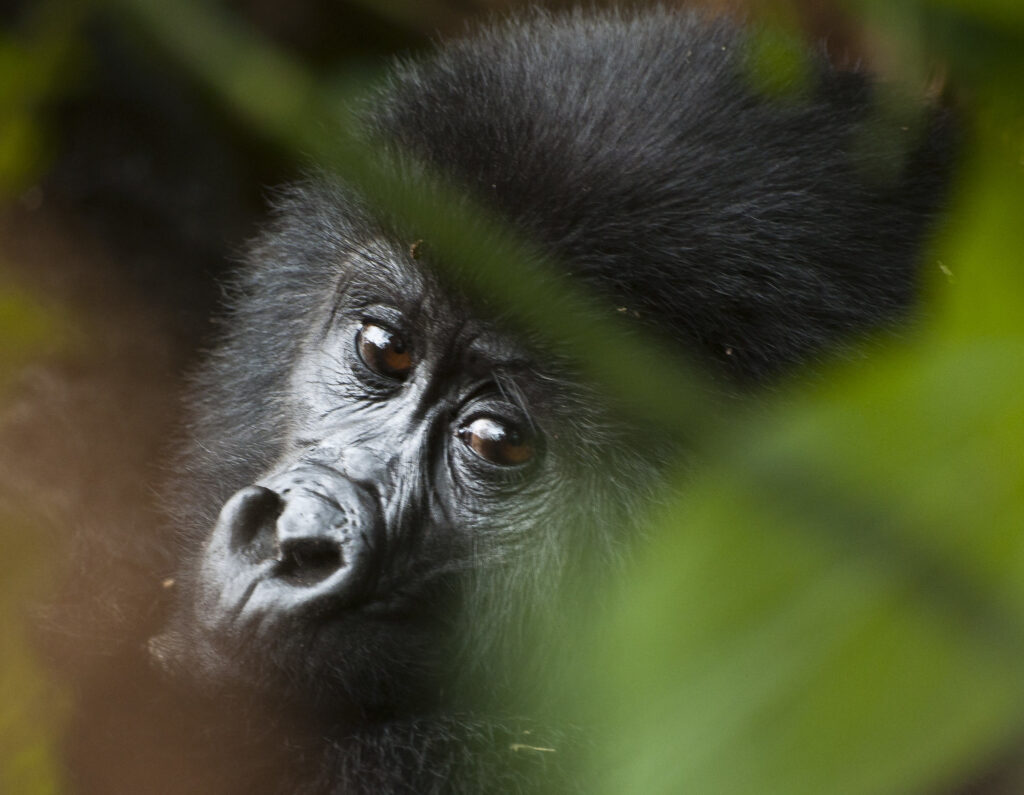
They may observe silently from a distance, watch movement patterns, or retreat into denser vegetation. Young gorillas may show curiosity by peeking or briefly approaching before returning to the group.
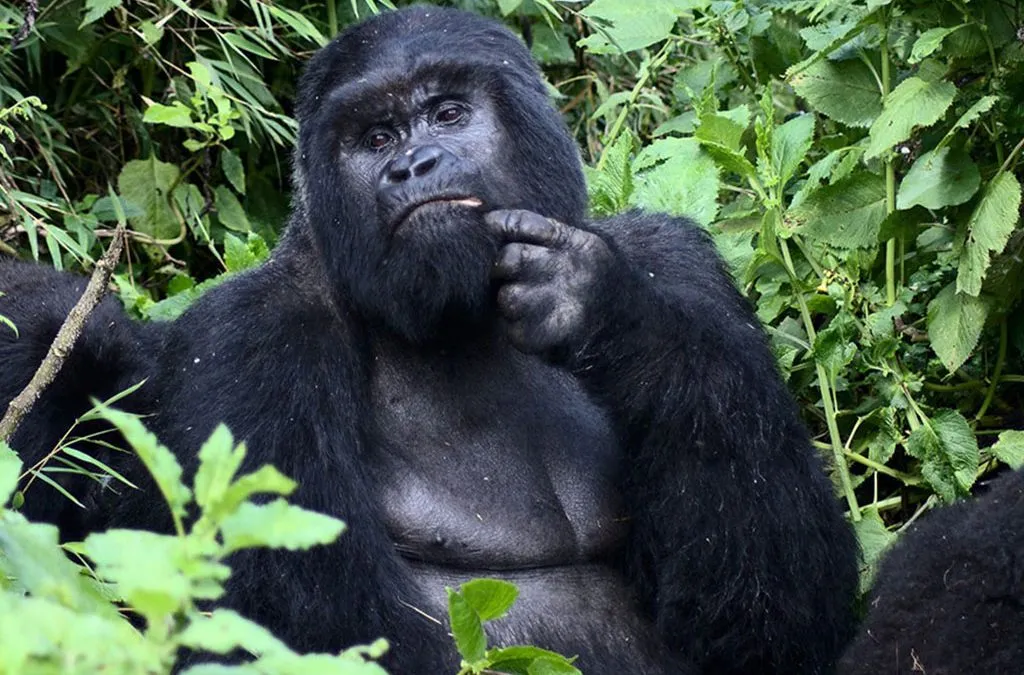
The silverback typically assesses the situation carefully. If he does not detect a direct threat, he may choose to ignore humans or slowly guide the group away.
This cautious behavior reflects intelligence and strong survival instincts.
Habituated Gorillas and Human Presence
In gorilla trekking areas, gorillas undergo a gradual process called habituation. This process introduces them slowly to repeated, non-threatening human presence over time.
Through habituation, gorillas learn that humans who behave calmly and respectfully do not pose a danger.
As a result, habituated gorillas often tolerate visitors at close range. They may continue feeding, resting, grooming, or playing without interruption.
However, habituation does not mean trust in a human sense. Gorillas still recognize humans as outsiders in their environment. They simply choose not to react aggressively because they have learned there is no immediate threat.
How Gorillas Interpret Human Behavior
Gorillas respond strongly to body language, movement, and sound.
Slow, calm movement usually signals safety. Sudden gestures, loud voices, or direct eye contact can signal danger or challenge.
A silverback gorilla may react defensively if humans behave unpredictably or invade personal space, especially near infants.
In contrast, calm and respectful behavior leads to neutral or relaxed responses from gorillas.
In this way, gorillas “judge” humans based on behavior rather than identity.
Do Gorillas Fear Humans?
In many wild populations, gorillas naturally fear humans because humans represent danger through hunting, habitat destruction, and historical conflict.
This fear is a survival mechanism. In unhabituated areas, gorillas often avoid humans completely.
However, in protected trekking areas, habituated gorillas lose much of this fear due to controlled exposure. They learn that humans do not always pose a threat.
Even so, they never fully lose their instinct to remain cautious.
Silverbacks and Human Interaction
The silverback gorilla plays a key role in how a group perceives humans.
When humans are nearby, the silverback closely monitors the situation. He may remain calm if he sees no threat, or he may display warning behaviors if he feels the group is at risk.
These behaviors include chest-beating, vocal grunts, standing upright, or short charge displays.
These actions do not usually indicate intent to attack but rather serve as warnings to maintain distance.
Once the situation feels safe again, the silverback often returns to normal behavior.
Do Gorillas Recognize Individual Humans?
Gorillas have strong memory and recognition abilities within their own species. However, there is no strong scientific evidence that they recognize individual humans in the same way they recognize other gorillas.
Instead, they likely recognize categories of behavior rather than specific people.
For example, they may distinguish between calm observers and disruptive visitors rather than remembering individual faces over time.
Their responses depend more on patterns of behavior than personal recognition.
Emotional Interpretation of Humans
Gorillas are highly social and emotionally intelligent animals. They read emotions in body language, tone, and movement patterns.
They may respond calmly to quiet, non-threatening human presence. They may become alert or stressed if they detect tension, fear, or aggressive behavior from humans.
This sensitivity allows them to adjust their behavior based on environmental cues.
However, they do not assign complex human meanings to emotions the way people do.
Why Gorillas Sometimes Approach Humans
In rare cases, gorillas may approach humans out of curiosity rather than aggression.
Young gorillas are especially curious and may move closer to inspect unfamiliar objects or beings.
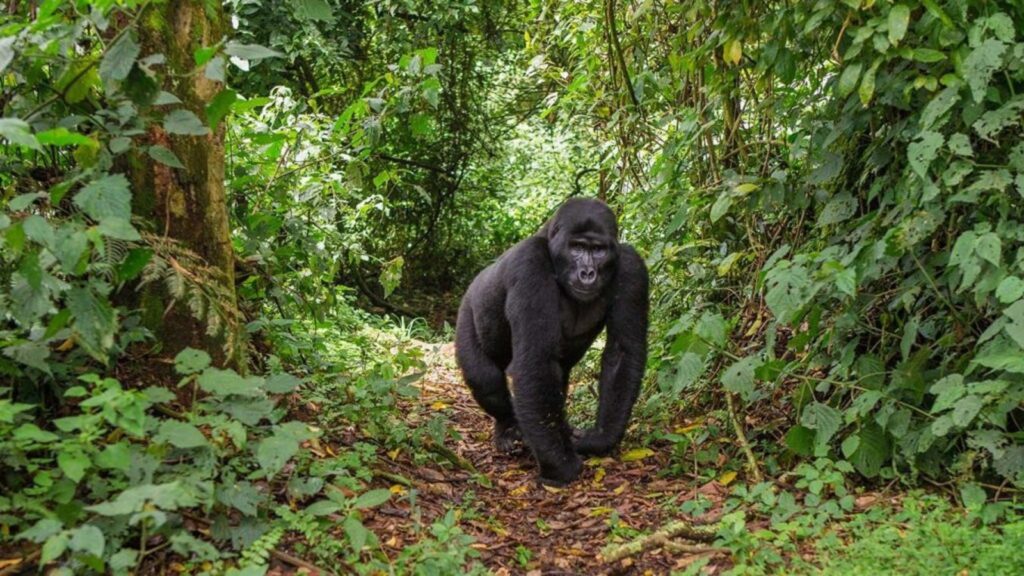
In habituated groups, gorillas sometimes walk near tourists while feeding or moving through the forest.
These moments are usually calm and brief. They reflect curiosity, not friendliness in a human sense.
Do Gorillas See Humans as Threats?
In unprotected environments or areas with hunting pressure, gorillas often view humans as a threat.
This perception leads to avoidance behavior, such as moving deeper into the forest or remaining silent and hidden.
In protected trekking zones, this threat perception is reduced but never completely eliminated.
Gorillas still maintain natural instincts that prioritize group safety.
The Reality Behind Human-Gorilla Interaction
Gorillas do not think about humans in abstract terms like “good” or “bad.” Their perception is based entirely on survival instincts and learned experience.
They evaluate humans through behavior, noise level, distance, and movement patterns.
If humans act calmly and respectfully, gorillas often remain calm. If humans act unpredictably, gorillas respond defensively or withdraw.
This dynamic explains why regulated gorilla trekking works successfully in Africa.
Conclusion
Gorillas do not “think” about humans in a human-like way. Instead, they interpret humans through instinct, experience, and behavior.
They do not see humans as prey, and they are not naturally aggressive toward them. In most cases, they respond with caution, curiosity, or calm tolerance depending on the situation.
In habituated trekking environments, gorillas learn that respectful human presence is not dangerous, which allows peaceful and unforgettable wildlife encounters.
Ultimately, gorillas view humans as unfamiliar but manageable presence in their environment, not as friends, enemies, or predators.