Volcanoes National Park Golden Monkey Trekking: Complete Rwanda Guide
Volcanoes National Park Golden Monkey trekking offers one of Rwanda’s most exciting primate experiences. Located in the Virunga Mountains of northern Rwanda, Volcanoes National Park is internationally famous for mountain gorilla trekking, but its golden monkey population provides another remarkable reason to explore the forest.
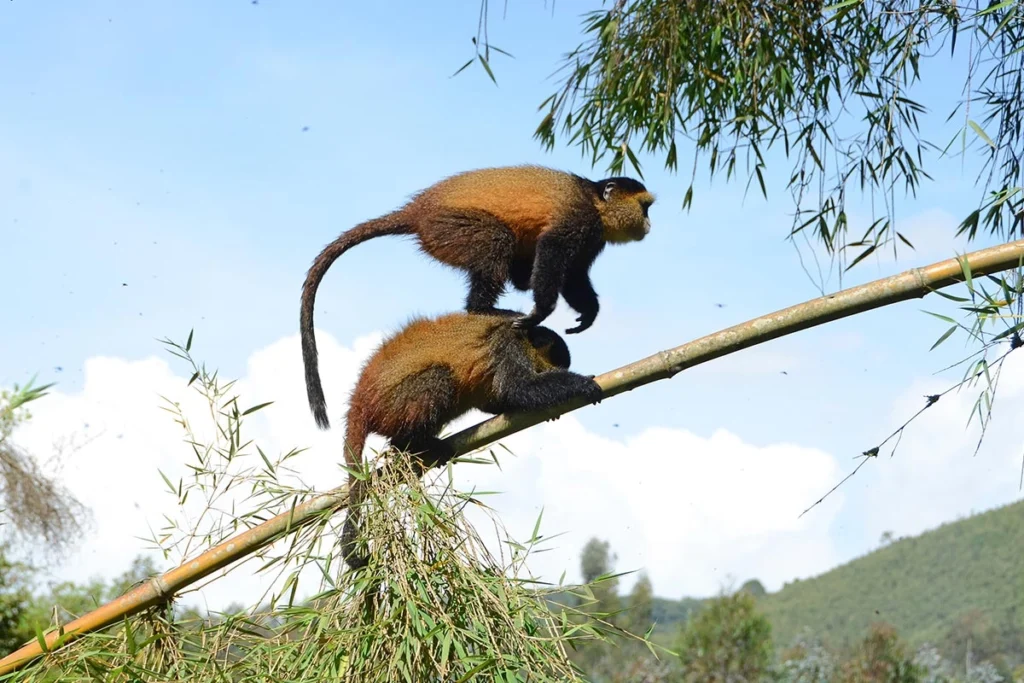
Golden monkeys are small, energetic primates recognized by their distinctive golden-orange fur. They live in the bamboo forests and higher-altitude vegetation of the Virunga Mountains. Unlike mountain gorillas, which often spend time resting and feeding on the forest floor, golden monkeys move quickly through the vegetation and frequently leap between bamboo stems and branches.
A golden monkey trek combines wildlife viewing, hiking, photography, and spectacular volcanic scenery. It also provides an opportunity to support conservation efforts protecting one of the Virunga region’s most distinctive primates.
What Are Golden Monkeys?
Golden monkeys are an endangered primate species found in the Virunga Mountains of Rwanda, Uganda, and the Democratic Republic of Congo.
Their scientific name is Cercopithecus kandti. They have distinctive golden-orange bodies, expressive faces, and contrasting dark limbs. Their attractive appearance makes them particularly popular with wildlife photographers and visitors interested in primates.
Golden monkeys live in social groups that can contain many individuals. They spend much of their time feeding on bamboo shoots, leaves, fruits, flowers, and other vegetation.
Where Is Golden Monkey Trekking Done?
The main destination for Volcanoes National Park golden monkey trekking is Volcanoes National Park in northern Rwanda.
The park protects the Rwandan section of the Virunga Mountains and contains several volcanic peaks, including Mount Karisimbi, Mount Bisoke, Mount Gahinga, Mount Sabyinyo, and Mount Muhabura.
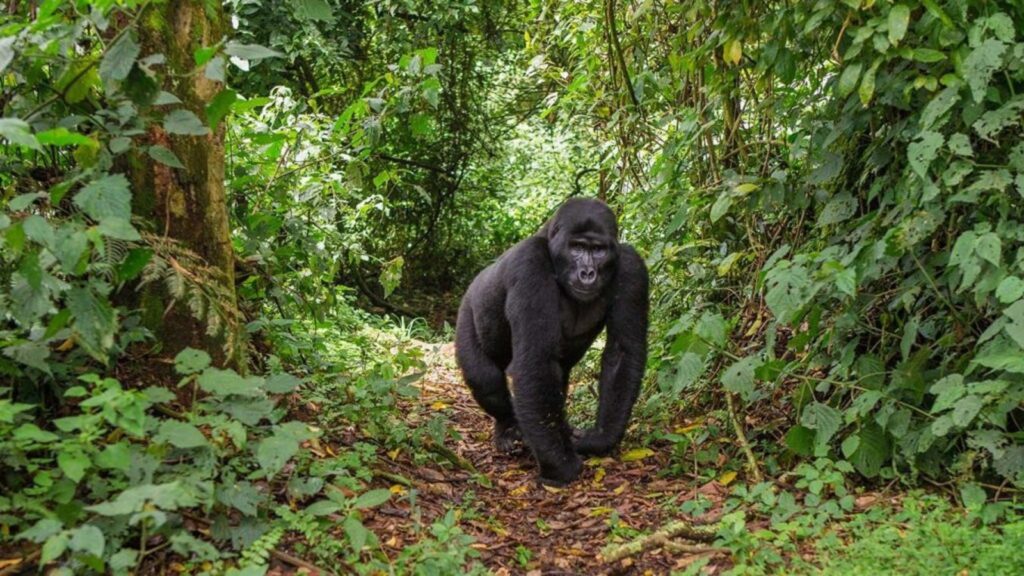
The forest provides important habitat for golden monkeys while also supporting mountain gorillas, buffaloes, bushbucks, forest elephants, numerous bird species, and other wildlife.
Golden Monkey Trekking Experience
Golden monkey trekking normally begins early in the morning.
Visitors gather at the park headquarters for registration and a briefing before driving or walking toward the starting point. Rangers and experienced guides then lead visitors into the forest in search of habituated golden monkey groups.
Unlike some longer gorilla treks, golden monkey trekking often involves relatively manageable hiking. However, the actual distance varies because the monkeys move freely through the forest.
Once the group is located, visitors can observe the animals as they feed, climb, jump, groom, and interact with one another.
How Long Does Golden Monkey Trekking Take?
The duration of a Volcanoes National Park golden monkey trek depends largely on where the monkeys are located.
Some groups may be found relatively close to the trailhead, while others require a longer hike through bamboo forest and mountain vegetation. The actual wildlife encounter generally lasts about one hour once visitors reach the habituated group.
Allowing several hours for the complete experience is advisable.
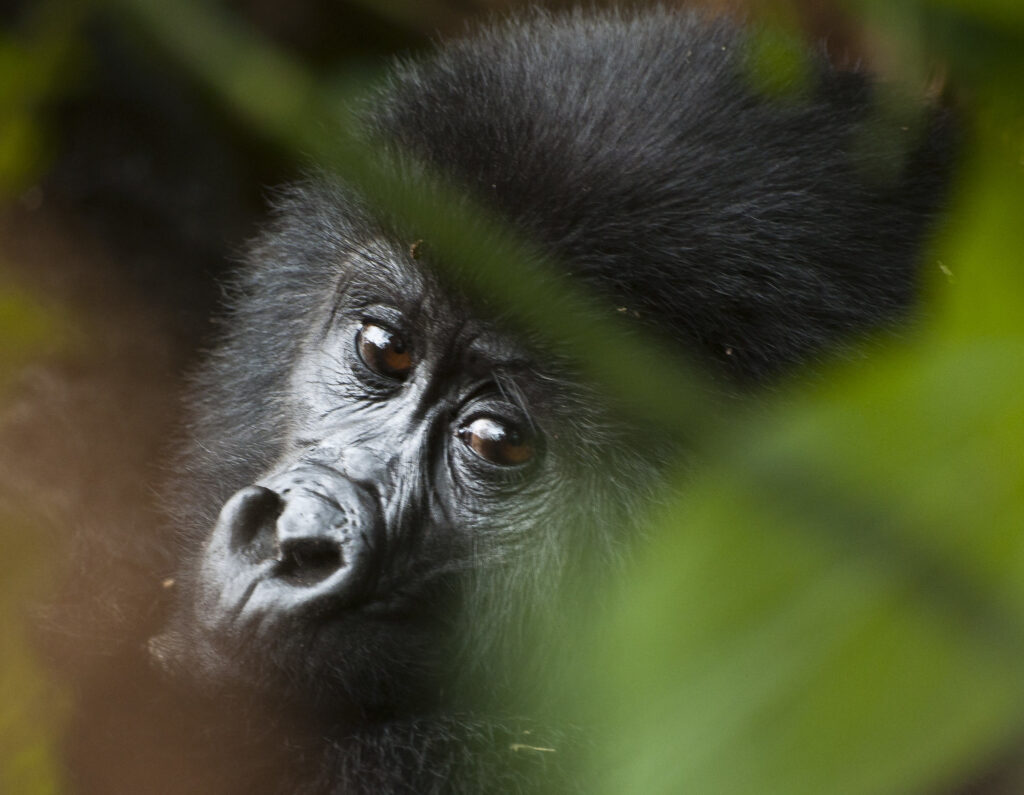
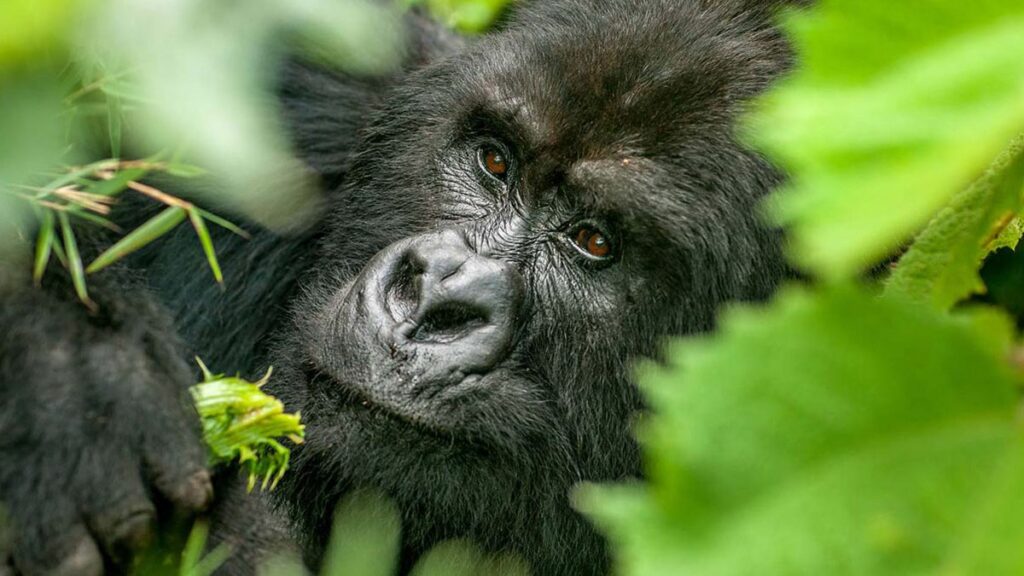
Golden Monkey Trekking vs Gorilla Trekking
Golden monkey trekking and gorilla trekking offer very different experiences.
Gorilla trekking focuses on observing large, powerful primates in their natural forest habitat, while golden monkey trekking involves following highly active animals that frequently move through bamboo and trees.
Golden monkey trekking also tends to require less physical effort than many gorilla treks. This makes it an attractive option for travelers who want a rainforest primate experience without undertaking a demanding mountain hike.
Many visitors choose to experience both activities during the same Rwanda safari.
Wildlife You May See
A golden monkey trek provides opportunities to encounter more than golden monkeys.
The surrounding forest supports mountain gorillas, buffaloes, bushbucks, duikers, forest elephants, and numerous smaller mammals. However, wildlife sightings depend on animal movements and forest conditions.
Birdwatchers can also look for species associated with the Albertine Rift, including Rwenzori Turacos, sunbirds, francolins, and other forest birds.
Golden Monkey Habitat
Golden monkeys have a relatively restricted distribution.
They primarily inhabit the bamboo and montane forests of the Virunga Mountains. Bamboo provides an important source of food and shelter, while higher-altitude vegetation offers additional feeding opportunities.
Because their habitat is limited to a small region, protecting the Virunga forests remains essential to their long-term survival.
Best Time to Visit
In Volcanoes National Park, golden monkey trekking is available throughout the year.
The relatively drier periods from June to September and December to February generally provide more comfortable hiking conditions. During rainy periods, trails can become muddy and slippery, although the forest becomes particularly lush and beautiful.
Golden monkeys remain in the park throughout the year, so visitors can encounter them during any season.
What to Wear
Appropriate clothing is important because Volcanoes National Park has a cool mountain climate and changing weather.
Wear sturdy waterproof hiking boots with good grip. Long trousers and long-sleeved shirts help protect against vegetation and insects. A lightweight waterproof jacket is useful because rain can arrive quickly in the mountains.
Visitors should also consider carrying gardening gloves, especially when walking through dense vegetation.
What to Bring
A small daypack can hold the essential items needed during the trek.
Bring drinking water, snacks, sunscreen, insect repellent, binoculars, a camera, extra batteries, and waterproof protection for electronic equipment. A walking stick can also provide additional stability on muddy or uneven sections of trail.
Travelers should avoid carrying unnecessary heavy luggage.
Hiring a Porter
Visitors can hire a local porter to assist during the trek.
Porters can carry backpacks, provide support on difficult sections, and offer practical assistance along the trail. Hiring a porter also creates a direct economic benefit for local communities surrounding Volcanoes National Park.
Even travelers who are physically fit may find a porter useful during wet or challenging conditions.
Golden Monkey Trekking Rules
Visitors must follow park regulations designed to protect both wildlife and people.
Maintain the required distance from the animals, avoid feeding wildlife, keep noise levels low, and follow instructions from guides and rangers. Visitors should never attempt to touch golden monkeys or move independently away from the trekking group.
These guidelines help reduce stress and minimize the risk of disease transmission.
Photography During the Trek
Golden monkeys provide excellent photography opportunities because of their distinctive appearance and active behavior.
Their movements can make photography challenging, particularly when they leap between bamboo stems or remain high in the vegetation. A camera with a suitable zoom lens can help capture close-up images without approaching the animals.
Early morning light can also create excellent conditions for wildlife photography.
Combining Golden Monkey Trekking with Gorilla Trekking
One of the best ways to experience Volcanoes National Park golden monkey trekking is by combining it with mountain gorilla trekking.
A multi-day Rwanda itinerary can include golden monkey tracking, gorilla trekking, volcano hiking, cultural experiences, and visits to nearby communities. Travelers with additional time can continue to Nyungwe Forest National Park for chimpanzee trekking or Akagera National Park for a classic savannah safari.
This creates a diverse Rwandan wildlife experience.
Conservation Importance
Golden monkey trekking contributes to conservation by creating economic value for protecting their forest habitat.
Tourism supports park management, wildlife monitoring, ranger activities, conservation education, and community development. Protecting the Virunga forests also benefits mountain gorillas and numerous other species that depend on the same ecosystem.
Responsible visitors therefore contribute to the wider conservation of the Virunga landscape.
Where to Stay
Travelers visiting Volcanoes National Park can choose from luxury lodges, boutique properties, mid-range hotels, guesthouses, and budget accommodations around Musanze and Kinigi.
Staying near the park headquarters makes it easier to attend early-morning trekking briefings. Travelers should choose accommodation based on their budget, preferred level of comfort, and planned activities.
Booking early is advisable during busy travel periods.
How to Get to Volcanoes National Park
Most international visitors arrive in Rwanda through Kigali International Airport.
From Kigali, travelers normally continue by road toward Musanze and Volcanoes National Park. The journey provides views of Rwanda’s famous rolling hills, rural communities, agricultural landscapes, and volcanic scenery.
The relatively short distance from Kigali makes Volcanoes National Park convenient for travelers with limited time.
Conclusion
Volcanoes National Park Golden Monkey trekking provides an unforgettable opportunity to encounter one of Africa’s most distinctive endangered primates in the spectacular Virunga Mountains. The combination of active golden monkeys, bamboo forests, volcanic landscapes, and knowledgeable guides creates a rewarding wildlife experience.
For travelers visiting Rwanda, golden monkey trekking offers an excellent complement to mountain gorilla trekking. By combining both experiences with chimpanzee trekking in Nyungwe or a Big Five safari in Akagera, visitors can discover the remarkable diversity of Rwanda’s wildlife and landscapes.