Virunga Massif Travel Guide: Complete Guide to East Africa’s Gorilla Highlands
The Virunga Massif travel guide introduces visitors to one of Africa’s most spectacular mountain landscapes and the only place in the world where endangered mountain gorillas live in the wild. Stretching across the borders of Rwanda, Uganda, and the Democratic Republic of Congo (DRC), the Virunga Massif is a chain of extinct and active volcanoes, lush montane forests, bamboo zones, and alpine meadows that form the heart of mountain gorilla conservation.
The massif covers approximately 430 square kilometers and is shared by three protected areas: Volcanoes National Park in Rwanda, Mgahinga Gorilla National Park in Uganda, and Virunga National Park in the Democratic Republic of Congo. Together, these parks protect more than half of the world’s remaining mountain gorilla population while supporting a remarkable diversity of wildlife, birds, plants, and scenic landscapes.
Whether your goal is gorilla trekking, volcano climbing, birdwatching, golden monkey tracking, or photography, the Virunga Massif offers one of Africa’s most rewarding adventure destinations.
Where Is the Virunga Massif?
The Virunga Massif lies within the Albertine Rift in East-Central Africa.
It spans the borders of Rwanda, Uganda, and the Democratic Republic of Congo, creating a continuous ecosystem that supports mountain gorillas and many other wildlife species. The massif is located only a few hours’ drive from Kigali, Rwanda’s capital, making it one of the most accessible gorilla trekking destinations in Africa.
Despite crossing international boundaries, the ecosystem functions as one connected conservation landscape.
The Volcanoes of the Virunga Massif
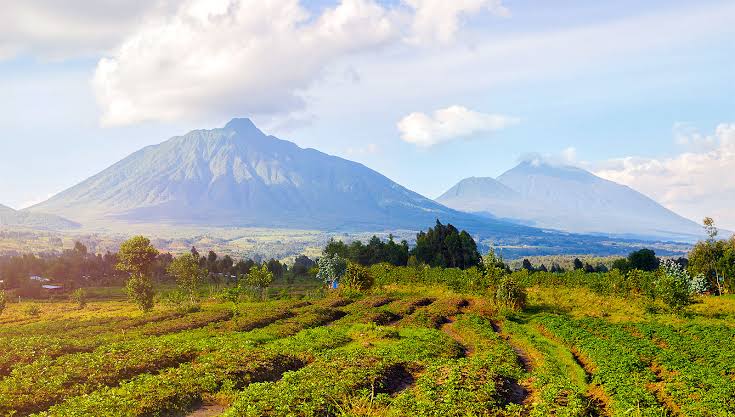
The Virunga Massif consists of eight major volcanic mountains.
These volcanoes include Mount Karisimbi, Mount Bisoke, Mount Muhabura, Mount Sabyinyo, Mount Gahinga, Mount Mikeno, Mount Nyiragongo, and Mount Nyamuragira. Some are extinct, while others remain active and continue to shape the region’s dramatic landscape.
The volcanic soils support dense forests that provide ideal habitat for mountain gorillas and other wildlife.
Protected National Parks
Three national parks protect the Virunga Massif.
Volcanoes National Park in Rwanda is internationally known for mountain gorilla trekking and golden monkey tracking. Mgahinga Gorilla National Park in Uganda offers gorilla trekking, volcano hiking, and rich cultural experiences. Virunga National Park in the Democratic Republic of Congo protects mountain gorillas, active volcanoes, and exceptional biodiversity when tourism operations are open.
Together, these parks represent one of Africa’s most significant conservation areas.
Mountain Gorilla Trekking
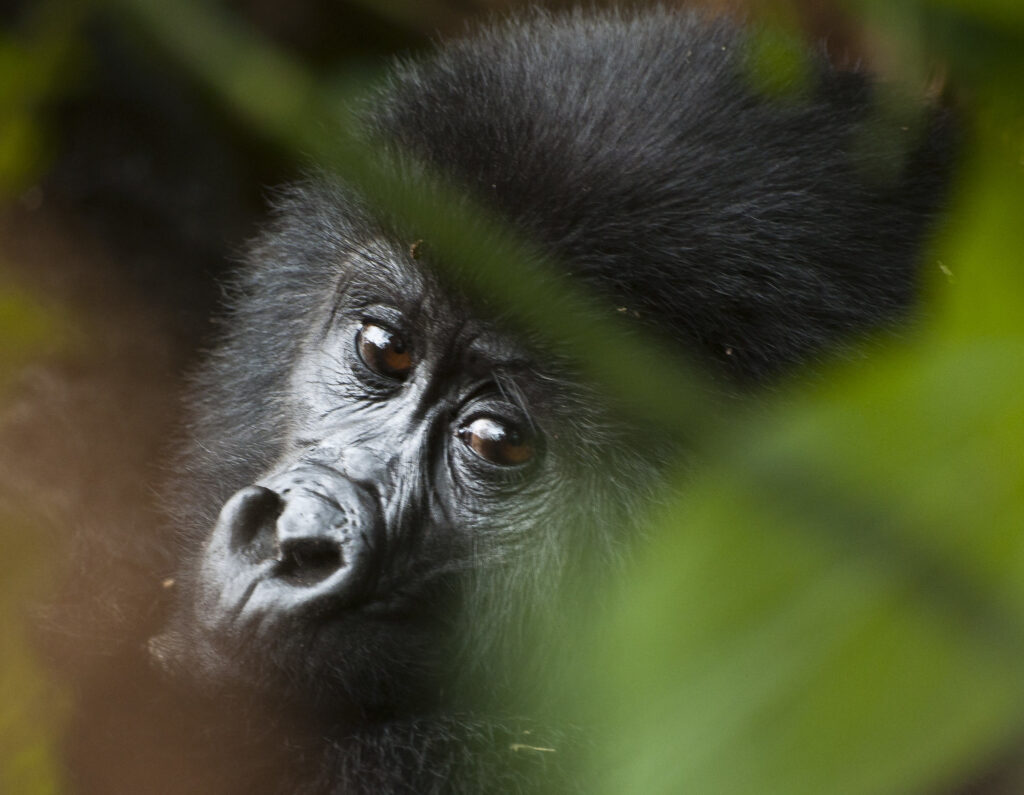
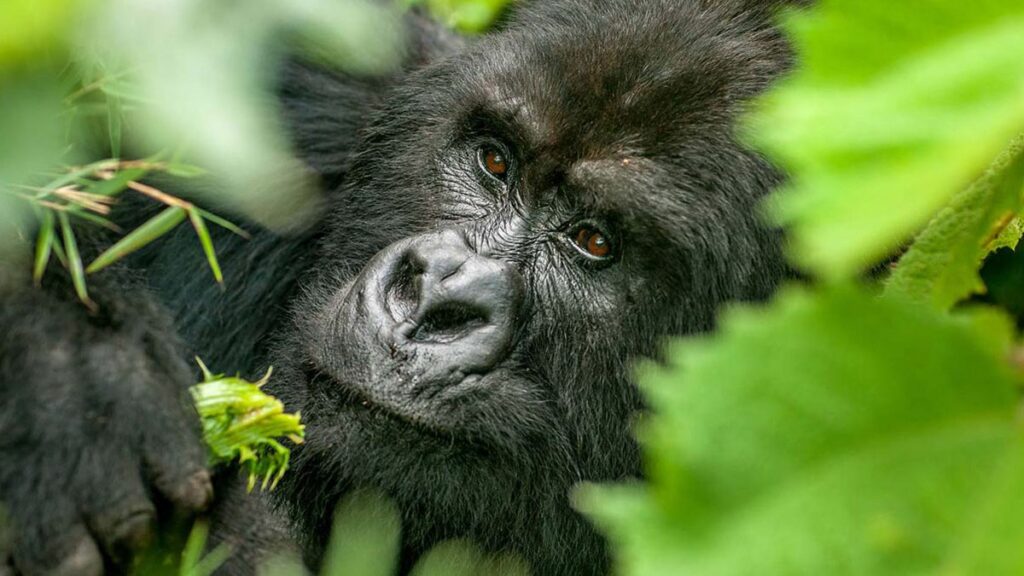
Mountain gorilla trekking is the primary reason most visitors travel to the Virunga Massif.
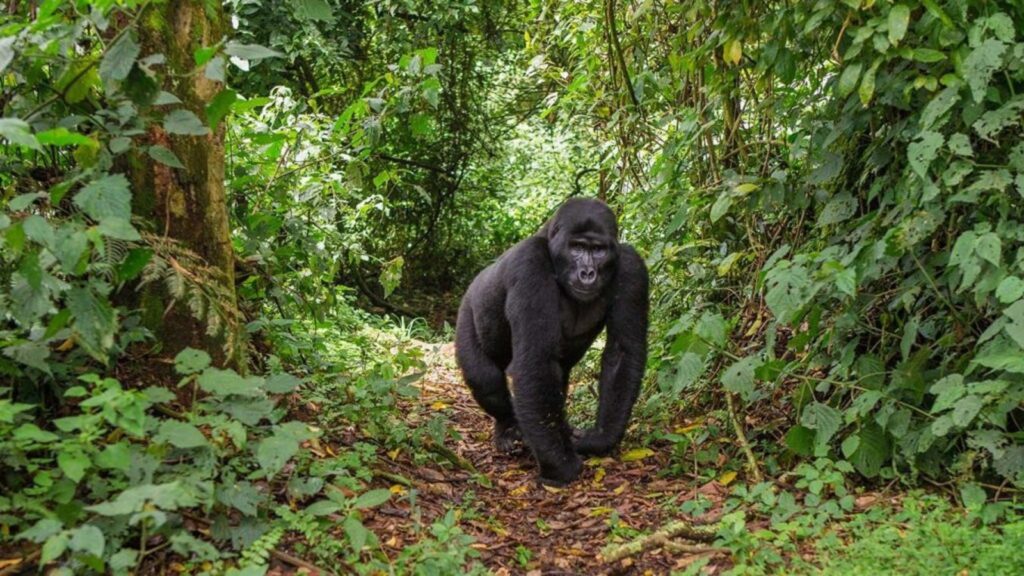
Guided treks take visitors through bamboo forests, montane rainforest, and volcanic slopes in search of habituated gorilla families. Once the gorillas are located, visitors spend one unforgettable hour observing their natural behavior while maintaining a safe viewing distance.
Each country follows strict conservation regulations designed to protect these endangered primates.
Gorilla Trekking in Rwanda
Volcanoes National Park offers one of the most popular gorilla trekking experiences.
The park’s excellent infrastructure, luxury accommodation, experienced guides, and relatively short travel distance from Kigali make it a preferred destination for many international travelers. Several habituated gorilla families are available for daily trekking experiences.
Rwanda is particularly popular with visitors seeking shorter safari itineraries.
Gorilla Trekking in Uganda
Mgahinga Gorilla National Park occupies the Ugandan section of the Virunga Massif.
Although smaller than nearby Bwindi Impenetrable National Park, Mgahinga provides excellent gorilla trekking in spectacular volcanic scenery. Visitors also enjoy golden monkey tracking, volcano hikes, birdwatching, and cultural encounters with the Batwa community.
Its quieter atmosphere appeals to travelers seeking a less crowded experience.
Gorilla Trekking in the Democratic Republic of Congo
Virunga National Park protects part of the Virunga Massif within eastern DRC.
When tourism operations are active and conditions permit, visitors can enjoy mountain gorilla trekking in one of Africa’s oldest national parks. The park also offers exceptional volcanic landscapes and opportunities to climb Mount Nyiragongo.
Travelers should always verify current park operations and official travel advisories before planning a visit.
Golden Monkey Tracking
Golden monkey tracking is another highlight of the Virunga Massif.
These rare and colorful primates inhabit the bamboo forests of both Volcanoes National Park and Mgahinga Gorilla National Park. Their energetic behavior and playful movements create a wildlife experience that differs significantly from gorilla trekking.
Many visitors combine both activities during the same safari.
Volcano Hiking
The Virunga Massif offers outstanding hiking opportunities.
Mount Bisoke attracts hikers with its scenic crater lake, while Mount Karisimbi provides Rwanda’s highest summit. Mount Muhabura and Mount Sabyinyo reward experienced hikers with panoramic views across Rwanda, Uganda, and the Democratic Republic of Congo. In Virunga National Park, Mount Nyiragongo is famous for its spectacular lava lake when accessible.
Each mountain provides a unique hiking adventure.
Birdwatching
The Virunga Massif is an exceptional birdwatching destination.
More than 300 bird species have been recorded across the massif, including numerous Albertine Rift endemics. Birdwatchers regularly search for the Rwenzori Turaco, Handsome Francolin, Dusky Crimsonwing, Regal Sunbird, Archer’s Robin-Chat, and many colorful forest birds.
The varied habitats support excellent bird diversity throughout the year.
Other Wildlife
Although gorillas receive most attention, the Virunga Massif supports many other animals.
Visitors may encounter golden monkeys, buffaloes, bushbucks, giant forest hogs, duikers, bush pigs, black-fronted duikers, servals, and numerous small mammals. The forests also contain reptiles, amphibians, butterflies, and countless plant species.
Every trek reveals different aspects of the region’s biodiversity.
Best Time to Visit
The Virunga Massif travel guide recommends visiting throughout the year.
The relatively dry seasons from June to September and December to February generally provide the most comfortable trekking conditions because forest trails become less muddy. However, mountain weather remains unpredictable, and rainfall is possible during any month.
Visitors should always prepare for cool temperatures and occasional showers.
Accommodation
Accommodation varies across the three countries.
Luxury lodges, boutique hotels, eco-lodges, mid-range safari camps, and budget guesthouses are available near Volcanoes National Park and Mgahinga Gorilla National Park. Accommodation options in Virunga National Park depend on current tourism operations.
Advance reservations are strongly recommended during peak travel seasons.
Travel Tips
Preparing properly improves the overall experience.
Visitors should book gorilla permits well in advance, wear waterproof hiking boots, pack lightweight rain gear, carry drinking water, use insect repellent, and follow all instructions provided by park rangers. Hiring a porter is highly recommended because it supports local communities while making the trek more comfortable.
Travel insurance that covers adventure activities is also advisable.
Conservation Importance
The Virunga Massif represents one of the world’s most successful conservation landscapes.
Governments, conservation organizations, researchers, and local communities work together to protect endangered mountain gorillas, preserve forests, reduce poaching, and promote sustainable tourism. Revenue generated through tourism directly supports wildlife conservation and community development initiatives.
Responsible tourism continues to play a critical role in safeguarding the future of the massif.
Conclusion
This Virunga Massif travel guide highlights one of Africa’s greatest natural treasures. From unforgettable mountain gorilla encounters and colorful golden monkeys to volcanic hikes, rare birds, and breathtaking mountain scenery, the Virunga Massif offers an extraordinary range of wildlife experiences across Rwanda, Uganda, and the Democratic Republic of Congo.
Whether you visit Volcanoes National Park, Mgahinga Gorilla National Park, or Virunga National Park, or combine all three destinations, the Virunga Massif promises an unforgettable journey into the heart of mountain gorilla conservation.