Gorilla Tracker Guide Role: What Trackers and Guides Do During Gorilla Trekking
Understanding the gorilla tracker guide role helps travelers appreciate the people who make mountain gorilla trekking possible. Finding a habituated gorilla family in the dense forests of Uganda, Rwanda, or the Democratic Republic of Congo requires much more than simply walking through the forest and hoping to encounter the animals.
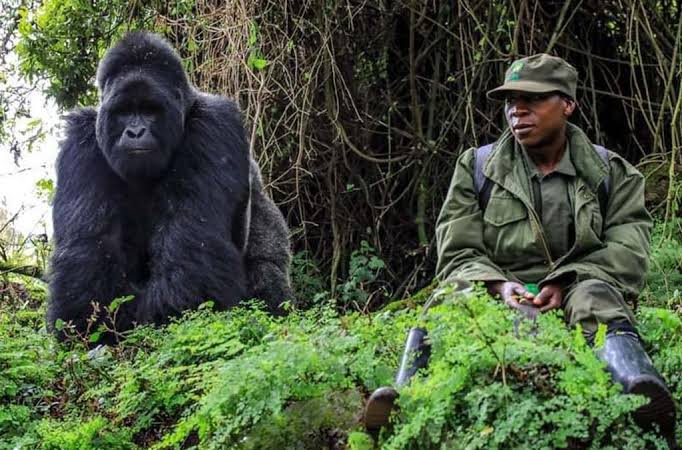
Gorilla trackers and guides work together to locate gorilla families, interpret their behavior, manage trekking groups, and help visitors follow conservation and safety rules. Their knowledge of the forest and individual gorilla families comes from extensive experience working in mountain gorilla habitats.
Although travelers often use the words “tracker” and “guide” interchangeably, they can have different responsibilities. Trackers focus heavily on locating and monitoring the gorillas, while guides generally lead visitors and explain the experience. Rangers and other members of the trekking team may also contribute to visitor safety and gorilla protection.
The gorilla tracker guide role is therefore an important part of both responsible tourism and mountain gorilla conservation.
What Is a Gorilla Tracker?
A gorilla tracker is a trained member of the trekking team who helps locate and monitor a habituated gorilla family.
Trackers usually have detailed knowledge of the forest and the movements of particular gorilla groups.
They may enter the forest before tourists arrive to determine where the gorillas are located.
Trackers can identify signs left by gorillas and use their knowledge of the animals’ previous movements to help locate the family.
Their work is especially important because mountain gorillas move naturally through large areas of forest.
The location of a gorilla family can change from one day to the next.
What Is a Gorilla Guide?
A gorilla guide leads visitors during the trekking experience.
The guide explains the rules of gorilla tourism, provides information about the forest and gorillas, and helps coordinate the group.
Guides also communicate with trackers during the trek.
When the trackers locate the gorilla family, the guide helps visitors approach the area appropriately while maintaining the required distance and following conservation rules.
The guide also explains what visitors are seeing during the encounter.
Gorilla Tracker vs Gorilla Guide
The roles of trackers and guides are closely connected but are not always identical.
Trackers concentrate on finding and monitoring the gorillas.
Guides concentrate on managing visitors and interpreting the experience.
A tracker may identify fresh gorilla trails or nesting signs, while the guide explains what those signs mean to visitors.
Both roles contribute to a successful trekking experience.
In some trekking operations, responsibilities can overlap, and staff structures may differ between destinations.
What Does a Gorilla Tracker Do Before Visitors Arrive?
Trackers may enter the forest before the tourist group begins its trek.
Their objective is to locate the assigned gorilla family and monitor its movements.
They may follow trails, identify feeding areas, examine vegetation, and look for other signs that indicate where the gorillas have moved.
Gorilla trackers become familiar with the habits and preferred areas of individual families over time.
This knowledge helps them estimate where the animals may be located.
However, trackers cannot control where gorillas go.
The animals remain wild and can move in unexpected directions.
How Do Trackers Find Gorillas?
Trackers use a combination of experience, observation, and knowledge of gorilla behavior.
They may look for footprints, broken vegetation, feeding remains, sleeping nests, dung, and other signs.
The previous location of the gorilla family can also provide useful information.
Trackers may communicate with other members of the monitoring team to establish the animals’ approximate location.
Once they locate the family, they can help guide the visitor group toward the area.
Their knowledge of the forest is one of the most valuable resources during the trek.
Gorilla Nesting Signs
Mountain gorillas construct nests where they sleep.
These nests can provide useful clues about where a family spent the previous night.
Trackers may examine the condition and location of nests to determine how recently the gorillas occupied an area.
Fresh nests can help narrow down the direction in which the group has moved.
However, nesting signs are only one part of the tracking process.
Trackers combine multiple clues rather than relying on a single sign.
Following Gorilla Feeding Signs
Gorillas spend significant amounts of time feeding on vegetation.
They may leave behind damaged stems, leaves, bark, and other plant material.
Experienced trackers can recognize these signs and determine whether they are likely to have been produced recently.
The type of vegetation being eaten can also provide clues about the animals’ location.
Trackers use this information together with their knowledge of the family’s movements.
Tracking Gorilla Trails
Gorillas create paths through vegetation as they move through the forest.
Some trails may be easier to identify than others.
Trackers learn to recognize routes commonly used by particular gorilla families.
They may also identify fresh disturbances in vegetation that indicate recent movement.
Dense vegetation and steep terrain can make this work physically demanding.
Trackers must remain alert throughout the process.
Communicating With the Trekking Group
Once trackers locate the gorillas, communication becomes an important part of the gorilla tracker guide role.
Trackers may communicate information about the family’s location and movement to the guide.
The guide then manages the visitor group.
Communication can help prevent visitors from approaching the gorillas too quickly or from moving into an inappropriate position.
The objective is to create a controlled encounter that minimizes disturbance to the animals.
How Guides Interpret Gorilla Behavior
Guides help visitors understand what they are seeing during the encounter.
A gorilla may be feeding, resting, grooming, playing, vocalizing, or moving through vegetation.
The guide can explain these behaviors and provide information about the group’s social structure.
Visitors may also learn about silverbacks, females, juveniles, infants, and other members of the family.
This interpretation transforms the trek from simply seeing gorillas into a deeper wildlife experience.
Guides Explain Gorilla Conservation Rules
Before and during the encounter, guides remind visitors about the rules governing gorilla tourism.
These rules can include maintaining the required distance, avoiding sudden movements, keeping noise under control, and following instructions from the trekking team.
Visitors must never attempt to touch or feed a gorilla.
Flash photography should also be avoided.
The guide’s responsibility is not simply to help visitors see the animals but to ensure that the encounter remains responsible.
What Does a Tracker Do During the Gorilla Encounter?
Trackers continue monitoring the gorillas after visitors reach the family.
They watch the animals’ movements and behavior.
If the gorillas move, trackers can help the guide understand where they are going.
This is particularly useful when a family moves through dense vegetation.
Trackers can also help identify individual gorillas that visitors may otherwise struggle to distinguish.
Their knowledge of the family can make the encounter more informative.
Do Trackers Protect Visitors?
Trackers contribute to visitor safety by monitoring the gorillas and the surrounding environment.
However, visitors should always follow the instructions of the guide and other park personnel.
Gorillas are powerful wild animals, and their behavior can change unexpectedly.
If a gorilla approaches the group, visitors should remain calm and follow the guide’s instructions.
Trackers can help the trekking team understand the animal’s movements and behavior.
What Happens If a Gorilla Charges?
A gorilla display or charge can be frightening for visitors.
However, visitors should not panic or run away.
The guide will provide instructions based on the situation.
Travelers should remain calm and avoid sudden movements.
Do not attempt to confront the gorilla or imitate its behavior.
This is why the presence of trained guides and trackers is so important during the encounter.
How Trackers Recognize Individual Gorillas
Experienced trackers can recognize individual gorillas through physical characteristics and behavioral patterns.
Features such as body size, facial characteristics, nose shape, scars, hair patterns, and other visible differences can help distinguish individuals.
Trackers may also know the social relationships within a family.
They can identify particular silverbacks, females, juveniles, and infants.
This knowledge allows them to provide visitors with more detailed information during the trek.
Gorilla Family Monitoring
Tracking is not limited to finding gorillas for tourists.
Trackers and monitoring teams also contribute to the long-term observation of habituated gorilla families.
They can document changes in group composition, births, deaths, movements, and other developments.
This information can contribute to conservation and research.
The work therefore extends beyond tourism.
It supports a broader understanding of mountain gorilla populations.
Trackers and Gorilla Conservation
The gorilla tracker guide role contributes directly and indirectly to conservation.
Regular monitoring allows teams to observe the condition and behavior of habituated gorillas.
Trackers can identify unusual situations and communicate important information to conservation teams.
Tourism also creates employment for people living around gorilla habitats.
When visitors pay for trekking experiences and related services, tourism can contribute to conservation programs and local economies.
The work of trackers is therefore part of a wider conservation system.
Trackers and Scientific Research
Mountain gorilla populations have been studied for decades.
Field teams collect information about gorilla behavior, health, reproduction, movements, and social relationships.
Experienced trackers can provide valuable observations because they spend considerable time in the forest with individual gorilla families.
Their knowledge can complement formal scientific monitoring.
This makes tracking an important practical skill within gorilla conservation.
How Trackers Know Gorilla Families
Trackers often become highly familiar with the families they monitor.
They may know the group’s preferred feeding areas, typical movements, social relationships, and individual characteristics.
This familiarity develops over time.
However, gorilla groups can change.
Individuals may transfer between groups, young males may leave their natal families, leadership can change, and groups can split or merge.
Trackers must therefore continually update their knowledge.
How Long Do Gorilla Trackers Spend in the Forest?
The amount of time trackers spend in the forest depends on their duties and the specific park or conservation program.
Some trackers may enter the forest early to locate gorillas before tourists arrive.
Others may remain with the family or perform monitoring duties throughout the day.
Their work can involve long periods of walking through difficult terrain.
Rain, steep slopes, dense vegetation, and changing weather conditions can make the job physically demanding.
Skills Required to Become a Gorilla Tracker
Gorilla tracking requires several important skills.
Trackers need strong knowledge of forest environments and gorilla behavior.
They also need excellent observation skills.
Physical fitness is important because tracking can involve long walks over steep and uneven terrain.
Communication skills are equally valuable.
Trackers must communicate effectively with guides and other members of the conservation team.
Patience is another essential quality because finding and monitoring gorillas can take considerable time.
Do Gorilla Trackers Carry Equipment?
The equipment used by trackers depends on their specific duties.
They may carry communication equipment, field notebooks, cameras, protective clothing, and other monitoring tools.
Some conservation or research teams use specialized equipment to document gorilla observations.
The exact equipment varies between organizations and trekking destinations.
Visitors should not assume that every tracker carries the same equipment.
Can Tourists Talk to Gorilla Trackers?
Visitors can often interact with trackers during the trek, particularly when trackers are explaining observations or answering questions.
However, travelers should allow trackers to concentrate on their work.
The guide is usually the primary person responsible for interpreting the experience for visitors.
If you have questions, ask at an appropriate moment rather than interrupting the tracking process.
Should You Tip Gorilla Trackers?
Tipping practices vary between destinations and trekking teams.
Some visitors choose to provide gratuities to trackers in recognition of their work.
Others may tip the guide and porter separately.
There is no universal amount that applies to every destination.
Your tour operator can provide current guidance about local tipping customs and how gratuities are normally distributed.
Gorilla Trackers in Uganda
Uganda’s mountain gorilla trekking takes place mainly in Bwindi Impenetrable National Park and Mgahinga Gorilla National Park.
Trackers play an important role in locating and monitoring habituated gorilla families.
Bwindi has several trekking sectors, including Buhoma, Ruhija, Rushaga, and Nkuringo.
Each sector has its own trekking arrangements and habituated families.
The work of trackers helps connect visitors with gorillas while maintaining responsible tourism practices.
Gorilla Trackers in Rwanda
Rwanda’s mountain gorilla trekking takes place in Volcanoes National Park.
The park’s gorilla tourism system relies on experienced guides, trackers, rangers, and other personnel.
Trackers monitor habituated families and help establish their location before visitor groups arrive.
Their knowledge contributes to both visitor experiences and gorilla monitoring.
Gorilla Trackers in Congo
The Democratic Republic of Congo has also developed gorilla tracking programs in Virunga National Park when tourism operations are active.
Trackers work within the broader conservation and park management system.
Because operational conditions can change, travelers should obtain current information before planning a gorilla trekking trip in the region.
Why the Tracker’s Role Matters to Visitors
Without experienced trackers, locating a gorilla family in a dense mountain forest would be much more difficult.
Trackers save visitors time while helping reduce unnecessary searching through the forest.
More importantly, their knowledge allows tourism to operate in a controlled manner.
They help the trekking team approach gorillas responsibly rather than wandering through the habitat without a clear plan.
Their work benefits both visitors and the animals.
Why You Should Respect the Trekking Team
Visitors should treat trackers, guides, rangers, and porters with respect.
These professionals work in challenging environments to support tourism and conservation.
Follow their instructions even when those instructions affect your preferred photograph or viewing position.
A responsible visitor understands that the welfare of the gorillas takes priority over personal convenience.
Good cooperation between visitors and the trekking team creates a safer and more rewarding experience.
Frequently Asked Questions
What is the role of a gorilla tracker?
A gorilla tracker helps locate and monitor habituated gorilla families, communicates their movements to the trekking team, and provides observations that support tourism and conservation.
What is the difference between a gorilla tracker and a guide?
Trackers primarily locate and monitor gorillas, while guides generally lead visitors, explain gorilla behavior, and manage the trekking experience. Their responsibilities can overlap depending on the destination.
Do trackers find the gorillas before tourists arrive?
Trackers may enter the forest before visitor groups to locate and monitor the assigned family.
How do trackers find gorillas?
They use knowledge of gorilla movements, feeding signs, nesting sites, trails, vegetation disturbance, and other clues.
Can trackers recognize individual gorillas?
Yes. Experienced trackers can often recognize individuals from physical characteristics and behavioral patterns.
Do trackers protect tourists?
Trackers contribute to monitoring the animals and surrounding environment, while guides and other park personnel manage visitor safety and instructions.
Should I tip a gorilla tracker?
Tipping practices vary. Ask your tour operator about appropriate local customs and whether gratuities are normally given separately to trackers.
Do gorilla trackers work in Uganda?
Yes. Trackers form part of the teams supporting gorilla tourism and monitoring in Uganda’s gorilla trekking destinations.
Do gorilla trackers work in Rwanda?
Yes. Trackers contribute to gorilla tourism and monitoring in Volcanoes National Park.
Why are gorilla trackers important?
They help locate and monitor gorilla families while contributing to visitor management, conservation, and understanding of gorilla behavior.
Conclusion
The gorilla tracker guide role is essential to a successful and responsible mountain gorilla trekking experience. Trackers use their knowledge of gorilla behavior, forest conditions, trails, feeding signs, nesting sites, and individual animals to help locate and monitor habituated families.
Guides work alongside them to lead visitors, explain gorilla behavior, communicate conservation rules, and manage the encounter.
Together with rangers, porters, and other conservation personnel, these professionals create a structured experience that allows visitors to observe mountain gorillas while minimizing disturbance.
For travelers, understanding their role adds another dimension to the trek. The encounter is not simply about finding gorillas. It depends on the knowledge, patience, experience, and dedication of the people who work in the forest every day.
When you trek with a trained team, listen to their instructions, respect their work, and recognize their contribution, you help make gorilla tourism safer, more responsible, and more beneficial to conservation.