Gorilla Social Structure Explained: How Mountain Gorilla Families Live Together
Understanding gorilla social structure provides a fascinating insight into how mountain gorillas live, communicate, and cooperate within their forest habitat. Mountain gorillas are highly social animals that usually live in stable groups known as gorilla families or troops. Each group can contain several individuals with different ages, sexes, and social relationships.
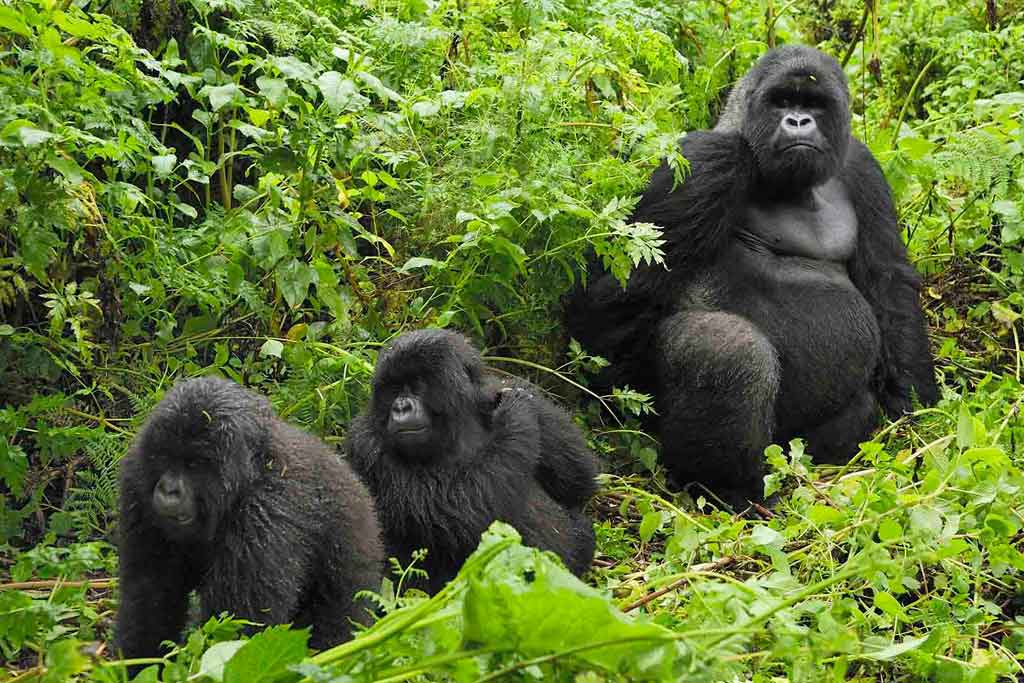
A typical mountain gorilla family may include a dominant silverback, other adult males, adult females, juveniles, and infants. Every member plays a different role within the group, while relationships between individuals can change over time.
The silverback often provides leadership and protection, but the social structure of a gorilla family involves much more than one dominant male. Grooming, feeding together, playing, communication, maternal care, and movement all contribute to maintaining strong social bonds.
For travelers visiting Uganda’s Bwindi Impenetrable National Park, Mgahinga Gorilla National Park, or Rwanda’s Volcanoes National Park, understanding this structure can make gorilla trekking more meaningful. Instead of simply seeing a group of gorillas, visitors can recognize the different relationships and behaviors taking place around them.
What Is Gorilla Social Structure?
Gorilla social structure refers to the way gorillas organize themselves into groups and maintain relationships between individual members.
Mountain gorillas are generally social and spend much of their lives in groups.
The group provides opportunities for protection, reproduction, learning, social interaction, and cooperation.
Although gorilla families can change over time, many groups maintain stable relationships for extended periods.
The composition of a group depends on births, deaths, migration, transfers between groups, and changes in male leadership.
What Is a Gorilla Family?
A gorilla family is a social group that lives and travels together.
The group may contain a dominant silverback, additional males, adult females, juveniles, and infants.
The exact composition varies between groups.
Some families may contain relatively few individuals, while others can become considerably larger.
During gorilla trekking, visitors are usually assigned to a habituated gorilla family that has been selected for controlled tourism encounters.
The Role of the Dominant Silverback
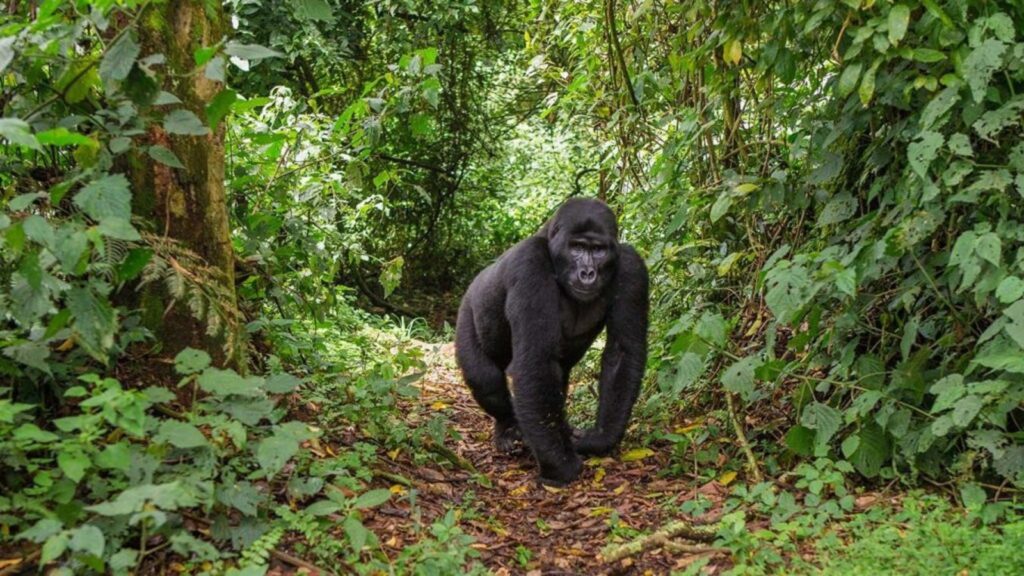
The dominant silverback often occupies the central leadership position within the group.
He may decide when and where the group moves, respond to threats, and intervene during conflicts.
The silverback also provides protection to other members of the family.
Visitors may see him feeding, resting, grooming other gorillas, playing with younger members, or monitoring the group.
His role is therefore both social and protective.
What Is a Silverback Gorilla?
A silverback is a mature male gorilla that develops distinctive silver-colored hair across the back and shoulders.
Not every adult male is the dominant leader.
A group can contain several mature males, and one may hold the highest social position.
The dominant silverback’s status is based on age, strength, experience, social relationships, and other factors.
Can a Gorilla Family Have More Than One Silverback?
Yes.
Some mountain gorilla groups contain multiple adult males.
A dominant silverback may lead the group while other mature males occupy lower social positions.
These males can contribute to group protection and social stability.
The presence of several adult males can also influence relationships within the group.
The Role of Adult Females
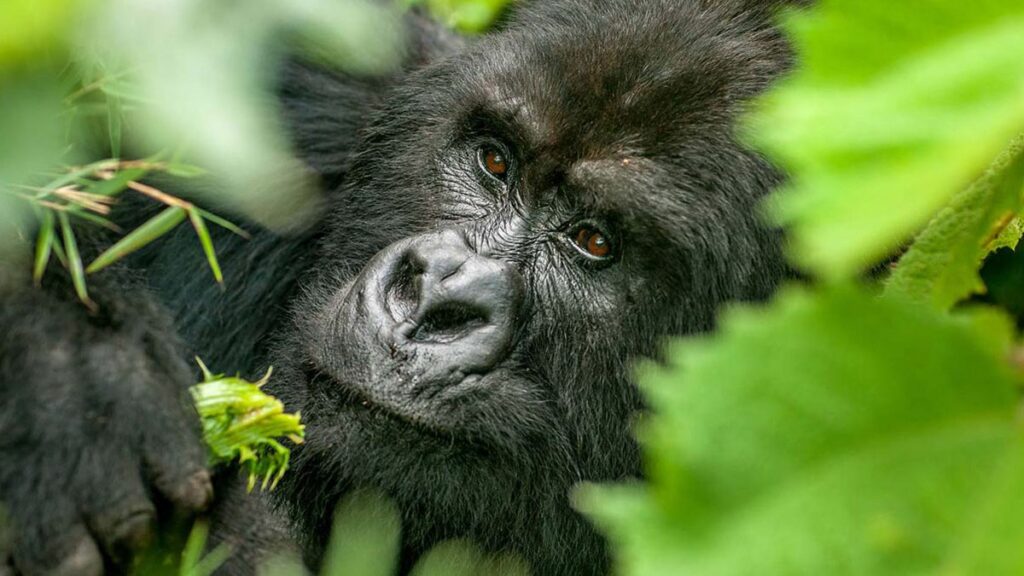
Adult females are essential members of gorilla families.
They contribute to the social stability of the group and raise young gorillas.
Females often form strong relationships with other group members.
They may spend time grooming, feeding, resting, and traveling with the family.
Maternal relationships are particularly important because infants depend heavily on their mothers during early development.
Gorilla Mothers and Infants
Mothers provide essential care to their infants.
A young gorilla remains close to its mother and depends on her for protection, nutrition, warmth, and social learning.
Visitors may see mothers carrying infants, grooming them, or allowing them to explore nearby.
These relationships provide some of the clearest examples of social bonding within gorilla families.
The Role of Juvenile Gorillas
Juveniles occupy an important stage in the gorilla social structure.
Young gorillas learn by watching and interacting with adults.
They develop physical and social skills through play, exploration, grooming, and interaction with other juveniles.
Play can include chasing, climbing, wrestling, and other physical activities.
These experiences help prepare young gorillas for adulthood.
The Role of Infants in the Group
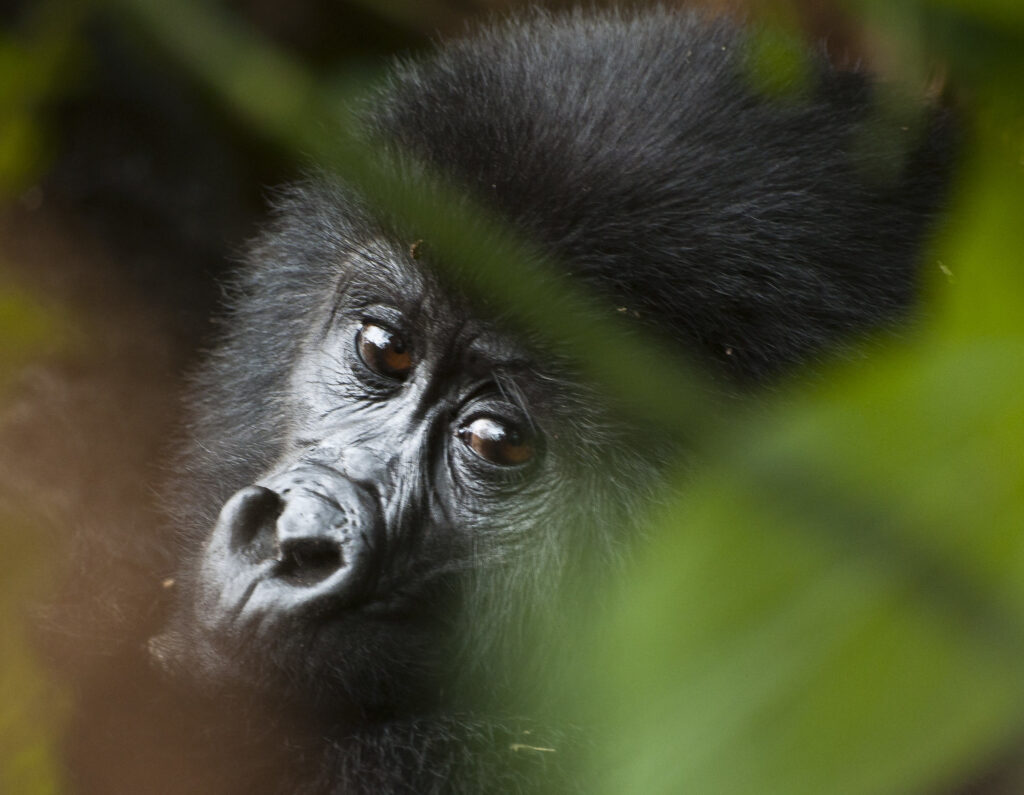
Infants are closely protected by their mothers and other members of the group.
They spend much of their early life close to their mother.
As they grow, they gradually become more independent.
Other gorillas may interact with infants through grooming, play, or gentle physical contact.
This demonstrates that social relationships extend beyond the mother-infant bond.
Grooming and Social Bonds
Grooming plays an important role in gorilla society.
Gorillas may carefully groom one another while resting.
The behavior helps maintain relationships and can strengthen social bonds.
Grooming can occur between different members of a family, including adults and younger gorillas.
Visitors who watch a relaxed group may see grooming occurring repeatedly throughout the day.
Gorilla Communication
Communication helps maintain social relationships.
Gorillas use vocalizations, facial expressions, body posture, gestures, and physical interactions.
Soft sounds may accompany feeding or social interactions.
Louder vocalizations can occur during excitement, conflict, or defensive displays.
Understanding these signals helps explain how gorillas coordinate their behavior within the group.
Gorilla Feeding Together
Members of a gorilla family often feed within the same general area.
They may spread through vegetation while remaining within contact of one another.
Feeding together provides opportunities for social interaction while allowing individuals to select their preferred foods.
The group may move when food becomes less abundant.
Gorilla Movement and Leadership
The dominant silverback often plays an important role in group movement.
He may initiate travel between feeding and resting areas.
Other members usually follow or remain close to the group.
This coordinated movement helps maintain group cohesion.
Trackers can observe these movement patterns when monitoring habituated gorilla families.
Gorilla Protection and Defense
Protection is one of the most important functions of the dominant silverback.
If the group encounters a potential threat, the silverback may move between the threat and other members.
He may also use chest beating, vocalizations, body displays, or rapid approaches to communicate strength.
These displays can help discourage threats without requiring physical confrontation.
Gorilla Social Hierarchy
Gorilla groups have social relationships that influence how individuals interact.
The dominant silverback generally occupies the highest position among adult males.
Other males may have lower social positions.
Relationships between females and males can also vary.
Social hierarchy is not simply determined by physical strength. Age, experience, reproductive relationships, and individual personalities can influence social interactions.
Can Gorillas Change Families?
Yes.
Gorilla social groups are not completely permanent.
Individuals may leave one group and join another.
This can occur at different stages of life and can influence the composition of gorilla families.
Young males may eventually leave their natal group as they mature.
Some females also transfer between groups.
These movements help shape the wider social structure of mountain gorilla populations.
What Happens to Young Male Gorillas?
Young males may eventually leave their family group.
As they mature, they can become independent or join another group.
Some males may become solitary for periods of time.
Eventually, a mature male may establish or take leadership of a group under suitable circumstances.
This process contributes to the development of new social groups.
What Happens When a Silverback Dies?
The death or disappearance of a dominant silverback can significantly affect a gorilla family.
Another adult male may take over leadership.
In some circumstances, the group may change substantially after the loss of its dominant male.
The outcome depends on the group’s composition and the relationships between its members.
This demonstrates how important adult males can be to gorilla social organization.
Gorilla Social Structure and Reproduction
Social relationships are closely connected to reproduction.
The dominant silverback may have important reproductive relationships with adult females.
However, mating behavior can be more complex than a simple single-male system.
Multiple males may be present within a group, and social relationships can influence reproductive opportunities.
This complexity helps maintain the genetic diversity of gorilla populations.
Gorilla Social Structure and Learning
Young gorillas learn many behaviors by observing older members.
They watch adults feeding, moving, grooming, communicating, and responding to environmental situations.
Play provides additional opportunities for learning.
This social learning helps young gorillas develop the skills needed to become independent adults.
Gorilla Personalities
Individual gorillas have distinct personalities.
Some may appear calm and reserved, while others can be more curious, energetic, or playful.
These differences can influence how individuals interact with visitors and other gorillas.
A gorilla family’s social structure therefore includes individual relationships rather than being a completely rigid hierarchy.
Gorilla Social Structure During Trekking
Visitors can observe many aspects of gorilla social structure during a trek.
A silverback may monitor the group while females feed nearby.
Juveniles may play while infants remain close to their mothers.
Other adults may groom each other or move between feeding areas.
These interactions provide a living demonstration of gorilla social organization.
Why Gorillas Stay Together
Living in a group provides several advantages.
Group members can cooperate in responding to threats and benefit from social relationships.
Young gorillas receive care and protection.
Individuals can also learn from one another.
Group living therefore supports survival and reproduction.
Gorilla Families and Habitat
A gorilla family’s social organization is closely connected to its forest habitat.
The group needs sufficient vegetation for feeding, suitable areas for resting, and safe locations for movement.
Habitat protection is therefore essential to maintaining healthy social groups.
Conservation programs protect the forests that support these relationships.
Gorilla Social Structure and Conservation
Understanding gorilla social structure helps researchers monitor the health and stability of mountain gorilla populations.
Researchers can track group size, births, deaths, movements, transfers, and changes in leadership.
This information helps conservationists make informed management decisions.
Tourism also contributes to conservation by generating revenue and supporting communities around gorilla habitats.
Why Visitors Should Respect Gorilla Social Groups
Visitors should never interfere with interactions between gorillas.
Do not attempt to attract a particular gorilla.
Do not make sounds to encourage a response.
Do not move closer to infants or interrupt grooming or feeding.
Allow the gorillas to continue their natural activities.
Respectful observation helps maintain the quality of the trekking experience and protects the animals.
What Makes Gorilla Families Fascinating?
The most fascinating aspect of gorilla families is the strength of their social relationships.
A trekking encounter may reveal a silverback protecting the group, a mother caring for her infant, juveniles playing together, and adults grooming one another.
These behaviors demonstrate that gorillas have complex social lives.
Seeing these relationships in their natural environment can create a deeper appreciation for mountain gorilla conservation.
Conclusion
Understanding gorilla social structure reveals how complex and cooperative mountain gorilla society can be. Gorilla families are made up of individuals with different ages, roles, relationships, and personalities.
The dominant silverback often provides leadership and protection, while adult females play important roles in reproduction, maternal care, and social relationships. Juveniles learn through play and observation, while infants remain closely connected to their mothers and other members of the group.
Gorillas maintain their social bonds through grooming, communication, feeding, movement, play, and physical interactions. Group composition can also change as individuals mature, transfer between groups, or establish new social relationships.
For visitors, understanding this structure makes gorilla trekking more than a wildlife-viewing experience. It provides an opportunity to observe a complex society and appreciate the relationships that help mountain gorillas survive.
By observing quietly, maintaining the required distance, and following the guidance of trained trackers, travelers can witness these remarkable social behaviors without disturbing the gorillas.