Gorilla Nesting Behavior: How Mountain Gorillas Build and Use Nests
Understanding gorilla nesting behavior offers travelers an interesting glimpse into the daily lives of mountain gorillas. Although gorillas spend much of their time moving through forests, feeding, resting, and interacting socially, they also build nests where they sleep and rest.
Mountain gorillas generally construct nests each day rather than repeatedly using the same sleeping site. They may build nests on the ground or, less commonly, in vegetation above the ground. The choice depends on the individual gorilla, the available vegetation, terrain, weather, and other environmental conditions.
During gorilla trekking in Uganda or Rwanda, visitors may encounter abandoned nests, fresh nesting sites, or signs showing where a gorilla family spent the previous night. These signs can help trackers locate gorillas and understand their recent movements.
Gorilla nesting is therefore more than simply finding a place to sleep. It is an important behavior connected to movement, social organization, habitat use, and survival.
What Is Gorilla Nesting Behavior?
Gorilla nesting behavior refers to the way gorillas select locations and construct structures for sleeping or resting.
A gorilla gathers vegetation such as leaves, stems, branches, and other plant material and arranges it into a comfortable resting surface.
Each individual may construct its own nest.
The resulting nest can vary in size, shape, and complexity depending on the gorilla and the location.
Nesting usually takes place toward the end of the day’s activities as the group prepares to settle down.
Why Do Gorillas Build Nests?
Gorillas build nests primarily for sleeping and resting.
A nest provides a more comfortable surface than bare ground or vegetation.
It can also help separate the gorilla from damp ground and provide some insulation from cool forest conditions.
Nest construction is therefore an important adaptation to life in the mountain forest.
The behavior also provides researchers with useful information about gorilla movements and habitat use.
Do Mountain Gorillas Sleep in Nests?
Yes.
Mountain gorillas typically construct nests for nighttime sleeping.
They may also use resting structures during the day.
The group usually settles in an area where members can build individual nests close to one another.
The location can change from one night to the next as the gorillas move through their home range.
Do Gorillas Build a New Nest Every Night?
Mountain gorillas generally build fresh nests each night.
This means that a gorilla family can leave behind numerous nesting sites as it moves through the forest.
Researchers and trackers can examine these sites to determine where the group spent the previous night.
Fresh nests can provide valuable clues when locating gorillas during a trekking expedition.
How Do Gorillas Build Their Nests?
Nest construction involves gathering and arranging vegetation.
A gorilla may pull leaves, stems, and branches toward a selected location.
The animal then arranges the material into a suitable resting surface.
The process does not require complicated tools.
Gorillas use their hands, body weight, and physical strength to manipulate vegetation into a comfortable structure.
Where Do Gorillas Build Their Nests?
Mountain gorillas commonly build nests on the ground.
Ground nests are particularly common because mountain gorillas spend much of their time on the forest floor.
However, some gorillas may construct nests in vegetation above the ground.
The choice can depend on age, individual preference, available vegetation, terrain, and other environmental factors.
Do All Gorillas Build the Same Type of Nest?
No.
Nest construction can vary between individuals.
Adult gorillas may build relatively large and sturdy nests, while younger gorillas may construct smaller or less elaborate structures.
Individual preferences can also influence the shape and location of a nest.
Researchers can sometimes distinguish patterns in nesting behavior among different gorilla groups.
Do Silverbacks Build Nests?
Yes.
Silverbacks build and use nests like other members of the group.
Because of their large body size, a silverback may create a relatively substantial ground nest.
The dominant silverback generally sleeps close to the group, although individual nest locations can vary.
His position within the group can also provide protection and allow him to monitor the surrounding environment.
Do Female Gorillas Build Nests?
Yes.
Adult females construct their own nests.
Females may build nests close to other members of the group.
Mothers with infants may also arrange nesting areas in ways that accommodate their young.
Nesting therefore forms part of the daily routine for both male and female gorillas.
How Do Gorilla Infants Sleep?
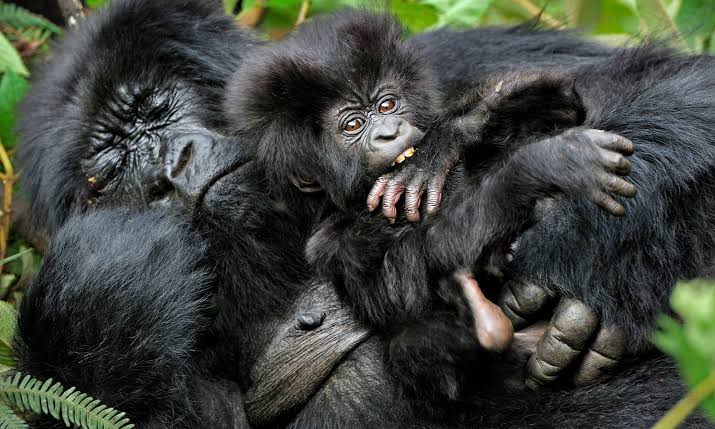
Young infants remain closely associated with their mothers.
Very young infants may sleep with or immediately beside their mothers rather than constructing completely independent nests.
As they grow, juveniles gradually develop greater independence and begin constructing their own nests.
This progression is part of their development.
Do Gorilla Families Sleep Together?
Gorilla families generally sleep in the same general area, but individual members usually have separate nests.
The nests can be positioned relatively close to one another.
This arrangement allows the group to maintain social cohesion while giving each individual a sleeping space.
The silverback may settle in a location that allows him to remain aware of the group and surroundings.
When Do Gorillas Build Their Nests?
Nest construction generally takes place in the evening as the gorillas prepare for nighttime rest.
The group may spend the day feeding and moving through the forest before selecting an area for the night.
Once the location is chosen, individual gorillas begin preparing their nests.
The construction process can be relatively quick compared with the amount of time the animals spend resting.
Do Gorillas Reuse Their Nests?
Mountain gorillas generally build fresh nests rather than repeatedly sleeping in the same nest.
As the group moves through its habitat, new nests are constructed in different locations.
This behavior means that old nests gradually deteriorate as vegetation dries and decomposes.
Trackers can therefore distinguish relatively fresh nesting sites from older ones.
How Do Trackers Use Gorilla Nests?
Gorilla nests are valuable clues for trackers.
When trackers locate a nesting site, they can examine the condition of the vegetation and other signs to estimate whether gorillas recently occupied the area.
Fresh nests can indicate the group’s approximate location.
Trackers combine this information with footprints, feeding signs, trails, and other evidence when following gorilla families.
This work helps trekking groups locate habituated gorillas more efficiently.
What Does a Fresh Gorilla Nest Look Like?
A fresh nest may contain recently broken or arranged vegetation.
Leaves and branches can appear relatively green and intact.
The nest may also retain the shape created by the gorilla’s body.
Older nests become flatter, drier, and less recognizable as vegetation decomposes.
Experienced trackers can identify these differences while searching for gorilla groups.
Gorilla Nests and Trekking
Visitors may encounter gorilla nesting sites during a trek.
Seeing a nest provides evidence of the gorillas’ recent presence even when the animals themselves are not nearby.
Guides and trackers may explain how the nest was constructed and how it helps them understand the group’s movements.
These discoveries can make the trek more educational.
Can Tourists Sleep Near Gorilla Nests?
Visitors should not camp near gorilla nesting sites unless specifically authorized as part of an official conservation or research activity.
Gorilla trekking takes place under controlled conditions.
Travelers should never approach an active sleeping site independently.
Following park regulations protects both gorillas and visitors.
Do Gorillas Build Nests in Trees?
Some gorillas can build nests above the ground, although mountain gorillas commonly construct ground nests.
Tree nesting may depend on the individual and the available vegetation.
Younger gorillas may be more likely to experiment with different nesting locations.
Ground nesting remains an important part of mountain gorilla behavior.
Gorilla Nesting and Weather
Weather can influence nest location and construction.
Gorillas live in cool, wet mountain forests where rain can occur throughout the year.
Vegetation provides materials that can be arranged into a dry and comfortable resting surface.
A suitable location can also help reduce exposure to wet or cold ground.
Gorilla Nesting and Habitat
The availability of vegetation is important for nest construction.
Healthy forests provide the leaves, branches, and other plant material gorillas need to build nests.
Habitat protection therefore supports not only gorilla food resources but also essential behaviors such as nesting.
This is one reason forest conservation is so important to mountain gorilla survival.
Gorilla Nesting and Social Behavior
Nesting is connected to the social structure of gorilla groups.
Members settle close enough to maintain group cohesion while still having individual resting spaces.
The arrangement can also reflect relationships between group members.
Mothers and infants often remain particularly close.
The silverback’s position can also provide an important protective role.
Gorilla Nesting and Territory
Gorillas move through relatively large areas in search of food and suitable resting locations.
Because they build new nests as they move, nesting sites can provide researchers with information about habitat use.
Repeated observations of nesting locations can help scientists understand how gorillas use different parts of the forest.
This information contributes to conservation planning.
Why Gorilla Nesting Matters to Conservation
Studying gorilla nesting behavior helps researchers understand mountain gorilla ecology.
Nest locations can provide information about population distribution, movement patterns, habitat preferences, and group dynamics.
Researchers can use nest surveys as one method of monitoring gorilla populations.
Protecting nesting habitat is therefore an important part of wider gorilla conservation efforts.
Gorilla Nests Compared With Chimpanzee Nests
Gorillas and chimpanzees both construct nests, but their nesting patterns can differ.
Chimpanzees frequently build nests in trees, while mountain gorillas commonly construct nests on the ground.
These differences reflect variations in body size, habitat use, behavior, and evolutionary adaptations.
Comparing the nesting behavior of great apes provides useful insights into how different species interact with their environments.
Can Nesting Behavior Help Identify Gorilla Groups?
Nesting evidence can contribute to identifying and tracking groups, but a nest alone does not necessarily identify a particular gorilla family.
Trackers use several clues together.
The location, freshness, size, number of nests, feeding signs, trails, and other evidence can help establish which group may have occupied an area.
Experienced trackers are highly skilled at interpreting these signs.
Gorilla Nesting as a Sign of Natural Behavior
Nesting is one of the many behaviors that demonstrate that mountain gorillas are wild animals.
Even habituated gorillas continue to build nests, feed, groom, communicate, move, and socialize according to their natural routines.
Visitors are therefore observing genuine wildlife behavior rather than a staged performance.
This makes gorilla trekking a valuable educational and conservation experience.
What Visitors Should Do Around Gorilla Nests
If you encounter a gorilla nest during trekking, remain with your group and listen to your guide.
Do not touch or disturb the nest.
Do not remove leaves or other material.
Do not attempt to sit in the nest or recreate the gorilla’s behavior.
The nest should be treated as part of the animal’s natural habitat.
Conclusion
Understanding gorilla nesting behavior provides an important insight into the daily lives of mountain gorillas. These remarkable animals generally construct fresh nests for nighttime sleeping and resting, using leaves, stems, branches, and other vegetation available in the forest.
Most mountain gorilla nests are built on the ground, although some individuals may construct nests above the ground. Members of a family usually sleep in separate nests located within the same general area, while mothers and infants maintain particularly close contact.
For trackers, nests are valuable clues that reveal where a gorilla group has recently been. For researchers, nesting sites provide information about gorilla movements, habitat use, and social organization.
Travelers who encounter a nest during gorilla trekking should observe it without disturbing it. Protecting the forest protects the materials gorillas need for food, shelter, and nesting.
Gorilla nesting may appear like a simple daily activity, but it is an important part of mountain gorilla ecology and one of the many behaviors that makes these animals so fascinating.