Gorilla DNA Similarity to Humans: How Closely Related Are Gorillas and People?
The gorilla DNA similarity humans share is one of the most fascinating aspects of great ape biology. Mountain gorillas may look very different from people at first glance, yet humans and gorillas share a large proportion of their genetic material because both species descended from a common ancestor millions of years ago.
This genetic relationship helps explain why gorillas display behaviors that sometimes appear surprisingly familiar. They form strong family relationships, care for their young, communicate socially, learn from experience, and demonstrate complex emotional and cognitive behaviors.
However, saying that humans and gorillas are “almost the same” genetically would be misleading. The exact percentage of similarity depends on how scientists compare genomes and which parts of the DNA they examine. Genetic similarity is therefore more complicated than a single percentage.
For safari visitors, understanding this relationship provides a deeper appreciation of mountain gorillas. A gorilla trekking encounter is not simply an opportunity to observe an endangered animal. It is also a chance to see one of our closest living evolutionary relatives in its natural environment.
How Similar Is Gorilla DNA to Human DNA?
Humans and gorillas have highly similar genomes.
Depending on the comparison method, researchers have reported human-gorilla DNA sequence similarity at roughly 98% to 99% for comparable regions.
The exact figure varies because scientists can compare different types of genetic sequences and use different methods to calculate similarity.
This is why statements about “98%” or “99%” similarity should be interpreted carefully.
Genetic similarity does not mean that humans and gorillas are nearly identical organisms. Small genetic differences can have significant effects on anatomy, physiology, development, and behavior.
Why Are Humans and Gorillas Genetically Similar?
The main reason is shared evolutionary ancestry.
Humans and gorillas descended from an ancient common ancestor.
Over millions of years, different populations evolved along separate evolutionary paths.
Mutations and other genetic changes accumulated independently within these populations.
Despite this divergence, much of the original genetic information remained similar because both species inherited it from their common ancestor.
When Did Humans and Gorillas Share a Common Ancestor?
Scientists estimate that the evolutionary line leading to humans and the lineage leading to gorillas diverged millions of years ago.
The exact date remains subject to scientific research and depends on the evidence and methods used.
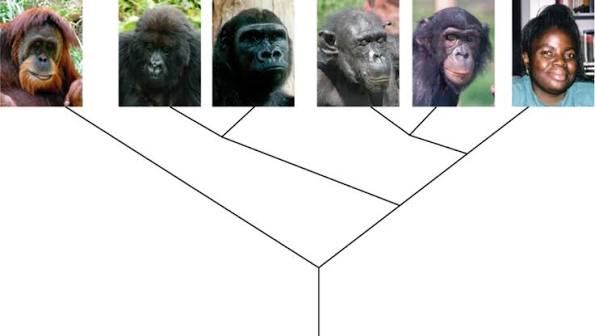
After the gorilla lineage separated from the lineage leading toward humans and chimpanzees, further evolutionary changes occurred.
Eventually, the human and chimpanzee lineages separated as well.
This evolutionary history explains why humans, chimpanzees, and gorillas share many genetic characteristics.
Are Gorillas Our Closest Relatives?
Gorillas are among our closest living relatives, but chimpanzees and bonobos are generally considered more closely related to humans than gorillas are.
Humans, chimpanzees, and bonobos share a more recent common ancestor.
Gorillas branched away from the evolutionary lineage leading to humans, chimpanzees, and bonobos earlier.
Even so, the genetic relationship between humans and gorillas remains remarkably close.
Gorilla DNA and Human Chromosomes
Another interesting aspect of gorilla DNA similarity to humans is chromosome organization.
Humans have 23 pairs of chromosomes, giving us 46 chromosomes in total.
Gorillas have 24 pairs, giving them 48 chromosomes.
The difference partly results from a major evolutionary event in the human lineage.
Human chromosome 2 formed through the fusion of two ancestral ape chromosomes.
Evidence for this fusion remains visible in the structure of human chromosome 2.
Human Chromosome 2 and Great Apes
Human chromosome 2 provides an important example of our evolutionary relationship with other great apes.
In other great apes, including gorillas, the corresponding ancestral chromosomes remain separate.
In humans, they became joined together during evolution.
Scientists can identify molecular signatures within human chromosome 2 that are consistent with an ancient chromosome fusion.
This provides strong evidence of our shared evolutionary history.
Do Gorillas Have the Same Genes as Humans?
Humans and gorillas share many genes.
These genes are involved in fundamental biological processes such as development, metabolism, reproduction, immune function, cell growth, and nervous-system activity.
However, sharing genes does not mean that those genes always function in exactly the same way.
Differences in DNA sequence, gene regulation, timing, and interactions between genes can produce major differences between species.
Why Can Small Genetic Differences Matter?
DNA contains instructions that influence how organisms develop and function.
A relatively small genetic difference can affect the structure or activity of a protein.
Changes in when and where a gene is expressed can also produce major differences.
Therefore, a high percentage of genetic similarity does not mean that the remaining differences are unimportant.
Those differences contribute to the distinct characteristics of humans and gorillas.
Gorilla DNA and Physical Differences
Despite their genetic similarities, humans and gorillas have substantial physical differences.
Gorillas have powerful muscles, long arms, broad shoulders, and adaptations for life in forest environments.
Humans have different skeletal proportions, locomotion, body structures, and physiological characteristics.
These differences developed through evolutionary adaptation.
Genetic similarities provide the foundation for many shared biological processes, while genetic differences contribute to species-specific traits.
Gorilla DNA and Brain Development
Humans and gorillas share many genes involved in nervous-system development.
However, differences in gene regulation and brain development contribute to the major differences between the two species.
Human brains have particular structural and developmental characteristics associated with our distinctive cognitive abilities.
Gorillas also have sophisticated cognitive abilities, but their brains and behavior evolved under different ecological and social pressures.
Gorilla DNA and Intelligence
The genetic relationship between humans and gorillas helps explain why both species display sophisticated social and cognitive behavior.
Gorillas can learn, remember individuals, communicate, solve practical problems, and maintain complex social relationships.
However, intelligence should not be understood as a single trait that can be directly calculated from DNA similarity.
Behavior results from interactions between genes, development, environment, learning, and social experience.
Gorilla DNA and Emotions
Gorillas demonstrate behaviors associated with emotional states.
They can show excitement, distress, curiosity, fear, relaxation, and social attachment.
Their strong mother-infant relationships are particularly noticeable.
These similarities do not mean that gorillas experience emotions exactly as humans do, but they demonstrate that important aspects of social and emotional biology are shared among great apes.
Gorilla DNA and Family Relationships
Gorilla families depend on strong social relationships.
Mothers care for infants, juveniles play together, adults groom one another, and silverbacks protect and lead their groups.
Humans also place considerable importance on social relationships and family bonds.
Some of these similarities reflect shared evolutionary history.
Gorilla DNA and Disease Research
The genetic similarities between humans and gorillas have scientific importance.
Because the two species share many biological characteristics, gorilla research can provide insights into genetics, disease, immunity, and other areas of biology.
At the same time, researchers must carefully consider species-specific differences.
Gorillas can also be vulnerable to pathogens carried by humans, which is one reason disease prevention is important during gorilla tourism.
Why Gorilla Trekking Rules Include Health Precautions
The genetic and biological similarities between humans and gorillas have practical conservation implications.
Some infectious diseases can potentially move between humans and gorillas.
Visitors who are unwell may therefore be subject to restrictions when visiting gorilla groups.
Travelers should follow current instructions from park authorities and trekking guides.
Protecting gorillas from human diseases is an important part of responsible tourism.
Gorilla DNA and Conservation
Understanding gorilla genetics helps scientists monitor populations and study their evolutionary history.
Genetic research can provide information about population structure, genetic diversity, relationships between groups, and conservation priorities.
This information supports efforts to maintain healthy gorilla populations.
Genetic diversity is particularly important for species with restricted populations because reduced diversity can increase vulnerability to environmental and disease pressures.
Are Mountain Gorillas Genetically Different From Lowland Gorillas?
Yes.
Mountain gorillas and lowland gorillas belong to different populations and subspecies within the gorilla lineage.
They have accumulated genetic differences over evolutionary time.
Mountain gorillas are classified as Gorilla beringei beringei, while Grauer’s gorillas are Gorilla beringei graueri.
Western lowland gorillas belong to Gorilla gorilla gorilla.
These genetic distinctions help scientists understand gorilla evolution and population history.
Gorilla DNA Similarity and Evolution
The genetic relationship between humans and gorillas provides evidence of evolution.
Scientists can compare DNA sequences between species and identify similarities and differences.
The more closely related two species are, the more genetic similarities they generally share due to their common ancestry.
These comparisons complement evidence from fossils, anatomy, embryology, and other fields.
Why Gorillas Look So Different From Humans
Visitors sometimes wonder how humans can be genetically similar to gorillas when the animals look so different.
The answer lies partly in how genes are regulated.
Two species can share many genes while using those genes differently.
Differences in gene activity during development can influence body shape, brain development, metabolism, reproduction, and other characteristics.
Evolution therefore involves changes not only in genes themselves but also in how genes are used.
What Gorilla DNA Tells Safari Visitors
For safari visitors, gorilla genetics provides an interesting perspective on the trekking experience.
When you watch a mountain gorilla feeding, grooming, caring for an infant, or interacting with a silverback, you are observing a species that shares a substantial portion of its evolutionary history with humans.
This does not make gorillas human.
Instead, it highlights the remarkable diversity of life that evolved from shared ancestors.
Why Genetic Similarity Does Not Mean Gorillas Are Human
It is important to maintain a clear distinction between genetic similarity and species identity.
Mountain gorillas are wild animals with their own ecological requirements, communication systems, social structures, and behaviors.
They should never be treated as human substitutes or pets.
Their similarities to humans should encourage respect and conservation rather than inappropriate interaction.
Gorilla DNA and Responsible Wildlife Tourism
Understanding our genetic relationship with gorillas can strengthen support for responsible tourism.
Visitors who recognize the biological significance of these animals may become more interested in protecting their habitats and respecting trekking regulations.
Responsible tourism includes maintaining distance, avoiding physical contact, following health guidelines, and supporting conservation programs.
These practices help ensure that future generations can continue to study and appreciate mountain gorillas.
Frequently Asked Questions About Gorilla DNA
Are humans genetically related to gorillas?
Yes. Humans and gorillas share a common evolutionary ancestor and therefore share many genetic characteristics.
What percentage of DNA do humans share with gorillas?
Comparisons commonly report around 98% to 99% sequence similarity for comparable regions, but the exact percentage depends on the method used.
Do humans and gorillas have the same number of chromosomes?
No. Humans have 46 chromosomes, while gorillas have 48.
Are chimpanzees closer to humans than gorillas?
Yes. Chimpanzees and bonobos are generally considered our closest living relatives, with gorillas branching earlier from the shared evolutionary lineage.
Can gorillas get human diseases?
Yes. Some pathogens can potentially pass between humans and gorillas, which is why health precautions are important during gorilla trekking.
Conclusion
The gorilla DNA similarity humans share provides remarkable evidence of our common evolutionary history. Humans and gorillas inherited many biological characteristics from ancient ancestors, which helps explain similarities in genetics, social behavior, development, and physiology.
At the same time, humans and gorillas remain distinct species with important differences. Humans have 46 chromosomes, while gorillas have 48, and differences in DNA sequences and gene regulation contribute to the unique characteristics of each species.
For travelers preparing for gorilla trekking, this genetic connection adds another dimension to the experience. Watching a gorilla family interact in the forest means observing one of our closest living evolutionary relatives.
The lesson is not that gorillas are “almost human.” Rather, their genetic relationship with us demonstrates how closely connected the living world can be.
Protecting mountain gorillas and their forest habitats, therefore, preserves not only an endangered species but also an extraordinary part of our shared evolutionary heritage.