
How Do Gorillas Communicate? Understanding Gorilla Language and Signals
How do gorillas communicate? This is one of the most fascinating questions for visitors preparing for a mountain gorilla trekking experience. Gorillas do not use human language, but they have a complex communication system that combines vocalizations, body movements, facial expressions, gestures, touch, and other social behaviors.
Mountain gorillas live in close-knit family groups where communication helps individuals maintain relationships, coordinate movement, express emotions, respond to threats, and care for the young. A silverback may use a loud vocalization or body display when protecting the group, while a mother can use touch and gentle sounds when interacting with her infant.
During gorilla trekking, visitors may notice some of these signals without immediately understanding their meaning. Learning about gorilla communication can make the experience more rewarding because trekkers can begin to interpret what the animals are doing rather than simply watching them from a distance.
How Do Gorillas Communicate?
Gorillas communicate through several different channels rather than relying on one form of signaling.
Their communication can include vocal sounds, facial expressions, body posture, gestures, physical contact, and movement.
Different signals can have different meanings depending on the situation.
A sound made during relaxed feeding may communicate something very different from a loud vocalization made during a confrontation.
Gorillas also combine different signals. A silverback may use a vocalization together with an upright posture and chest beating to communicate a strong message.
This makes gorilla communication a flexible and highly social system.
Gorilla Vocalisations
Vocalizations are among the most recognizable forms of gorilla communication.
Gorillas produce a variety of sounds during everyday activities.
Some sounds occur during feeding, resting, grooming, or moving through the forest.
Others can signal excitement, distress, uncertainty, aggression, or a response to another gorilla.
Researchers have documented numerous gorilla vocalizations, although scientists do not interpret every sound as having a simple one-to-one translation into a human word.
The meaning of a vocalization often depends on its context.
What Sounds Do Gorillas Make?
Gorillas can produce soft and loud sounds.
During peaceful activities, individuals may make low-frequency or gentle vocalizations while feeding or interacting with family members.
They can also produce louder calls when excited or responding to a disturbance.
Infants have their own range of sounds for communicating with their mothers.
Young gorillas may vocalize during play or when seeking attention.
These sounds help maintain contact within the group.
Gorilla Grunts
Grunts are among the common sounds associated with gorilla communication.
Gorillas may produce grunting sounds during relaxed social situations or while feeding.
A series of soft grunts can help maintain contact between individuals.
The precise meaning of a grunt depends on the circumstances in which it occurs.
Trekkers should therefore avoid assuming that every gorilla sound has the same meaning.
Gorilla Hoots
Gorillas can also produce louder vocalizations sometimes described as hoots.
These sounds can occur during social interactions or moments of excitement.
The intensity and context of a call can provide information about the animal’s state.
Researchers study these vocal patterns to better understand gorilla communication.
Gorilla Screams and Distress Calls
Gorillas can produce loud calls when distressed, frightened, or involved in intense social situations.
Young gorillas may vocalize loudly when separated from their mothers or when experiencing discomfort.
Adults can also produce strong vocalizations during conflict or other stressful situations.
When trekkers hear an unusual loud call, they should remain calm and follow the guide’s instructions.
Chest Beating as Communication
Chest beating is one of the most famous forms of gorilla communication.
A gorilla may strike its chest repeatedly with its hands to create a loud sound.
The behavior can occur during excitement, social interactions, displays of strength, or responses to potential threats.
Silverbacks are particularly well known for chest-beating.
However, chest beating does not automatically mean that a gorilla intends to attack.
Its meaning depends heavily on the surrounding situation.
Why Do Gorillas Beat Their Chests?
Chest beating can communicate information about the gorilla’s size, strength, emotional state, and intentions.
It can also help attract attention or discourage a potential threat.
Researchers have found that chest beats can provide information about an individual’s body size.
This makes the behavior an interesting example of communication that combines visual and acoustic signals.
Gorilla Body Language
Body language is another important part of how gorillas communicate.
Gorillas can change their posture depending on their emotional state and social situation.
A relaxed gorilla may sit or lie comfortably while feeding.
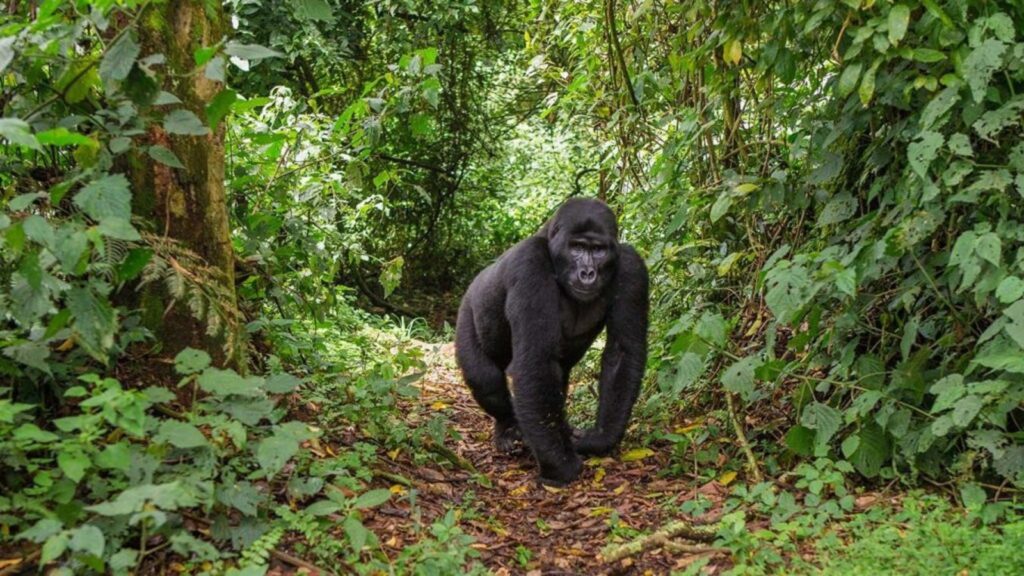
A silverback responding to a potential threat may stand upright, move toward the source of disturbance, or display his body.
Posture can therefore communicate information even when the gorilla makes little or no sound.
Gorilla Facial Expressions
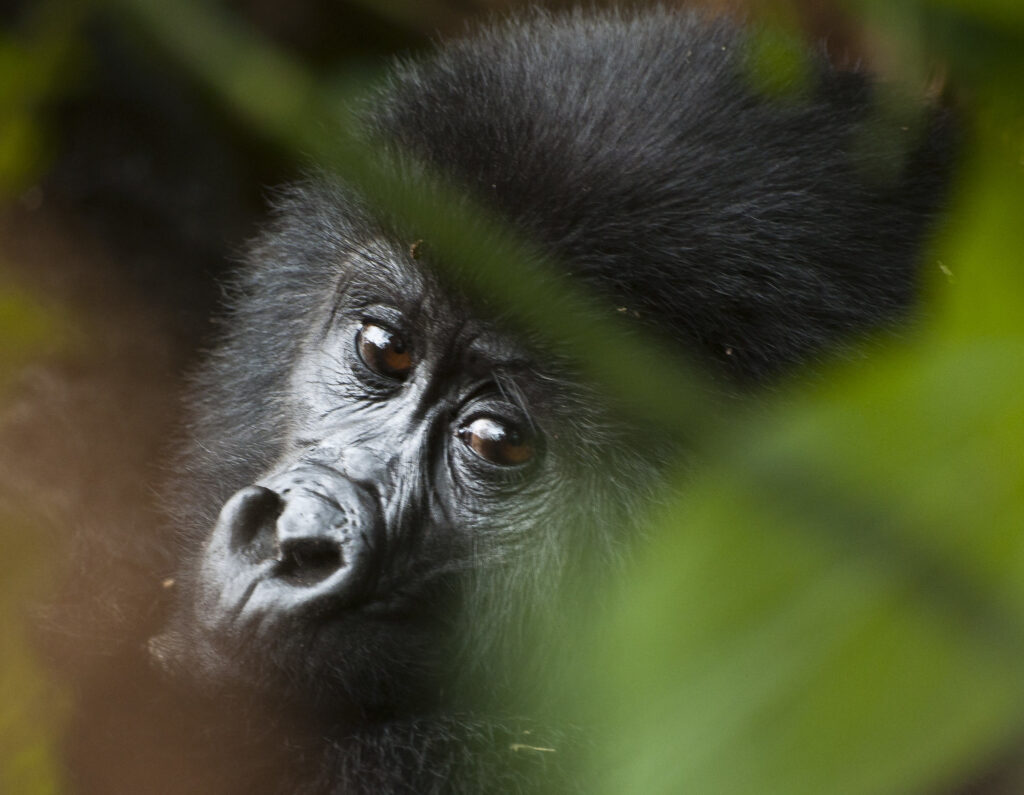
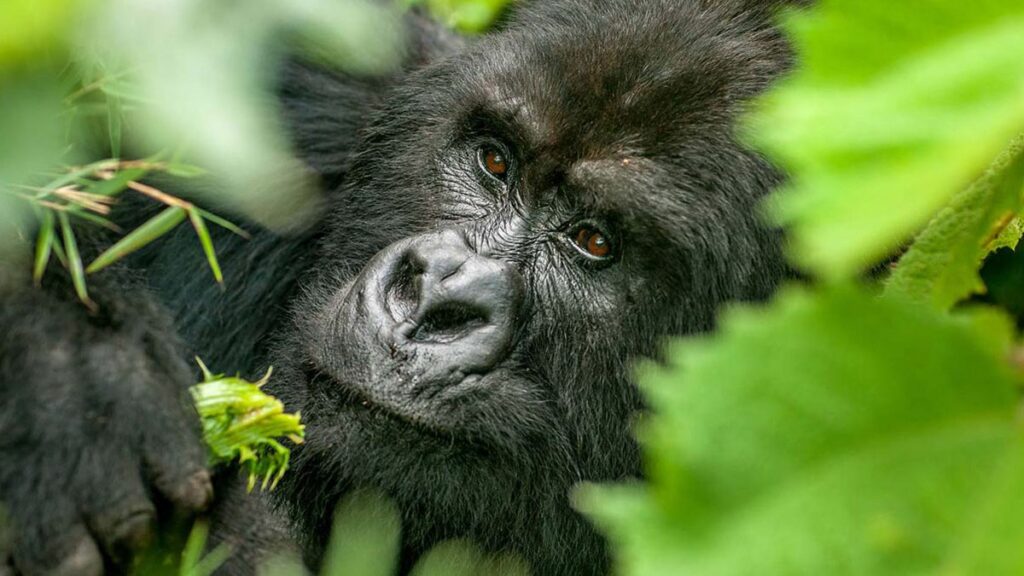
Gorillas use facial expressions during social interactions.
Changes around the eyes, mouth, and face can accompany different emotional states.
A relaxed expression can occur during peaceful social activities.
Tension may be visible during conflict or uncertainty.
Facial expressions can work together with vocalizations and body posture to create a more complete signal.
Gorilla Gestures
Gorillas also communicate through gestures and movements.
An individual may move toward another gorilla, retreat, reach out, touch another animal, or change its position.
These actions can influence how other members respond.
Young gorillas are particularly active in using movement during play.
Through repeated interactions, they learn how different gestures affect their family members.
Communication Through Touch
Physical contact is extremely important in gorilla society.
Mothers maintain contact with infants, especially during the early stages of development.
Gorillas also groom one another and may rest in close physical contact.
Touch can communicate reassurance, affection, social connection, and acceptance.
For young gorillas, physical contact also provides security.
Grooming as Communication
Grooming is more than a way of keeping the body clean.
It also helps strengthen relationships between gorillas.
Two individuals may spend time grooming one another while resting.
These interactions can reinforce social bonds and provide opportunities for peaceful contact.
Grooming is therefore an important part of gorilla social communication.
Mother and Baby Gorilla Communication
Mother-infant communication is especially important.
A mother and her infant remain closely connected through physical contact, vocalizations, facial expressions, and movement.
The infant may produce sounds to attract its mother’s attention.
The mother responds through touch, movement, or vocalization.
As the infant grows, it becomes increasingly independent while continuing to maintain communication with its mother.
How Baby Gorillas Communicate
Baby gorillas communicate through sounds, facial expressions, gestures, touch, and physical movement.
They may vocalize when hungry, uncomfortable, frightened, or seeking their mother’s attention.
During play, young gorillas use movements and sounds to interact with other juveniles.
These early interactions help them learn the social communication system of their group.
Gorilla Communication During Play
Play is an important learning opportunity for young gorillas.
Juveniles may chase one another, wrestle, climb, roll, or interact with vegetation.
Their movements and vocalisations help establish whether another gorilla wants to continue playing.
Play therefore teaches young gorillas how to read social signals and respond appropriately.
Communication Between Silverbacks
Adult males can communicate through vocalizations, posture, movement, facial expressions, and displays.
A dominant silverback may use strong signals to establish his position within the group.
Interactions between males can become tense when social relationships change.
Displays can sometimes resolve conflicts without physical fighting.
Gorilla Communication During Conflict
Conflict can produce some of the most dramatic communication behaviors.
A gorilla may vocalize loudly, display its body, beat its chest, or move rapidly.
These behaviors can communicate aggression, dominance, fear, or a warning.
Many conflicts are resolved through displays rather than serious physical confrontation.
The ability to communicate strength can therefore help prevent unnecessary fighting.
Gorilla Communication and Group Movement
Communication also helps gorillas coordinate movement.
A silverback may initiate movement, while other group members respond by following or remaining close.
Vocalizations and body signals can help maintain contact when vegetation makes visual communication difficult.
This is particularly important when a family moves through dense forest.
Do Gorillas Have a Language?
Gorillas have a sophisticated communication system, but scientists generally do not describe wild gorilla communication as a human-like language.
Human language has complex grammar, symbolic systems, and unlimited combinations of abstract meanings.
Gorillas communicate using vocalizations, gestures, facial expressions, posture, and social behavior.
Their system is complex, but it is different from human language.
Can Gorillas Understand Humans?
Habituated gorillas can become familiar with the presence and routines of researchers and trackers.
Some gorillas may respond to human movements or voices.
Research involving gorillas under human care has also demonstrated impressive learning and communication abilities.
However, wild mountain gorillas should never be treated as though they understand human speech in the same way people do.
Can Humans Communicate With Gorillas?
Visitors should not attempt to communicate directly with gorillas.
Do not imitate their vocalizations.
Do not beat your chest.
Do not make loud noises to attract attention.
Do not use gestures to encourage a gorilla to approach.
Instead, visitors should remain quiet and allow trained guides to manage the encounter.
How Do Gorillas Communicate With Tourists?
Habituated mountain gorillas may tolerate the presence of visitors, but this does not mean they communicate with tourists in a deliberate human-directed conversation.
A gorilla may look toward visitors, move past them, vocalize, or display other natural behaviors.
These actions should be interpreted cautiously.
The most important rule is to allow the gorilla to continue its natural behavior without interference.
Can Gorillas Recognize Individual Humans?
Yes, habituated gorillas can become familiar with people who regularly work around them.
Researchers and trackers may be recognized through repeated exposure.
This ability reflects memory and learning.
However, tourists should not assume that a gorilla will recognize them or remember them after a single encounter.
Gorilla Communication and Intelligence
Communication is closely connected to gorilla intelligence.
Gorillas need to recognize social signals, remember individuals, respond appropriately to different situations, and learn behaviors from other group members.
Young gorillas gradually develop these abilities through observation and interaction.
Their communication system therefore provides another example of their sophisticated social intelligence.
How Visitors Should Behave When Gorillas Communicate
When gorillas vocalize, gesture, beat their chests, or display other behaviors, visitors should remain calm.
Do not imitate the animal.
Do not move closer.
Do not shout.
Listen to the guide and follow instructions.
The best way to appreciate gorilla communication is to observe without interfering.
Why Understanding Gorilla Communication Matters
Learning how gorillas communicate helps visitors understand what they are seeing during a trek.
A chest beat may be a display rather than an immediate threat.
A soft vocalization may occur during feeding.
Grooming may strengthen a social relationship.
A juvenile’s movements may be part of a playful interaction.
Recognizing these behaviors makes the encounter more informative and memorable.
Gorilla Communication and Conservation
Understanding communication helps researchers monitor gorilla health and social relationships.
Changes in vocalizations, behavior, group interactions, or responses to disturbances can provide useful information about the condition of a group.
Long-term behavioral research therefore supports conservation management.
Protecting gorillas requires understanding not only their population numbers but also their social and behavioral needs.
Conclusion
So, how do gorillas communicate? Mountain gorillas use a diverse combination of vocalizations, chest beating, body language, facial expressions, gestures, touch, grooming, and movement.
Their communication helps them maintain family relationships, coordinate movement, care for infants, resolve conflicts, establish social positions, and respond to potential threats. Young gorillas learn these signals gradually through observation, play, and interaction with older members of their group.
For safari visitors, understanding these signals can transform a gorilla trekking experience. Instead of simply watching animals in the forest, trekkers can observe a sophisticated social system unfolding around them.
However, visitors should never attempt to imitate gorilla sounds, beat their chests, touch the animals, or deliberately attract their attention. The safest and most respectful approach is quiet observation under the guidance of experienced trackers.
By giving gorillas space to communicate naturally, visitors can enjoy one of Africa’s most remarkable wildlife experiences while helping protect the behavior and well-being of these endangered great apes.