Semuliki National Park Uganda: Complete Guide to Uganda’s Tropical Rainforest Wilderness
Semuliki National Park, Uganda, is one of the country’s most unique protected areas, offering visitors an extraordinary combination of tropical rainforest, abundant birdlife, diverse wildlife, geothermal hot springs, and rich cultural heritage. Located in western Uganda within the Albertine Rift Valley, the park covers approximately 220 square kilometers and forms part of the vast Ituri Forest ecosystem that extends into the Democratic Republic of Congo. This ancient rainforest is one of Africa’s oldest surviving forests and is renowned for its exceptional biodiversity.
Unlike Uganda’s famous savannah parks, Semuliki National Park provides an immersive rainforest experience where visitors can explore dense forests, winding rivers, swamps, and scenic trails while discovering rare bird species, primates, butterflies, and unique plant life. The park is also home to the spectacular Sempaya Hot Springs, one of Uganda’s most fascinating natural attractions.
Whether you are interested in birdwatching, nature walks, photography, or exploring one of Africa’s oldest tropical forests, Semuliki National Park offers an unforgettable safari experience.
History of Semuliki National Park
The forests of Semuliki have existed for thousands of years.
The park protects part of the ancient Ituri Forest, which remained relatively stable throughout major climatic changes that affected much of Africa. This long ecological history has allowed numerous plant and animal species to evolve and survive within the forest, making Semuliki one of the continent’s biodiversity hotspots.
Semuliki National Park was officially established in 1993 to conserve this remarkable ecosystem while promoting sustainable tourism and scientific research.
Location and How to Get There
Semuliki National Park is located in Bundibugyo District in western Uganda.
The park lies approximately 360 kilometers from Kampala, with the drive taking about seven to eight hours depending on road conditions. Most visitors travel through Fort Portal before continuing west toward the Semuliki Valley.
The journey itself is highly scenic, passing crater lakes, tea plantations, rolling hills, and magnificent views of the Rwenzori Mountains.
Landscape and Geography
The landscapes of Semuliki National Park, Uganda, differ significantly from most other Ugandan national parks.
Situated on the floor of the Albertine Rift Valley at elevations ranging from approximately 670 to 760 meters above sea level, the park features dense lowland tropical rainforest, wetlands, rivers, palm forests, and swamp vegetation. The Semuliki River flows along the international border with the Democratic Republic of Congo, adding further ecological diversity to the region.
The surrounding escarpments and mountain ranges create spectacular scenery throughout the park.
Wildlife in Semuliki National Park
Semuliki supports an impressive variety of mammals despite its relatively small size.
Visitors may encounter forest elephants, buffaloes, bush pigs, pygmy antelopes, water chevrotains, giant forest hogs, civets, genets, and several species of squirrels. Although many forest mammals remain elusive due to dense vegetation, the park provides important habitat for species rarely found elsewhere in Uganda.
The rainforest environment creates a unique wildlife experience quite different from traditional savannah safaris.
Primates
Primates are among the park’s greatest attractions.
Semuliki National Park supports several monkey species, including black-and-white colobus monkeys, red-tailed monkeys, vervet monkeys, olive baboons, blue monkeys, and grey-cheeked mangabeys. Chimpanzees also inhabit the forest, although they are more commonly heard than seen because they range widely through dense vegetation.
Observing primates in their natural rainforest habitat is one of the highlights of visiting the park.
Birdwatching
Semuliki National Park, Uganda, is internationally recognized as one of Africa’s premier birdwatching destinations.
More than 440 bird species have been recorded, including many Central African forest birds found nowhere else in East Africa. Birdwatchers search for species such as the Nkulengu Rail, Yellow-throated Cuckoo, White-crested Hornbill, Long-tailed Hawk, Black Dwarf Hornbill, Congo Serpent Eagle, Piping Hornbill, Lyre-tailed Honeyguide, White-bellied Kingfisher, and numerous greenbuls and flycatchers.
Semuliki is an essential destination for serious bird enthusiasts visiting Uganda.
Sempaya Hot Springs
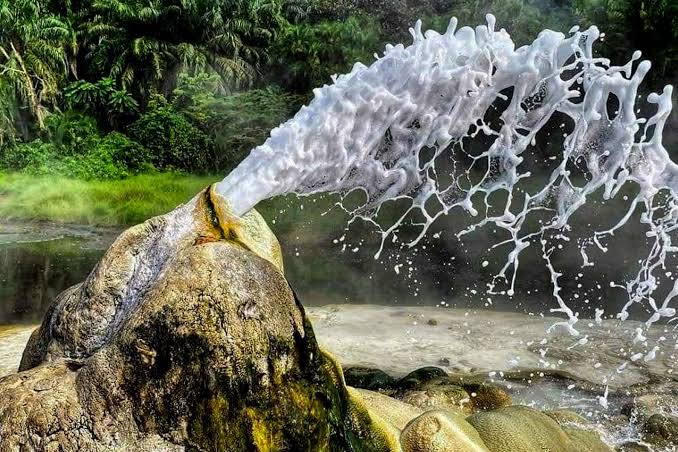
The Sempaya Hot Springs are the park’s most famous attraction.
These geothermal springs consist of the Male Hot Spring and the Female Hot Spring, both associated with fascinating local legends and cultural beliefs. The Female Hot Spring shoots boiling water several meters into the air, while temperatures exceed 100°C, making it possible to cook eggs and bananas in the naturally heated water.
Guided walks to the springs also introduce visitors to the park’s diverse flora and fauna.
Nature Walks
Guided nature walks provide one of the best ways to explore the rainforest.
Several trails pass through dense forest, swamps, and riverine habitats where guides explain medicinal plants, forest ecology, wildlife behavior, and birdlife. Visitors gain a deeper appreciation of the remarkable biodiversity that makes Semuliki internationally significant.
Walking through one of Africa’s oldest tropical forests creates a truly immersive experience.
Butterflies and Plant Life
Semuliki is exceptionally rich in insects and vegetation.
More than 460 butterfly species have been recorded, making the park one of Uganda’s leading butterfly destinations. Towering mahogany trees, palms, lianas, ferns, orchids, and numerous medicinal plants create a lush tropical environment that supports countless forms of life.
Botanists and nature lovers find the park particularly rewarding.
Cultural Experiences
Several indigenous communities live around the park.
Visitors can participate in cultural experiences that introduce the traditions of the Batuku and Bakonjo people, including traditional dances, storytelling, crafts, and local customs. These interactions provide valuable insight into the long-standing relationship between local communities and the rainforest.
Community tourism also contributes directly to local livelihoods.
Best Time to Visit
Semuliki National Park can be visited throughout the year.
The relatively dry seasons from December to February and June to August generally provide more comfortable walking conditions because forest trails become less muddy. During the rainy seasons, vegetation becomes especially lush while bird activity remains excellent.
Rain showers are common throughout the year due to the tropical rainforest climate.
Accommodation
Accommodation options are available both inside and near the park.
Visitors can choose from safari lodges, guesthouses, eco-lodges, and budget accommodations around Bundibugyo and Fort Portal. Many travelers combine Semuliki with Kibale National Park, Queen Elizabeth National Park, and the Rwenzori Mountains, creating a diverse western Uganda safari.
What to Pack
Lightweight long-sleeved clothing, waterproof hiking boots, rain gear, insect repellent, binoculars, sunscreen, drinking water, and a camera are essential for exploring the rainforest.
A walking stick can also be helpful on muddy forest trails.
Conservation and Responsible Tourism
The Uganda Wildlife Authority manages Semuliki National Park through conservation programs that protect rainforest ecosystems, wildlife, bird habitats, and local communities.
Tourism revenue supports anti-poaching efforts, scientific research, habitat restoration, ranger training, environmental education, and sustainable community development initiatives.
Responsible tourism plays an important role in preserving one of Africa’s oldest tropical forests.
Conclusion
Semuliki National Park, Uganda, offers one of the country’s most distinctive wildlife experiences. Ancient rainforest, remarkable birdlife, fascinating hot springs, diverse primates, unique butterflies, and rich cultural traditions combine to create an unforgettable destination for nature lovers and adventure travelers.
Whether visited independently or combined with Kibale National Park, Queen Elizabeth National Park, or the Rwenzori Mountains, Semuliki National Park showcases another extraordinary side of Uganda’s remarkable natural heritage.