Mountain Gorilla Habitat Map: Where Mountain Gorillas Live in Africa
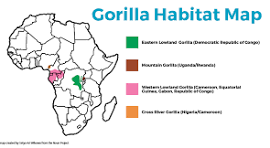
A mountain gorilla habitat map reveals one of the most remarkable wildlife distributions on Earth. Unlike many animal species that occupy vast ranges across multiple countries, mountain gorillas survive in only two isolated forest ecosystems within East and Central Africa. Their entire global population inhabits a small area spanning Uganda, Rwanda, and the Democratic Republic of Congo.
Understanding the mountain gorilla habitat map helps travelers, conservationists, researchers, and wildlife enthusiasts appreciate the importance of protecting these critically important ecosystems. It also helps prospective trekkers choose the best destination for a gorilla safari.
This guide explores the complete mountain gorilla habitat map, including the countries where mountain gorillas live, the national parks that protect them, the unique characteristics of their habitats, and the conservation efforts that have helped increase their population in recent decades.
Where Do Mountain Gorillas Live?
Mountain gorillas are found exclusively in the high-altitude forests of East and Central Africa.
Their entire population occupies two separate habitat regions. The first lies within the Virunga Mountains, a volcanic mountain chain that stretches across Rwanda, Uganda, and the Democratic Republic of Congo. The second lies within the Bwindi forest ecosystem in southwestern Uganda.
These are the only places on Earth where mountain gorillas occur naturally.
The restricted distribution makes habitat protection critically important.
Mountain Gorilla Habitat Map Overview


The mountain gorilla habitat map can be divided into two major conservation landscapes.
The Virunga Conservation Area
The Virunga ecosystem contains mountain gorilla populations that move across protected areas in three countries.
This transboundary conservation region includes:
- Volcanoes National Park in Rwanda
- Mgahinga Gorilla National Park in Uganda
- Virunga National Park in the Democratic Republic of Congo
Together, these parks form a connected habitat that supports one of the world’s two mountain gorilla populations.
The Bwindi Ecosystem
The second mountain gorilla population inhabits Bwindi Impenetrable National Park.
Unlike the Virunga gorillas, the Bwindi population lives within a separate forest ecosystem and remains geographically isolated from the Virunga population.
Bwindi contains nearly half of the world’s mountain gorillas.
The park serves as Uganda’s premier gorilla trekking destination.
The Virunga Mountains Habitat
The Virunga Mountains form one of Africa’s most important wildlife landscapes.
This chain of volcanic mountains stretches approximately 80 kilometers across Rwanda, Uganda, and the Democratic Republic of Congo. The region features lush montane forests, bamboo zones, alpine vegetation, and volcanic peaks.
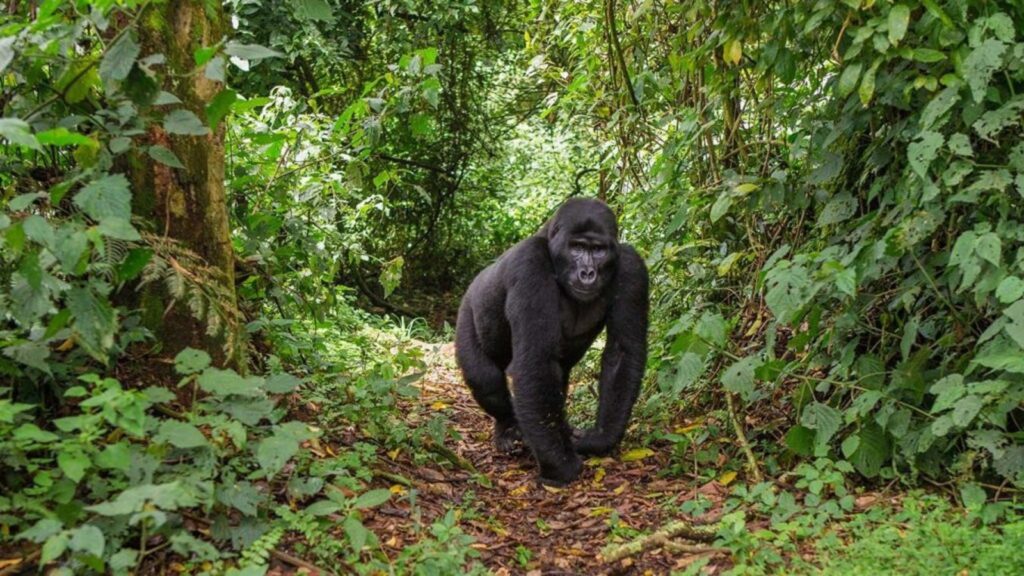
Mountain gorillas thrive in these cool, mist-covered forests.
The abundance of vegetation provides a constant food supply throughout the year.
Volcanoes National Park Rwanda
Volcanoes National Park protects Rwanda’s share of the Virunga Mountains.
The park is famous for its well-managed gorilla trekking experiences, luxury tourism infrastructure, and successful conservation programs. Several habituated gorilla families reside within the park and attract visitors from around the world.
The park plays a crucial role in regional conservation efforts.
Its gorilla population contributes significantly to global recovery efforts.
Mgahinga Gorilla National Park Uganda
Mgahinga Gorilla National Park forms Uganda’s section of the Virunga Mountains.
Although smaller than Bwindi, Mgahinga protects important mountain gorilla habitat and offers excellent trekking opportunities. The park also contains golden monkeys and three volcanic peaks.
Its conservation significance extends beyond gorillas.
The park contributes to the protection of the entire Virunga ecosystem.
Virunga National Park Congo
Virunga National Park is Africa’s oldest national park.
The park protects extensive mountain gorilla habitat within the Virunga range and supports one of the region’s most important wildlife populations. Conservation efforts continue despite numerous challenges associated with regional instability.
Virunga remains a globally significant conservation area.
Its biodiversity extends far beyond gorillas alone.
Bwindi Impenetrable Forest Habitat


Bwindi Impenetrable National Park represents a unique mountain gorilla habitat.
The park consists of ancient rainforest characterized by steep hills, dense vegetation, deep valleys, and exceptional biodiversity. Scientists consider Bwindi one of Africa’s oldest surviving forests.
Its ecological complexity creates ideal conditions for mountain gorillas.
The forest supports a rich variety of plant species that provide year-round food resources.
Why Mountain Gorillas Live at High Altitudes
Mountain gorillas have adapted specifically to high-altitude environments.
Most populations occupy elevations ranging from approximately 2,200 to 4,000 meters above sea level. These elevations experience cooler temperatures and higher rainfall than surrounding lowland areas.
Their thick fur helps them survive in these conditions.
The forests provide abundant vegetation and natural shelter.
Vegetation Within Mountain Gorilla Habitats
Mountain gorilla habitats support diverse plant communities.
Common vegetation types include bamboo forests, montane forests, hagenia woodlands, giant lobelia zones, and dense undergrowth. Gorillas feed on leaves, shoots, stems, roots, bark, and seasonal fruits found throughout these ecosystems.
The availability of food strongly influences gorilla movements.
Healthy vegetation remains essential for population survival.
Why Habitat Protection Matters
The limited distribution shown on a mountain gorilla habitat map highlights the importance of conservation.
Because mountain gorillas occupy such a small geographic range, habitat loss could have devastating consequences. Conservation organizations, governments, researchers, and local communities work together to protect these forests from encroachment and degradation.
Protected areas form the foundation of gorilla conservation.
Habitat security remains a top priority.
Threats to Mountain Gorilla Habitats
Several threats continue to affect mountain gorilla ecosystems.
Human Population Growth
Communities surrounding gorilla habitats often depend on land and natural resources for their livelihoods.
Population growth can increase pressure on forest boundaries.
Habitat Encroachment
Agricultural expansion and land-use changes have historically reduced available wildlife habitat.
Strong park management helps address these challenges.
Climate Change
Changing weather patterns may affect vegetation distribution and habitat quality over time.
Researchers continue monitoring potential impacts.
Conservation Success Story
Mountain gorillas represent one of conservation’s greatest success stories.
Decades of habitat protection, anti-poaching efforts, veterinary care, community engagement, and responsible tourism have helped increase gorilla numbers. Population growth demonstrates the effectiveness of collaborative conservation initiatives.
The species remains endangered but continues to recover.
This achievement highlights the value of long-term conservation investment.
Gorilla Trekking and Habitat Conservation
Tourism plays a major role in protecting mountain gorilla habitats.
Permit fees contribute directly to park management, ranger salaries, scientific research, community development, and conservation projects. Every visitor helps support the protection of these unique ecosystems.
Responsible tourism creates incentives for conservation.
The benefits extend to both wildlife and local communities.
Best Places to Experience Mountain Gorilla Habitats
Travelers seeking to experience mountain gorilla habitats firsthand have several options.
Bwindi Impenetrable National Park
Bwindi offers the largest number of habituated gorilla families and multiple trekking sectors.
Volcanoes National Park
Rwanda’s flagship gorilla destination provides excellent accessibility and luxury tourism facilities.
Mgahinga Gorilla National Park
Mgahinga combines gorilla trekking with spectacular volcanic scenery.
Virunga National Park
Virunga offers a unique conservation experience when tourism activities are operational.
Each destination showcases a different aspect of the mountain gorilla habitat map.
Conclusion
A mountain gorilla habitat map illustrates just how rare and special these remarkable primates truly are. Mountain gorillas survive in only two isolated ecosystems: the Virunga Mountains shared by Rwanda, Uganda, and the Democratic Republic of Congo, and the ancient forests of Bwindi Impenetrable National Park in Uganda.
These habitats support the entire global mountain gorilla population and represent some of Africa’s most important conservation landscapes. Through responsible tourism, habitat protection, and collaborative conservation efforts, mountain gorillas have become one of the world’s greatest wildlife recovery success stories.
Understanding where mountain gorillas live helps travelers appreciate the significance of these ecosystems and the ongoing efforts required to ensure their survival for future generations.