How Gorilla Twins Survive in the Wild.
The birth of gorilla twins is one of the rarest events in the world of great apes. While twins are relatively common in humans, gorilla mothers almost always give birth to a single infant after a gestation period of about eight and a half months. When twins do occur, they face significant challenges from the moment they enter the world.
Unlike many mammals that routinely raise multiple offspring, gorillas evolved to invest enormous amounts of energy in a single infant. This makes twin births exceptionally demanding for both the mother and the newborns. Despite these difficulties, some gorilla twins have survived and thrived, offering remarkable insights into gorilla family dynamics and social support systems.
The survival of gorilla twins depends on a combination of maternal care, group protection, food availability, and sometimes the assistance of other family members within the troop.
How Rare Are Gorilla Twins?
Twin births among gorillas occur very infrequently in both wild and captive populations.
Most female gorillas produce one infant every four to six years. Because gorillas invest heavily in raising each offspring, their reproductive strategy favors quality over quantity. A single infant receives constant attention, nourishment, and protection for several years.
Scientists estimate that twin births represent only a tiny fraction of all gorilla births. When twins are born, the event often attracts attention from researchers and conservationists because it provides a unique opportunity to study gorilla parenting and social behavior.
In recent years, a few well-documented cases of mountain gorilla twins in Uganda and Rwanda have demonstrated that successful twin survival is possible under the right conditions.
Why Raising Twins Is Challenging for Gorilla Mothers
Physical Demands
A gorilla mother typically carries her infant almost continuously during the first months of life. A newborn spends much of its time clinging to the mother’s chest and later rides on her back.
With twins, this task becomes far more complicated.
The mother must provide milk, warmth, protection, and transportation for two infants at the same time. Since newborn gorillas lack the strength to move independently, managing both infants requires significant energy and coordination.
Nutritional Requirements
Producing enough milk for two infants places extra strain on the mother.
A nursing gorilla already consumes large amounts of vegetation to support her own needs and milk production. Twins increase nutritional demands considerably, making access to abundant food resources critical for survival.
If food becomes scarce, maintaining adequate nourishment for both infants can become difficult.
Constant Supervision
Twin infants often become active and curious at an early age. Keeping track of two adventurous youngsters presents an ongoing challenge.
The mother must ensure that neither infant becomes separated from the group or exposed to danger while continuing her daily activities.
The Importance of Maternal Care
The mother remains the single most important factor in twin survival.
From birth onward, she provides everything the infants need. She nurses them, protects them from threats, helps regulate their body temperature, and teaches them essential survival skills.
Many gorilla mothers demonstrate remarkable adaptability when caring for twins. They alternate carrying positions, manage feeding schedules, and respond quickly to each infant’s needs.
This extraordinary level of care greatly increases the chances of both twins reaching independence.
How the Gorilla Family Helps Raise Twins
Support from the Silverback
The silverback plays a critical role in protecting the group and creating a stable environment for infant development.
Although he does not directly care for newborns in the way mothers do, his protection reduces stress and allows the mother to focus on raising her twins.
In some documented cases, silverbacks have shown special interest in twins by remaining close to them and tolerating increased interaction from the young gorillas.
Assistance from Siblings and Juveniles
Older siblings and juvenile gorillas often show curiosity toward twins.
They may spend time playing with the infants, staying near them, or engaging in gentle interactions. While these behaviors do not replace maternal care, they contribute to the twins’ social development.
The presence of multiple caregivers within the social group creates a supportive environment that benefits young gorillas.
The Role of Adult Females
Other adult females occasionally interact with infants and may help monitor them while the mother feeds or moves through the forest.
These interactions strengthen group cohesion and provide additional layers of protection.
Development of Gorilla Twins
The First Six Months
The earliest months represent the most vulnerable period for gorilla twins.
Both infants depend entirely on their mother for food and movement. Survival during this stage relies heavily on maternal health, milk production, and protection.
Twins spend much of their time sleeping, nursing, and maintaining close physical contact with their mother.
One Year and Beyond
As twins grow stronger, they begin exploring their environment independently.
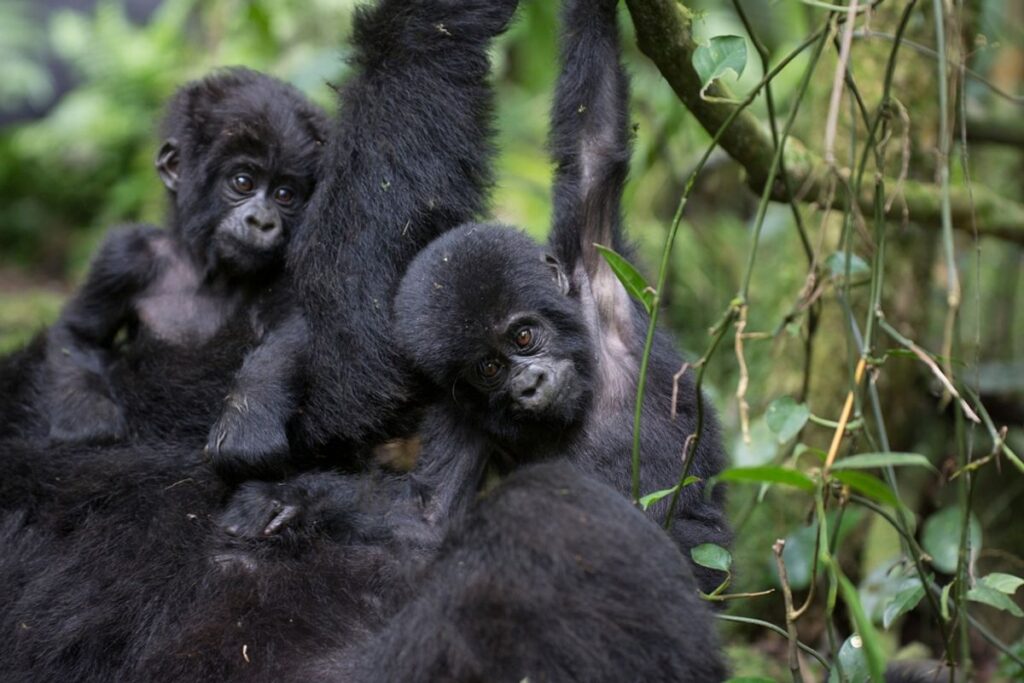
Play becomes a major part of daily life. Wrestling, climbing, and chasing games help develop strength, coordination, and social skills.
The twins often form especially strong bonds with one another because they spend so much time together.
These sibling relationships may remain important throughout life.
Known Cases of Gorilla Twins in the Wild
One of the most famous recent examples occurred in Uganda’s Bwindi Impenetrable National Park, where mountain gorilla twins captured international attention.
The successful survival of these twins highlighted the effectiveness of conservation efforts and the strength of gorilla family structures.
Their progress provided researchers with valuable information about twin development and parental investment among mountain gorillas.
Such cases remain rare but demonstrate that gorilla twins can survive and thrive when conditions support their growth.
Threats Facing Gorilla Twins
Predation and Accidents
Although adult gorillas have few natural predators, infant gorillas remain vulnerable to accidents, illness, and environmental hazards.
Twins face additional risks because the mother’s attention must be divided between two infants.
Disease
Like all young gorillas, twins are susceptible to disease.
Because gorillas share many biological similarities with humans, infectious diseases can spread rapidly within populations.
Strong health monitoring programs in protected areas help reduce these risks.
Habitat Loss
Habitat destruction threatens all gorillas, including twins.
Forest loss reduces food availability and increases pressure on gorilla families. Conservation efforts play a crucial role in ensuring that gorilla groups maintain access to the resources needed for successful reproduction and infant survival.
What Gorilla Twins Teach Us About Gorilla Society
The survival of gorilla twins reveals the strength and adaptability of gorilla social systems.
These rare births demonstrate the importance of maternal dedication, family support, and stable group structures. They also highlight the emotional complexity of gorilla relationships and the cooperative nature of life within a gorilla family.
Observing twin development provides researchers with valuable insight into gorilla behavior, parenting strategies, and social organization.
Conservation and the Future of Gorilla Twins
The increasing success of gorilla conservation programs has improved survival prospects for all gorillas, including twins.
Protected habitats, anti-poaching efforts, veterinary interventions, and responsible tourism contribute to healthier populations and more stable family groups.
As gorilla numbers continue to recover in some regions, the chances of observing and studying twin births may increase.
Each successful case offers new opportunities to understand these remarkable primates.
Conclusion
Gorilla twins face extraordinary challenges from birth, but they can survive and flourish with strong maternal care and support from their family group. Their survival depends on nutrition, protection, social stability, and healthy habitats.
Although twin births remain rare, successful cases demonstrate the resilience of gorilla families and the remarkable adaptability of mothers caring for two infants at once.
These rare siblings provide a powerful reminder of the complexity, intelligence, and social strength that define gorilla life in the wild.