How Are Gorilla Groups Named? Understanding Mountain Gorilla Family Names
Many travelers preparing for gorilla trekking wonder how gorilla groups are named. During a trek, guides and trackers may refer to gorilla families by names such as Mubare, Habinyanja, Rushegura, Oruzogo, or Susa. These names help conservation teams, researchers, guides, and visitors identify different gorilla groups and understand their history.
Gorilla family names are not random labels. They often have connections to the locations where groups were first observed, local languages, geographical features, vegetation, historical events, or characteristics associated with the group.
Understanding these names adds another interesting dimension to gorilla trekking. Instead of seeing a gorilla family as an anonymous collection of animals, visitors can learn about its history, members, movements, and relationships.
The naming system also helps wildlife authorities organize tourism and conservation activities. Since gorilla groups can split, merge, change leadership, or disappear over time, accurate identification remains essential for long-term monitoring.
Why Are Gorilla Groups Given Names?
Gorilla groups receive names mainly to make identification easier.
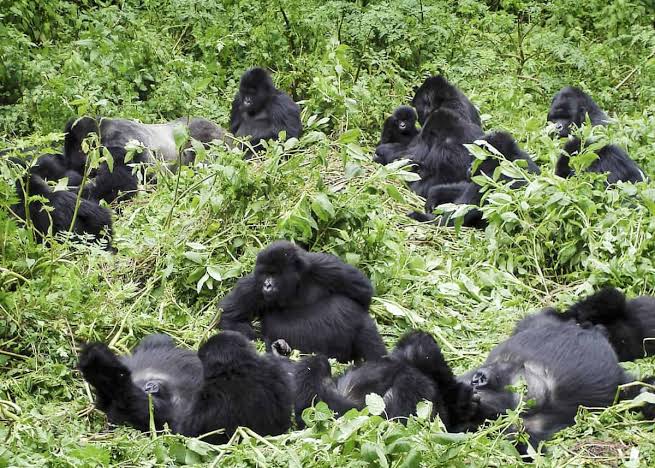
Researchers and trackers monitor individual gorillas throughout their lives. A family may contain a dominant silverback, several adult females, blackbacks, juveniles, and infants.
Giving the group a name allows conservation teams to discuss it easily.
For example, researchers can record that a particular individual was born into a certain family or that a silverback transferred from one group to another.
Names therefore become useful tools for scientific records, tourism management, and conservation monitoring.
Who Names Gorilla Groups?
There is no single universal naming authority for every mountain gorilla group.
Names can originate from researchers, trackers, conservation authorities, local communities, or historical observations.
The exact process can differ between gorilla populations and protected areas.
In Uganda, Rwanda, and the Democratic Republic of Congo, different authorities and research programs have developed their own naming traditions.
Once a name becomes widely established, it can remain in use for many years.
Are Gorilla Groups Named After the Silverback?
Not necessarily.
Although the dominant silverback is an important member of a gorilla family, group names do not always come from the leader.
Some groups have names connected to geographical locations, forests, rivers, vegetation, or other features.
A group’s leadership can also change.
If a new silverback takes over, changing the family name every time leadership changes would make long-term records difficult to maintain.
Keeping an established group name therefore helps researchers track its history.
Gorilla Group Names and Local Geography
Geographical features are an important source of gorilla family names.
A group may become associated with a particular location where researchers first encountered or regularly monitored it.
This naming approach can make it easier for trackers and conservation teams to distinguish between groups.
It also creates a connection between gorilla tourism and the landscapes where these animals live.
Gorilla Group Names in Uganda
Uganda is home to many habituated mountain gorilla families, particularly in Bwindi Impenetrable National Park.
Some well-known family names include Mubare, Habinyanja, Rushegura, Oruzogo, Nkuringo, Nshongi, Mishaya, and Bweza.
Different families are associated with different trekking sectors and have their own histories.
Group availability can change because gorilla families naturally move, split, merge, or experience changes in composition.
Mubare Gorilla Family
The Mubare family is one of the best-known gorilla families in Uganda.
The group is associated with the Buhoma area of Bwindi.
Its name comes from the Mubare Hills in the area.
The family has experienced changes in leadership and membership over time.
Its long history makes it an important example of why maintaining consistent family names is useful for conservation records.
Habinyanja Gorilla Family
The Habinyanja family is another well-known gorilla group associated with Bwindi.
The name is linked to a local area and has remained associated with the family even as its members and leadership have changed.
The group has experienced natural changes in composition over the years.
Visitors tracking Habinyanja can therefore experience a family with a long history of monitoring and habituation.
Rushegura Gorilla Family
The Rushegura family is associated with the Buhoma sector.
Its name comes from the local area where the group was observed.
Rushegura is a popular family among visitors because it has a history of habituation and tourism.
Like other gorilla families, its membership can change naturally over time.
The Oruzogo family is associated with the Ruhija sector of Bwindi.
Its name comes from a local plant or vegetation reference.
The family has been monitored for many years and has included several generations of gorillas.
Young gorillas within the group provide visitors with opportunities to observe play, social learning, and family interactions.
Nkuringo Gorilla Family
The Nkuringo family is associated with the Nkuringo sector in southern Bwindi.
Its name comes from the local area.
The family became one of the groups available for tourism after habituation.
The Nkuringo region is also known for challenging terrain, making trekking here particularly rewarding for adventurous visitors.
Nshongi Gorilla Family
The Nshongi family is associated with the Rushaga sector.
The group became well known because it once contained a relatively large number of individuals.
Natural changes eventually resulted in group splits and the formation of other families.
This demonstrates an important point about how gorilla groups are named: family names can remain even after the original composition of a group changes.
Mishaya Gorilla Family
The Mishaya family was named after Mishaya, a silverback associated with the group.
This is an example of a gorilla family name connected to an individual animal.
Mishaya became notable for his role in establishing and leading a group.
His history illustrates how individual silverbacks can influence the development and identity of gorilla families.
Bweza Gorilla Family
The Bweza family also has a connection to the natural splitting of gorilla groups.
The family emerged following changes within the Nshongi group.
Its development demonstrates how gorilla society changes naturally as individuals establish new social units.
Researchers maintain separate names to distinguish these groups and follow their histories.
Gorilla Group Names in Rwanda
Rwanda’s mountain gorilla families live in Volcanoes National Park.
Some historically well-known names include Susa, Sabinyo, Amahoro, Hirwa, Agashya, Kwitonda, and Karisimbi.
These groups have different histories and social structures.
Some names relate to geographical features or local terminology.
Others became established through research and conservation work.
Susa Gorilla Family
The Susa family became internationally famous through early mountain gorilla research.
The group was observed by researchers working in the Virunga region.
Its name became widely associated with the family and remains an important part of gorilla research history.
The family has also experienced changes in composition and leadership over time.
Amahoro Gorilla Family
Amahoro is a well-known gorilla family in Rwanda.
The name “Amahoro” means peace in Kinyarwanda.
The name reflects a positive concept associated with the group.
It is a good example of how local language can contribute to gorilla family naming.
Sabinyo Gorilla Family
The Sabinyo family is named after Mount Sabyinyo, one of the volcanoes of the Virunga mountain range.
The mountain is an important geographical landmark shared by the region’s landscapes.
This illustrates how gorilla family names can connect wildlife populations to the physical environment they inhabit.
Agashya Gorilla Family
The Agashya family is another well-known group in Rwanda.
The name is associated with the group’s history and leadership.
The family has undergone changes in composition over time.
As with other groups, researchers continue to monitor its members and social relationships.
Gorilla Group Names in the Democratic Republic of Congo
The Democratic Republic of Congo is home to mountain gorillas in the Virunga region.
Gorilla families in the area have their own names used by park authorities, researchers, and trackers.
Naming practices can reflect local geography, individuals, historical observations, and conservation traditions.
Tourism operations can vary according to security and park conditions, so travelers should confirm current information before planning a trek.
Can Gorilla Family Names Change?
Yes, names can change in some circumstances, but established names are often retained for continuity.
Gorilla groups can undergo major social changes.
A family may split into two groups.
A new silverback may become dominant.
Individuals may transfer between groups.
A group can also lose or gain members through births, deaths, and dispersal.
Maintaining consistent names helps researchers connect current observations with historical records.
What Happens When a Gorilla Group Splits?
Group splitting is a natural part of gorilla social dynamics.
A large group may divide when social relationships or leadership patterns change.
One section may remain with the original family name while another receives a new name.
Researchers then monitor both groups separately.
This allows conservation teams to follow their population histories and social development.
Can Gorilla Families Merge?
Gorilla groups can also experience temporary or longer-term associations.
Individuals may move between groups, particularly adult females.
Silverbacks can establish new groups or take control of existing ones.
These movements make gorilla society dynamic.
The family name provides a stable reference point even when individual membership changes.
Why Gorilla Group Names Matter to Researchers
Names allow researchers to maintain organized records.
A research team can document births, deaths, transfers, injuries, illnesses, behavioral changes, and leadership changes within a specific group.
Over many years, these records become extremely valuable.
They help scientists understand gorilla population dynamics and social behavior.
Why Names Matter to Tour Guides
Guides use family names to communicate information to visitors.
Before a trek, guides may explain the history and characteristics of the family being visited.
Knowing the family name also helps visitors understand the animals they are observing.
Instead of simply saying “the gorillas,” guides can discuss a particular family and its members.
Why Names Matter to Tourists
For travelers, a gorilla family name can make the experience more personal and memorable.
Visitors may learn that they are tracking a family with several generations of known individuals.
They may hear about a famous silverback, a new infant, or a recent group split.
These stories transform the trek into a deeper wildlife experience.
Are Gorilla Families Named After Their Personalities?
Sometimes a name may become associated with a group’s behavior or history, but personality is not necessarily the primary naming method.
Most names have stronger connections to places, individuals, languages, or historical circumstances.
Visitors should therefore avoid assuming that a family’s name automatically describes its behavior.
Do All Gorillas in a Family Share the Same Name?
No.
The family has a group name, but individual gorillas are usually identified separately.
Researchers can assign individual names or identification codes to specific animals.
These individuals can have different roles within the family.
For example, a family may contain a dominant silverback, subordinate males, adult females, juveniles, and infants, each with their own identity.
How Are Individual Gorillas Identified?
Researchers can identify gorillas using distinctive physical and behavioral characteristics.
Facial structure is particularly useful.
Other characteristics can include nose patterns, scars, body shape, fur differences, and other visible features.
Trackers develop considerable knowledge of individual animals through repeated observation.
This allows them to recognize gorillas even when the animals are surrounded by dense vegetation.
Gorilla Names and Conservation Records
Accurate identification is essential for conservation.
Researchers can track an individual from infancy through adulthood.
They can document reproductive success, movements between groups, health conditions, and social relationships.
These records contribute to long-term population studies.
The information can also help authorities make better conservation decisions.
Gorilla Group Names and Habituation
Family names become especially important during habituation.
Researchers need to distinguish between groups that are undergoing habituation and those already accustomed to controlled human presence.
The name provides a consistent reference as researchers monitor the group’s progress.
It also helps separate the history of one family from another.
Do Gorillas Know Their Group’s Name?
There is no evidence that gorillas understand their family name in the same symbolic way humans understand names.
The name is primarily a human identification system.
Gorillas communicate using their own vocalizations, gestures, body language, facial expressions, and other social signals.
The name therefore helps people organize information about gorillas rather than serving as a word the animals necessarily recognize.
How Gorilla Family Names Help During Trekking
Before entering the forest, visitors may receive information about the family they are tracking.
Knowing its name can help them follow the story of the group.
Guides may explain where the family lives, how many individuals it contains, and whether it has recently experienced changes.
This information adds educational value to the trek.
Frequently Asked Questions
How are gorilla groups named?
Gorilla groups are generally named by researchers, trackers, conservation authorities, or local naming traditions. Names may relate to geographical locations, local languages, individual gorillas, vegetation, or the group’s history.
Are gorilla families named after silverbacks?
Sometimes. Some groups have names associated with important silverbacks, but many family names come from places or other local references.
Can a gorilla family change its name?
Established names are usually retained for continuity, although names can change in certain circumstances. Group splits and major changes in social organization can result in new family names.
Do individual gorillas have names?
Yes. Researchers and trackers often give individual gorillas names or identification codes to help monitor them.
Why do gorilla groups need names?
Names help researchers, conservation authorities, guides, and tourism operators distinguish between different groups and maintain accurate long-term records.
Conclusion
Understanding how gorilla groups are named provides an interesting glimpse into the science and conservation behind gorilla trekking. Family names help researchers and trackers distinguish different groups, monitor their histories, and document changes in membership, leadership, reproduction, and social relationships.
Gorilla family names can originate from local geographical features, languages, vegetation, individual gorillas, or historical events. Names such as Mubare, Habinyanja, Rushegura, Nkuringo, Amahoro, and Sabinyo demonstrate the variety of traditions used across Uganda and Rwanda.
The names remain useful even as gorilla families change. Groups can split, individuals can transfer between families, silverbacks can change leadership, and new generations can be born. Maintaining established names allows conservation teams to connect present-day observations with decades of research.
For travelers, learning the name and history of a gorilla family can make a trekking experience much more meaningful. Instead of simply observing a group of gorillas, visitors gain an introduction to a living social community with its own history, relationships, and individual personalities.