Gorilla Habituation Experience vs Trek: Which Gorilla Adventure Is Better?
Understanding the gorilla habituation experience vs. trek is important when planning a mountain gorilla safari in Uganda. Both experiences allow travelers to spend time observing endangered mountain gorillas in their natural forest habitat, but they offer different levels of access, time, cost, and involvement in conservation activities.
A normal gorilla trek focuses on tracking a habituated gorilla family and observing the animals for a limited period. The experience suits most travelers who want to see mountain gorillas without spending an extended period in the forest.
The gorilla habituation experience offers a more immersive encounter. Visitors join researchers and trackers as they spend more time with a gorilla group that is still undergoing habituation. This provides an opportunity to observe a wider range of behaviors and learn more about the scientific work behind gorilla conservation.
Both experiences are carefully regulated to protect the animals. The best choice depends on your budget, available time, physical ability, interest in conservation, and how deeply you want to engage with gorilla research.
What Is a Normal Gorilla Trek?
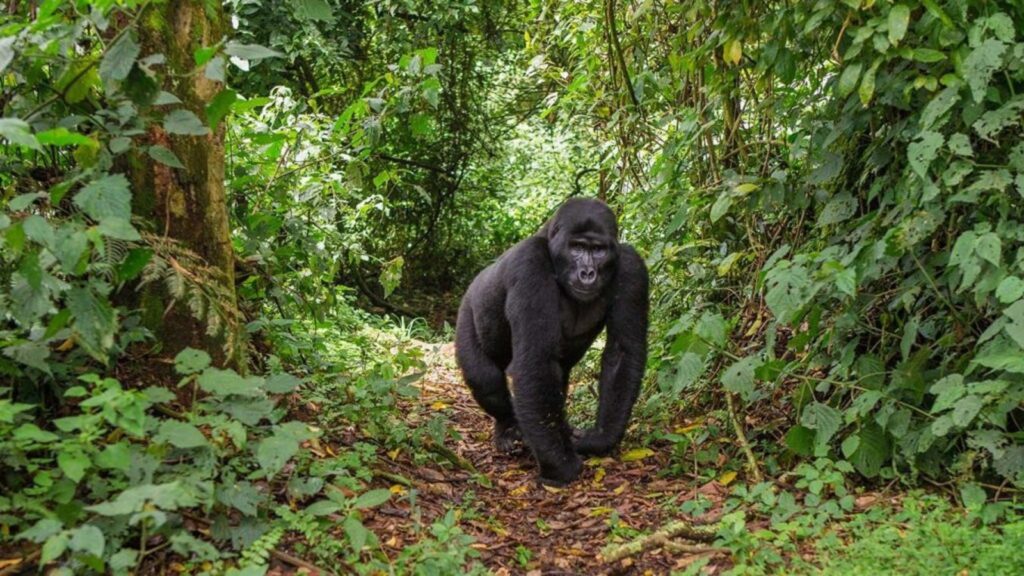
A normal gorilla trek involves tracking a habituated mountain gorilla family through the forest.
Visitors begin at a designated park headquarters, receive a briefing, and then enter the forest with trained guides and trackers.
The trek can take different amounts of time depending on where the gorilla family is located that day.
Once the group is located, visitors observe the gorillas under strict regulations.
The standard experience provides a memorable opportunity to watch gorillas feed, groom, rest, play, communicate, and interact with their family members.
What Is the Gorilla Habituation Experience?
The gorilla habituation experience is a specialized activity in Uganda that allows visitors to spend more time observing a gorilla group undergoing habituation.
The group is gradually becoming accustomed to controlled human presence.
Visitors accompany researchers and trackers who monitor the animals and study their behavior.
Because the experience involves a group that is not fully habituated, the encounter can feel more exploratory and less predictable than a standard trek.
The longer observation period allows visitors to learn more about gorilla behavior and the conservation process.
Gorilla Habituation Experience vs Trek: Main Difference
The biggest difference is the purpose and duration of the experience.
A normal trek primarily focuses on wildlife viewing.
The habituation experience combines wildlife viewing with conservation research.
Standard trekking provides a shorter observation period once the gorillas are located.
The habituation experience provides a longer period with the gorilla group, allowing visitors to observe more behaviors and learn about the habituation process.
Difference in Time With Gorillas
Time is one of the most important factors when comparing the gorilla habituation experience vs. the trek.
A normal gorilla trek generally allows visitors to spend up to one hour observing the gorillas after locating the group.
The gorilla habituation experience can allow visitors to spend up to four hours with the gorilla group, subject to current wildlife authority regulations.
This longer period provides more opportunities to observe changing behavior.
Visitors may see feeding, movement, resting, grooming, communication, play, and interactions between different members of the group.
Difference in Gorilla Groups
Normal gorilla trekking generally involves fully habituated gorilla families.
These groups are accustomed to limited human presence.
The habituation experience involves gorilla groups that are still undergoing the habituation process.
Because these animals are less accustomed to humans, their behavior can be less predictable.
They may move away, hide, or become more cautious when people approach.
This creates a different type of wildlife experience.
Difference in Human-Gorilla Interaction
Neither experience allows visitors to interact physically with gorillas.
The difference is the animals’ level of familiarity with humans.
Gorillas encountered during standard trekking are more accustomed to carefully controlled visitor presence.
Gorillas involved in habituation are still learning to tolerate researchers and visitors.
This means the habituation experience requires greater patience and careful observation.
Visitors must never attempt to touch, feed, call, or attract the gorillas.
Difference in Group Size
Group size can also differ.
Standard trekking groups operate under established visitor limits and conservation regulations.
The habituation experience may involve fewer visitors because the activity focuses on research and the gradual adaptation of the gorilla group.
Current visitor limits can change according to wildlife authority policies.
Travelers should confirm the latest regulations before booking.
Gorilla Habituation Experience vs Trek: Cost
Cost is another major difference.
The habituation experience generally costs significantly more than a standard gorilla trekking permit.
Uganda’s wildlife authority has historically priced the habituation experience at a premium because of the longer duration and specialized nature of the activity.
The standard gorilla trekking permit is less expensive.
Because prices and regulations can change, travelers should confirm current permit rates with the Uganda Wildlife Authority or a reputable tour operator before making payment.
Why Is the Habituation Experience More Expensive?
The higher price reflects the longer experience and its connection to conservation research.
Visitors spend more time in the forest and have greater opportunities to observe the gorillas.
The experience also supports the broader research and conservation system surrounding mountain gorilla protection.
For travelers who value immersive wildlife experiences, the additional cost may be worthwhile.
Difference in Trekking Difficulty
Both activities take place in challenging forest terrain.
The physical difficulty depends heavily on where the gorillas are located on the day of the trek.
Mountain gorilla habitat includes steep slopes, dense vegetation, muddy trails, and uneven ground.
The habituation experience can require additional patience because the group may move away from people.
Travelers should prepare for hiking rather than assuming that either experience will involve an easy walk.
Difference in Predictability
A standard gorilla trek is generally more predictable.
The gorilla family has already become accustomed to controlled human presence, making observation easier.
The habituation experience can be less predictable.
A partially habituated group may move away or remain hidden.
This uncertainty can make the experience feel more like genuine wildlife research.
For adventurous travelers, this unpredictability can be part of the attraction.
Difference in Wildlife Observation
The longer habituation experience provides more time for behavioral observation.
During four hours, visitors may witness changes in the group’s activities.
The gorillas may transition from feeding to resting, move through the forest, groom one another, interact socially, or communicate through vocalizations and body language.
A standard trek provides less observation time but can still offer excellent opportunities to see these behaviors.
Gorilla Habituation Experience vs Trek for Photographers
Photography enthusiasts may find the habituation experience attractive because of the additional observation time.
More time in the forest creates more opportunities to wait for interesting behavior and changing light conditions.
However, photography should never interfere with the gorillas.
Visitors must follow all rules regarding distance, camera equipment, flash photography, and movement.
The welfare of the animals always comes before obtaining a photograph.
Gorilla Habituation Experience vs Trek for Families
A normal trek may be more suitable for travelers who want a shorter and simpler wildlife experience.
The habituation experience requires a longer commitment in the forest.
Families should consider the ages, fitness levels, and interests of all participants before choosing.
Children are also subject to minimum age requirements established by wildlife authorities.
Travelers should confirm current age regulations before booking.
Gorilla Habituation Experience vs Trek for Older Travelers
Older travelers should carefully consider physical fitness.
Neither experience guarantees easy terrain.
Visitors may need to hike through steep and muddy forest conditions.
Porter services and other assistance can make trekking more manageable.
However, the longer habituation experience may be tiring for travelers who prefer shorter activities.
A standard trek may therefore be a better choice for some visitors.
Gorilla Habituation Experience vs Trek for First-Time Visitors
First-time gorilla trekkers often choose the standard experience.
It provides an introduction to mountain gorilla tourism without requiring an extended research-style encounter.
However, travelers who are especially interested in animal behavior and conservation may prefer habituation.
The decision ultimately depends on how much time and money the traveler wants to invest.
Gorilla Habituation Experience vs Trek for Conservation Enthusiasts
The habituation experience is particularly appealing to conservation enthusiasts.
Visitors can observe researchers and trackers at work while learning how scientists monitor gorilla behavior.
They gain insight into the process of gradually introducing wild gorillas to controlled human presence.
This makes the experience more educational than a conventional wildlife encounter.
Difference in Research Involvement
Research is more central to the habituation experience.
Researchers and trackers monitor the gorillas and record behavioral information.
Visitors can learn about individual animals and observe how researchers identify and follow them.
A standard trek focuses primarily on visitor observation rather than direct participation in research activities.
Difference in the Overall Experience
A standard trek can feel like a carefully managed wildlife encounter.
You hike through the forest, locate a habituated family, and spend regulated time observing them.
The habituation experience can feel more like entering an ongoing conservation project.
You spend longer with the animals and observe the gradual process through which they become accustomed to humans.
Neither experience is objectively better.
They simply offer different ways to experience gorilla conservation.
Gorilla Habituation Experience vs Trek Comparison
Feature: Normal Gorilla Trek Gorilla Habituation Experience
Main purpose: Wildlife viewing Wildlife viewing and habituation research
Gorilla group Fully habituated Partially habituated
Observation time Usually up to 1 hour Usually up to 4 hours
Cost Lower Higher
Experience a structured wildlife encounter Longer conservation-focused experience
Predictability Generally higher Generally lower
Research involvement Limited Greater
Best for Most first-time trekkers Conservation and wildlife enthusiasts
Physical demands Can be challenging Can be more demanding due to longer duration
Which Experience Should You Choose?
Choose a normal gorilla trek if you want a shorter, more affordable introduction to mountain gorillas.
It is ideal for travelers who are combining gorilla trekking with other safari activities and want to experience gorillas without spending most of the day with one group.
Choose the gorilla habituation experience if you have more time, a larger budget, and a strong interest in wildlife research and conservation.
The four-hour observation period allows you to see more of the group’s natural activities and understand the work involved in habituating wild gorillas.
Is Gorilla Habituation Worth the Extra Cost?
For some travelers, absolutely.
If your main goal is simply to see mountain gorillas, a normal trek can provide an unforgettable experience at a lower cost.
If you want deeper behavioral observation and a greater understanding of conservation research, the habituation experience can justify the additional expense.
Your choice should depend on your priorities rather than assuming that the more expensive option is automatically better.
Can You Combine Gorilla Habituation With Other Activities?
Yes.
Travelers can build a broader Uganda safari around their gorilla experience.
Depending on your itinerary, you can combine gorilla habituation with activities around Bwindi, Lake Bunyonyi, Queen Elizabeth National Park, or other destinations.
This creates a more complete Ugandan wildlife and cultural experience.
Booking Gorilla Habituation and Normal Trekking
Both experiences require advance planning.
Gorilla permits are limited, and popular trekking dates can sell out.
Travelers should determine their preferred experience, travel dates, trekking sector, and accommodation before booking.
It is also important to confirm the latest permit prices, age requirements, health regulations, and visitor limits before making final arrangements.
Conclusion
The gorilla habituation experience vs. trek comparison comes down to the type of adventure you want.
A normal gorilla trek offers a shorter and more affordable opportunity to observe a fully habituated mountain gorilla family. It is an excellent choice for first-time visitors and travelers combining gorilla trekking with a wider Uganda safari.
The gorilla habituation experience provides a longer and more immersive encounter with a group that is still becoming accustomed to human presence. It offers greater opportunities to observe behavior and learn about the research and conservation work behind gorilla tourism.
If your priority is simply seeing mountain gorillas, the standard trek is usually sufficient. If you want a deeper conservation experience and are willing to spend more time and money, the habituation experience can be an exceptional choice.
Whichever option you choose, remember that the gorillas remain wild animals. Respecting distance requirements, following guide instructions, observing health precautions, and avoiding physical interaction are essential for responsible gorilla tourism.