Gorilla Trekking Photography Tour Package: Complete Guide to Gorilla Photography Safaris
A gorilla trekking photography tour package combines mountain gorilla trekking with specialized planning for wildlife photography. Instead of simply joining a standard gorilla trek, photography-focused travelers can build an itinerary around the best opportunities for capturing gorillas, forest landscapes, local communities, and other wildlife.
Mountain gorillas live in dense and often challenging forest environments. Their movements, weather conditions, vegetation, and available natural light can change throughout the day. Good photography therefore requires more than carrying an expensive camera. It requires suitable equipment, careful preparation, patience, and respect for conservation regulations.
A well-planned photography tour package can make the experience more comfortable while helping photographers concentrate on documenting the gorillas responsibly.
What Is a Gorilla Trekking Photography Tour Package?
A gorilla trekking photography tour package is a safari designed for travelers who want to combine gorilla trekking with wildlife photography.
The package may include gorilla permits, accommodation, transportation, professional guiding, airport transfers, meals, and additional photography activities depending on the operator.
Some packages can also include nature walks, birdwatching, cultural experiences, landscape photography, or other wildlife destinations.
The exact services depend on the tour operator and the selected destination.
Why Choose a Photography-Focused Gorilla Safari?
A photography-focused itinerary allows travelers to prepare specifically for the challenges of photographing mountain gorillas.
Photographers need to consider camera settings, lenses, weather protection, battery capacity, storage, hiking equipment, and physical endurance.
A specialist itinerary can also provide additional time for photography before or after the gorilla trek.
This makes the safari particularly attractive to wildlife photographers, travel photographers, content creators, filmmakers, and serious photography enthusiasts.
Gorilla Photography in Uganda
Uganda offers mountain gorilla trekking in Bwindi Impenetrable National Park and Mgahinga Gorilla National Park.
Bwindi is particularly well known for its diverse forest environment and several trekking sectors.
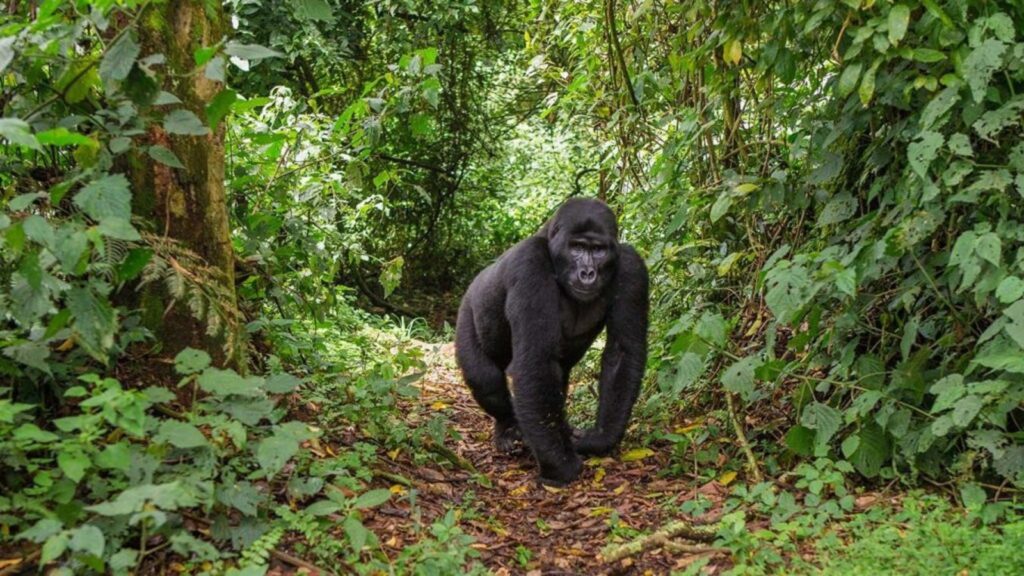
The dense vegetation can create challenging photographic conditions, but it can also produce atmospheric images with layers of foliage, mist, trees, and natural light.
Photographers should understand that the location of gorilla families changes, so no operator can guarantee a particular background, pose, lighting condition, or photographic composition.
Gorilla Photography in Rwanda
Rwanda offers gorilla trekking in Volcanoes National Park.
The park forms part of the Virunga Massif and provides important habitat for mountain gorillas.
Rwanda’s well-developed tourism infrastructure can make it attractive for photographers who want to combine gorilla trekking with comfortable accommodation and other photographic experiences.
The mountainous landscape also provides opportunities for landscape photography around the gorilla trekking experience.
Uganda or Rwanda for a photography tour?
Both destinations can provide exceptional gorilla photography opportunities.
Uganda offers several trekking sectors in Bwindi and a wide range of safari combinations. Rwanda offers convenient access from Kigali and a strong network of tourism infrastructure around Volcanoes National Park.
The best destination depends on the photographer’s budget, preferred itinerary, travel time, accommodation preferences, and other wildlife interests.
Choosing the Right Camera
A reliable camera is more important than simply choosing the most expensive model.
A modern mirrorless or DSLR camera with good low-light performance can work well in the forest.
Because gorilla encounters can involve changing light conditions, photographers should understand their camera’s manual controls before beginning the trek.
A second camera body can also provide useful backup for professional photographers.
Choosing the Right Lens
Lens selection is one of the most important decisions for a gorilla trekking photography tour package.
A medium telephoto zoom can provide flexibility when photographing gorillas at different distances.
A lens in the approximate 70–200mm range can be useful for portraits and environmental compositions, while a wider lens can capture gorillas within their forest surroundings.
Photographers should remember that park regulations determine how close visitors may approach wildlife. Equipment should therefore be selected around responsible viewing distances rather than attempts to get physically closer.
Camera Settings for Gorilla Photography
Forest conditions can change quickly.
Photographers may need relatively fast shutter speeds when gorillas are moving. Higher ISO settings can help maintain shutter speed when the forest becomes dark.
A wide aperture can help separate the subject from busy vegetation, although photographers may sometimes want greater depth of field for environmental portraits.
It is useful to practice adjusting shutter speed, aperture, ISO, and autofocus before the trek.
Shooting Through Forest Vegetation
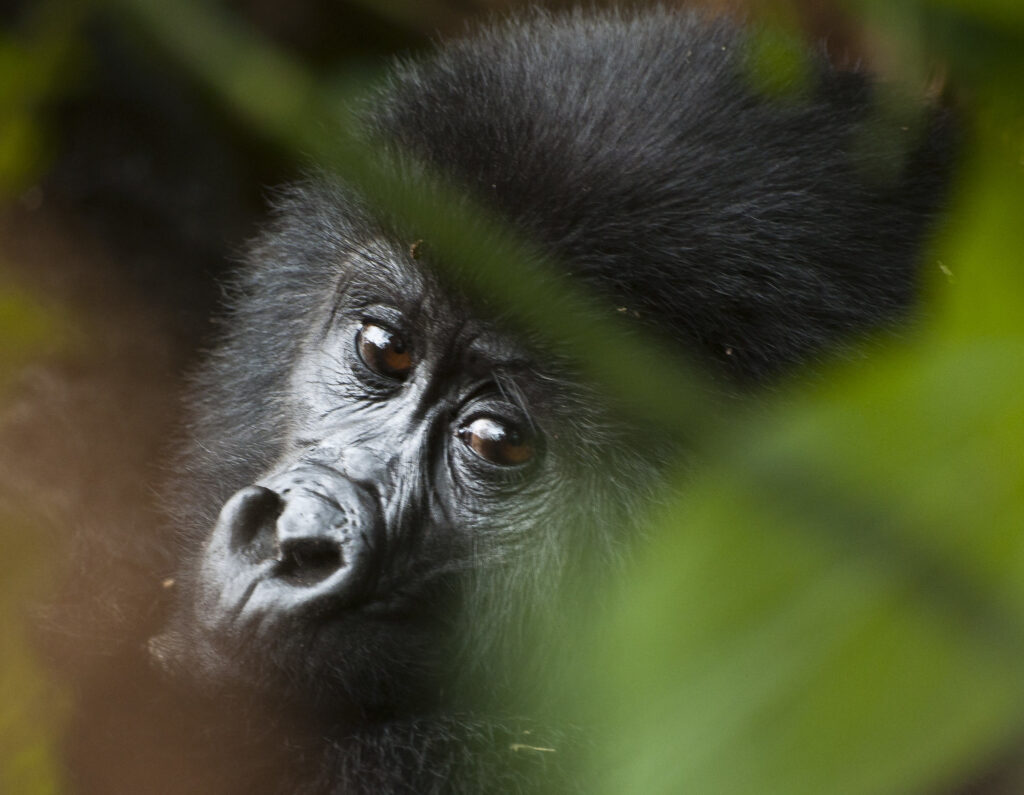
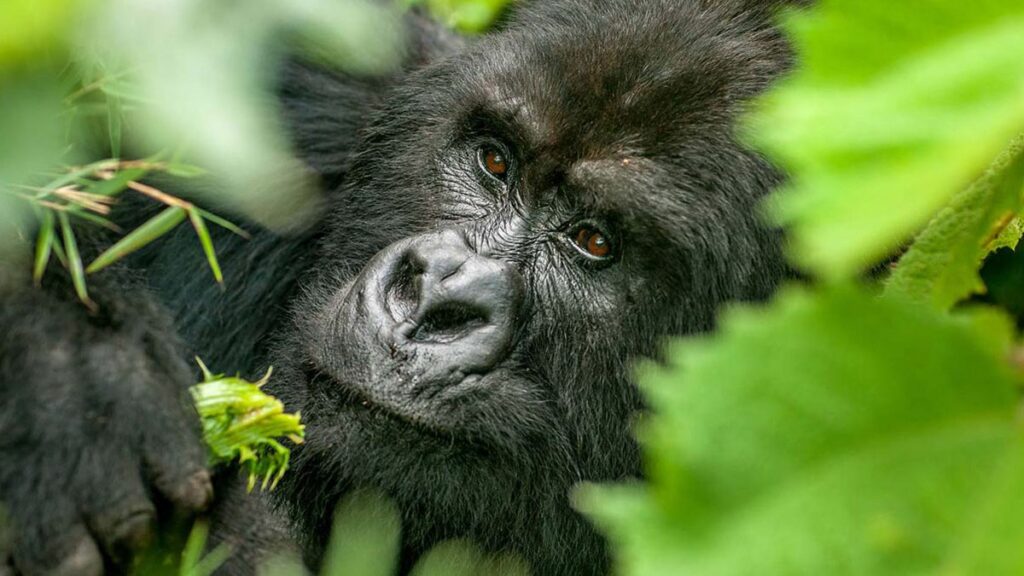
One of the biggest challenges is vegetation.
Leaves, branches, vines, and shadows can partially obscure gorillas.
Instead of treating vegetation only as an obstacle, photographers can use it creatively to show the gorillas within their natural environment.
Waiting for a clear opening can produce a stronger image than continuously trying to photograph through dense foliage.
Photographing Gorilla Faces
Gorilla portraits are among the most powerful images produced during a trek.
Focus carefully on the eyes when possible and watch the animal’s behavior.
Avoid using intrusive techniques such as flash photography where prohibited or attempting to attract the animal’s attention.
The strongest photographs often come from quiet observation rather than attempts to create a specific pose.
Photographing Gorilla Behavior
A photography tour should focus on behavior as well as portraits.
Photographers may capture gorillas feeding, resting, grooming, climbing, interacting with family members, or moving through vegetation.
Behavioral images can tell a more complete story about gorilla life.
Patience is essential because important moments may occur unexpectedly.
Photographing Silverbacks
Silverback gorillas can provide striking photographic subjects because of their size, posture, facial expressions, and distinctive silver hair.
However, photographers should never attempt to provoke or attract a silverback’s attention.
Follow the guide’s instructions and observe the gorilla from the permitted distance.
Natural behavior produces more meaningful photographs than staged interactions.
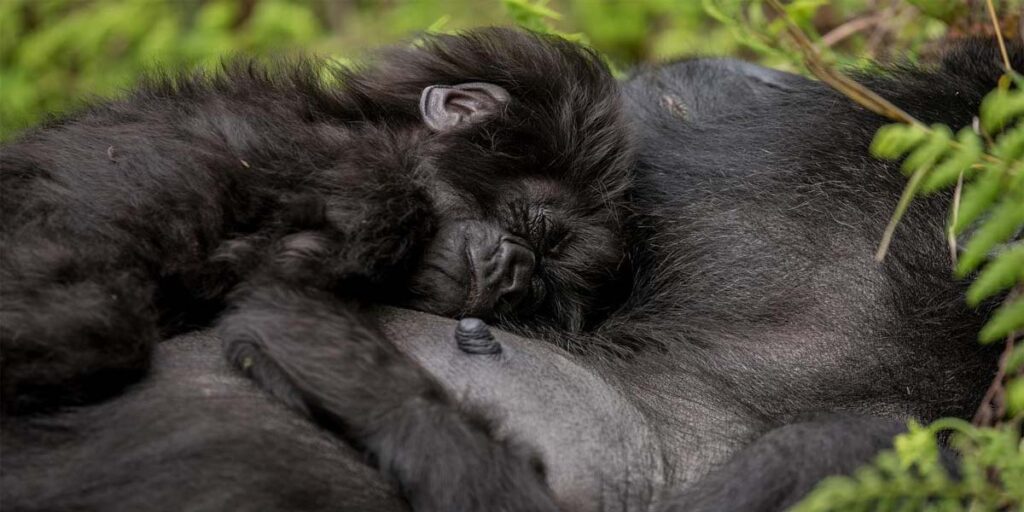
Photographing Young Gorillas
Young gorillas can provide memorable images as they play, climb, explore, and interact with adults.
Because juveniles can move quickly, photographers should use appropriate shutter speeds and continuous autofocus where useful.
Do not move toward young gorillas or attempt to interfere with their behavior.
Forest and Landscape Photography
A gorilla trekking photography tour package does not need to focus exclusively on gorillas.
Bwindi and the Virunga region provide excellent opportunities for forest and mountain landscape photography.
Misty hills, dense vegetation, volcanic landscapes, trails, and local communities can help create a broader photographic story.
These images can be particularly useful for photographers producing travel features or conservation stories.
Bird Photography During Gorilla Safaris
Bwindi is also an important birding destination.
Photographers can combine gorilla trekking with birdwatching to photograph forest species, including birds associated with the Albertine Rift.
A telephoto lens and patience are useful because forest birds can be difficult to locate and photograph.
A dedicated birding excursion can provide more time for this type of photography than the gorilla trek itself.
Photography Equipment Checklist
A photography-focused gorilla safari may require a camera body, one or more lenses, spare batteries, memory cards, lens cloths, a small camera bag, and rain protection.
A waterproof cover is particularly useful because Bwindi and the Virunga mountains can receive rain.
Photographers should also carry a power bank or arrange reliable charging at their accommodation.
Heavy equipment should be avoided unless the photographer genuinely needs it.
Protecting Equipment From Rain
Rain is one of the major challenges of forest photography.
Use weather protection for cameras and lenses and keep spare batteries and memory cards protected from moisture.
A dry bag or waterproof pouch can help protect smaller electronic accessories.
Never assume that a dry-looking morning will remain dry throughout the trek.
Tripods and Monopods
A full tripod is often inconvenient during a gorilla trek because trails can be steep and narrow.
A monopod may provide support in some situations, but photographers should check whether their chosen operator and park rules permit its use.
Handheld shooting is often the most practical approach.
Drones and Gorilla Photography
Travelers should never assume that drones are permitted around gorilla trekking areas.
Protected areas have strict rules concerning aircraft, noise, wildlife disturbance, and visitor activities.
Anyone interested in aerial photography should obtain explicit authorization from the relevant authorities before bringing or operating a drone.
Photography Ethics and Gorilla Conservation
Ethical wildlife photography should always place animal welfare above obtaining a photograph.
Photographers should not attempt to influence gorilla behavior, use food as bait, make loud noises, move toward animals unnecessarily, or ignore guide instructions.
The goal should be to document natural behavior without increasing stress or disturbance.
Respecting Other Trekkers
Gorilla trekking is a shared experience.
Photographers should avoid blocking other visitors or monopolizing the best viewing position.
If several travelers are trying to observe the same gorilla, rotate positions when possible and follow the guide’s instructions.
Responsible photography ensures that everyone can enjoy the encounter.
Professional Photography Tour Packages
Professional photographers may prefer private or specialized safari arrangements.
A tour operator can build additional photography days into the itinerary and combine gorilla trekking with destinations such as Queen Elizabeth National Park, Kibale Forest, or other wildlife areas.
Additional time allows photographers to photograph more than gorillas and develop a complete wildlife story.
Gorilla Photography for Content Creators
Content creators can combine still photography with video production, subject to park rules and applicable permissions.
A content-focused itinerary may include additional time for landscapes, local communities, wildlife, accommodation, and conservation stories.
Creators should obtain any necessary commercial or filming permissions before traveling.
Best Time for Gorilla Photography
Gorilla trekking can take place throughout the year.
Weather conditions vary, and rain can occur even during periods generally considered drier.
The best photography conditions cannot be guaranteed because wildlife behavior and weather are unpredictable.
Photographers should therefore prioritize flexibility and preparation rather than expecting perfect lighting.
Sample Gorilla Photography Tour Itinerary
Day 1: Arrival in Uganda
Arrive at Entebbe International Airport and check into your accommodation.
Day 2: Travel Toward Bwindi
Travel toward Bwindi Impenetrable National Park and prepare your camera equipment at the lodge.
Day 3: Gorilla Trekking Photography
Take part in the gorilla trek and photograph the gorilla family while following all park regulations and guide instructions.
Day 4: Forest and Bird Photography
Enjoy a guided forest walk or birding experience to photograph additional species and landscapes.
Day 5: Community and Cultural Photography
Explore local communities and photograph crafts, landscapes, and cultural activities with appropriate permission.
Day 6: Wildlife Photography
Continue to Queen Elizabeth National Park or another wildlife destination for additional photography opportunities.
Day 7: Continue or Depart
Return toward Entebbe or continue with a longer Uganda safari.
The itinerary can be customized for professional photographers, hobbyists, couples, or small groups.
Cost of a Gorilla Photography Tour Package
The cost depends on several factors.
Permit fees, accommodation level, transportation, number of travelers, length of the safari, professional photography services, and additional activities can all affect the final price.
A photography-specific package may cost more than a standard gorilla safari because it can involve additional guiding, private transportation, longer itineraries, or specialized services.
Travelers should request an itemized quotation before making a booking.
How Early Should Photographers Book?
Early planning is recommended because gorilla permits are limited.
Photographers who require specific trekking dates should secure permits before finalizing the rest of the itinerary.
Booking early can also provide more accommodation choices and make it easier to build additional photography days into the safari.
Conclusion
A gorilla trekking photography tour package offers photographers an opportunity to combine mountain gorilla trekking with a carefully planned wildlife photography experience.
From intimate gorilla portraits and behavioral photographs to forest landscapes, birds, local communities, and conservation stories, the gorilla region provides a wide range of photographic subjects.
The most important preparation involves choosing appropriate equipment, protecting cameras from rain, understanding forest lighting, practicing camera settings, and following all wildlife and park regulations.
Most importantly, photography should never interfere with gorilla welfare. The best gorilla photographs are created through patience, respect, and careful observation rather than attempting to control the animals or their surroundings.
For photographers seeking a deeper wildlife experience, a well-planned gorilla photography safari can become much more than a single gorilla encounter. It can become a complete visual journey through Uganda or Rwanda’s forests, landscapes, communities, and conservation efforts.