Dian Fossey Tomb Hike Gorilla Trekking: The Ultimate Rwanda Conservation Experience
The Dian Fossey Tomb Hike Gorilla Trekking experience combines two of Rwanda’s most meaningful wildlife activities into one unforgettable journey. Visitors not only encounter endangered mountain gorillas in their natural habitat but also gain a deeper understanding of the conservation legacy that helped save these remarkable primates from extinction.
Mountain gorilla trekking attracts thousands of visitors to Rwanda every year. However, many travelers choose to complement this experience with a hike to the final resting place of renowned primatologist Dian Fossey. Her groundbreaking research, dedication to gorilla conservation, and tireless efforts to combat poaching transformed the future of mountain gorillas in the Virunga Mountains.
Today, the Dian Fossey Tomb Hike offers visitors a unique opportunity to follow in her footsteps, explore the forests where she conducted her research, and learn about the conservation challenges and successes that continue to shape gorilla protection efforts.
For travelers seeking more than a wildlife encounter, the Dian Fossey Tomb Hike Gorilla Trekking itinerary provides a powerful combination of adventure, education, history, and conservation.
Who Was Dian Fossey?
The Woman Who Dedicated Her Life to Gorillas
Dian Fossey was an American primatologist who devoted nearly two decades of her life to studying and protecting mountain gorillas in the Virunga Mountains.
She arrived in Rwanda in 1967 and established a research center known as the Karisoke Research Center between Mount Karisimbi and Mount Bisoke. At a time when poaching posed a serious threat to gorilla populations, Fossey worked tirelessly to understand gorilla behavior and advocate for stronger conservation measures.
Her research transformed scientific understanding of mountain gorillas.
Her conservation efforts inspired global support for gorilla protection.
Dian Fossey’s Conservation Legacy
Before Fossey’s work, many people viewed gorillas as aggressive and dangerous animals.
Her long-term observations revealed their gentle social behavior, complex family structures, and close similarities to humans. Through books, research publications, and public advocacy, she helped change global perceptions of gorillas.
Her most famous book, Gorillas in the Mist introduced millions of readers to the lives of mountain gorillas and the challenges they faced.
Today, her legacy continues through ongoing research and conservation programs.
What Is the Dian Fossey Tomb Hike?
A Journey Through Conservation History
The Dian Fossey Tomb Hike is a guided trek through the forests of Volcanoes National Park to the site of the former Karisoke Research Center.
The trail leads visitors through the same forests where Fossey conducted her pioneering research and protected gorillas from poachers.
At the end of the hike, visitors reach her gravesite.
The site serves as both a memorial and a symbol of the conservation movement she helped create.
Visiting the Karisoke Research Area
The hike provides access to the historic Karisoke area where Fossey lived and worked.
Although much of the original research station no longer remains, guides explain the history of the site and its importance in gorilla conservation.
Visitors gain valuable insights into the challenges Fossey faced during her years in the mountains.
The experience adds significant context to modern gorilla tourism.
Gorilla Trekking in Rwanda
The Mountain Gorilla Experience
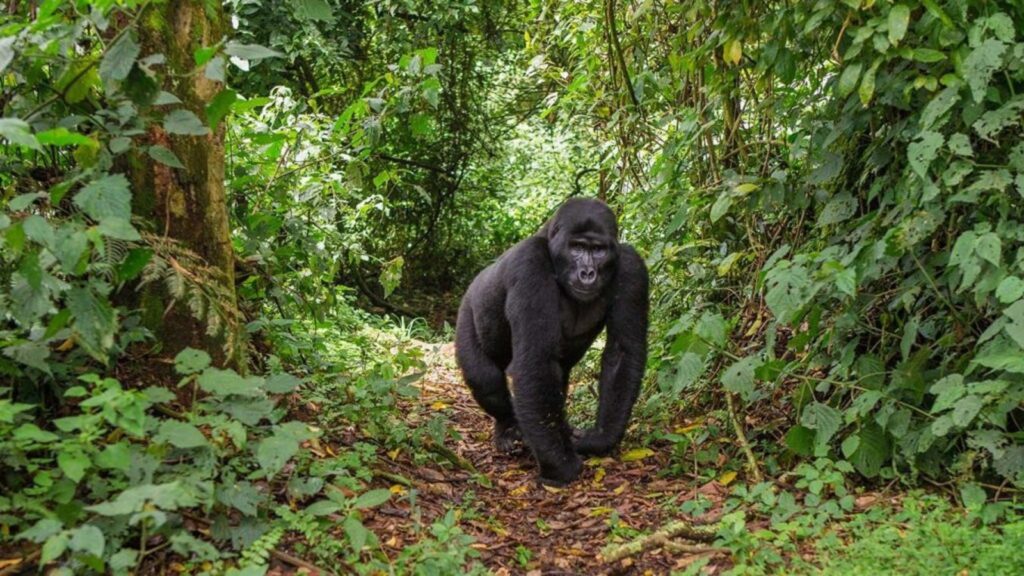
Mountain gorilla trekking takes place within Volcanoes National Park, one of Africa’s most important conservation areas.
The park protects several habituated gorilla families that visitors can track under the supervision of experienced guides and rangers. Each morning, trekkers attend a briefing before entering the forest in small groups.
The trek may take one hour or several hours depending on the location of the assigned gorilla family.
The anticipation builds with every step through the forest.
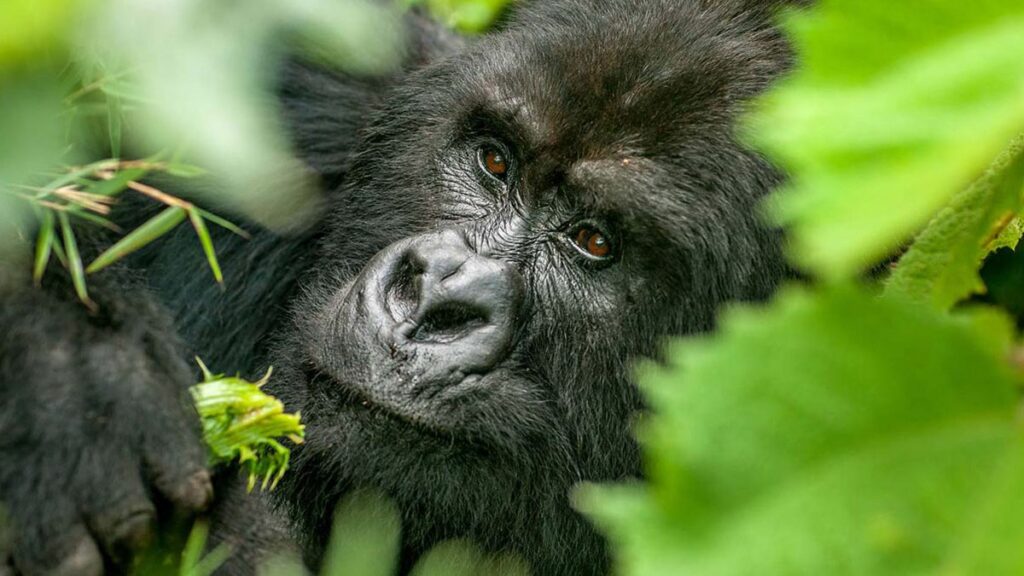
Encountering Mountain Gorillas
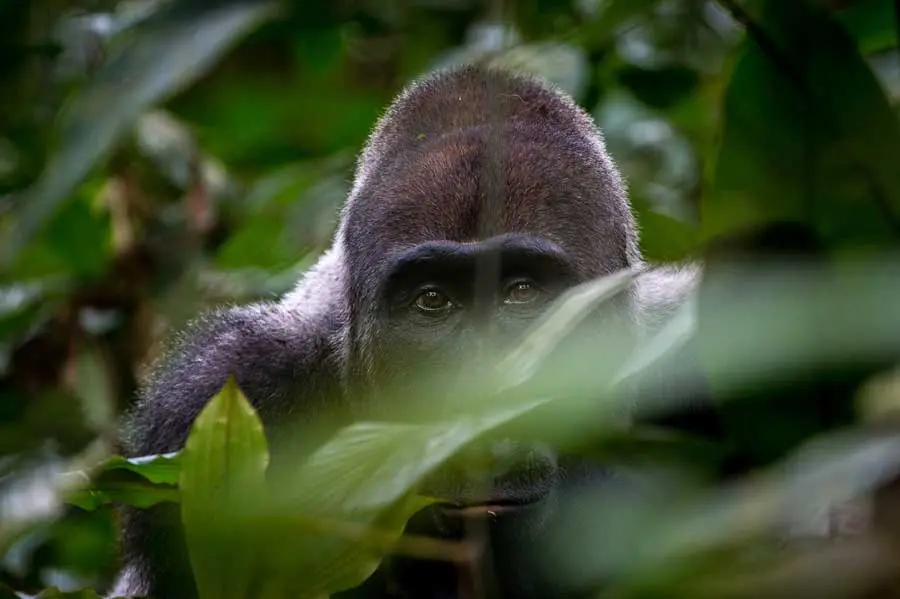
Once visitors locate a gorilla family, they spend one hour observing the animals in their natural environment.
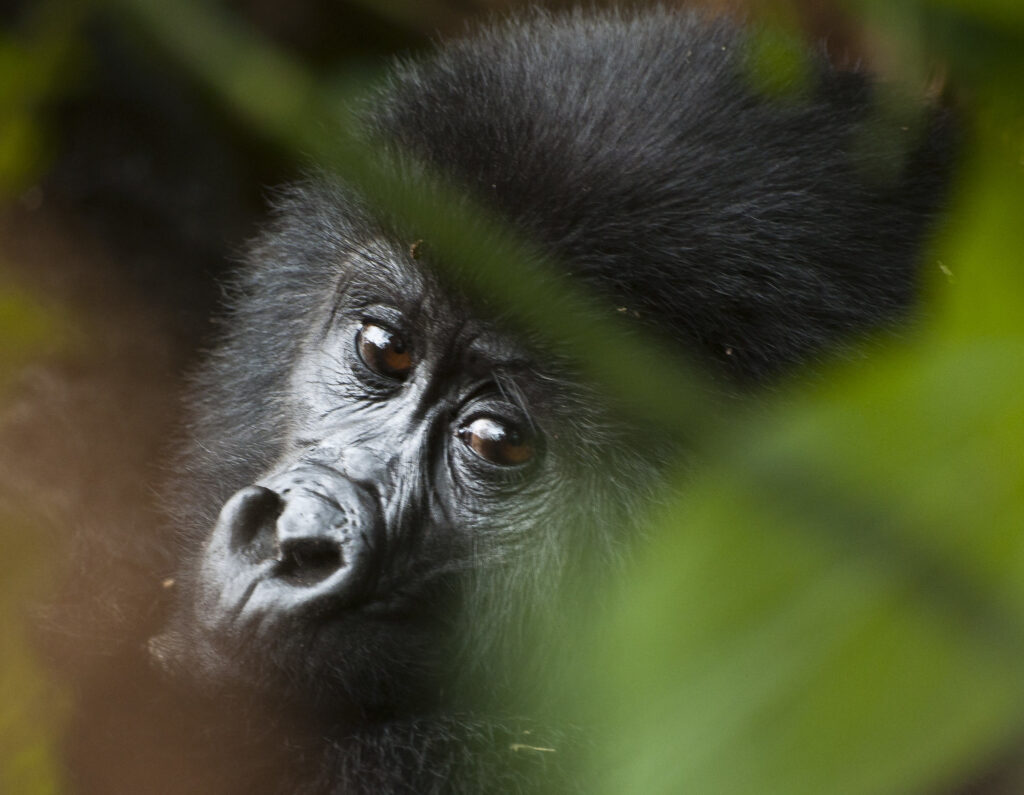
The experience often includes watching silverbacks supervise their families, mothers care for infants, and young gorillas play among the vegetation.
These encounters create powerful emotional connections.
Many visitors consider gorilla trekking the highlight of their African travels.
Why Combine Gorilla Trekking with the Dian Fossey Tomb Hike?
Many travelers view gorilla trekking as a wildlife activity.
The Dian Fossey Tomb Hike transforms it into a broader conservation experience. By combining both activities, visitors gain a deeper appreciation for the efforts that made modern gorilla tourism possible.
The gorillas observed today owe much of their protection to decades of conservation work.
Understanding this history enriches the trekking experience.
The combination creates a stronger connection between wildlife encounters and conservation awareness.
What to Expect During the Dian Fossey Tomb Hike
Starting the Hike
The hike begins at the Volcanoes National Park headquarters where visitors receive a briefing from park officials.
Guides explain the route, safety procedures, and historical significance of the trek before leading participants into the forest.
The trail passes through beautiful montane vegetation.
The scenery provides excellent opportunities for photography.
Hiking Through the Virunga Mountains
The route traverses sections of the Virunga ecosystem, including forested slopes and bamboo zones.
Visitors often encounter birds, unique vegetation, and spectacular views of the surrounding volcanoes.
The journey itself forms a major part of the experience.
Every section of the trail reflects the environment that shaped Fossey’s work.
Reaching the Gravesite
The highlight of the hike is the arrival at Dian Fossey’s tomb.
Her grave lies beside the graves of several gorillas that she studied and protected during her career. Guides share stories about her life, research, and conservation efforts.
The site often inspires reflection among visitors.
It serves as a powerful reminder of the importance of wildlife conservation.
Physical Fitness Requirements
Both gorilla trekking and the Dian Fossey Tomb Hike require a moderate level of physical fitness.
The terrain includes forest trails, uneven surfaces, and varying elevations. While the hikes are manageable for most visitors, preparation improves comfort and enjoyment.
Good hiking boots are essential.
Appropriate clothing also helps visitors adapt to changing weather conditions.
Best Time for the Dian Fossey Tomb Hike Gorilla Trekking Experience
Travelers can enjoy both activities throughout the year.
The drier months generally provide easier hiking conditions and clearer trails. However, the forests remain beautiful and productive during every season.
The lush landscapes create spectacular scenery year-round.
Wildlife viewing opportunities remain excellent.
What to Pack
Proper preparation contributes significantly to a successful experience.
Visitors should carry waterproof clothing, sturdy hiking boots, long trousers, sunscreen, insect repellent, drinking water, and a camera.
Weather conditions can change quickly in the mountains.
Layered clothing helps maintain comfort throughout the day.
Conservation Benefits of Tourism
Both gorilla trekking and the Dian Fossey Tomb Hike contribute directly to conservation efforts.
Tourism revenue supports habitat protection, anti-poaching initiatives, community development projects, scientific research, and wildlife monitoring programs.
Local communities benefit from employment opportunities generated by tourism.
This creates incentives for long-term conservation.
Responsible tourism continues the legacy that Fossey helped establish.
Suggested Itinerary
Day 1: Arrival in Kigali
Arrive in Kigali and prepare for your journey to Volcanoes National Park.
Day 2: Gorilla Trekking
Participate in a mountain gorilla trekking experience and spend one hour with a gorilla family.
Day 3: Dian Fossey Tomb Hike
Follow the historic trail to Karisoke and visit Dian Fossey’s gravesite.
Day 4: Return to Kigali
Travel back to Kigali for departure or continue exploring Rwanda.
This itinerary provides an ideal balance of wildlife encounters and conservation history.
Why This Experience Is Worth It
Few wildlife experiences combine adventure, education, and conservation as effectively as the Dian Fossey Tomb Hike Gorilla Trekking itinerary.
Visitors not only observe mountain gorillas but also learn about the people who dedicated their lives to protecting them. The combination deepens understanding and appreciation of conservation efforts in the Virunga Mountains.
The experience offers more than photographs and memories.
It provides valuable perspective on the relationship between tourism and conservation.
Conclusion
The Dian Fossey Tomb Hike Gorilla Trekking experience offers one of the most meaningful adventures in Rwanda. By combining mountain gorilla trekking with a visit to the historic Karisoke Research Center and Dian Fossey’s final resting place, travelers gain a deeper understanding of both gorilla conservation and Rwanda’s remarkable wildlife heritage.
From unforgettable encounters with mountain gorillas to the inspiring story of Dian Fossey’s dedication and sacrifice, this journey creates lasting memories and valuable conservation awareness. For travelers seeking a safari experience that combines wildlife, history, and purpose, the Dian Fossey Tomb Hike Gorilla Trekking adventure remains one of Rwanda’s most rewarding activities.