Park Headquarters Arrival for Gorilla Trek: What Time Should You Arrive?
The park headquarters arrival gorilla trek process is an important part of preparing for a mountain gorilla trekking experience in Uganda, Rwanda, or the Democratic Republic of the Congo. Before visitors enter the forest, they normally report to a designated park or trekking headquarters for registration, permit verification, group allocation, and a pre-trek briefing.
Arriving at the correct time helps ensure that the day’s arrangements run smoothly. Visitors who arrive late may miss important instructions or create delays for their trekking group.
For travelers staying near Bwindi Impenetrable National Park, Mgahinga Gorilla National Park, or Volcanoes National Park, understanding when and where to report is therefore essential.
The exact reporting time can vary depending on the trekking destination, sector, tour operator, and current park procedures. Travelers should always follow the latest instructions provided with their permit and by their tour operator.
What Is the Park Headquarters for Gorilla Trekking?
The park headquarters is the designated location where gorilla trekking activities are organized before visitors enter the forest.
At the headquarters, park staff and guides coordinate the day’s trekking arrangements.
Visitors may complete registration, have their permits checked, receive information about their assigned gorilla family, meet their guide and trackers, and attend the pre-trek briefing.
The headquarters, therefore, serves as the main starting point for the organized part of the guerrilla trekking experience.
What Time Should You Arrive?
Gorilla trekking normally begins in the morning, so visitors should arrive early enough to complete all required procedures before entering the forest.
The exact reporting time varies between trekking destinations and can change according to park procedures.
For this reason, travelers should not rely on a generic arrival time found online.
Your tour operator, lodge, permit documentation, or park authority should provide the current reporting instructions for your specific trek.
As a practical approach, staying close to the trekking headquarters the night before makes an early arrival much easier.
Why Early Arrival Matters
Arriving early gives you enough time to complete registration without rushing.
You may also need time to organize your hiking equipment, use the restroom, drink water, and meet other members of your trekking group.
The guide may provide important information before the trek begins.
A relaxed arrival allows you to focus on the experience instead of worrying about being late.
What Happens When You Arrive?
When you arrive at the headquarters, staff normally organize visitors according to the day’s trekking arrangements.
Your permit and booking information may be checked.
You may then be assigned to a trekking group and introduced to the guide.
The group receives instructions about the gorilla family being tracked, conservation rules, safety, and expected trekking conditions.
After the briefing, the group prepares to enter the forest.
Gorilla Permit Verification
Your gorilla permit is an essential part of the trekking process.
Park staff need to confirm that you are authorized to participate in the trek.
Travelers should carry the required permit or booking documentation according to the instructions provided by their tour operator.
Personal identification may also be required.
Your tour operator should explain what documents you need to bring.
What Documents Should You Carry?
Travelers should keep their passport or other required identification readily available.
Your gorilla permit documentation should also be accessible.
Avoid packing important documents deep inside your luggage because you may need them during registration.
If your tour operator has arranged the permit on your behalf, confirm beforehand which documents you need to present at the headquarters.
Gorilla Trekking Group Allocation
The headquarters is where visitors are organized into trekking groups.
Group allocation can depend on the available gorilla families, conservation requirements, visitor numbers, and operational arrangements.
The final assignment is determined according to the park’s procedures.
Travelers should therefore avoid assuming that they can choose any family simply because they have a particular preference.
Meeting Your Guide and Trackers
After registration and group allocation, visitors meet the guide responsible for leading the trek.
Trackers may also be involved in locating the gorilla family.
The guide explains how the group should move through the forest and communicates with trackers during the search.
This team plays an important role in making the trek safe and informative.
The Pre-Trek Gorilla Briefing
The briefing is one of the most important activities at the headquarters.
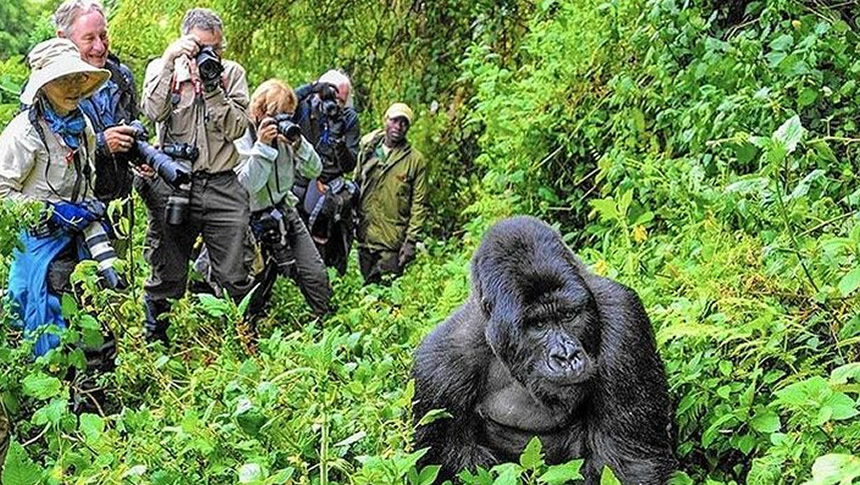
Guides explain how visitors should behave around the gorillas and review conservation and safety rules.
You may receive instructions about maintaining distance, avoiding sudden movements, keeping noise levels low, and following the guide.
Health precautions and photography rules may also be discussed.
Visitors should pay close attention because these instructions help protect both people and gorillas.
What If You Arrive Late?
Late arrival can create problems.
You may miss part of the registration or briefing process.
Depending on the circumstances, you could also delay other members of your trekking group.
If you realize that you may be late, contact your tour operator immediately.
Do not assume that the park will wait indefinitely for a late visitor.
Where Should You Stay the Night Before?
The best location depends on your trekking sector.
Uganda’s Bwindi region has several trekking sectors, and accommodation options are located at different distances from their respective headquarters.
Travelers trekking in Mgahinga should also consider accommodation that allows easy access to the park’s designated meeting point.
In Rwanda, many visitors stay near Volcanoes National Park or in nearby towns and lodges.
Choosing accommodation close to your trekking headquarters can reduce early-morning travel stress.
Why Your Trekking Sector Matters
Bwindi Impenetrable National Park is divided into several trekking areas.
These include Buhoma, Ruhija, Rushaga, and Nkuringo.
Your permit is associated with a particular trekking arrangement, so your accommodation should ideally be located near the appropriate starting point.
Booking a beautiful lodge in another sector without checking the distance can create unnecessary logistical problems.
Always confirm your exact meeting point before finalizing accommodation.
Park Headquarters: Arrival in Bwindi
Gorilla trekking in Bwindi takes place across different sectors.
Each sector has its own operational arrangements and starting point.
Visitors should therefore confirm the exact headquarters where they need to report.
The distance between accommodation and the meeting point can vary considerably.
Your safari operator should provide clear instructions before the trekking day.
Park Headquarters: Arrival in Mgahinga
Mgahinga Gorilla National Park has its own trekking arrangements and designated meeting point.
Travelers should confirm the reporting location and time with their tour operator or park authority before the trek.
Because accommodation options are more limited than in some Bwindi sectors, planning transportation in advance can be useful.
Park Headquarters: Arrival in Rwanda
Visitors trekking in Volcanoes National Park report for the pre-trek arrangements before entering the gorilla habitat.
The exact procedures and reporting instructions can change.
Travelers should follow the information supplied by their tour operator and the relevant park authority.
Staying nearby the previous night is generally the easiest way to avoid an early-morning transportation problem.
Park Headquarters: Arrival in Congo
Gorilla trekking arrangements in the Democratic Republic of Congo depend on current tourism operations in the Virunga region.
Travelers should obtain up-to-date information about the designated meeting point, reporting time, security procedures, and transport arrangements.
Do not rely on outdated travel information because operating conditions can change.
What Should You Do Before Leaving Your Lodge?
Before leaving your accommodation, check that you have everything needed for the trek.
Wear appropriate hiking clothing and sturdy footwear.
Carry drinking water and any equipment permitted by the park.
Protect your camera and other electronics against rain.
Keep your passport and required documentation accessible.
Most importantly, leave enough time to reach the headquarters without rushing.
Should You Eat Breakfast Before the Trek?
Yes.
Gorilla trekking can last several hours, depending on where the gorilla family is located.
A substantial breakfast can help provide energy for the hike.
If your lodge offers an early breakfast or packed meal, ask about arrangements the evening before.
However, follow the park’s instructions about eating and carrying food into the forest.
What About Drinking Water?
Carry sufficient drinking water for the trek according to your tour operator’s recommendations.
The forest can be humid, and the hike may become physically demanding.
A reusable water bottle or hydration system can be convenient.
Avoid leaving plastic bottles or other waste in the forest.
What If You Need a Porter?
If you plan to hire a porter, ask your lodge or tour operator about arrangements before reaching the headquarters.
Porters can help carry bags and provide assistance on steep or muddy trails.
Hiring a local porter also provides income to communities surrounding gorilla trekking areas.
For travelers concerned about the physical demands of the trek, this can be a valuable service.
Can You Use the Restroom at Headquarters?
Facilities at the headquarters may provide visitors with an opportunity to use the restroom before entering the forest.
It is advisable to do so because restroom facilities may be limited once you are deep inside the forest.
Visitors should also follow the guide’s instructions concerning sanitation during the trek.
What If You Have a Medical or Mobility Concern?
Inform your tour operator and guide before the trek if you have a mobility concern or another issue that could affect your ability to hike.
Do not wait until you are struggling on the trail to mention an important limitation.
Early communication allows the team to consider appropriate support, including porter assistance or other available arrangements.
The objective is to make the experience as safe and manageable as possible.
Can You Change Your Trekking Sector at the Headquarters?
Travelers should not expect to change their trekking sector simply by arriving at the headquarters.
Permit allocation and trekking arrangements are managed by the relevant wildlife authority.
If you have a special request, discuss it with your tour operator well before the trekking date.
Last-minute changes may not be possible.
What Happens After the Briefing?
Once registration, allocation, and briefing are complete, the trekking group begins its journey toward the gorilla family.
Trackers work to locate the animals while the guide leads visitors through the forest.
The trek can be relatively short or last several hours.
The distance depends largely on where the gorillas have moved.
Can the Trek Start Immediately After the Briefing?
Usually, the group proceeds into the forest once all preparations are complete.
However, the exact sequence depends on the day’s operational arrangements.
Some groups may have a short transfer from the headquarters before beginning the hike.
Your guide will explain what happens next.
Why You Should Not Rush the Morning
A rushed morning can make an otherwise exciting safari stressful.
Travelers should allow time for breakfast, dressing, transportation, registration, and briefing.
If you are staying some distance from the headquarters, leave earlier than you think necessary.
Mountain roads can be slow, especially in rainy conditions.
What If Your Lodge Is Far From Headquarters?
If your accommodation is far away, arrange transport in advance.
Do not rely on finding a vehicle at the last minute.
Your tour operator can normally advise on the best departure time based on your lodge location and trekking sector.
In remote areas, road conditions can affect travel time significantly.
Why Staying Nearby Is Better
Staying near the headquarters the night before has several advantages.
It reduces travel time on the morning of the trek.
It allows you to sleep longer and prepare more comfortably.
It also reduces the risk of arriving late because of unexpected road delays.
For visitors with early-morning trekking arrangements, proximity can be more valuable than choosing accommodation based solely on luxury.
Frequently Asked Questions
What time should I arrive at the park headquarters for gorilla trekking?
The exact reporting time varies by destination and current park procedures. Follow the time provided by your tour operator or park authority and arrive early enough to complete registration and briefing.
What happens at the gorilla trekking headquarters?
Visitors normally complete registration and permit verification, receive group arrangements, meet guides and trackers, and attend a pre-trek briefing before entering the forest.
Can I arrive directly from another town on the morning of trekking?
This may be possible depending on the distance and road conditions, but staying closer to the headquarters the previous night is usually more convenient.
What happens if I arrive late?
Late arrival can interfere with registration and group arrangements. Contact your tour operator immediately if you expect to be delayed.
Do I need my passport for gorilla trekking?
Travelers should carry the identification documents requested by their tour operator or wildlife authority. Confirm the current requirements before the trekking day.
Should I hire a porter before arriving at headquarters?
You can discuss porter arrangements with your lodge or tour operator beforehand. Porters can also be available around some trekking starting points.
How long does the gorilla trek take after leaving headquarters?
The duration varies considerably. Some groups locate the gorillas relatively quickly, while others may hike for several hours.
Conclusion
The park headquarters arrival gorilla trek process is an essential part of preparing for a successful mountain gorilla experience. Arriving at the correct meeting point with enough time allows visitors to complete registration, verify their permits, meet their guides and trackers, receive their gorilla family assignment, and attend the pre-trek briefing.
The exact reporting time and procedures vary between Uganda, Rwanda, and the Democratic Republic of Congo, as well as between individual trekking sectors. Travelers should therefore follow the latest instructions provided by their tour operator and the relevant wildlife authority.
For Uganda’s Bwindi and Mgahinga areas, choosing accommodation close to the correct trekking sector can make the morning much easier. Travelers should also prepare their documents, hiking equipment, water, and clothing the night before.
Most importantly, avoid treating the headquarters arrival as a minor detail. It is the point where the day’s gorilla trekking experience begins, and being prepared and punctual helps create a smooth transition from the lodge to the forest.