What Does a Silverback Gorilla Eat? Complete Guide to the Gorilla Diet
What does a silverback gorilla eat? This is a common question among travelers preparing for gorilla trekking in Uganda, Rwanda, or the Democratic Republic of Congo. Silverback gorillas are powerful animals that can weigh well over 100 kilograms, yet their diet consists primarily of plants rather than meat.
A silverback spends much of the day feeding on vegetation found throughout the mountain forest. Leaves, stems, shoots, bark, flowers, and fruits can all contribute to the diet, depending on what is available in the habitat and the season.
Despite their impressive size and strength, mountain gorillas do not need a meat-based diet to maintain their bodies. Their large digestive systems allow them to process substantial amounts of fibrous plant material.
Understanding what silverbacks eat also helps travelers appreciate the relationship between gorillas and their forest habitat. The availability of vegetation influences where gorilla families move, how long they spend feeding, and how they interact with their environment.
What Is the Main Diet of a Silverback Gorilla?
A silverback’s diet is predominantly herbivorous.
Mountain gorillas consume a wide variety of vegetation, with leaves, stems, shoots, and other plant parts forming major components of their diet.
They may also eat fruits when seasonal availability allows.
The exact diet varies according to habitat, season, and the plants growing in the area occupied by the gorilla family.
Silverbacks therefore do not follow a fixed daily menu.
Do Silverback Gorillas Eat Meat?
No, mountain gorillas are primarily herbivorous and do not normally hunt animals for food.
Their natural diet is dominated by vegetation.
Their large bodies may give them an intimidating appearance, but their feeding behavior is very different from that of carnivorous predators.
Visitors on gorilla trekking safaris will most commonly see gorillas searching for and consuming plants.
Do Silverbacks Eat Leaves?
Yes.
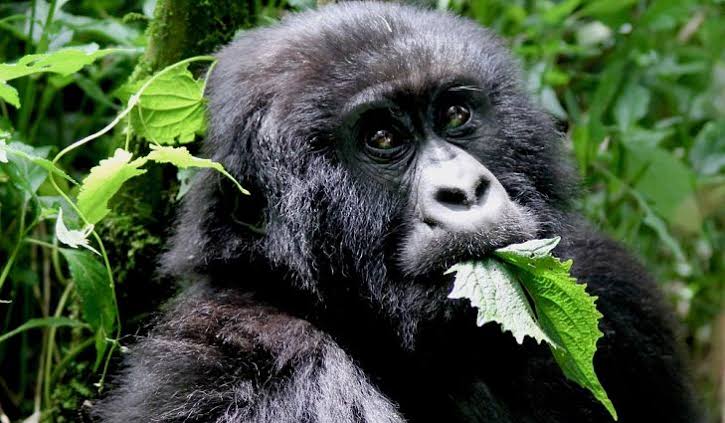
Leaves are an important part of the mountain gorilla diet.
A silverback may pull leaves from vegetation and consume them directly.
Gorillas spend considerable time feeding, so travelers may frequently observe this behavior during trekking.
Leaves provide nutrients and contribute to the large volume of plant material that gorillas consume each day.
Do Silverbacks Eat Stems and Shoots?
Yes.
Stems and young shoots are important food sources for mountain gorillas.
Gorillas can use their hands and teeth to strip vegetation and consume tender plant parts.
Young shoots may be particularly attractive because they are softer and easier to process.
This feeding behavior also explains why gorillas can spend significant periods moving slowly through vegetation.
Do Silverback Gorillas Eat Bamboo?
Mountain gorillas can consume bamboo shoots and other bamboo parts when available.
Bamboo can provide an important food source in areas where it grows within their habitats.
However, bamboo is only one component of the broader gorilla diet.
The availability of different plants changes according to location and season.
Do Silverback Gorillas Eat Fruits?
Yes, mountain gorillas can eat fruit.
However, fruit generally forms a smaller proportion of the diet of mountain gorillas than it does for some other great apes.
Mountain gorillas primarily live in high-altitude environments where leafy vegetation is abundant and fruit availability can be more limited.
When suitable fruits are available, gorillas may take advantage of them.
Do Silverbacks Eat Flowers?
Yes.
Flowers can form part of the mountain gorilla diet.
Gorillas are opportunistic feeders and consume different edible plant parts according to what is available.
Flowers can provide additional nutrients and variety.
Visitors may occasionally see gorillas feeding on flowers while moving through the forest.
Do Silverback Gorillas Eat Bark?
Yes.
Mountain gorillas can consume bark and other woody plant material.
They may strip sections of bark from suitable vegetation and chew the softer material.
This is another example of how their diet allows them to use a wide variety of forest resources.
Do Silverbacks Eat Roots?
Gorillas can consume roots and other underground plant parts when they are accessible.
Their strong hands allow them to manipulate vegetation and expose edible portions.
The availability of roots varies according to habitat and plant species.
Roots therefore form part of a diverse diet rather than being the main food source.
How Much Does a Silverback Gorilla Eat?
Silverback gorillas consume large quantities of vegetation because plant foods are generally less energy-dense than meat.
An adult gorilla can spend many hours feeding throughout the day.
The exact amount consumed varies according to body size, activity, food availability, and the nutritional quality of the vegetation.
It is therefore more useful to think of the gorilla diet in terms of extensive daily feeding rather than a single fixed amount.
How Often Does a Silverback Eat?
Gorillas feed at several periods throughout the day.
A silverback may move from one feeding area to another while selecting different plants.
Feeding is often interrupted by resting, social interactions, movement, and other activities.
During a trekking encounter, visitors may therefore see gorillas eating for a few minutes before they move or rest.
Why Do Silverback Gorillas Eat So Much Vegetation?
Plant material is generally less energy-dense than many animal foods.
Gorillas compensate by consuming substantial quantities.
Their digestive system is adapted to process fibrous vegetation.
This allows them to obtain energy and nutrients from plants that many other animals cannot efficiently use.
How Does a Silverback Find Food?
Silverbacks use their senses and experience to locate suitable vegetation.
They move through the forest while selecting edible leaves, shoots, stems, and other plant parts.
The rest of the group usually moves with the silverback or follows the group’s established movement patterns.
Gorilla trackers also monitor the group’s movements to locate them for trekking visitors.
Does the Silverback Decide What the Group Eats?
The silverback plays an important role in group movement, but feeding is not simply controlled by one individual.
Different gorillas can select food according to what they encounter.
The group may move through an area where suitable vegetation is available and then spread out slightly while feeding.
The silverback’s leadership influences group movement, but individual gorillas still make feeding choices.
What Does a Silverback Gorilla Drink?
Water can come from several sources.
Gorillas obtain much of their water through the vegetation they consume.
They may also drink from streams, puddles, or other natural water sources when available.
The amount of direct drinking can therefore vary according to diet, weather, and habitat conditions.
Do Silverback Gorillas Eat Insects?
Mountain gorillas may occasionally consume small insects or other animal matter accidentally encountered while feeding.
However, this is not a major part of their diet.
Their diet remains overwhelmingly plant-based.
They are not predators and do not depend on animal prey for nutrition.
Do Silverbacks Eat Bananas?
Wild mountain gorillas do not normally eat cultivated bananas as part of their natural forest diet.
They eat naturally occurring vegetation within their habitat.
Visitors should never feed gorillas bananas, fruit, or any other human food.
Feeding wildlife can alter natural behavior and create health and conservation risks.
Do Silverback Gorillas Eat Human Food?
No.
Visitors must never give food to wild gorillas.
Human foods are not part of the natural gorilla diet and may cause health problems.
Feeding can also encourage animals to approach humans and change their natural behavior.
Gorilla trekking rules exist partly to prevent these interactions.
Silverback Feeding Behavior During Gorilla Trekking
Feeding is one of the most common behaviors visitors observe during gorilla trekking.
A silverback may sit among vegetation, pull leaves toward himself, chew slowly, and move from one plant to another.
Other members of the group may feed nearby.
This can create an excellent opportunity for visitors to observe natural behavior without disturbing the animals.
What Does a Silverback Eat During the Dry Season?
The diet depends on which plants remain available in the habitat.
Gorillas can adapt their feeding choices according to seasonal vegetation.
They may consume leaves, stems, shoots, bark, and other available plant material.
The exact composition of the diet can therefore change throughout the year.
What Does a Silverback Eat During the Rainy Season?
Rain can increase the availability of certain vegetation.
Fresh shoots and other plant growth may become more abundant in some areas.
Gorillas can adjust their feeding behavior according to the plants available in their territory.
Their flexible diet helps them survive in a changing mountain environment.
How the Gorilla Diet Supports Their Strength
A silverback’s physical strength comes from a combination of genetics, body structure, muscle development, and nutrition.
A plant-based diet provides energy, protein, minerals, and other nutrients required for growth and maintenance.
The large quantities of vegetation consumed by gorillas help support their substantial bodies.
Their diet demonstrates that strength does not require a carnivorous lifestyle.
Gorilla Diet and Forest Ecology
Silverbacks do more than simply consume vegetation.
As gorillas feed and move through the forest, they interact with plants and contribute to ecological processes.
Their movement can disturb vegetation and help distribute seeds when they consume fruit.
Gorillas are therefore an important part of the forest ecosystem.
Does Every Gorilla Eat the Same Food?
Not necessarily.
Diet varies according to age, individual preference, location, season, and food availability.
Infants depend heavily on their mothers and gradually begin consuming solid foods as they develop.
Juveniles may explore different foods while learning feeding behaviors.
Adults consume larger quantities and have more extensive feeding experience.
Silverback Diet Compared With Other Gorillas
Mountain gorillas generally rely heavily on leafy vegetation because of the environment in which they live.
Other gorilla populations living in lower-altitude forests may consume considerably more fruit.
This demonstrates how gorilla diets can vary according to habitat.
The environment plays an important role in determining what food is available.
Can Visitors See Silverbacks Feeding?
Yes.
Feeding is one of the behaviors visitors frequently observe during gorilla trekking.
A silverback may feed while seated, standing, or moving through vegetation.
Travelers should remain quiet and maintain the required distance.
The goal is to watch the gorilla naturally rather than encourage interaction.
Why Visitors Should Not Interrupt Feeding
Feeding is an essential part of a gorilla’s daily life.
Visitors should avoid making loud noises, moving unnecessarily, or attempting to attract the animal’s attention.
Interrupting feeding can cause unnecessary stress.
Quiet observation allows travelers to witness authentic behavior.
Gorilla Diet and Conservation
Protecting mountain gorilla habitat is essential because their food comes directly from the forest.
Habitat loss can reduce access to suitable vegetation and affect gorilla populations.
Conservation programs therefore protect both the animals and the ecosystems that provide their food.
Gorilla tourism can contribute to these efforts by generating revenue for conservation and supporting communities around protected areas.
What Visitors Should Remember
The most important thing to remember is that silverbacks are wild herbivores.
They primarily eat vegetation such as leaves, stems, shoots, flowers, bark, roots, and seasonal fruits.
They do not normally hunt animals for food.
Visitors should never feed them or attempt to influence their feeding behavior.
Instead, travelers should observe quietly and allow the gorillas to forage naturally.
Conclusion
So, what does a silverback gorilla eat? A silverback primarily eats vegetation. Leaves, stems, shoots, flowers, bark, roots, and other plant material form the foundation of the mountain gorilla diet. Seasonal fruits may also contribute when they are available.
Despite their impressive size and strength, silverbacks do not need to hunt animals to maintain their bodies. Their digestive system is adapted to process large quantities of fibrous plant material, allowing them to obtain the nutrients and energy they need from their forest habitat.
During gorilla trekking, visitors may have the opportunity to watch a silverback feeding naturally. These moments provide valuable insight into gorilla behavior and their relationship with the forest.
The best way to experience this behavior is through quiet observation. Never feed a gorilla, attempt to attract its attention, or interfere with its natural feeding activities.