
What to Do If a Gorilla Charges: Gorilla Charge Safety Guide
Knowing how to charge a gorilla is important for anyone planning a mountain gorilla trekking experience in Uganda or Rwanda. Gorilla encounters are carefully managed by trained guides and trackers, and serious incidents are uncommon. However, mountain gorillas remain wild animals, so visitors should understand how to respond if a gorilla suddenly approaches, displays aggressively, or appears to charge.
A gorilla charge can be frightening, especially when a large silverback moves quickly toward visitors. In many situations, however, what appears to be a charge may be a warning or display rather than an attempt to physically attack someone.
The most important rule is simple: stay calm and follow the guide’s instructions. Do not run, scream, make sudden movements, or attempt to confront the gorilla. Guides and trackers are trained to interpret gorilla behavior and manage encounters.
This guide explains what visitors should do during a gorilla charge, why gorillas may charge, how to recognize warning behavior, and how to reduce the risk of an unsafe encounter.
Can a Gorilla Charge a Tourist?
Yes, a mountain gorilla can move rapidly toward a person if it feels threatened, disturbed, or challenged.
However, a charge does not necessarily mean the gorilla intends to attack.
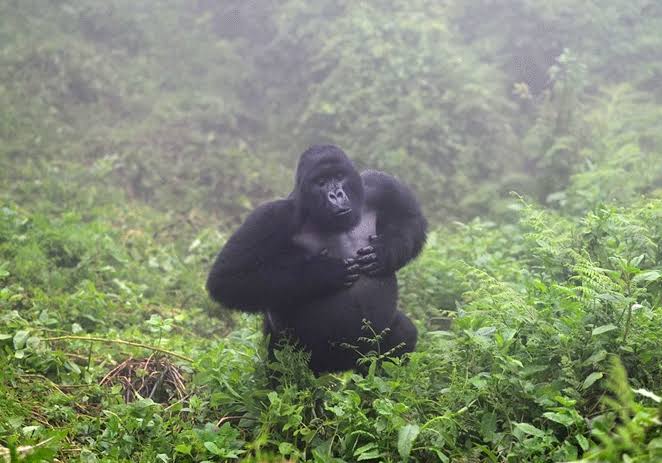
Gorillas use displays and movement to communicate. A silverback may approach visitors quickly, beat its chest, vocalize, stand upright, or make other intimidating movements.
These behaviors can serve as warnings.
Visitors should never attempt to determine the gorilla’s intentions themselves. The guide should control the group’s response.
Why Do Gorillas Charge?
A gorilla may charge or make a rapid approach for several reasons.
A silverback may perceive people as a potential threat to the group. He may also respond to sudden movement, loud noises, unfamiliar behavior, or another perceived disturbance.
The presence of visitors can sometimes trigger a defensive display even when the gorilla does not intend to make physical contact.
Understanding this behavior helps explain why visitors must remain calm and predictable throughout the encounter.
What Should You Do If a Gorilla Charges?
If a gorilla charges, do not run.
Remain as calm as possible and immediately follow the instructions of your guide or tracker.
Keep your movements slow and controlled.
Do not scream, wave your arms, or attempt to scare the gorilla.
Avoid staring aggressively at the animal.
Your guide may instruct you to remain still, lower your body position, change direction, or take another action depending on the situation.
The correct response can vary according to the gorilla’s behavior, distance, and surroundings.
Should You Run From a Charging Gorilla?
No.
Running can create a sudden movement that may increase the animal’s interest or make the situation more difficult to manage.
Visitors should remain with the group and follow the guide’s instructions.
Do not turn the encounter into a chase.
The safest response is controlled behavior rather than panic.
Should You Scream During a Gorilla Charge?
No.
Screaming can increase noise and may contribute to an already stressful situation.
Keep your voice low unless the guide instructs you otherwise.
Avoid shouting at the gorilla or attempting to frighten it away.
Your guide is trained to manage the encounter and should direct the group.
Should You Make Eye Contact With a Charging Gorilla?
Avoid prolonged or confrontational eye contact.
Do not stare intensely at the gorilla as though challenging it.
At the same time, do not panic or suddenly turn away and run.
Remain calm, keep your movements controlled, and follow the guide’s instructions.
The guide can interpret the gorilla’s wider body language more effectively than a visitor observing one behavior in isolation.
What If the Gorilla Beats Its Chest?
Chest beating does not automatically mean that an attack is about to happen.
Gorillas use chest beating as a form of communication and display.
A silverback may beat his chest during excitement, social interactions, displays of strength, or defensive situations.
If chest beating occurs alongside a rapid approach or other intimidating behavior, visitors should pay close attention to the guide.
Never imitate the chest beating.
What If a Gorilla Stands Upright?
Standing upright can form part of a gorilla’s display behavior.
A silverback may stand tall to make himself appear larger and communicate strength.
Visitors should not interpret this as an invitation to approach.
Remain calm and follow the guide’s instructions.
What If the Gorilla Comes Very Close?
A gorilla may sometimes approach visitors during a trekking encounter.
If this happens, do not reach toward the animal.
Do not attempt to touch it or move closer for a photograph.
Remain calm and allow the guide to manage the situation.
The gorilla may simply pass through the area or move away after displaying its behavior.
What If a Gorilla Touches You?
Visitors should never intentionally touch a gorilla.
If a gorilla unexpectedly comes into physical contact with someone, the visitor should remain calm and follow the guide’s instructions.
Do not push the gorilla away unless instructed to do so.
Avoid sudden movements.
The guide and trackers should manage the encounter and determine the appropriate response.
What If You Are Carrying a Backpack?
Keep your backpack with you unless your guide gives different instructions.
Do not swing it toward the gorilla or use it to frighten the animal.
Avoid sudden movements.
A small, secure backpack is generally easier to manage during a trek than a large or loosely packed bag.
What If You Have a Camera?
Do not raise your camera suddenly toward a charging gorilla.
Your safety and the animals’ welfare are more important than obtaining a photograph.
If the guide tells you to stop photographing, follow the instruction immediately.
Once the situation has settled, you can resume photography if the guide considers it appropriate.
What Should Children Do During a Gorilla Charge?
Children should remain close to their accompanying adults and follow the guide’s instructions.
Parents should avoid shouting or making sudden movements.
Before trekking, families should discuss basic safety behavior with children so they understand the importance of remaining calm around gorillas.
Current age and trekking requirements should also be confirmed before booking a family gorilla safari.
Why Guides Are Important During Gorilla Encounters
Gorilla trekking guides and trackers play a critical role in managing encounters.
They understand the behavior of habituated gorilla groups and can recognize changes in body language, vocalizations, movement, and group dynamics.
They also know the terrain and can communicate with other trackers during the trek.
Visitors should therefore avoid acting independently when a gorilla behaves unexpectedly.
Can Guides Prevent a Gorilla Charge?
Guides cannot control wild animals, but their experience helps reduce the likelihood of problematic encounters.
They can anticipate certain behaviors, position visitors appropriately, maintain trekking rules, and respond quickly when gorillas display signs of discomfort.
Visitors contribute to safety by following instructions and avoiding behavior that could disturb the animals.
How to Reduce the Risk of a Gorilla Charge
Responsible behavior is the best way to reduce unnecessary risks.
Visitors should maintain the required distance, keep their voices low, avoid sudden movements, never feed the gorillas, and never attempt to touch them.
Do not imitate gorilla sounds or displays.
Avoid using flash photography where prohibited.
Most importantly, remain with the trekking group and follow the guide’s instructions.
Gorilla Habituation and Safety
Tourist gorilla groups have undergone habituation, meaning they have been gradually accustomed to the controlled presence of humans.
Habituation does not make gorillas tame.
They remain wild animals capable of displaying defensive behavior.
Visitors must therefore respect the animals’ space even when the gorillas appear calm.
Gorilla Charges and Conservation
Appropriate visitor behavior protects more than tourists.
Mountain gorillas can also be harmed by human interaction, particularly through disease transmission and unnecessary stress.
Maintaining distance and following trekking regulations help protect the animals.
Responsible gorilla tourism contributes to conservation by allowing visitors to observe gorillas while minimizing disturbance.
What Not to Do During a Gorilla Charge
Do not run.
Do not scream.
Do not throw objects.
Do not wave your arms aggressively.
Do not attempt to scare the gorilla.
Do not imitate its chest beating.
Do not move closer for a photograph.
Do not attempt to touch the animal.
Do not ignore the guide’s instructions.
These actions can make an already stressful encounter more difficult to manage.
Gorilla Charge vs Gorilla Display
It is important to distinguish between a rapid approach and an actual physical attack.
Gorillas may use displays to communicate without making physical contact.
A silverback can charge toward an apparent threat and stop before reaching it.
The behavior may be intended to intimidate rather than cause injury.
Only trained guides and trackers should interpret the situation and decide how visitors should respond.
Are Gorilla Trekking Encounters Dangerous?
Gorilla trekking involves observing wild animals, so there is always an element of risk.
However, trekking is conducted under controlled conditions with trained guides and trackers.
Visitors receive instructions before entering the forest and must follow established rules during the encounter.
Responsible behavior significantly reduces unnecessary risks.
Travelers should never treat gorilla trekking as an opportunity for close physical interaction with wildlife.
Gorilla Safety Briefing Before Trekking
Before beginning the trek, visitors normally receive instructions about appropriate behavior around gorillas.
Pay close attention during this briefing.
Ask the guide if you are uncertain about any instruction.
Knowing what to expect before entering the forest can help you remain calm during an unexpected encounter.
Health Considerations After a Close Encounter
Gorilla trekking rules also protect the health of the animals and visitors.
Gorillas are susceptible to human illnesses, particularly respiratory infections.
Visitors who are unwell should follow current park rules and notify their tour operator before trekking.
After an unexpected close encounter, follow any additional instructions provided by park authorities or your guide.
Why Staying Calm Matters
Fear can cause people to react instinctively.
Running, shouting, or making sudden movements can make it more difficult for guides to manage the encounter.
Staying calm allows you to hear instructions and respond appropriately.
Even if a silverback’s display looks intimidating, remember that a display does not automatically mean an attack is coming.
Gorilla Charge Safety Checklist
Before your trek, remember these basic principles:
Stay calm.
Do not run.
Do not scream.
Avoid sudden movements.
Do not challenge the gorilla.
Maintain the required distance whenever possible.
Do not touch or feed the animals.
Follow the guide and tracker immediately.
These principles are more important than attempting to memorize a complicated response.
Conclusion
Knowing how to charge a gorilla can help travelers remain calm during an unexpected mountain gorilla encounter.
A gorilla moving rapidly toward visitors may be displaying defensive or intimidating behavior rather than attempting to attack. Nevertheless, visitors should always treat the situation seriously and follow the instructions of trained guides and trackers.
Do not run, scream, wave your arms, imitate the gorilla, or attempt to obtain a photograph. Remain calm, keep your movements controlled, and allow the professionals accompanying the group to manage the encounter.
Gorilla trekking is carefully regulated to protect both visitors and mountain gorillas. By respecting the animals, maintaining appropriate boundaries, and following trekking rules, travelers can enjoy an extraordinary wildlife experience while contributing to responsible gorilla tourism and conservation.



