Rwenzori vs Gorilla Trekking: Which Uganda Adventure Is Right for You?
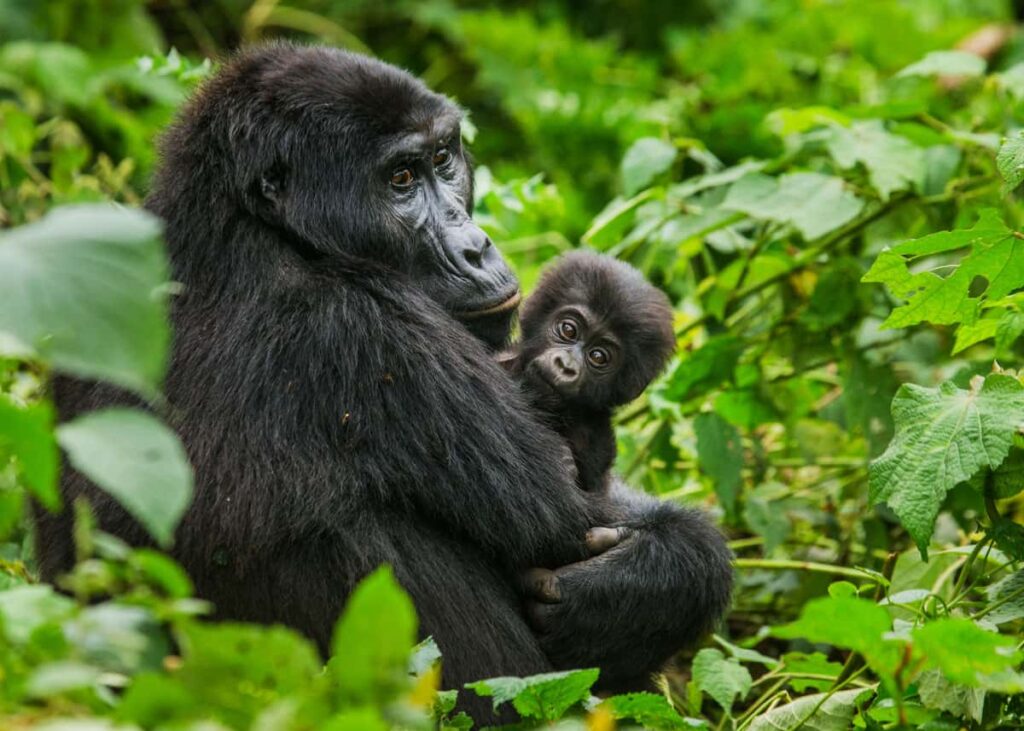
Choosing between the Rwenzori and gorilla trekking is one of the biggest decisions travelers face when planning an adventure safari in Uganda. Both experiences rank among Africa’s finest outdoor adventures, yet they offer completely different journeys. Gorilla trekking takes visitors deep into ancient rainforests to spend one unforgettable hour observing endangered mountain gorillas in their natural habitat, while climbing the Rwenzori Mountains challenges adventurers to conquer Africa’s legendary “Mountains of the Moon,” with snow-capped peaks, glaciers, waterfalls, and alpine landscapes.
Neither experience is objectively better than the other because each appeals to different travel interests, fitness levels, budgets, and available time. Gorilla trekking focuses on wildlife encounters and conservation, while the Rwenzori Mountains provide one of Africa’s most demanding and rewarding mountaineering adventures. Many travelers even choose to combine both experiences into one unforgettable Uganda itinerary.
This guide compares every important aspect of Rwenzori vs. gorilla trekking to help you decide which adventure best matches your travel goals.
Overview of Gorilla Trekking
Gorilla trekking takes place in Bwindi Impenetrable National Park and Mgahinga Gorilla National Park in southwestern Uganda.
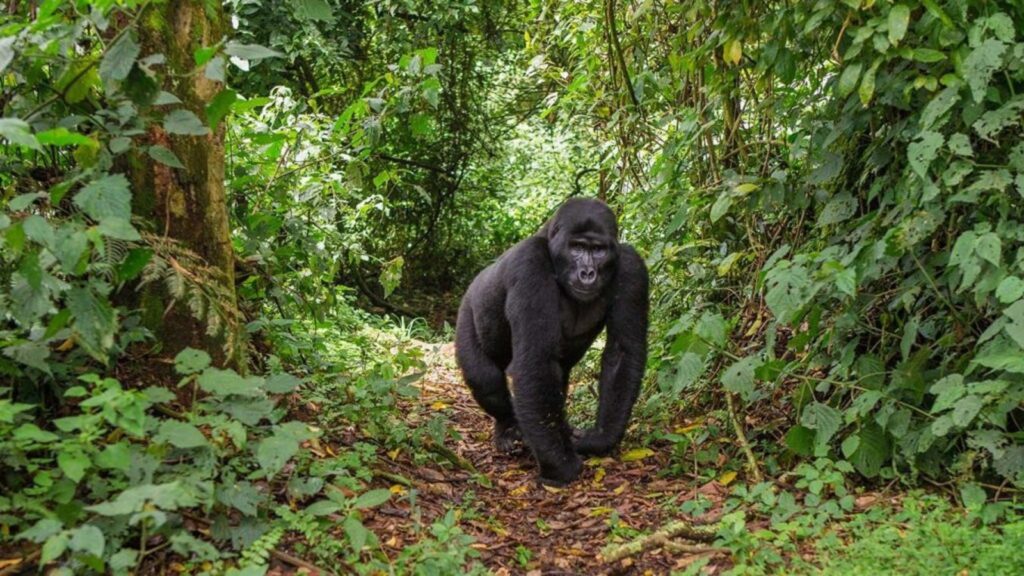
After an early morning briefing, visitors join experienced Uganda Wildlife Authority guides to hike through dense rainforest in search of one of the park’s habituated mountain gorilla families. Trekking times vary from less than an hour to several hours depending on the gorillas’ movements.
Once the gorillas are located, visitors spend one hour observing their natural behavior before returning to the park headquarters.
Overview of the Rwenzori Mountains
The Rwenzori Mountains are located in western Uganda near Kasese.
The mountain range rises to 5,109 meters at Margherita Peak and offers one of Africa’s most challenging trekking experiences. Multi-day expeditions pass through tropical rainforest, bamboo forests, giant heather zones, alpine bogs, glaciers, and snow-covered peaks.
Most summit expeditions require between seven and nine days.
Wildlife vs Mountain Adventure
The most significant difference in the Rwenzori vs. gorilla trekking comparison is the type of experience.
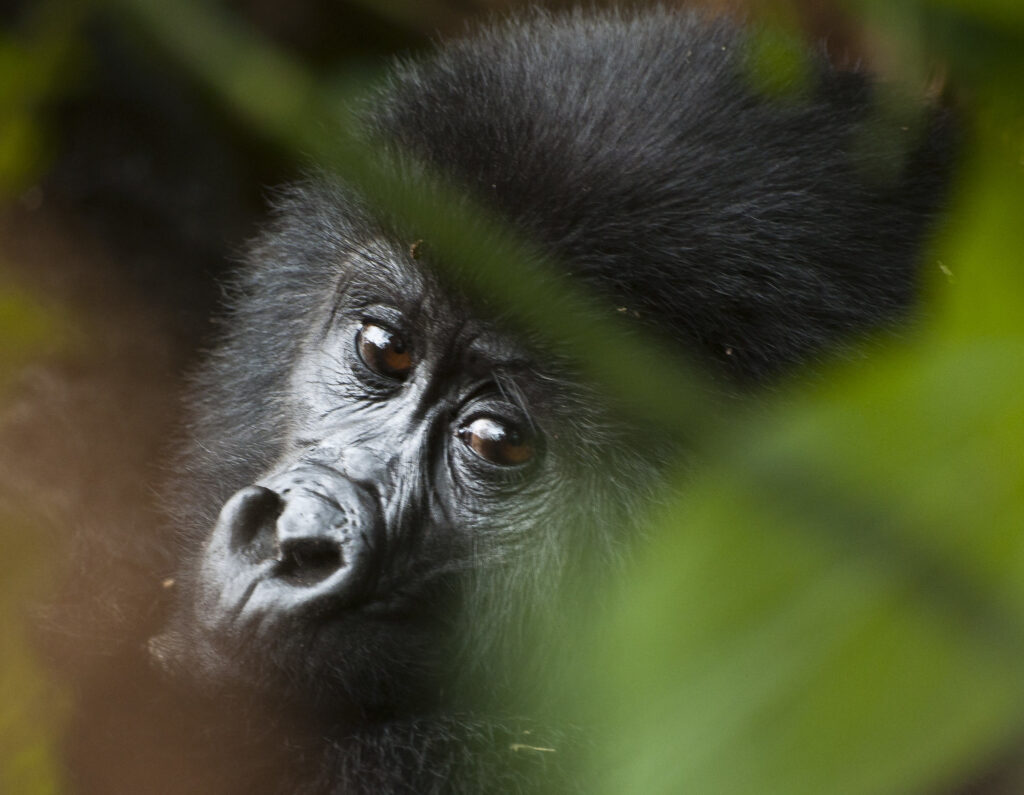
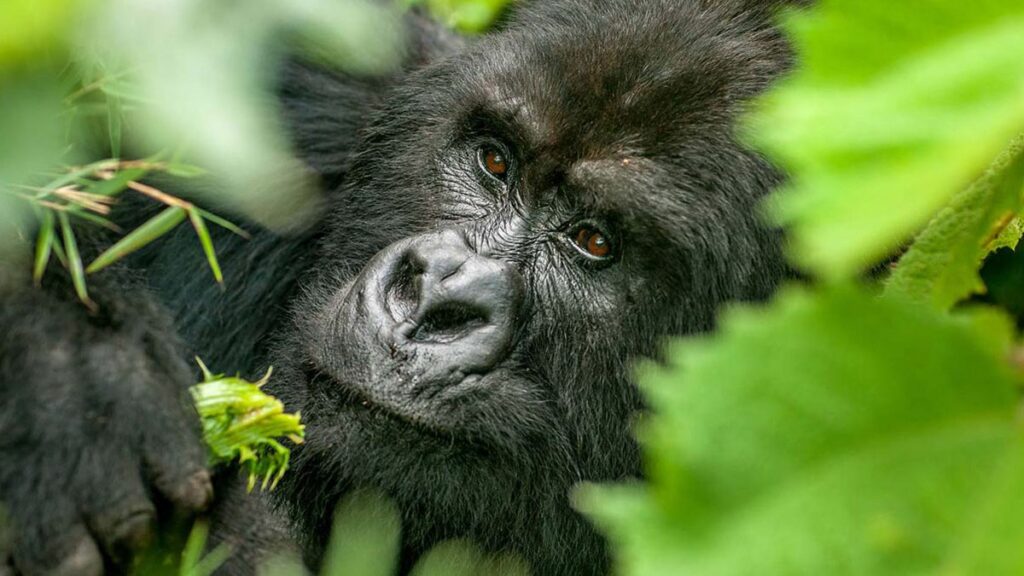
Gorilla trekking focuses entirely on wildlife. The highlight is observing endangered mountain gorillas at close range while learning about their social behavior, conservation, and rainforest habitat.
The Rwenzori Mountains emphasize adventure, endurance, and spectacular scenery. Wildlife sightings occur during the climb, but they are secondary to the mountaineering experience.
Physical Difficulty
Gorilla trekking requires moderate fitness.
The hike can become challenging depending on where the gorillas are located, but most visitors complete the trek within a single day. Rest breaks are frequent, and guides adjust the pace according to the group.
Rwenzori climbing is significantly more demanding. Climbers spend several consecutive days hiking through muddy trails, steep valleys, rocky terrain, and high-altitude environments. Good physical preparation is essential for reaching the higher peaks.
Duration
One of the biggest differences involves the amount of time required.
Gorilla trekking usually occupies a single day, although many visitors stay two or three nights near the national parks.
Rwenzori expeditions generally last between five and nine days depending on the chosen route and destination.
Travelers with limited time often find gorilla trekking easier to include in their itinerary.
Cost Comparison
The overall costs differ considerably.
Gorilla trekking requires purchasing a gorilla permit, accommodation, transportation, and guiding services. Although permits represent a significant expense, the overall trip remains shorter than a mountain expedition.
Rwenzori climbing includes park entrance fees, mountain guides, porters, accommodation on the mountain, meals, rescue services, and specialized equipment where necessary. The longer duration generally results in higher overall trip costs.
Scenery
Both experiences offer extraordinary scenery.
Gorilla trekking passes through dense tropical rainforest filled with giant trees, ferns, vines, and mountain vegetation. The forests themselves form part of the attraction.
The Rwenzori Mountains showcase constantly changing landscapes that include waterfalls, glaciers, alpine meadows, giant lobelias, rocky cliffs, rivers, and snow-capped peaks. The dramatic scenery changes every day of the expedition.
Wildlife Encounters
Wildlife is the primary objective of gorilla trekking.
Besides mountain gorillas, visitors may encounter monkeys, forest elephants, colorful birds, butterflies, and numerous smaller forest animals.
The Rwenzori Mountains also support wildlife, including blue monkeys, black-and-white colobus monkeys, forest elephants, duikers, and many Albertine Rift endemic birds. However, wildlife viewing is less predictable because the focus remains on mountain trekking.
Photography Opportunities
Both adventures offer exceptional photography.
Gorilla trekking allows photographers to capture intimate images of one of the world’s most endangered great apes within their natural environment. Wildlife photography enthusiasts often consider this a once-in-a-lifetime opportunity.
The Rwenzori Mountains provide breathtaking landscape photography, dramatic mountain vistas, glaciers, waterfalls, and unusual alpine vegetation that create spectacular images throughout the climb.
Accessibility
Gorilla trekking is more accessible for most travelers.
People with moderate fitness, including older visitors, can often participate with assistance from porters or sedan chair services where necessary.
Rwenzori climbing requires greater physical endurance and is generally recommended for hikers who enjoy multi-day mountain trekking.
Best Time to Visit
Both activities can be enjoyed throughout the year.
The relatively dry seasons from June to August and December to February usually provide more comfortable hiking conditions for both gorilla trekking and mountain climbing. Rain remains possible at any time due to the tropical climate.
Weather conditions change more dramatically in the Rwenzori Mountains because of higher elevations.
Can You Combine Both?
Absolutely.
Many visitors combine Rwenzori vs. gorilla trekking into one extended Uganda safari. After completing a Rwenzori expedition, travelers often continue to Bwindi Impenetrable National Park for gorilla trekking before visiting Queen Elizabeth National Park, Kibale National Park, or Lake Mburo National Park.
Combining both experiences provides one of Africa’s most complete adventure holidays.
Which Experience Is Right for You?
If your primary goal is observing rare wildlife and experiencing one of the world’s greatest conservation success stories, gorilla trekking is the ideal choice.
If you enjoy mountaineering, challenging hikes, breathtaking alpine scenery, and multi-day wilderness expeditions, the Rwenzori Mountains provide an unmatched adventure.
Travelers with sufficient time and budget often find that combining both experiences delivers the ultimate Uganda safari.
Conclusion
The comparison of Rwenzori vs. gorilla trekking demonstrates that both adventures offer completely different but equally unforgettable experiences. Gorilla trekking provides intimate wildlife encounters with endangered mountain gorillas, while the Rwenzori Mountains deliver one of Africa’s most spectacular climbing adventures through glaciers, waterfalls, and alpine landscapes.
Rather than choosing one over the other, many travelers discover that combining both creates the perfect balance of wildlife, adventure, conservation, and breathtaking scenery. Whatever your choice, Uganda offers world-class experiences that will remain memorable for a lifetime.