
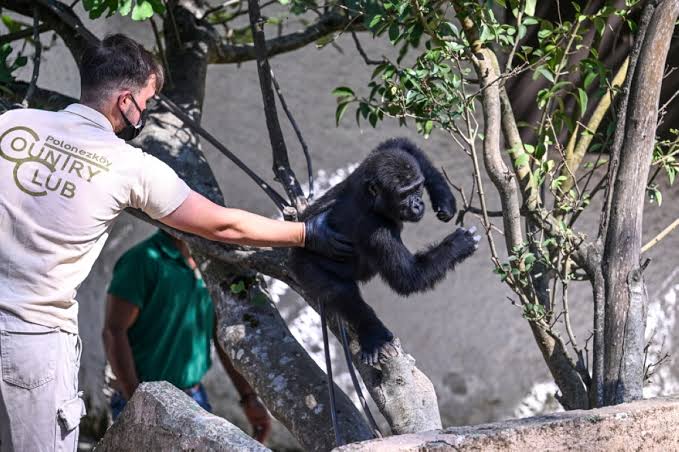
Gorilla DNA Testing Conservation: How Genetic Science Protects Mountain Gorillas
Mountain gorillas represent one of the world’s greatest conservation success stories, yet they remain endangered and require continuous scientific monitoring to ensure their long-term survival. Conservation organizations, wildlife authorities, veterinarians, and researchers work together to protect gorilla populations through habitat conservation, health monitoring, anti-poaching efforts, and scientific research. Among the most important research tools available today is genetic analysis. As a result, gorilla DNA testing and conservation have become a critical part of modern wildlife science.
DNA testing allows scientists to study gorilla populations without disturbing the animals. Researchers can learn about family relationships, genetic diversity, population size, disease risks, and breeding patterns by analyzing biological samples collected in the field. These discoveries help conservation managers make informed decisions that support healthy gorilla populations across Uganda, Rwanda, and the Democratic Republic of the Congo.
Understanding the role of DNA science demonstrates how advanced research contributes to protecting one of Africa’s most iconic wildlife species.
What Is Gorilla DNA Testing?
DNA, or deoxyribonucleic acid, contains the genetic instructions that determine the biological characteristics of every living organism. Each mountain gorilla carries a unique genetic profile that scientists can study using carefully collected biological samples.
In gorilla DNA testing conservation, researchers analyze DNA obtained from naturally shed hair, fecal samples, or other non-invasive sources. Laboratory analysis allows scientists to identify individual gorillas, examine family relationships, measure genetic diversity, and monitor population health.
Because researchers do not need to capture or disturb gorillas during most DNA studies, this approach supports both scientific research and animal welfare.
Why DNA Testing Matters for Conservation
Conservation depends on accurate scientific information. Without reliable data, wildlife managers cannot effectively protect endangered populations or measure conservation progress.
DNA testing provides detailed insights that traditional field observations alone cannot reveal. Researchers use genetic information to estimate population size, monitor breeding success, identify related individuals, and detect changes in genetic diversity over time.
The growing importance of gorilla DNA testing conservation lies in its ability to provide objective scientific evidence that supports conservation planning and long-term management decisions.
Reliable genetic information strengthens conservation programs.
Identifying Individual Gorillas
Each mountain gorilla has a unique genetic fingerprint.
Researchers use DNA analysis to distinguish one individual from another, even when physical identification proves difficult. This capability becomes especially valuable when studying unhabituated gorilla groups or conducting large-scale population surveys across extensive forest habitats.
Accurate identification helps scientists avoid counting the same gorilla multiple times while improving population estimates.
This application represents one of the most valuable contributions of gorilla DNA testing to conservation.
Understanding Family Relationships
Mountain gorillas live in complex social groups led by dominant silverbacks. Understanding family relationships helps researchers study breeding patterns, group dynamics, and long-term population health.
DNA analysis reveals parent-offspring relationships, identifies close relatives, and confirms family structures that may not always be obvious through observation alone. These findings improve scientific understanding of gorilla social behavior and reproduction.
Family relationship studies contribute directly to better conservation management.
Monitoring Genetic Diversity
Healthy wildlife populations require sufficient genetic diversity to remain resilient over time.
Low genetic diversity may increase the risk of inherited health problems and reduce a population’s ability to adapt to environmental changes. Researchers therefore monitor genetic variation carefully across mountain gorilla populations.
Using gorilla DNA testing conservation, scientists evaluate whether genetic diversity remains strong enough to support healthy future generations. This information helps conservation organizations develop long-term management strategies that protect population stability.
Genetic monitoring supports species survival.
Supporting Population Surveys
Estimating the number of mountain gorillas living in the wild requires multiple scientific techniques.
Researchers combine nest counts, field observations, GPS mapping, camera traps, and DNA analysis to improve the accuracy of population estimates. Genetic samples collected from different locations help identify individual gorillas and reduce duplicate counting during surveys.
By contributing precise identification data, gorilla DNA testing conservation strengthens population monitoring programs throughout East Africa.
Accurate surveys guide conservation planning.
Detecting Disease Risks
Mountain gorillas share approximately 98 percent of their DNA with humans, making disease prevention a major conservation priority.
Although veterinarians diagnose illnesses using a range of medical techniques, genetic research can improve scientists’ understanding of disease susceptibility, population health, and hereditary conditions. Researchers use this information alongside veterinary assessments to strengthen wildlife health management.
DNA science complements clinical expertise while supporting healthier gorilla populations.
Protecting gorilla health remains a cornerstone of conservation.
Non-Invasive Sample Collection
One of the greatest advantages of DNA research is that scientists can often collect samples without handling the animals.
Researchers frequently obtain genetic material from feces, naturally shed hair, or plant material containing saliva. After collecting these samples, laboratories extract DNA for detailed analysis.
This non-invasive approach allows gorilla DNA testing conservation to generate valuable scientific information while minimizing stress and disturbance to endangered wildlife.
Ethical research remains essential.
Combining DNA Research with Other Technologies
Modern gorilla conservation depends on integrating multiple scientific tools.
Researchers combine DNA testing with GPS mapping, camera traps, satellite imagery, habitat monitoring, artificial intelligence, veterinary examinations, and long-term field observations. Together, these technologies provide a comprehensive understanding of gorilla populations and their environment.
Each research method contributes unique information that supports evidence-based conservation decisions.
Integrated science strengthens conservation outcomes.
Challenges of Gorilla DNA Research
Although DNA testing provides valuable information, it also presents several challenges.
Collecting high-quality samples in dense tropical forests requires careful planning, trained personnel, and strict laboratory procedures. Environmental conditions such as rain, humidity, and sunlight may degrade genetic material before analysis. Laboratory testing also requires specialized equipment, skilled scientists, and financial investment.
Despite these challenges, gorilla DNA testing conservation continues to expand because of its enormous scientific value.
Investment in research benefits long-term conservation.
The Future of Genetic Conservation
Advances in molecular biology continue to improve wildlife research.
Scientists now analyze genetic information more quickly and accurately than ever before, allowing conservation organizations to respond more effectively to emerging conservation challenges. Future developments may include improved genome sequencing, faster laboratory techniques, and stronger collaboration between international research institutions.
These innovations will help researchers better understand mountain gorillas while supporting more effective conservation strategies.
Scientific progress continues to strengthen wildlife protection.
Responsible Tourism Supports Conservation Science
Every visitor who purchases a gorilla trekking permit contributes to conservation research.
Tourism revenue supports ranger patrols, veterinary programs, scientific studies, habitat management, community development, and conservation education. These financial resources help fund research projects that include genetic monitoring and other scientific initiatives.
Responsible tourism, therefore, plays an important role in supporting gorilla DNA testing, conservation, and protecting mountain gorillas for future generations.
Every trek contributes to conservation success.
Conclusion
Gorilla DNA testing and conservation have become one of the most valuable scientific tools supporting mountain gorilla protection. By analyzing non-invasive genetic samples, researchers identify individual gorillas, study family relationships, monitor genetic diversity, improve population estimates, and strengthen long-term conservation planning.
When combined with field observations, camera traps, GPS mapping, veterinary science, and responsible tourism, DNA research provides the knowledge needed to protect one of the world’s most remarkable wildlife species. As genetic technology continues to advance, it will remain an essential part of ensuring a healthy future for mountain gorillas across East Africa.



