Loango National Park
Loango National Park in Gabon stands among Africa’s most unique and untouched wilderness areas. It stretches along the Atlantic Ocean where dense rainforest meets wide beaches, lagoons, and savannah. This rare combination creates a landscape often described as “Africa’s last Eden.”
The park offers something few destinations in the world can match. Forest elephants walk across white-sand beaches. Hippos swim in ocean surf. Gorillas, buffalo, and sitatunga antelope move between mangroves and rainforest. The result is a wild ecosystem where land, sea, and forest blend seamlessly.
Loango remains largely undeveloped, which preserves its raw beauty and makes every visit feel like an exploration into an ancient, untouched world.
Location and Landscape
Loango National Park lies on Gabon’s western coastline in Central Africa. It forms part of a larger network of protected areas known as the Gamba Complex.
The park covers a vast area that includes coastal savannah, dense rainforest, lagoons, wetlands, and long stretches of Atlantic shoreline. This diversity creates one of the most ecologically rich environments in Africa.
Rivers and lagoons cut through the forest, forming natural corridors that wildlife uses to move between habitats. The ocean adds another layer of life, influencing weather patterns and shaping the coastline.
This dynamic landscape allows visitors to witness multiple ecosystems within a single safari destination.
The Famous “Surfing Hippos” of Loango
One of Loango’s most iconic sights is the hippos that enter the ocean surf. Unlike typical hippos that remain in rivers and lakes, Loango’s hippos regularly swim in saltwater along the Atlantic coast.
They move between lagoon systems and ocean waters, often seen resting in waves or walking along sandy beaches. This unusual behavior remains one of the park’s greatest natural mysteries.
The sight of massive hippos in crashing ocean waves creates a surreal safari experience that cannot be found anywhere else in Africa.
Forest Elephants on the Beach
Loango is also famous for its forest elephants walking along the shoreline. These elephants emerge from dense rainforest and step directly onto empty beaches where they forage, bathe, and move along the coast.
The contrast between elephants and the ocean creates one of the most photogenic wildlife scenes in Africa. Sunsets often highlight silhouettes of elephants against golden skies and rolling waves.
These elephants belong to the smaller forest species, adapted to moving through thick vegetation and swampy terrain.
Primates of Loango National Park
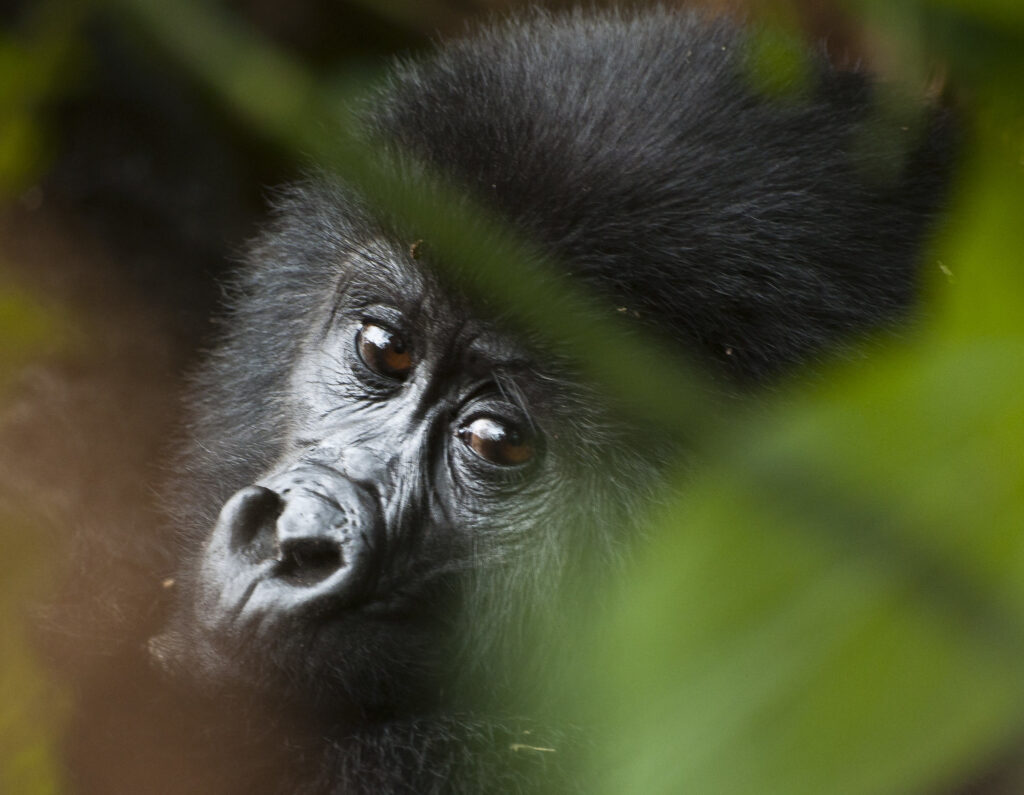
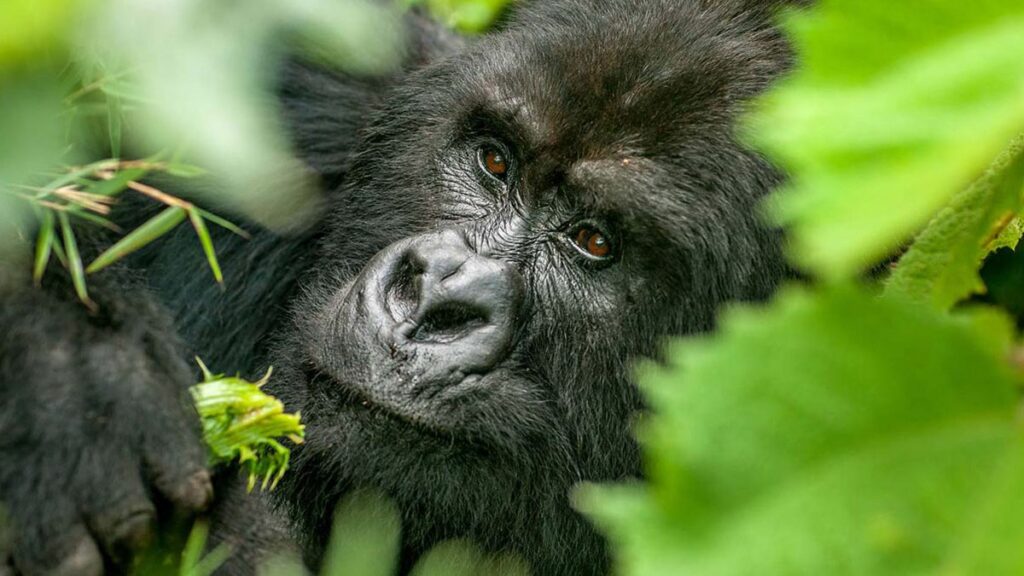
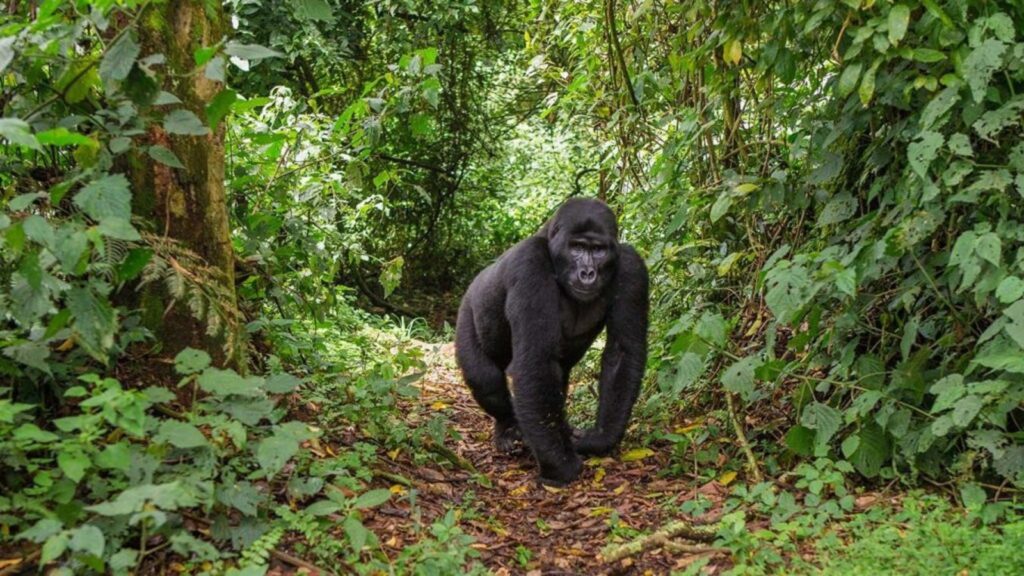
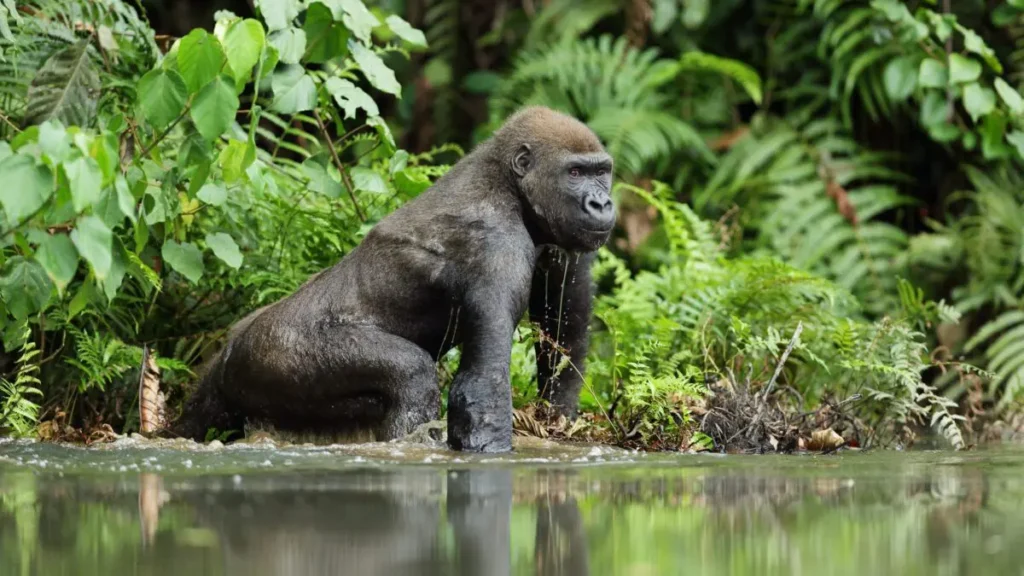
Loango supports several primate species, including western lowland gorillas, chimpanzees, mandrills, and colobus monkeys.
Western lowland gorillas live deep within the rainforest, where they move in family groups led by a dominant silverback. Chimpanzees inhabit dense forest zones and display complex social behavior.
Mandrills, one of Africa’s most colorful primates, move in large troops and occasionally appear in forest clearings.
These primates play a vital role in maintaining forest health through seed dispersal and vegetation control.
Wildlife Diversity Beyond Primates
Loango National Park supports an extraordinary variety of wildlife beyond primates and elephants.
Forest buffalo move through savannah edges and forest clearings. Sitatunga antelope thrive in swampy wetlands. Duikers, bush pigs, and small forest mammals occupy dense undergrowth.
Predators such as leopards also live within the park, although they remain elusive and rarely seen.
The combination of forest, savannah, and coastal habitats supports this exceptional biodiversity.
Birdlife in Loango
Loango offers excellent birdwatching opportunities with hundreds of recorded species.
Coastal birds, forest species, and wetland birds coexist within the park’s diverse ecosystems. Kingfishers, hornbills, fish eagles, and herons frequently appear near lagoons and rivers.
Migratory birds also pass through the region, especially along the Atlantic coastline.
The mix of habitats makes Loango one of West-Central Africa’s most important bird conservation areas.
Activities and Safari Experiences
Game Drives
Game drives in Loango explore savannah areas, forest edges, and open plains. These drives reveal elephants, buffalo, antelope, and primates moving through natural landscapes.
The experience feels remote and uncrowded due to the park’s low visitor numbers.
Boat Safaris
Boat safaris along lagoons and rivers allow close observation of hippos, crocodiles, and birdlife.
These water-based safaris offer a peaceful way to explore the park’s wetlands and waterways.
Walking Safaris
Guided walking safaris provide a deeper connection with the forest environment. Rangers lead small groups through trails while explaining animal tracks, plant life, and ecosystem dynamics.
Walking safaris reveal the smaller details of the wilderness that are often missed from vehicles.
Beach Wildlife Viewing
Loango’s beaches offer a safari experience unlike any other in Africa. Elephants, buffalo, and sometimes gorillas move along the coastline.
Sunrise and sunset sessions often deliver the most dramatic wildlife encounters.
Conservation and Protection
Loango National Park plays a key role in protecting Central Africa’s biodiversity.
The park forms part of Gabon’s national conservation strategy, which places a large percentage of the country’s land under protection.
Anti-poaching patrols, scientific research, and community involvement support long-term conservation goals.
Despite its remote location, Loango faces challenges such as illegal hunting and habitat pressure in surrounding areas.
Conservation efforts focus on maintaining ecological balance while supporting ecotourism.
Best Time to Visit Loango National Park
The best time to visit Loango depends on wildlife activity and accessibility.
The dry seasons, typically from June to September and December to February, offer better road conditions and improved wildlife viewing.
During wetter months, the park becomes lush and green, but travel can be more challenging due to muddy terrain.
Each season offers unique photographic opportunities and wildlife behavior patterns.
Accommodation in Loango
Accommodation in Loango focuses on eco-lodges and tented camps that blend into the natural environment.
These lodges offer comfort while maintaining minimal environmental impact. Guests often stay in forest or lagoon-side settings with direct access to wildlife areas.
Luxury camps provide private decks, guided activities, and personalized safari experiences.
The remoteness of the park enhances the sense of exclusivity and adventure.
Why Loango National Park Is Unique
Loango stands out because it combines multiple ecosystems in one protected area. Few places on Earth allow visitors to see elephants on beaches, hippos in surf, and gorillas in rainforest all within the same destination.
The park offers a rare sense of untouched wilderness. Human presence remains minimal, allowing nature to dominate the landscape.
This creates a safari experience that feels raw, authentic, and deeply immersive.
Conclusion
Loango National Park represents one of Africa’s most extraordinary and least disturbed wilderness areas. Its combination of rainforest, savannah, lagoons, and Atlantic coastline creates unmatched biodiversity and unforgettable wildlife encounters.
From elephants walking on beaches to hippos in ocean waves, Loango delivers safari moments that exist nowhere else in the world.
For travelers seeking true wilderness, isolation, and raw natural beauty, Loango National Park offers an experience that feels both ancient and alive.