Mountain Gorilla: Africa’s Most Iconic Great Ape
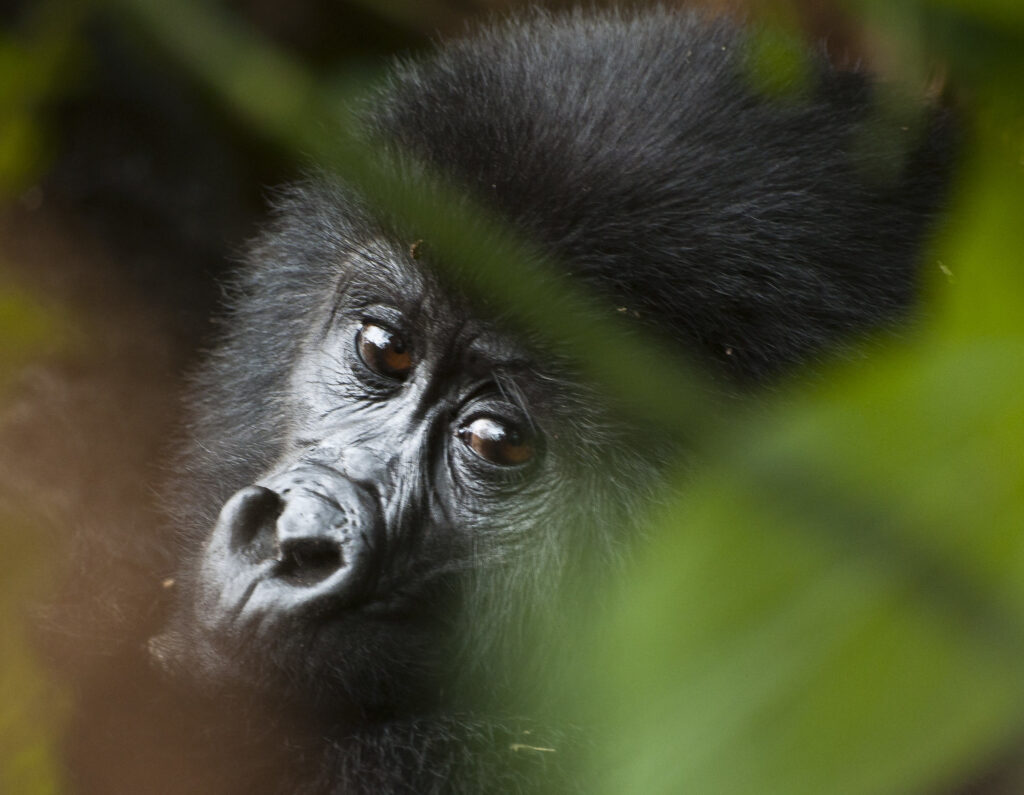
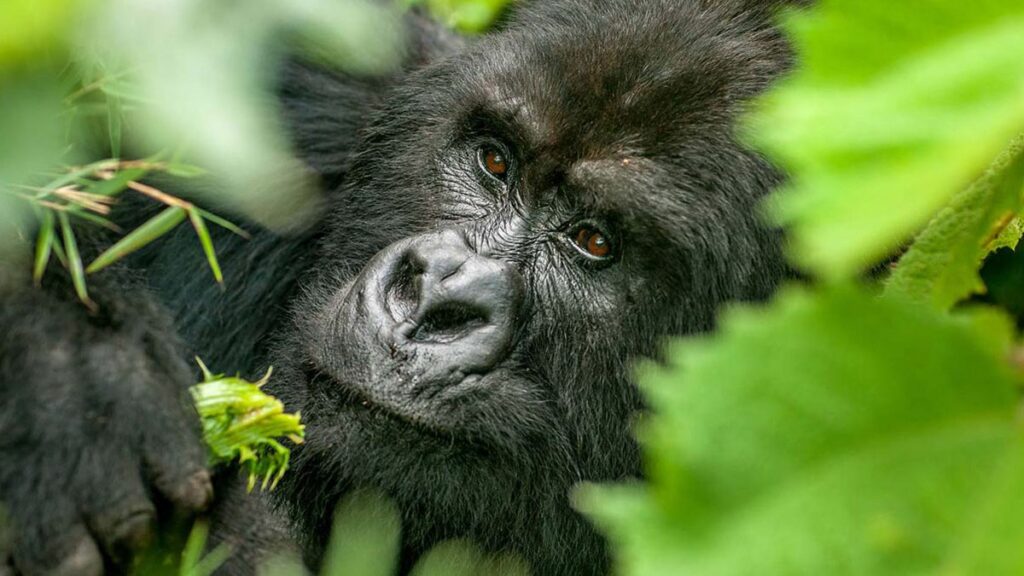
The Mountain Gorilla is one of the world’s most remarkable wildlife species and a symbol of conservation success in Africa. Found only in a few protected forests in Uganda, Rwanda, and the Democratic Republic of Congo, these endangered great apes attract thousands of visitors each year who travel to witness them in their natural habitat.
Mountain gorillas share more than 98 percent of their DNA with humans, making them one of our closest living relatives. Their intelligence, social behavior, and gentle nature create unforgettable encounters for wildlife enthusiasts. Today, mountain gorilla trekking stands among Africa’s most sought-after safari experiences and plays a crucial role in supporting conservation efforts across the region.
Scientific Classification
The Mountain Gorilla belongs to the eastern gorilla species (Gorilla beringei). Scientists classify it as a subspecies known as Gorilla beringei beringei.
Unlike western gorillas and eastern lowland gorillas, mountain gorillas have adapted to life at high elevations. Over thousands of years, they developed physical features that allow them to thrive in cool, misty mountain forests.
Where Mountain Gorillas Live
Mountain gorillas occupy a very limited geographic range. Their entire global population exists in two isolated regions of East and Central Africa.
One population lives in Uganda’s Bwindi Impenetrable National Park. The second population inhabits the Virunga Massif, a chain of volcanic mountains that spans Uganda, Rwanda, and the Democratic Republic of Congo.
The Virunga ecosystem includes Mgahinga Gorilla National Park in Uganda, Volcanoes National Park in Rwanda, and Virunga National Park in the Democratic Republic of Congo.
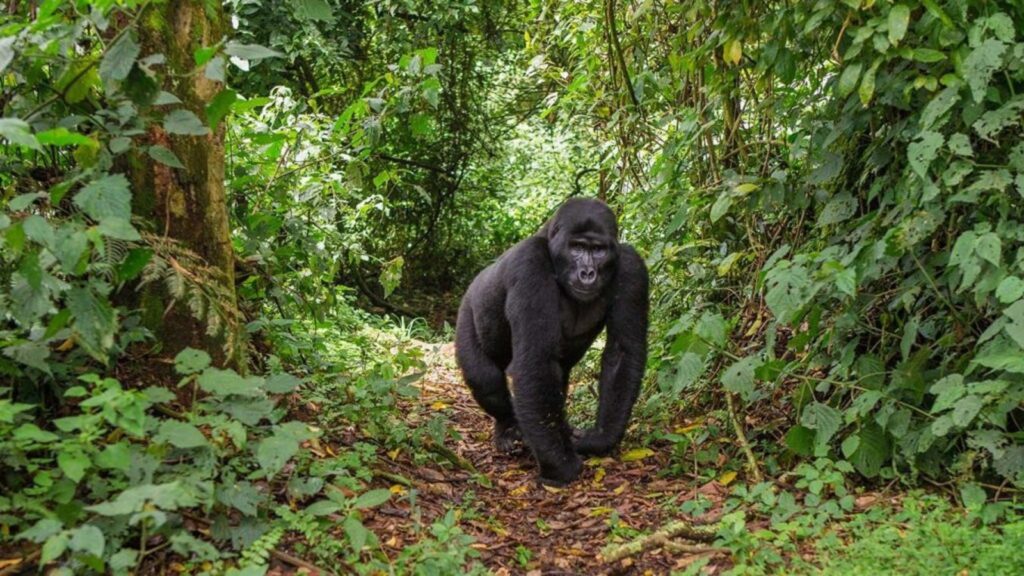
These forests lie at elevations ranging from approximately 2,200 to over 4,000 meters above sea level. The environment consists of bamboo forests, montane vegetation, dense rainforest, and volcanic slopes.
Physical Characteristics
Size and Weight
Mountain gorillas are the largest living primates. Adult males, commonly known as silverbacks, can weigh between 135 and 195 kilograms. Some exceptionally large individuals exceed these figures.
Adult females are significantly smaller and typically weigh between 70 and 100 kilograms.
Despite their massive size, mountain gorillas move with surprising agility through steep forest terrain.
Thick Fur Adaptation
One of the most distinctive features of mountain gorillas is their thick, dense fur. This adaptation helps them survive the cold temperatures found at high elevations.
The fur appears longer than that of eastern lowland gorillas and western gorillas. It provides insulation against rain, wind, and mountain mist.
The Silverback
Mature males develop a patch of silver-gray hair across their backs, giving rise to the term “silverback.”
A silverback serves as the leader and protector of the family group. He makes decisions regarding feeding locations, movement patterns, and group safety.
Social Structure and Family Life
Mountain gorillas live in close-knit family groups led by a dominant silverback.
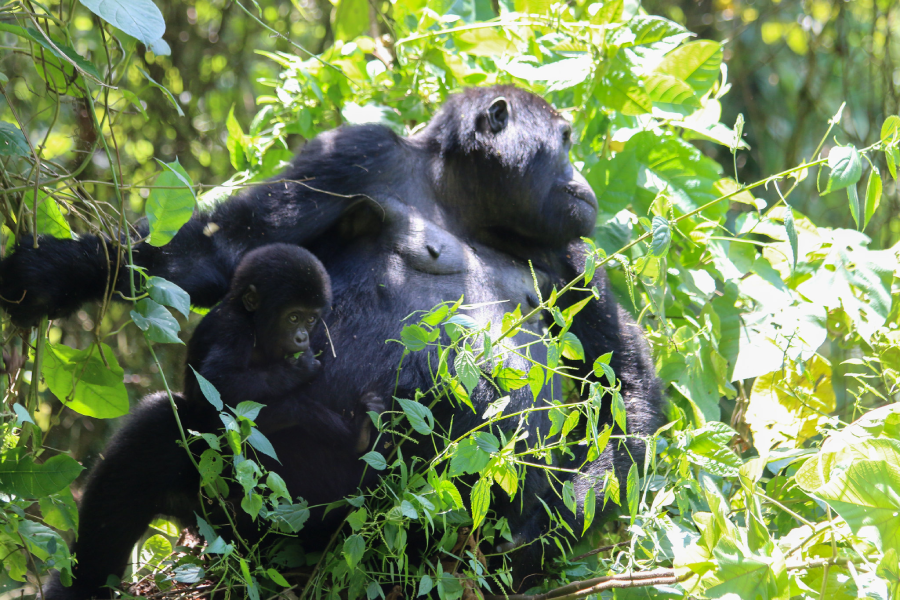
A typical group includes several adult females, juveniles, infants, and sometimes younger males. Group sizes vary considerably, with some families containing fewer than ten members while others exceed twenty individuals.
Strong social bonds characterize mountain gorilla life. Family members spend time feeding, grooming, resting, and playing together.
Young gorillas often engage in playful activities that resemble human childhood behavior. They chase one another, wrestle, climb vegetation, and explore their surroundings under the watchful eyes of adults.
Diet and Feeding Habits
Mountain gorillas are primarily herbivores. Their diet consists mainly of leaves, stems, shoots, roots, bark, and wild vegetation.
Bamboo shoots form an important food source in certain seasons, especially within the Virunga Mountains.
Unlike many lowland gorillas, mountain gorillas consume relatively little fruit because their high-altitude habitat contains fewer fruit-bearing trees.
An adult gorilla may spend several hours each day feeding to meet its nutritional requirements. Their powerful jaws and large teeth allow them to process tough plant material efficiently.
Daily Life in the Forest
Mountain gorillas follow a predictable daily routine.
They begin the day shortly after sunrise by feeding on nearby vegetation. Throughout the morning, the group moves slowly through the forest while searching for food.
During midday, gorillas often rest, groom one another, and socialize. This period allows them to conserve energy before resuming feeding activities later in the afternoon.
As evening approaches, each gorilla constructs a sleeping nest from vegetation. Adults usually build nests on the ground, while younger gorillas often sleep in trees.
The following morning, the family leaves the nests behind and begins another day of movement and feeding.
Communication and Intelligence
Mountain gorillas display remarkable intelligence and sophisticated communication skills.
They use a variety of vocalizations, facial expressions, body postures, and gestures to interact with one another. Researchers have documented more than twenty distinct vocal sounds.
Soft grunts help maintain contact between family members. Alarm calls warn the group of potential threats. Infants communicate with mothers through vocal sounds and physical contact.
The famous chest-beating display often serves as a communication signal rather than an act of aggression. Silverbacks use this behavior to demonstrate strength, establish dominance, or communicate with neighboring groups.
Gorilla Trekking Experience
Gorilla Trekking in Uganda
Uganda offers mountain gorilla trekking in Bwindi Impenetrable National Park and Mgahinga Gorilla National Park.
Bwindi hosts the largest mountain gorilla population in the world and contains multiple habituated families available for tourism.
Visitors hike through dense rainforest under the guidance of trained rangers. Trek durations vary depending on the location of the gorilla family.
Gorilla Trekking in Rwanda
Volcanoes National Park serves as Rwanda’s premier gorilla trekking destination.
The park features spectacular volcanic scenery and a well-developed tourism infrastructure. Many travelers choose Rwanda because of its accessibility from Kigali International Airport.
Gorilla Trekking in Congo
Virunga National Park provides mountain gorilla trekking opportunities within the Democratic Republic of Congo.
The park combines gorilla encounters with dramatic volcanic landscapes and diverse wildlife experiences.
Conservation Success Story
Mountain gorillas represent one of the most encouraging conservation achievements in modern history.
During the twentieth century, habitat loss, poaching, disease, and human encroachment pushed the species toward extinction. Conservationists feared that mountain gorillas might disappear completely.
Governments, conservation organizations, local communities, and tourism stakeholders collaborated to reverse this trend.
Anti-poaching patrols, veterinary care, habitat protection, research programs, and regulated tourism all contributed to population recovery.
Today, the mountain gorilla population exceeds 1,000 individuals. Although the species remains endangered, conservation efforts continue to produce positive results.
Threats Facing Mountain Gorillas
Despite conservation progress, mountain gorillas still face significant challenges.
Human population growth around protected areas creates pressure on forest habitats. Agricultural expansion increases competition for land and natural resources.
Disease remains a major concern because gorillas share many biological similarities with humans. Respiratory illnesses can spread from people to gorilla populations.
Climate change may also affect forest ecosystems and alter habitat conditions over time.
Conservation authorities continue monitoring these threats while implementing measures to ensure the long-term survival of the species.
Why Mountain Gorillas Matter
Mountain gorillas play a vital role in maintaining healthy forest ecosystems. As they move through the forest, they help disperse seeds and support natural vegetation growth.
Their presence also generates substantial tourism revenue that benefits local communities and conservation programs.
Beyond their ecological importance, mountain gorillas inspire global conservation awareness. They remind humanity of the value of protecting endangered wildlife and preserving natural habitats.
A single encounter with a mountain gorilla family often changes how visitors view wildlife conservation and the interconnectedness of life on Earth.
Planning a Mountain Gorilla Safari
Travelers planning a mountain gorilla safari should book permits well in advance, particularly during peak travel seasons.
Permits remain limited to protect gorilla families from excessive human contact. Visitors must follow strict guidelines during treks, including maintaining safe distances and limiting viewing time.
The best trekking periods generally occur during the dry seasons from June to September and December to February. However, gorilla trekking operates throughout the year.
Proper hiking boots, waterproof clothing, and moderate physical fitness enhance the overall experience.
For many travelers, spending one hour with a mountain gorilla family becomes the highlight of an African safari and a memory that lasts a lifetime.