Wildlife of Queen Elizabeth National Park
Wildlife in Queen Elizabeth National Park reflects Uganda at its most diverse and dynamic. This is not a park defined by a single headline species or landscape. Instead, it brings together savannah, wetlands, crater lakes, forests, and river systems into one living mosaic where animals adapt, overlap, and thrive in unexpected ways.
Every game drive, boat safari, or forest walk here reveals a different side of East African wildlife.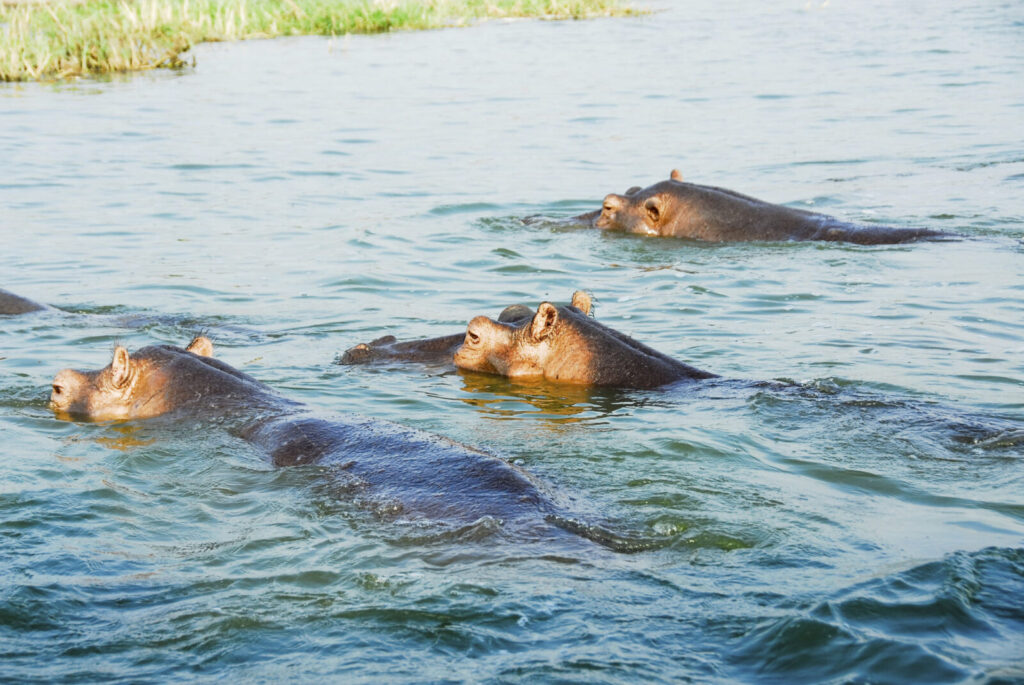
A Park Shaped by Diversity
Queen Elizabeth National Park sits astride the western Rift Valley, stretching from open plains to dense forest corridors. This ecological variety explains why the park supports one of the highest biodiversity counts in Africa.
Large mammals share space with primates, reptiles, and more than 600 bird species. Wildlife movement follows water, seasons, and vegetation rather than rigid territories, which makes sightings feel natural and unscripted. Queen Elizabeth rewards patience and curiosity more than speed.
Iconic Mammals of the Savannah Plains
The savannah areas of Queen Elizabeth support classic African wildlife. Elephants move steadily between feeding grounds and water sources, often appearing in family groups along game drive tracks. Buffaloes gather in large herds, especially near open grassland and waterlogged areas.
Uganda kob dominate the plains and form the backbone of the predator-prey relationship within the park. Their presence supports lions, leopards, and hyenas, which patrol the grasslands quietly and strategically.
Unlike more crowded parks, wildlife here often appears without competition from vehicles, allowing calm observation.
The Famous Tree-Climbing Lions of Ishasha
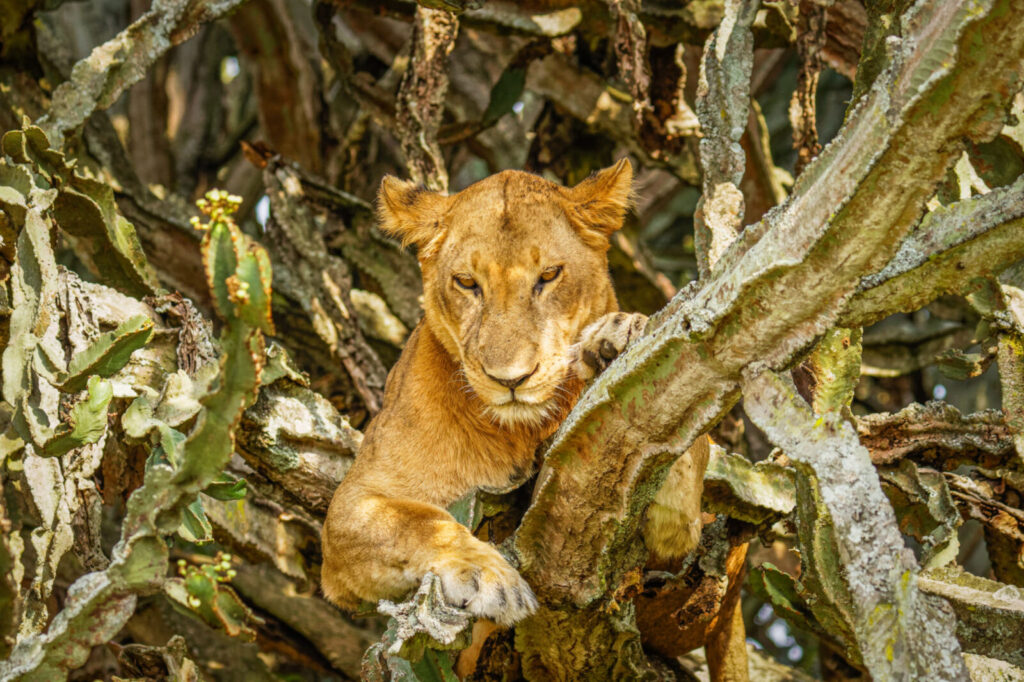
One of Queen Elizabeth’s most distinctive wildlife features lies in the southern Ishasha sector. Here, lions regularly climb fig and acacia trees, a behavior rarely observed elsewhere.
These lions use trees to escape insects, catch cooling breezes, and survey their territory. Seeing a full-grown lion draped across branches feels surreal, challenging assumptions about how big cats behave.
Ishasha’s open plains and scattered trees create ideal conditions for this unique adaptation.
Predators and the Balance of the Ecosystem
Lions remain the park’s apex predators, but leopards add an element of mystery. They appear less frequently and often during early morning or evening hours, moving silently through vegetation or resting in trees.
Spotted hyenas play a crucial ecological role as scavengers and hunters, especially at night. Their presence maintains balance by preventing disease and regulating prey populations. Predators in Queen Elizabeth do not dominate the experience. They complete it.
The Kazinga Channel: Wildlife at Close Range
The Kazinga Channel forms the heart of the park’s wildlife activity. This natural waterway connects Lake Edward and Lake George and supports one of the highest concentrations of hippos in Africa.
Boat safaris along the channel bring wildlife uncomfortably close in the best way. Hippos line the banks. Nile crocodiles bask motionless. Elephants, buffaloes, and antelope approach the water to drink. Birdlife fills the air, turning the channel into a moving wildlife gallery rather than a single-viewpoint experience.
Primate Life Beyond the Savannah
Queen Elizabeth is not only about big game. Forested areas such as Kyambura Gorge introduce a different wildlife rhythm. Chimpanzees, monkeys, and forest birds inhabit this sunken rainforest carved into the savannah.
Chimpanzee tracking here feels intimate and unpredictable. Black-and-white colobus, red-tailed monkeys, and vervet monkeys appear frequently along forest edges and woodland areas. This primate diversity adds depth to the park’s wildlife profile.
Birdlife: One of Africa’s Richest Records
Birdlife in Queen Elizabeth National Park ranks among the richest in Africa. Wetlands, lakeshores, savannah, and forest habitats attract resident and migratory species throughout the year.
African fish eagles call from riverbanks. Pelicans skim the channel. Shoebills appear in remote swampy sections. Woodland species and raptors complete the picture. For birders, Queen Elizabeth is not an add-on park. It is a destination in its own right.
Seasonal Wildlife Movement and Viewing
Wildlife behavior in Queen Elizabeth changes with the seasons. During drier periods, animals concentrate near water sources, making sightings more predictable. Wet seasons spread wildlife across wider areas, creating lush landscapes and fewer vehicles.
Neither season diminishes the experience. Each reveals different interactions and patterns. Understanding these rhythms deepens appreciation rather than limiting expectations.
Conservation and Human Coexistence
Queen Elizabeth National Park exists within a densely populated region, making conservation a daily negotiation between people and wildlife. Community programs, ranger patrols, and tourism revenue play a vital role in protecting habitats.
Wildlife corridors, education initiatives, and revenue sharing reduce conflict and encourage coexistence. The park’s continued success depends on this balance.
Seeing wildlife here also means understanding the effort behind its protection.
Plan Your Safari
Planning a wildlife safari to Queen Elizabeth National Park works best when you allow time for variety. Combining game drives with a Kazinga Channel boat safari and, where possible, a forest or gorge visit reveals the park’s full character. Choosing lodges close to your preferred activity areas reduces travel time and allows for early starts and relaxed pacing. A well-planned safari here focuses less on ticking species lists and more on understanding how wildlife, water, and landscape connect across the park.
Final Reflection
Wildlife in Queen Elizabeth National Park does not overwhelm through sheer numbers. It captivates through diversity, contrast, and authenticity. From tree-climbing lions to hippos lining the channel, from forest primates to open savannah herds, the park tells a layered story of adaptation and survival.
This is Uganda’s wildlife at its most nuanced.