What to Expect During Heavy Rains in Bwindi and Volcanoes
Heavy rains shape the rainforest experience in powerful ways. In gorilla regions, rain does not stop trekking, but it changes how the forest feels, how trails behave, and how you move through the landscape. Travelers who understand these conditions arrive prepared and often leave with deeper, more intimate encounters.
This guide explains what really happens during heavy rains in Bwindi Impenetrable National Park and Volcanoes National Park, and how to turn wet conditions into an advantage rather than a challenge.
Understanding Heavy Rain Seasons in Gorilla Parks
Heavy rains usually occur from March to May and again from October to November. These rains fall fast and intensely, often in short bursts. Mornings still offer trekking windows, while afternoons receive most downpours.
Despite the rain, gorilla trekking operates daily. Rangers track gorilla families every morning, and park authorities rarely cancel treks due to weather alone.
Trail Conditions During Heavy Rains
Mud, Slopes, and Footing
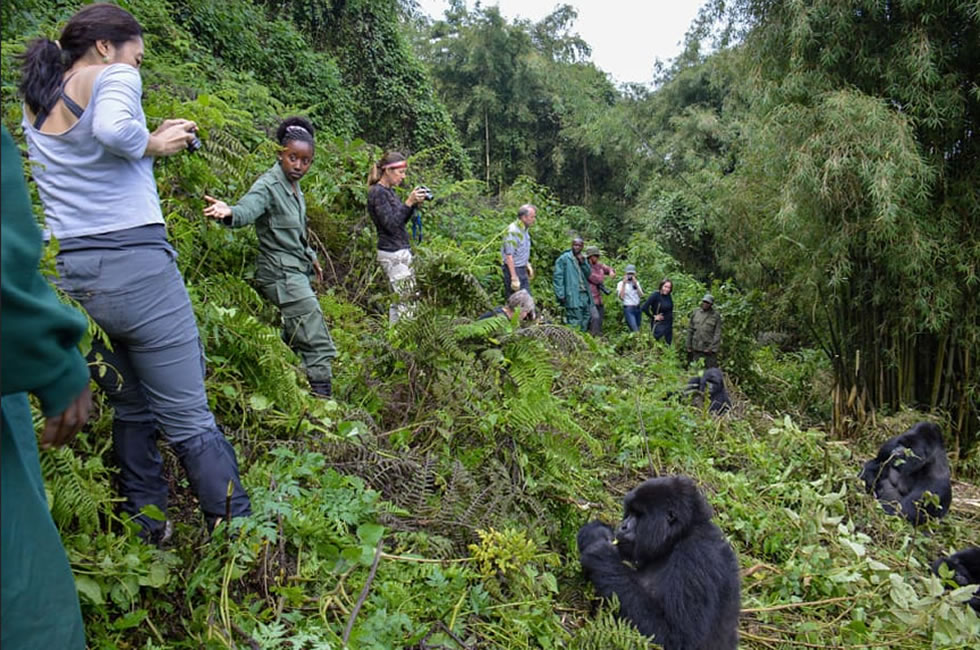
Rain transforms forest trails quickly. Paths become muddy, especially on steep slopes and clay-rich soils. Footing demands more focus, and progress slows as guides choose safer routes.
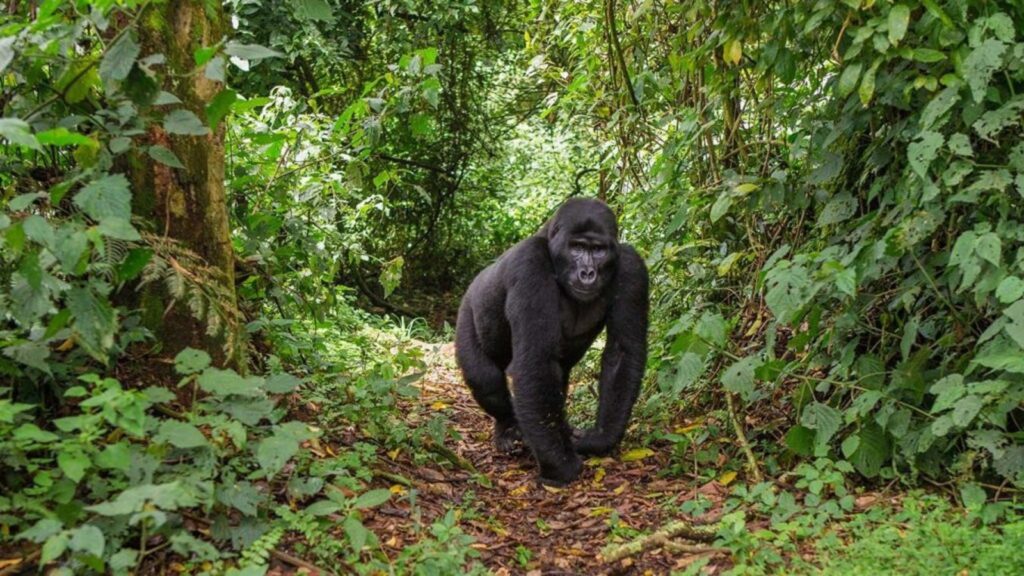
In Bwindi, dense vegetation and narrow trails amplify the challenge. In Volcanoes National Park, open bamboo zones and volcanic soil create slippery sections that test balance rather than endurance.
Trek Duration and Pace
Treks during heavy rains often take longer. Guides set a steady pace and allow frequent pauses. This slower rhythm reduces fatigue and increases safety while keeping the experience enjoyable.
Forest Atmosphere and Visibility
Mist, Clouds, and Light
Rain brings mist that rolls through the forest canopy. Visibility shifts constantly as clouds move in and out. While this reduces long-distance views, it adds depth and drama to close encounters.
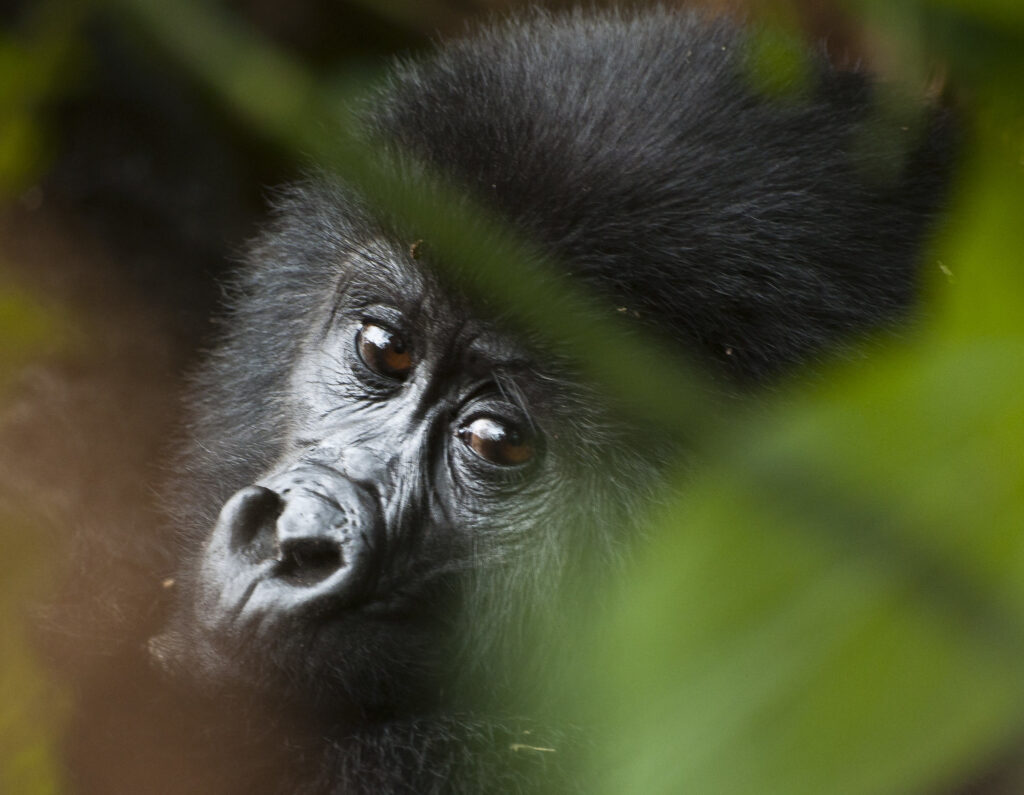
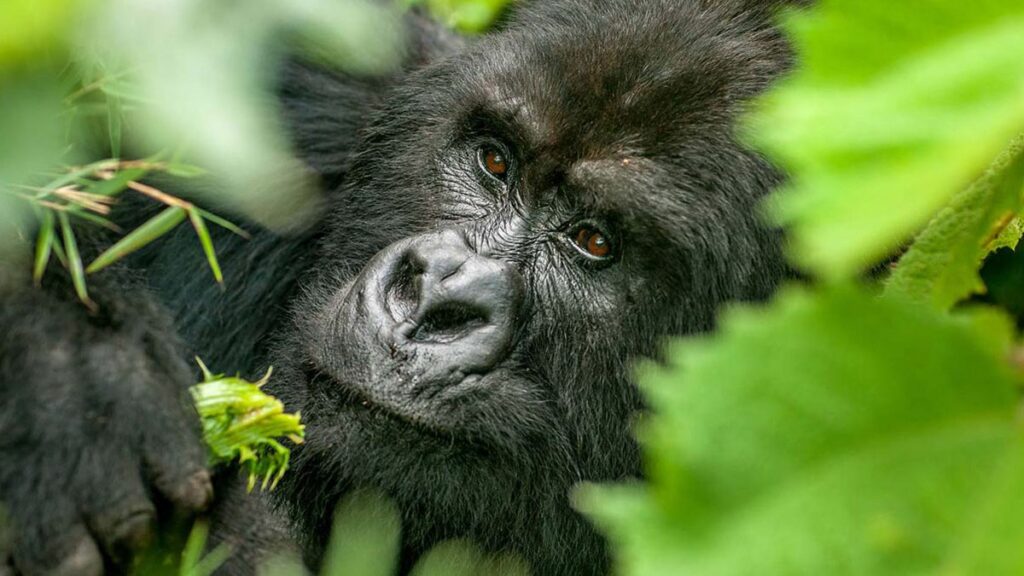
Photographers often appreciate the softer light. Leaves shine, gorilla fur appears richer in tone, and backgrounds feel layered and cinematic.
Sounds of the Rainforest
Rain amplifies forest sounds. Dripping leaves, distant thunder, bird calls, and gorilla vocalizations blend into a powerful natural soundtrack. Many travelers describe rainy treks as more immersive and emotional.
Gorilla Behavior During Heavy Rains
Gorillas remain calm and active during rain. They continue feeding, resting, and moving through their territories as usual. In some cases, gorillas stay on lower slopes where food grows abundantly, which can shorten trek distances.
Rain does not affect the quality of the encounter. You still spend the same regulated time with the gorillas once you find them.
Clothing, Gear, and Comfort
Staying Dry and Warm
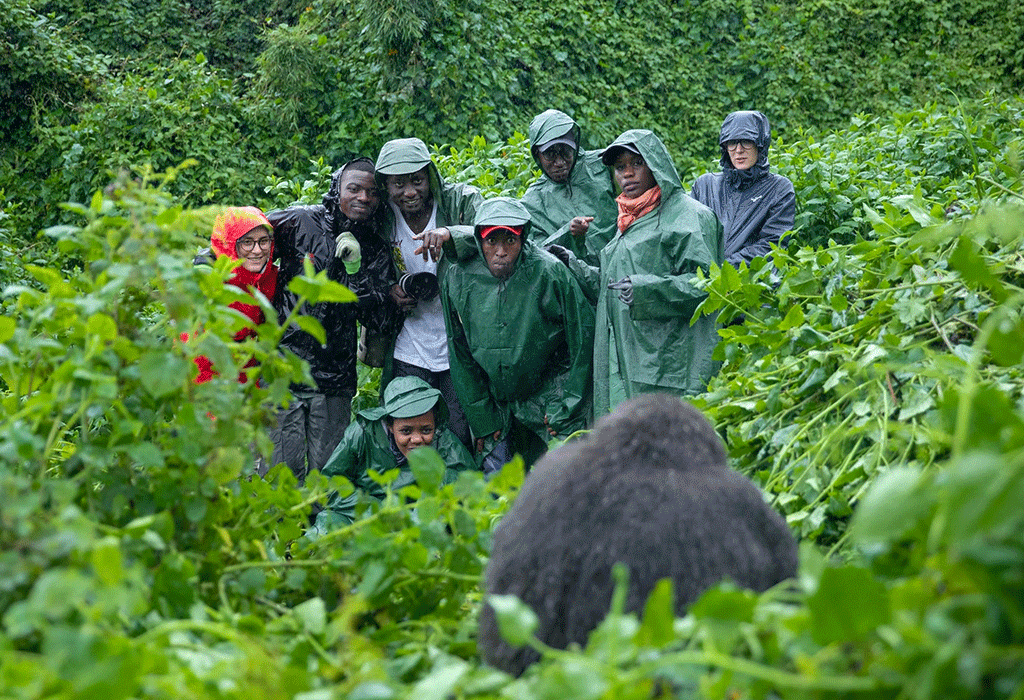
Proper gear changes everything. A waterproof jacket, rain pants, and sturdy hiking boots protect you from discomfort. Gaiters help keep mud and water out of boots, especially in Bwindi’s thicker undergrowth.
Temperatures stay cool at altitude, so wet clothing without insulation can feel cold. Lightweight layers help regulate body temperature throughout the trek.
Porters and Support
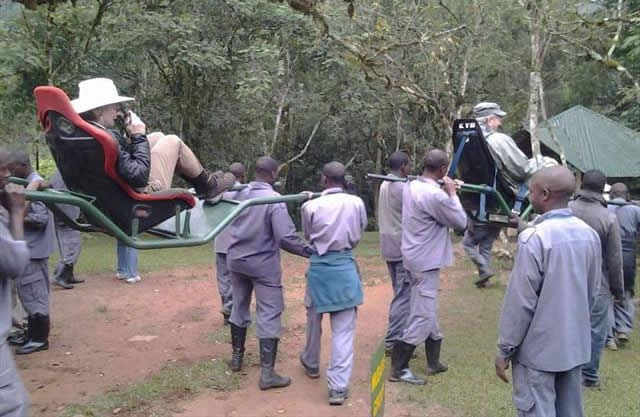
Hiring a porter becomes especially valuable during heavy rains. Porters assist with balance on muddy slopes and help carry daypacks. Their support improves safety and directly benefits local communities.
Crowd Levels and Trekking Experience
Heavy rains reduce visitor numbers significantly. Trails feel quieter, and gorilla encounters feel more personal. You rarely meet other trekking groups deep in the forest.
This sense of solitude appeals strongly to travelers who want a less commercial, more authentic rainforest experience.
Travel Logistics During Heavy Rains
Roads leading to Bwindi can become rough, especially on unpaved sections. Four-wheel-drive vehicles remain essential. Travel times may increase, but experienced drivers handle these conditions safely.
In Rwanda, road infrastructure around Volcanoes National Park remains better maintained, though rain still slows travel slightly.
Is Heavy Rain a Deal Breaker?
Heavy rain challenges comfort, not the experience itself. Travelers who arrive prepared often rate rainy-season treks among their most memorable moments. The forest feels alive, raw, and deeply atmospheric.
For travelers who value solitude, photography, and value-driven travel, heavy rains can actually enhance the journey.
Plan Your Safari With Us
Heavy rains require smart planning, the right lodges, and realistic expectations. We help you choose suitable travel dates, recommend lodges with good access roads, and prepare you fully for rainy-season trekking. Our team secures permits, arranges reliable transport, and matches you with experienced guides.
Enquire now and let us design a gorilla safari that works beautifully—even in the rain.