What It Feels Like to Stand Face-to-Face with a Silverback
Standing face-to-face with a silverback gorilla does not begin at the moment you see him. It begins earlier, deep in the forest, when the pace of the trek slows and awareness sharpens. As rangers signal for silence, the atmosphere changes almost instantly. The forest feels closer, heavier, and more focused. Every sound becomes noticeable, from leaves brushing against one another to the soft compression of boots in the mud.
At this stage, anticipation replaces excitement. You realize that something powerful occupies the same space, unseen but undeniably present. This mental shift prepares you for an encounter that will feel less like observation and more like shared presence.
The First Visual Contact
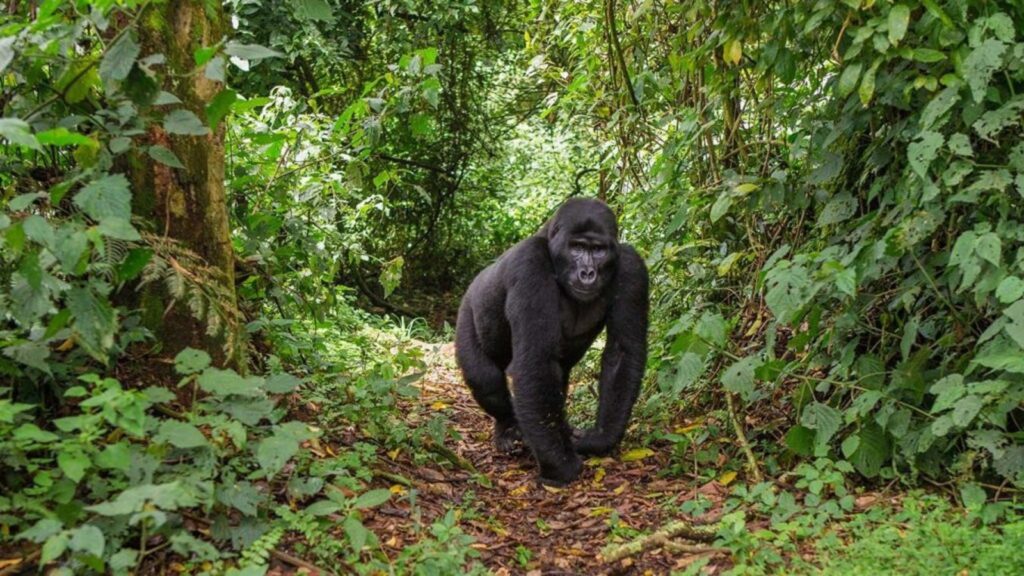
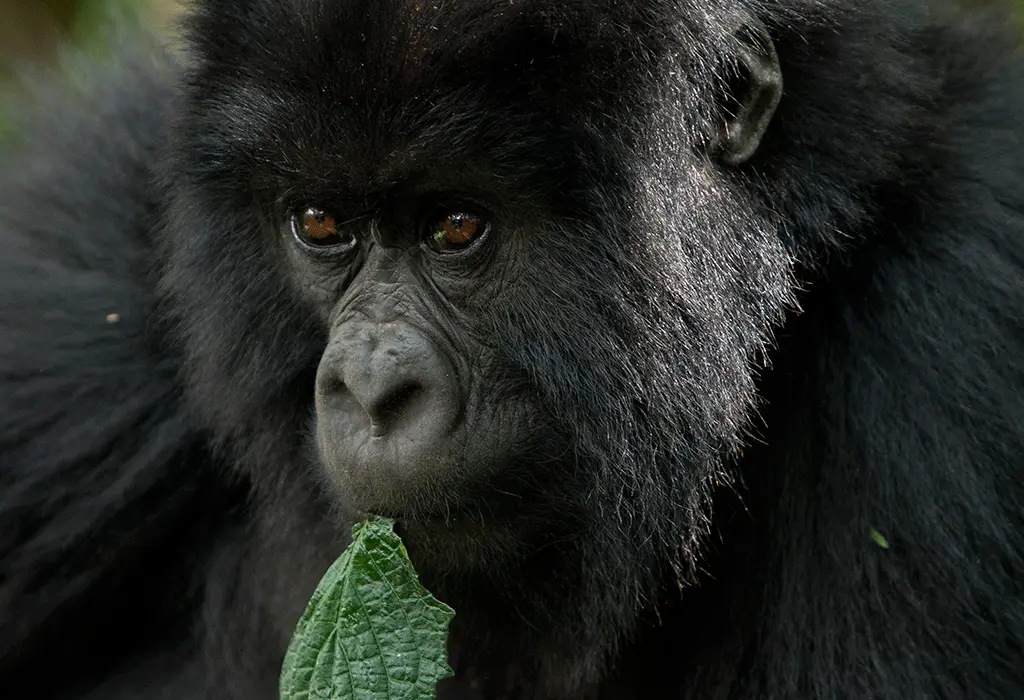
The first sight of a silverback rarely comes with drama. There is no sudden movement or announcement. Instead, vegetation parts slowly, revealing a massive figure seated with complete ease. His size registers immediately, but what stands out most is his stillness. The silvered hair across his back catches filtered light, emphasizing both age and authority.
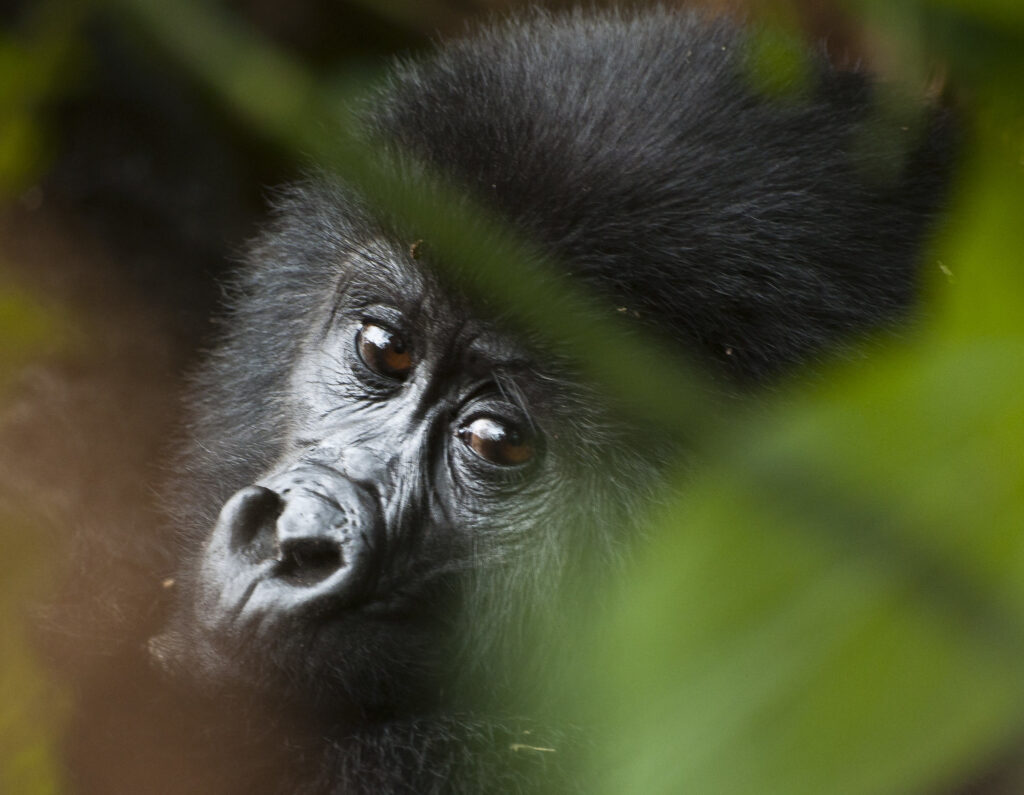
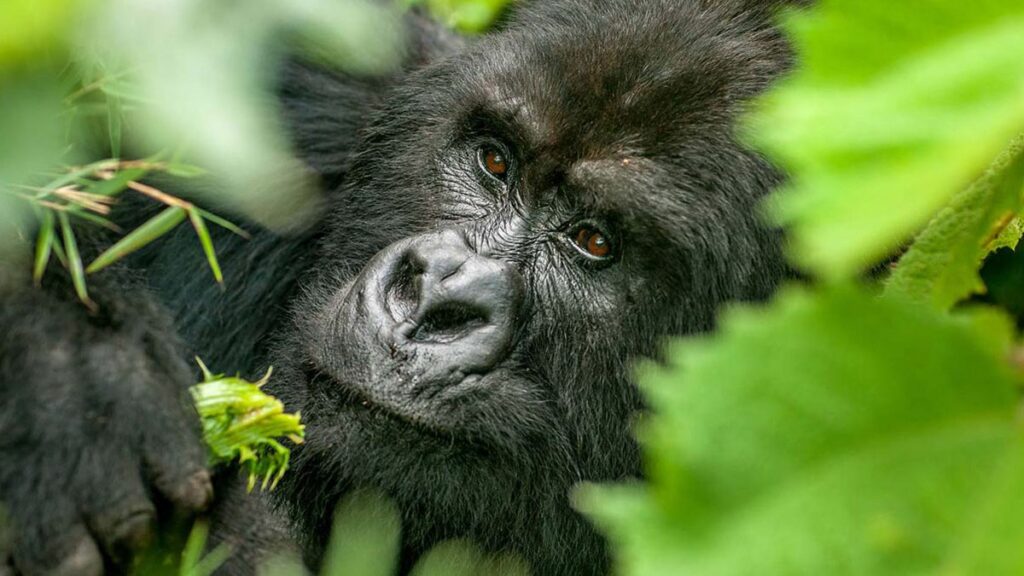
Eye contact may last only a second, but it feels longer. His gaze is calm, controlled, and deliberate. There is no aggression, no curiosity. He has acknowledged you, assessed the situation, and decided there is no reason to react. That silent decision carries a weight that words struggle to explain.
Understanding the Silverback’s Presence
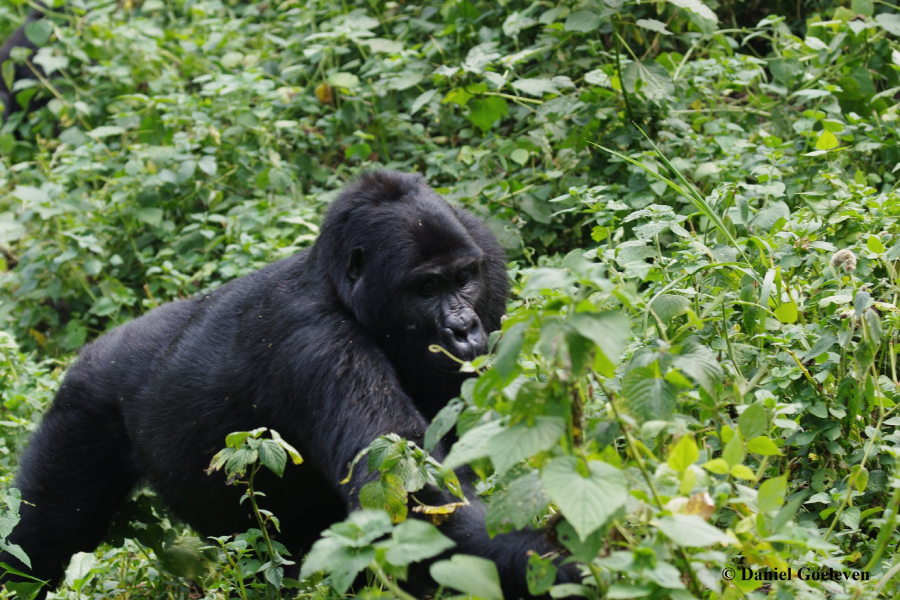
In person, a silverback’s presence reshapes your understanding of strength. His broad shoulders, muscular arms, and dense frame reflect immense power, yet nothing about his behavior feels threatening. Every movement is measured. When he shifts position, branches bend effortlessly beneath him. When he feeds, his fingers move with precision rather than urgency.
This balance between power and restraint defines silverback leadership. He does not dominate through noise or display. He commands space simply by existing within it. Witnessing this firsthand reveals why silverbacks anchor their families and why respect, not fear, governs these encounters.
The Physical and Emotional Response
Standing close to a silverback triggers a physical response you do not consciously control. Breathing slows. Muscles tighten briefly, then settle. You become aware of your posture, the direction of your gaze, and the space you occupy. The instinct to remain calm and non-threatening feels natural rather than learned.
Emotion follows quietly. Many people expect excitement, but what often emerges instead is humility. The realization that you are a visitor in a functioning social world creates a deep sense of respect. Cameras feel secondary. Presence becomes the priority. The moment demands attention rather than documentation.
The Silence That Defines the Moment
Silence plays a powerful role in the experience. Rangers remain still. Visitors do not speak. The forest absorbs sound as if protecting the interaction. Within this quiet, the silverback’s awareness feels expansive. You sense his responsibility to the group around him, his constant monitoring of his family, and his calm authority.
This silence does not feel empty. It feels intentional. It reinforces the understanding that this encounter depends on mutual restraint and respect, not proximity or duration.
Movement Without Tension
When the silverback stands or changes position, the forest responds subtly. Branches crack softly. Leaves shift aside. Despite his size, there is no sense of threat. His movements remain slow, deliberate, and controlled, reinforcing the idea that true power does not need to assert itself.
This moment often reshapes how visitors understand dominance in nature. Strength here exists to maintain balance, not to intimidate. Observing this dynamic leaves a lasting impression.
The Role of Conservation in Making This Possible
Encounters like this occur in protected environments such as Bwindi Impenetrable National Park, where strict conservation rules guide every interaction. Small group sizes, limited viewing time, and highly trained rangers ensure that gorillas remain undisturbed and safe.
These rules do not diminish the experience. They preserve its authenticity. Knowing that the encounter exists because of long-term protection efforts adds depth and meaning to the moment.
Walking Away Changed
Leaving the silverback feels heavier than expected. Rangers guide visitors back slowly, maintaining distance until the forest closes again. The silverback resumes his role within the group without pause. Life continues uninterrupted.
What lingers is not adrenaline, but grounding. The experience settles internally rather than fading quickly. Many visitors walk back in silence, processing what they have just witnessed.
Why This Experience Stays With You
Standing face-to-face with a silverback does not feel like conquering nature. It feels like being acknowledged by it. Briefly and quietly. The encounter strips away expectations and replaces them with perspective.
This is why people struggle to describe it. The experience lives more in the body than in language. It stays in the breath, the posture, and the memory of shared stillness.