Trekking Pole Gorilla Trek: Useful or Not?
One of the most common questions asked by first-time gorilla trekkers is whether a trekking pole gorilla trek is really necessary. While gorilla trekking does not require specialized mountaineering equipment, the terrain can often be challenging, especially in mountain rainforests where trails are steep, muddy, uneven, and sometimes slippery.
A trekking pole may seem like a simple piece of gear, but it can make a significant difference in comfort, balance, and confidence during the trek. Many experienced trekkers and guides recommend using one, particularly for older travelers, those with knee concerns, or anyone unfamiliar with hiking in mountainous terrain.
Whether you are trekking in Bwindi Impenetrable National Park, Mgahinga Gorilla National Park, Volcanoes National Park, or Virunga National Park, understanding the advantages and limitations of trekking poles will help you decide whether to bring one.
What Is a Trekking Pole?
A trekking pole is a lightweight hiking aid designed to provide stability and support while walking on uneven terrain.
Modern trekking poles are usually made from aluminum or carbon fiber and feature adjustable lengths, ergonomic grips, and wrist straps. They function much like a walking stick but offer enhanced performance and comfort.
Many hikers use trekking poles during mountain hikes, long-distance treks, and challenging outdoor adventures.
Why Gorilla Trekking Can Be Physically Demanding
Many people imagine gorilla trekking as a simple forest walk.
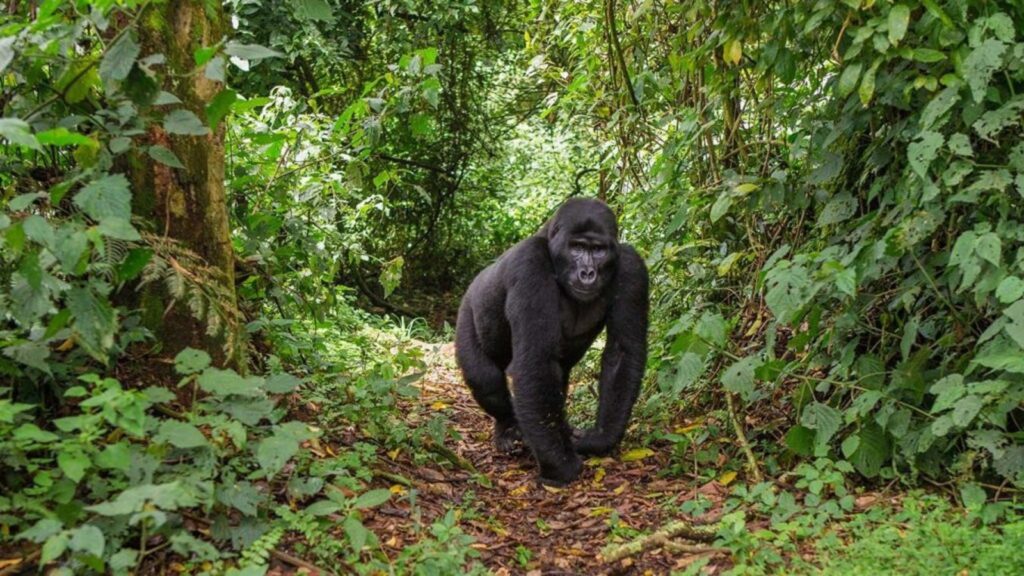
In reality, trekking conditions vary significantly depending on the location of the gorilla family. Some treks may take less than an hour, while others can last several hours through dense rainforest.
Common challenges include:
Steep hillsides.
Muddy trails.
Slippery roots.
Dense vegetation.
Rocky sections.
Uneven forest floors.
Wet conditions after rainfall.
These factors often make trekking poles useful.
Benefits of Using a Trekking Pole for Gorilla Trekking
Improved Balance
One of the biggest advantages of a trekking pole is enhanced stability.
Rainforest trails often become slippery due to mud, wet leaves, and exposed roots. A trekking pole provides an additional point of contact with the ground, helping maintain balance.
This extra stability can increase confidence while hiking.
Reduced Knee Strain
Descending steep slopes often places significant pressure on the knees.
A trekking pole helps distribute some of your body weight, reducing stress on the joints.
Travelers with previous knee injuries frequently find trekking poles especially beneficial.
The support becomes more noticeable during longer treks.
Better Performance on Steep Terrain
Many gorilla habitats are located on mountainous slopes.
A trekking pole can assist during climbs by providing leverage and support.
When moving downhill, it helps control movement and reduces slipping.
This versatility makes it useful throughout the trek.
Increased Confidence
Not everyone who goes gorilla trekking is an experienced hiker.
A trekking pole can help less experienced trekkers feel more secure on challenging terrain.
Confidence often improves overall enjoyment of the experience.
Reduced Fatigue
Because trekking poles distribute effort between the upper and lower body, they can reduce fatigue during long hikes.
This benefit becomes more noticeable on difficult routes.
Many trekkers feel less exhausted at the end of the day.
Are Trekking Poles Necessary for Gorilla Trekking?
The simple answer is no.
Thousands of visitors complete gorilla treks every year without using trekking poles.
However, many travelers find them extremely helpful.
The need often depends on:
Your fitness level.
Trail conditions.
Age.
Personal preference.
Length of the trek.
Weather conditions.
For many visitors, a trekking pole is not essential but highly beneficial.
Who Should Definitely Consider a Trekking Pole?
Older Travelers
Additional balance and support can make trekking more comfortable and enjoyable.
Travelers with Knee Issues
Anyone with previous knee injuries or joint discomfort may benefit greatly from using a pole.
First-Time Hikers
Those unfamiliar with mountain hiking often appreciate the extra stability.
Travelers Trekking During Rainy Seasons
Wet conditions increase the usefulness of trekking poles.
Mud and slippery surfaces become more common after rainfall.
Trekking Pole Use by Destination
Bwindi Impenetrable National Park
Bwindi Impenetrable National Park features some of the most challenging gorilla trekking terrain in East Africa.
Steep slopes and dense vegetation make trekking poles particularly valuable.
Many guides strongly recommend them.
Mgahinga Gorilla National Park
Mgahinga Gorilla National Park includes volcanic landscapes and mountain trails where extra support can be beneficial.
Volcanoes National Park
Volcanoes National Park often involves hiking through bamboo forests and volcanic foothills.
A trekking pole can improve comfort and stability.
Virunga National Park
Virunga National Park offers rugged trekking routes where poles frequently prove useful.
Can You Rent or Borrow a Trekking Pole?
Yes.
Most gorilla trekking destinations provide walking sticks at the briefing point before the trek.
In many cases, local guides cut sturdy wooden walking sticks for visitors at no additional charge.
Some lodges also provide trekking poles for guests.
This means you do not necessarily need to travel with your own pole.
Many travelers successfully use locally provided walking sticks.
Trekking Pole vs Walking Stick
A common question concerns the difference between a trekking pole and a walking stick.
Trekking Pole
Lightweight.
Adjustable.
Comfortable grip.
Shock absorption.
Easy to pack.
Traditional Walking Stick
Readily available.
Strong and durable.
Often provided locally.
No additional cost.
Both options perform well during gorilla trekking.
Many visitors use the traditional walking sticks supplied by local guides.
How to Use a Trekking Pole Correctly
Proper use maximizes the benefits.
Adjust the pole so your elbow forms approximately a 90-degree angle when holding the grip.
Use the pole ahead of you when climbing or descending.
Allow it to support balance rather than carrying your entire body weight.
A natural rhythm improves efficiency and comfort.
Other Gear That Works Well with a Trekking Pole
Hiking Boots
Quality hiking boots remain the most important trekking equipment.
Gaiters
Gaiters help keep mud and debris out of your boots.
Gardening Gloves
Gloves protect your hands while moving through dense vegetation.
Rain Jacket
Rain protection remains essential in rainforest environments.
Daypack
A small backpack allows you to carry water, snacks, and personal items comfortably.
Together, these items create a well-prepared trekking setup.
Common Mistakes to Avoid
Depending Entirely on the Pole
A trekking pole should improve balance, not replace proper hiking technique.
Using the Wrong Height
Incorrect pole length reduces effectiveness and comfort.
Bringing Heavy Trekking Poles
Lightweight poles are usually more practical for gorilla trekking.
Ignoring Local Walking Sticks
Many travelers bring expensive poles only to discover that local walking sticks work exceptionally well.
Should You Bring Your Own Trekking Pole?
If you already own a lightweight trekking pole and enjoy hiking with it, bringing it can be a good idea.
However, purchasing a trekking pole solely for gorilla trekking may not be necessary.
Most visitors find the locally provided walking sticks perfectly adequate.
The choice largely comes down to personal preference.
Conclusion
So, is a trekking pole gorilla trek useful or not?
For most travelers, the answer is yes. A trekking pole improves balance, reduces knee strain, increases confidence, and helps manage challenging rainforest terrain. While it is not mandatory, it can make the trekking experience significantly more comfortable, particularly on steep or muddy trails.
The good news is that visitors do not always need to bring their own trekking poles. Local walking sticks are widely available in Uganda, Rwanda, and the Democratic Republic of the Congo and often provide excellent support during the trek.
Whether you choose a professional trekking pole or a traditional walking stick, the extra stability can help you focus on the true highlight of the adventure—spending unforgettable moments with mountain gorillas in their natural habitat.