Rushegura Gorilla Group Full Profile: History, Members, Location and Trekking Experience
The Rushegura gorilla group profile is an essential guide for travelers interested in one of the best-known habituated mountain gorilla families in Uganda’s Bwindi Impenetrable National Park. Rushegura is associated with the Buhoma sector in the northern part of Bwindi and has a fascinating history shaped by natural group formation, changing leadership, and the movement of individual gorillas.
For visitors, trekking the Rushegura group offers an opportunity to observe mountain gorillas in their natural forest environment while contributing to conservation and communities around Bwindi. The experience can include watching silverbacks interact, females care for young gorillas, juveniles play, and the entire family move through the dense rainforest.
Gorilla family membership changes naturally over time. Births, deaths, transfers, dispersal, and the formation of new groups can all affect the composition of a family. Therefore, travelers should confirm the latest membership and trekking allocation with the Uganda Wildlife Authority or their tour operator before visiting.
Where Is the Rushegura Gorilla Group Located?
The Rushegura gorilla group is associated with the Buhoma sector of Bwindi Impenetrable National Park in southwestern Uganda.
Buhoma is one of Uganda’s most established gorilla trekking areas and has several habituated gorilla families. The sector is located on the northern side of Bwindi and provides access to a large section of the forest.
Travelers trekking Rushegura normally begin their day at the Buhoma trekking headquarters. After registration and briefing, visitors enter the forest accompanied by guides and trackers.
The exact location of the gorilla family changes from day to day because the animals move naturally through their habitat.
History of the Rushegura Gorilla Group
Rushegura has an interesting history within Bwindi’s gorilla conservation program.
The group originated from a split involving the larger Kyaguriro family, with a number of gorillas forming a separate social unit under the leadership of a silverback.
The group subsequently became habituated for tourism and developed into one of the families available for regular trekking in the Buhoma sector.
Its history demonstrates the dynamic nature of mountain gorilla society. Gorilla families can divide, merge, lose members, gain new members, and experience changes in leadership.
This natural flexibility means that the story of Rushegura continues to evolve.
What Does the Name Rushegura Mean?
The name Rushegura is associated with the local area surrounding Bwindi.
Gorilla families in the region receive names that can reflect places, physical features, events, or other circumstances connected with their history.
These names have become an important part of gorilla tourism because they help visitors identify and learn about individual habituated families.
Rushegura Gorilla Group Leadership
Like other mountain gorilla families, Rushegura’s social organization centers around mature males.
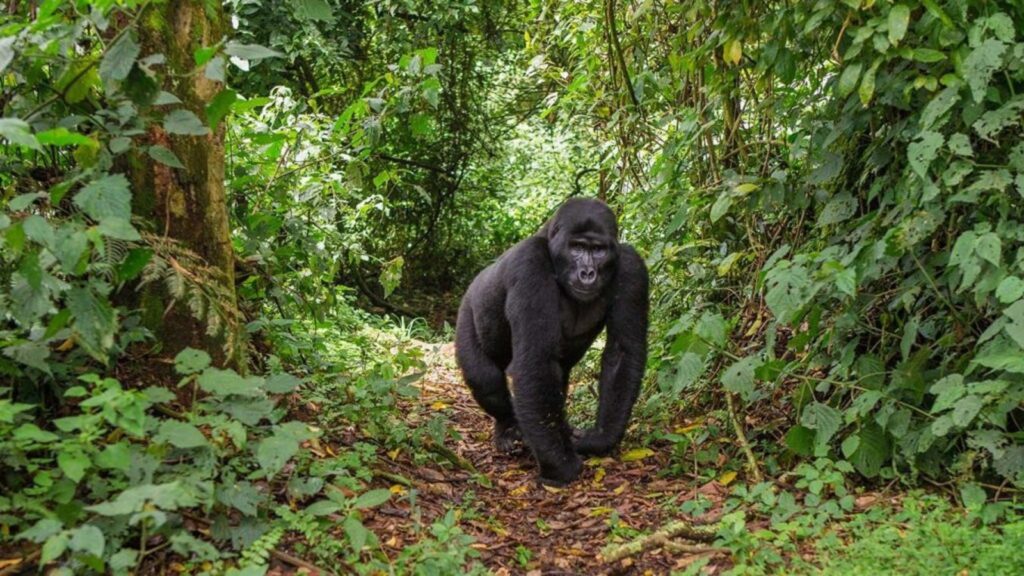
A dominant silverback normally provides leadership and protection for the group.
He may determine movement patterns, respond to potential threats, intervene in disputes, and maintain social order.
Leadership is not necessarily permanent. As males age or social circumstances change, another silverback may eventually become dominant.
These changes are natural elements of gorilla social behavior.
The Role of the Silverback
The silverback is one of the most important members of the Rushegura family.
Adult males develop the characteristic silver hair across their backs as they mature.
A dominant silverback can spend much of his time monitoring the group while other members feed, rest, groom, or play.
Visitors may see him displaying strength, making vocalizations, interacting with other males, or simply resting beneath the forest vegetation.
Although his size can appear intimidating, visitors should remember that the silverback’s behavior is usually focused on protecting and managing his family.
Rushegura Gorilla Group Members
The exact membership of Rushegura changes over time.
A family can contain silverbacks, blackbacks, adult females, juveniles, and infants.
Some males remain with their natal group for several years before leaving. Others may eventually become solitary or establish their own social groups.
Females can also transfer between groups.
Because these changes happen naturally, a membership list published several years ago may no longer accurately represent the family today.
Travelers seeking the current list of Rushegura gorillas should confirm it shortly before their trek.
Rushegura Silverbacks and Blackbacks
Silverbacks are mature male gorillas recognized by their silver-colored backs.
Blackbacks are younger males that have not yet developed the full silver coloration of adult males.
Observing the relationship between these males can provide an interesting insight into gorilla social development.
Younger males may engage in play and competitive behavior while learning how to interact with older members.
As they mature, they may eventually establish independent social positions.
Rushegura Adult Females
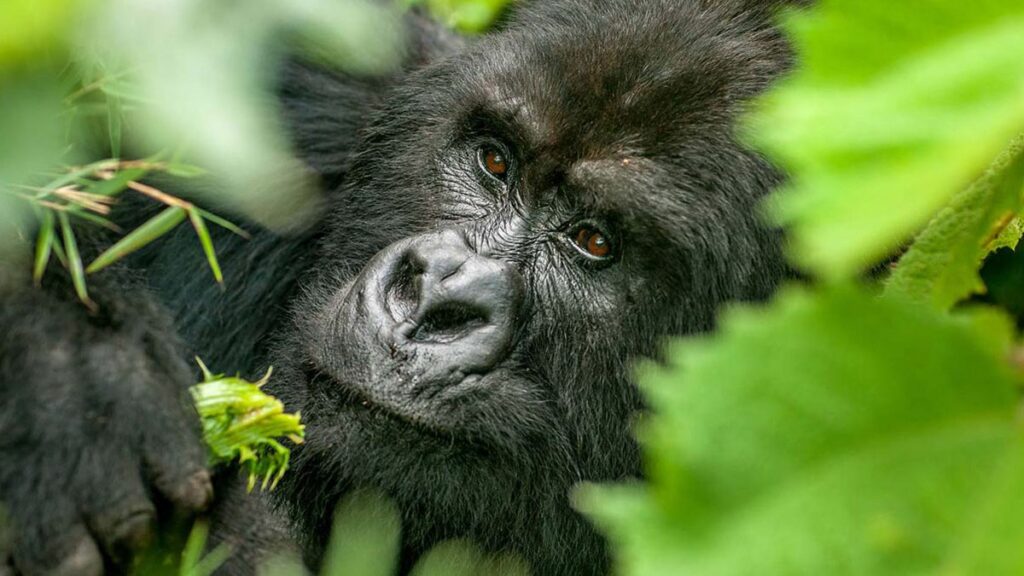
Adult females form a central part of the family.
They contribute to reproduction and provide care for infants.
During a trek, visitors may see females feeding, resting, grooming, carrying infants, or interacting with other members of the group.
Female gorillas can transfer between families, making them an important factor in maintaining genetic diversity and changing family structures.
Rushegura Infants and Juveniles
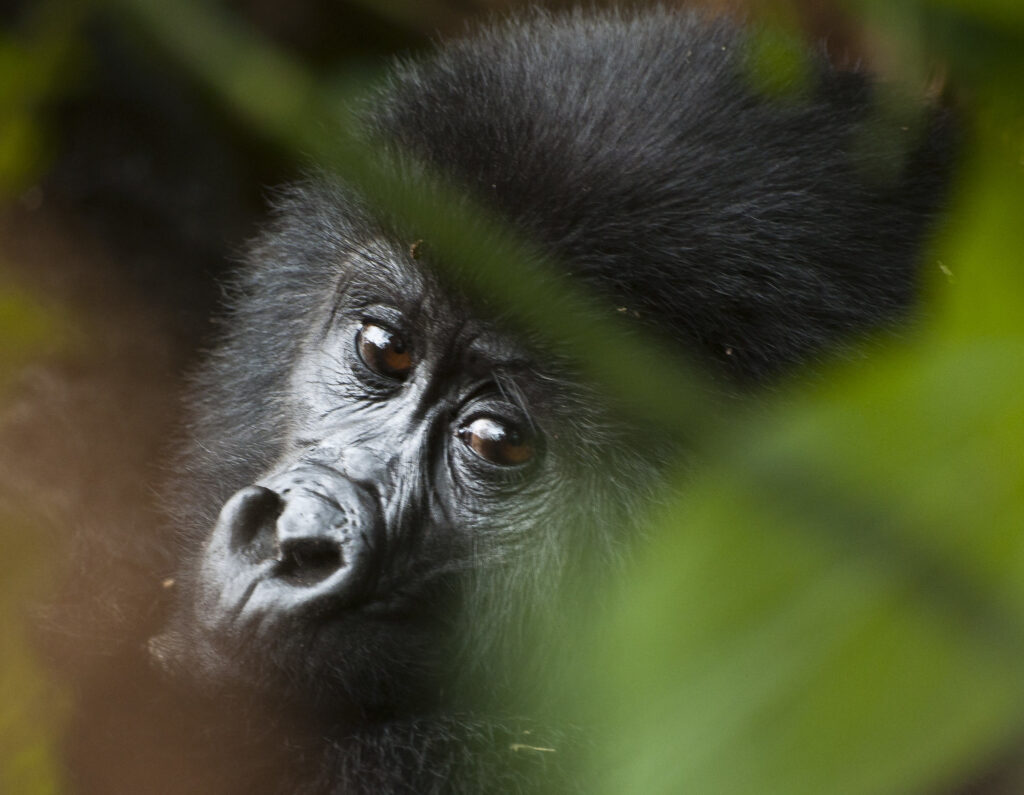
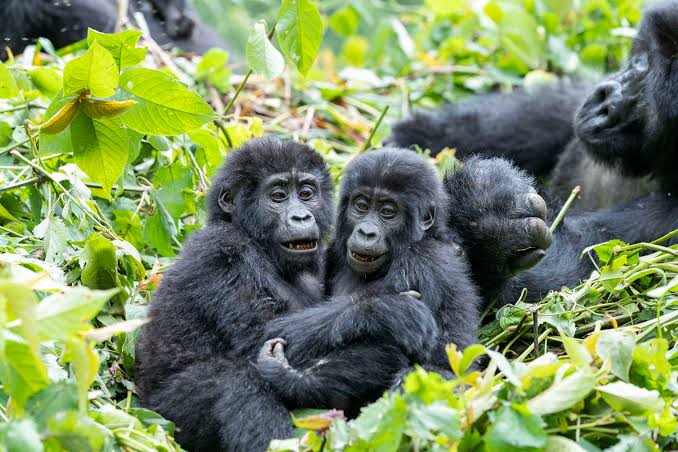
Young gorillas often create some of the most memorable moments during a trek.
Infants remain closely associated with their mothers during their early development.
As they become juveniles, they become more active and independent.
Visitors may see young gorillas playing, climbing vegetation, chasing one another, or interacting with older members of the family.
These behaviors are natural forms of learning and social development.
Visitors should never attempt to attract or interact directly with young gorillas.
Rushegura Gorilla Group Size
The size of the Rushegura family can change over time.
Gorilla groups are living social communities rather than fixed populations.
Births can increase group size, while deaths, transfers, dispersal, and group formation can reduce or redistribute membership.
For this reason, travelers should be cautious about websites that provide a permanent number of Rushegura gorillas without a date.
The most reliable information comes from current park authorities and trekking operators.
Is Rushegura Open for Gorilla Trekking?
Rushegura has historically been one of the habituated gorilla families available for trekking in Buhoma.
However, wildlife authorities control trekking assignments and family access.
Visitors cannot normally guarantee that they will be assigned to Rushegura simply because they request it.
The allocation can depend on conservation management, availability, group distribution, and operational considerations.
Can You Request the Rushegura Gorilla Group?
Travelers can communicate their preference for Rushegura to their tour operator.
However, a request does not guarantee that the family will be assigned.
The final allocation remains under the control of the relevant wildlife authorities.
If Rushegura is particularly important to you, communicate your preference as early as possible.
Rushegura Gorilla Trekking Experience
A Rushegura trek begins with registration and a pre-trekking briefing at Buhoma.
Guides explain the trekking rules, safety procedures, and gorilla-viewing etiquette before the group enters the forest.
Trackers then work to locate the gorilla family.
The walking distance varies according to where the gorillas have moved.
Some days can involve relatively short hikes, while others may require several hours of demanding walking through Bwindi’s mountainous terrain.
How Difficult Is Rushegura Gorilla Trekking?
Rushegura trekking can range from moderate to challenging.
Bwindi’s landscape contains steep slopes, dense vegetation, muddy sections, tree roots, and uneven trails.
Weather can also change quickly because Bwindi is a rainforest.
Travelers should prepare through regular walking or hiking before their safari.
A local porter can also provide useful assistance by carrying luggage and helping visitors navigate difficult sections.
How Long Does a Rushegura Trek Take?
The duration varies from one day to another.
The biggest factor is the location of the gorilla family.
If the gorillas remain relatively close to the trailhead, visitors may reach them quickly. If they have moved deeper into the forest, the hike can take much longer.
The time spent observing the gorillas is controlled under gorilla trekking regulations.
After the encounter, visitors return through the forest to the starting area.
No operator can guarantee the exact duration because the gorillas move naturally.
Best Time to Trek Rushegura
Gorilla trekking operates throughout the year.
Many travelers prefer the relatively drier months because forest trails can be easier to navigate.
However, Bwindi receives rainfall throughout the year.
Wet-season trekking can involve muddier trails but may also provide lush vegetation and fewer tourists.
The best time ultimately depends on your priorities, including weather preferences, accommodation availability, travel budget, and overall itinerary.
What Makes Rushegura Special?
Rushegura is particularly interesting because of its history as a naturally formed gorilla family and its association with the Buhoma sector.
The group’s social structure can change over time, giving researchers and visitors opportunities to observe different aspects of mountain gorilla behavior.
Every encounter is also different.
The gorillas decide where they travel, where they feed, when they rest, and how they interact.
This unpredictability is one of the most appealing aspects of gorilla trekking.
Rushegura and Gorilla Conservation
Gorilla tourism plays an important role in mountain gorilla conservation.
Permit revenue helps support protected-area management and conservation activities.
Tourism also provides employment for guides, trackers, rangers, porters, drivers, lodge employees, and other workers.
Local businesses benefit from visitors who spend money on accommodation, transportation, meals, crafts, cultural experiences, and other services.
The continued protection of Rushegura therefore depends on maintaining responsible tourism alongside effective conservation.
Rushegura and Local Communities
Communities surrounding Bwindi play an important role in the long-term success of conservation.
Tourism creates income opportunities for people living around the park.
Visitors can support these communities by using local services and purchasing appropriate locally produced crafts.
Hiring a porter is another direct way of contributing to local livelihoods while receiving useful assistance during the trek.
Strong relationships between communities and conservation authorities can help reduce pressure on the forest and strengthen support for protected-area management.
Rushegura Trekking Rules
Visitors must follow the rules explained during the trekking briefing.
Maintain the required distance from the gorillas and never attempt to touch them.
Keep noise levels low and avoid sudden movements.
Do not feed the animals.
Do not use flash photography.
Visitors who are sick should not enter the gorilla habitat because some human diseases can potentially affect mountain gorillas.
The guide’s instructions should always take priority during the encounter.
Can You Take Photos of Rushegura Gorillas?
Yes, visitors can photograph habituated gorillas during the trekking experience.
However, photography should never interfere with conservation rules.
Do not use flash.
Do not move closer to the gorillas to obtain a better photograph.
Remain in the position directed by your guide.
A camera with a suitable zoom lens can help capture detailed photographs without encouraging visitors to approach the animals.
Rushegura and Gorilla Habituation
Habituation is the gradual process through which selected gorillas become accustomed to the controlled presence of humans.
Rushegura underwent habituation before becoming available for regular tourist trekking.
Habituation does not make gorillas domesticated.
They remain wild animals capable of unpredictable behavior.
Visitors are guests in their habitat and must respect the animals’ space and natural behavior.
Rushegura Compared With Other Buhoma Gorilla Groups
Buhoma has several habituated gorilla families, and each group has its own history and social dynamics.
Rushegura should not automatically be considered better than other families.
One group may have more infants at a particular time, while another may have more active young males or several silverbacks.
The location of each family also changes.
As a result, visitors assigned to another Buhoma group can have an equally remarkable experience.
Can You Choose Rushegura When Booking?
You can express a preference, but you should not purchase a permit on the assumption that your preferred family is guaranteed.
Permit allocation is managed by the relevant wildlife authorities.
If you have a strong preference for the Buhoma sector, tell your tour operator before the permit is secured.
Early communication gives the operator more opportunity to organize the itinerary around your preference.
Can Children Trek Rushegura?
Gorilla trekking has a minimum age requirement established by the relevant wildlife authority.
Travelers should confirm the current age rule before booking.
Meeting the age requirement is only one consideration.
The child must also be physically prepared for potentially several hours of hiking through steep and muddy forest terrain.
Parents should discuss the demands of the trek with their tour operator before confirming the booking.
Hiring a Porter for a Rushegura Trek
Hiring a porter is highly recommended for visitors who want additional support.
A porter can carry a backpack, water, camera equipment, or other personal belongings.
They can also provide physical assistance on challenging sections of the trail.
Porter services provide an important source of income for people living around Bwindi.
Agree on the service fee before beginning the trek and follow your operator’s guidance.
What Should You Pack?
Prepare for wet and challenging rainforest conditions.
Sturdy hiking boots with good grip are essential.
Long trousers and long-sleeved clothing can help protect against vegetation and insects.
Carry a waterproof jacket, drinking water, a small backpack, snacks where appropriate, and camera equipment.
Waterproof protection for electronics is also useful because rain can occur unexpectedly.
Gardening gloves can provide additional protection when moving through dense vegetation.
When Should You Arrive at Buhoma?
Arrive at the designated trekking headquarters early enough to complete registration and briefing.
Your tour operator should provide the exact reporting time.
Arriving early prevents unnecessary delays and gives you enough time to organize your equipment.
It also allows you to meet your guide and trekking team before entering the forest.
Rushegura Gorilla Trekking Cost
The total cost depends on more than the gorilla permit.
Travelers should consider accommodation, transportation, meals, porter services, and other safari activities when preparing a budget.
The gorilla permit remains the principal mandatory cost for the trekking experience.
Because permit prices and other tourism charges can change, travelers should confirm the current rates before booking.
A complete safari quotation provides a more accurate picture of the total trip cost.
How to Book a Rushegura Gorilla Trek
Begin by selecting your preferred travel date and the Buhoma sector.
Your tour operator can check permit availability and arrange the required permit.
If you specifically prefer Rushegura, communicate this preference before the booking is finalized.
Remember that requesting Rushegura does not guarantee assignment to the family.
Once the permit is confirmed, arrange accommodation, transportation, and any additional activities around your trekking date.
Frequently Asked Questions
Where is the Rushegura gorilla group?
Rushegura is associated with the Buhoma sector of Bwindi Impenetrable National Park in southwestern Uganda.
How did the Rushegura group form?
Rushegura developed as a separate social group following a split involving gorillas from another established family. Its membership and social structure have continued to change naturally.
Can I choose Rushegura?
You can request or express a preference, but the final gorilla family allocation is controlled by park authorities and cannot be guaranteed.
How many gorillas are currently in Rushegura?
The number changes through births, deaths, transfers, and other natural social changes. Confirm the current composition before your trek.
Is Rushegura habituated?
Yes. Rushegura has been habituated for controlled human observation and has historically been available for regular gorilla trekking.
How difficult is a Rushegura trek?
Difficulty varies depending on the gorillas’ location and forest conditions. Some hikes are moderate, while others can be physically demanding.
How long does the trek take?
There is no fixed total duration. The hiking time depends largely on where the gorillas are located on the day of your trek.
Can I photograph Rushegura gorillas?
Yes. Visitors can take photographs while following the current distance rules and avoiding flash.
Can I touch a Rushegura gorilla?
No. Visitors should never intentionally touch a gorilla.
Should I hire a porter?
A porter can be extremely helpful on steep or muddy trails and provides direct economic support to local communities.
Can I trek Rushegura if I am sick?
Visitors showing signs of potentially infectious illness should not enter the gorilla habitat. Inform your tour operator and follow the current health procedures.
Conclusion
The Rushegura gorilla group profile offers an insight into the history, social organization, conservation importance, and trekking experience of one of Bwindi’s well-known habituated gorilla families.
Located in the Buhoma sector, Rushegura has developed through the natural dynamics of mountain gorilla society. Its leadership and membership can change as gorillas mature, reproduce, transfer between groups, or establish new social units.
For travelers, a Rushegura trek provides more than a wildlife encounter. It creates an opportunity to observe complex gorilla behavior while supporting conservation and communities around Bwindi.
If you want to experience Rushegura, plan your trek early, communicate your preference to your tour operator, prepare for unpredictable rainforest conditions, and hire a porter if you need additional assistance.
Most importantly, remember that gorilla trekking is a controlled wildlife experience. The animals remain wild, and their behavior determines the encounter.
Respecting their space, following your guide’s instructions, and protecting the forest help ensure that Rushegura and other mountain gorilla families remain protected for future generations.