
How Rangers Track Gorillas Each Morning
Rangers track gorillas Uganda. Each morning in Bwindi and Mgahinga begins with a dedicated team of rangers and trackers heading into the forest before the trekkers arrive. Their mission stays simple but crucial: find the gorilla families, check their condition and guide visitors safely to them.
This early morning routine keeps the gorillas protected and ensures that every trek leads to a guaranteed encounter. Without this daily effort, gorilla tourism and conservation would not function.

Starting at the Previous Night’s Nest
Trackers begin at the site where the gorillas built their nests the previous evening. Gorillas construct fresh nests every night, and the location gives the rangers a clear starting point.
The forest often feels misty and quiet at dawn, and the trackers study the nests for clues. They examine the freshness of dung, broken stems and feeding remains to understand which direction the family moved when they woke up.
Reading the Trail
After leaving the nesting site, the trackers follow signs that reveal the gorillas’ movements. They search for bent vegetation, footprints in soft soil and chewed leaves left along the path.
The trackers read the forest like a map. Each sign tells a story—how fast the gorillas moved, which family member led the way and whether the group scattered or stayed tightly together.
This skill comes from years of experience, patience and deep knowledge of the forest.
Working in Communication With Guides
Trackers and rangers carry radios that allow constant communication with the guides who wait at the trailhead with trekkers.
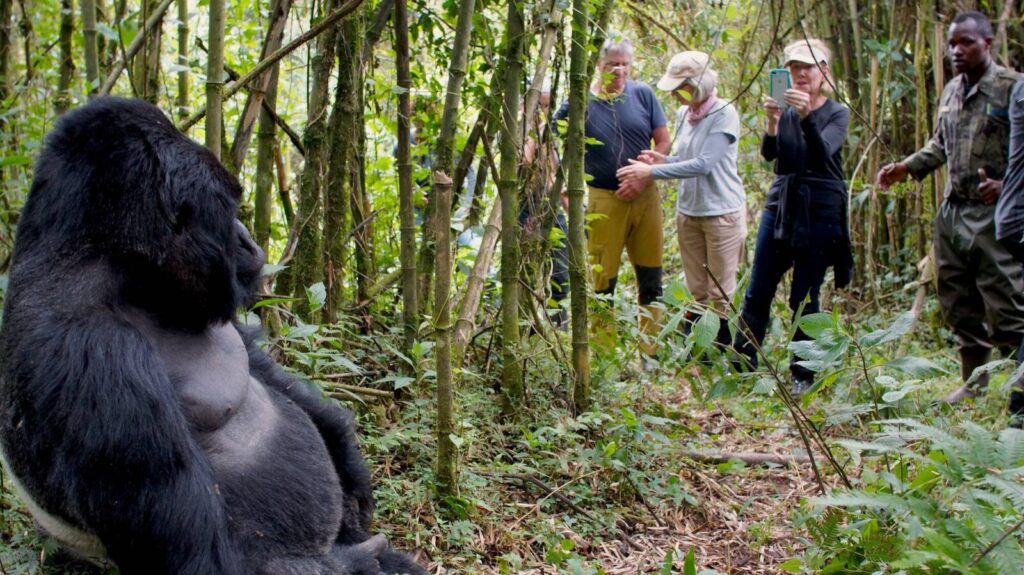
As the trackers move deeper into the forest, they update the guides about direction, speed and approximate distance. These early updates help guides plan the easiest route for the trekking group.
Clear communication makes the trek efficient and ensures trekkers reach the gorillas without unnecessary detours.
Studying Feeding Patterns
Gorillas move in search of fresh vegetation. Trackers study feeding sites to understand how far the gorillas may travel that morning.
Chewed bamboo, stripped vines and uprooted herbs reveal what the gorillas ate during the early hours. If the feeding remains look fresh, the family stays close. If older, it means the group moved farther, sometimes across steep ridges or into thicker forest zones.
Observing Behaviour From a Distance
Trackers locate the gorilla family long before trekkers reach the site. They observe quietly from a safe distance to understand the mood of the group.
They check whether infants feel active, whether the silverback looks relaxed and whether the group shows any signs of stress.
This assessment helps guides prepare trekkers for the encounter and ensures everyone approaches calmly and respectfully.
Confirming the Group’s Exact Location
When the trackers find the family, they mark the location using radio coordinates. The forest has no fixed trails, so this pinpointed position helps the guides bring trekkers directly to the gorillas.
The trackers then wait with the family until the trekking group arrives. Their presence keeps the gorillas calm because the animals recognise them.
Ensuring Safety for Both Gorillas and Trekkers
Trackers monitor the environment around the gorilla family to ensure it stays safe. They choose the best viewing angle, clear slippery ground and create a calm approach path.
Their presence reduces the chance of surprises, especially when gorillas move suddenly through dense vegetation.
Why This Morning Routine Matters
Daily tracking allows wildlife authorities to understand gorilla health, movement and family dynamics.
It also guarantees ethical tourism. Trekkers spend only one hour with the gorillas, and the short interaction depends entirely on the trackers’ early work. Without accurate tracking, finding gorillas in such dense forest would be extremely difficult.
This routine also strengthens conservation because fewer disturbances create a stable environment for the gorillas.
Final Thoughts
Rangers and trackers form the backbone of Uganda’s gorilla conservation system. Their early morning work protects the gorillas, guides tourism and maintains the delicate balance between wildlife protection and visitor experience.
Every trekker who meets a gorilla family benefits from the skill, dedication and quiet heroism of these teams.
Plan Your Gorilla Trek
You can support conservation by booking your trek responsibly. Secure your permits, choose your sector and plan your safari with expert guidance.
For confirmed dates and full support, book with us at https://www.gorilla-permits.com.



