How Gorillas Feed
Gorillas are powerful animals, yet their feeding habits are surprisingly gentle and deliberate. They spend a large part of each day foraging, selecting, and processing plant material from their forest environment. Understanding how gorillas feed helps explain their social structure, movement patterns, and the ecosystems they help sustain.
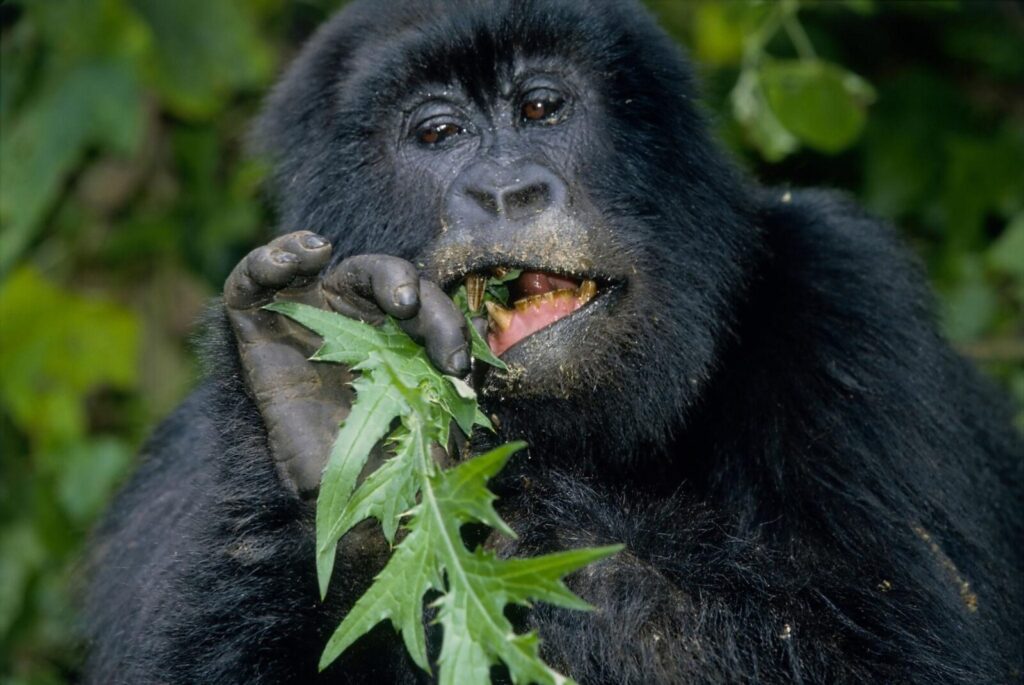
What Gorillas Eat
Gorillas are primarily herbivores. Their diet consists mainly of leaves, stems, shoots, bark, and roots. They also consume fruits when available, along with flowers and occasional insects such as ants or termites. The exact diet depends on habitat, altitude, and season.
Mountain gorillas rely heavily on fibrous vegetation because fruit is limited at higher elevations. Lowland gorillas enjoy a more fruit-rich diet when seasonal trees are in production.
Daily Feeding Patterns
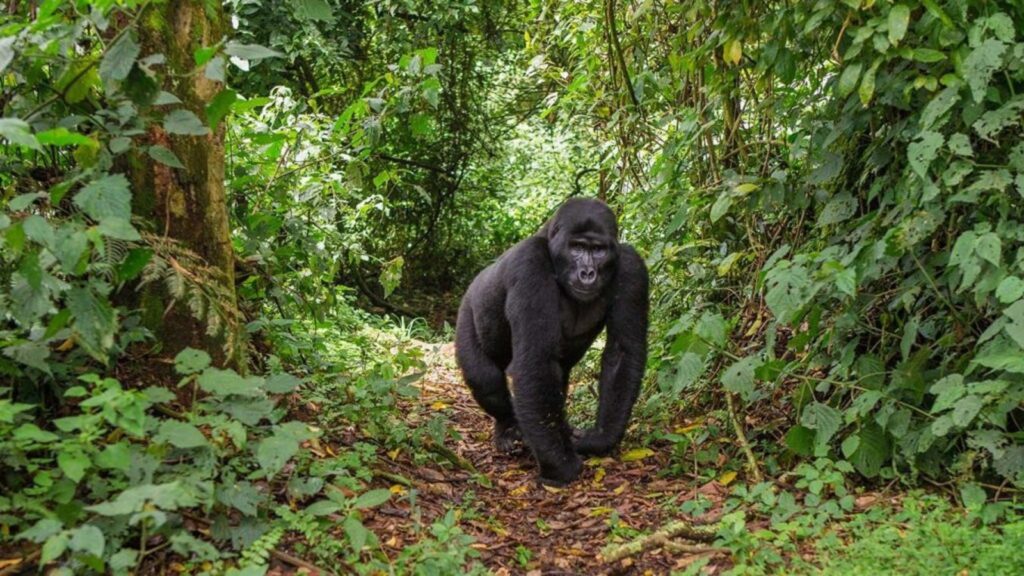
Gorillas feed for most of the day, usually between 6 and 8 hours. Feeding begins shortly after sunrise and continues in cycles, broken up by rest and social interaction. They move slowly through the forest, feeding as they go rather than returning to a single feeding site.
This steady pace reduces competition within the group and allows individuals to eat calmly without aggression.
How Gorillas Select Food
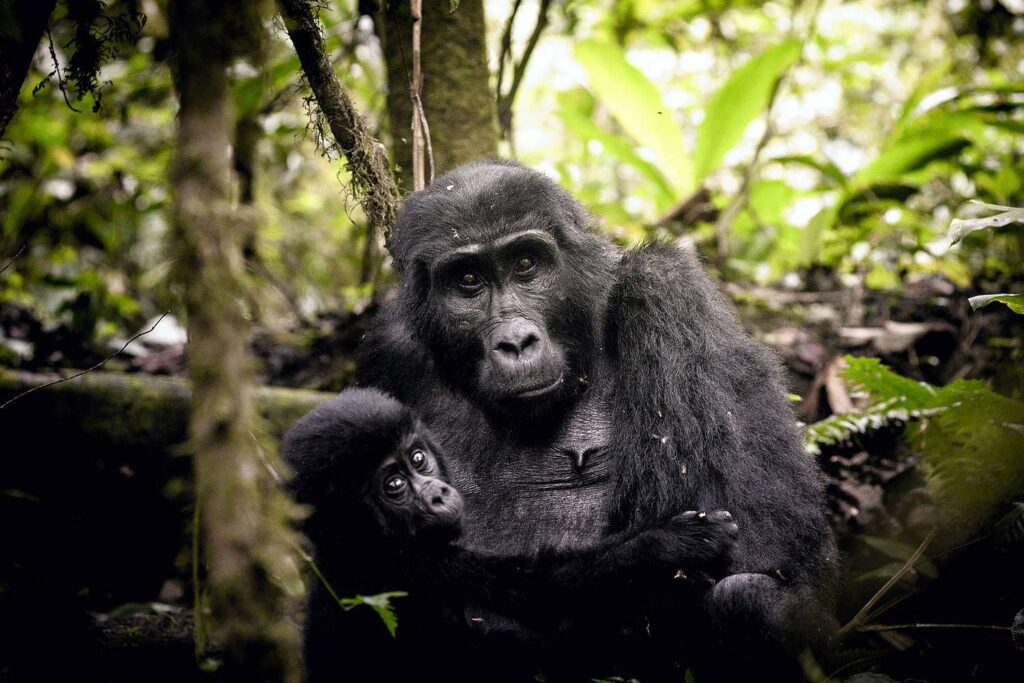
Gorillas are selective feeders. They do not eat everything available to them. Experienced adults, especially silverbacks and older females, know which plants are nutritious, safe, and seasonally optimal. Young gorillas learn by observing and copying adults.
They often peel stems, strip bark, or discard tough outer layers to reach the most nutritious parts of a plant. This careful selection minimizes toxins and maximizes energy intake.
Feeding Techniques and Physical Adaptations
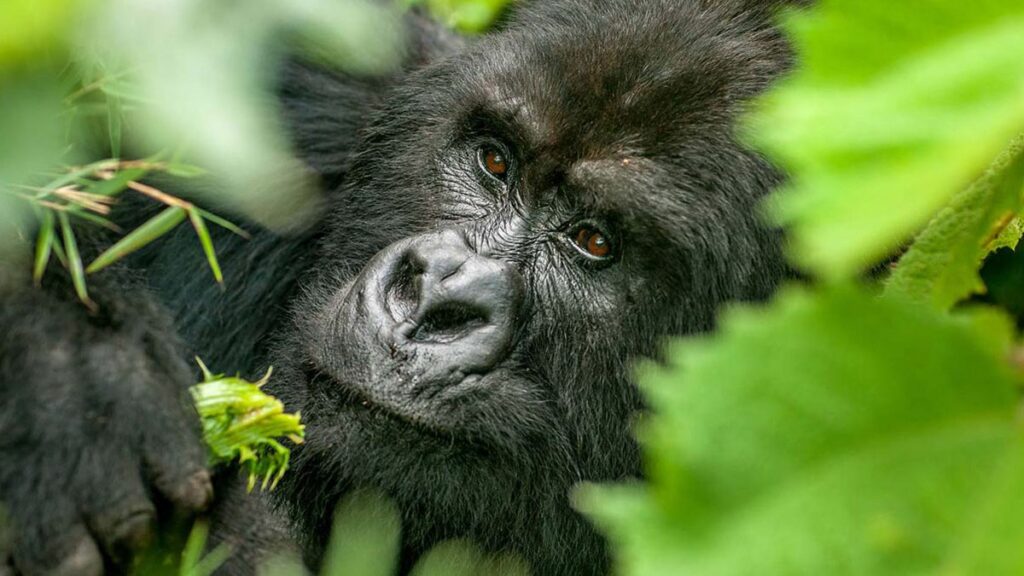
Gorillas use their hands with remarkable precision. They grip, tear, fold, and bundle vegetation before eating. Their large molars and powerful jaw muscles allow them to crush tough plant fibers efficiently.
Their digestive system is adapted to process large volumes of fibrous food. A slow fermentation process in the gut extracts nutrients that many other animals cannot access.
Group Feeding and Social Order
Feeding is a social activity, but it is rarely chaotic. Silverbacks usually feed first or choose feeding areas, setting the direction of group movement. Females and juveniles follow, spacing themselves naturally to avoid conflict.
Because food is usually abundant, competition is low. This calm feeding environment supports the strong social bonds seen within gorilla families.
Seasonal Changes in Feeding
Gorilla diets change with the seasons. During wet seasons, fresh leaves and shoots dominate their meals. In drier periods, gorillas rely more on bark, roots, and hardy vegetation. Fruit consumption increases when trees are in season, especially for lowland gorillas.
These seasonal shifts influence how far gorillas travel each day and how long they remain in one area.
Feeding and Habitat Movement
Because gorillas feed continuously, their daily travel distances are relatively short. They move only as far as needed to access fresh vegetation. This feeding-driven movement pattern helps explain why gorilla groups have defined home ranges rather than fixed territories.
Their feeding behavior also shapes the forest. By breaking stems, dispersing seeds, and opening vegetation, gorillas play a key role in maintaining forest health.
Feeding Behavior in Protected Gorilla Populations
In protected areas such as Bwindi Impenetrable National Park and Volcanoes National Park, gorillas feed naturally with minimal human interference. Conservation rules ensure that trekking activities do not disrupt feeding times or patterns.
Maintaining natural feeding behavior is essential for long-term survival and population stability.
Why Feeding Habits Matter for Conservation
Because gorillas depend on specific plant species, habitat destruction directly threatens their ability to feed. Protecting large, continuous forest areas ensures food security for gorilla families. Conservation bodies such as the Uganda Wildlife Authority focus on safeguarding feeding zones as part of broader ecosystem protection.
Plan Your Safari
Watching gorillas feed in the wild is one of the most intimate parts of a trekking experience. Their calm movements, careful food selection, and family interactions offer a powerful lesson in balance and survival. By choosing responsible gorilla trekking, you help protect the forests that sustain these remarkable feeding systems for generations to come.