Gorilla Trekking Photo Contest Entry Tips: How to Submit Better Wildlife Photos
Gorilla trekking gives travelers an extraordinary opportunity to photograph mountain gorillas in their natural forest environment. The combination of dramatic landscapes, expressive gorilla faces, powerful silverbacks, playful juveniles, and intimate family interactions creates many memorable photography opportunities. For travelers who enjoy wildlife photography, entering a gorilla trekking photo contest can provide an exciting way to share these experiences with a wider audience.
However, taking a beautiful photograph during a gorilla trek requires more than owning an expensive camera. The photographer must work within strict wildlife-viewing rules, changing forest conditions, and limited opportunities. Gorillas may move through dense vegetation, light can change quickly, and photographers must follow the instructions of guides and trackers.
A successful contest entry should therefore combine strong composition, authentic wildlife behavior, good technical quality, and responsible photography. The best photograph is not necessarily the closest or most dramatic image. It is often the image that tells a compelling story while respecting the animal and its natural environment.
What Makes a Strong Gorilla Trekking Photo Contest Entry?
A strong gorilla trekking photo contest entry should immediately capture attention while also communicating something meaningful about the gorilla or its environment. Judges often have many photographs to review, so an image needs a clear subject and visual impact.
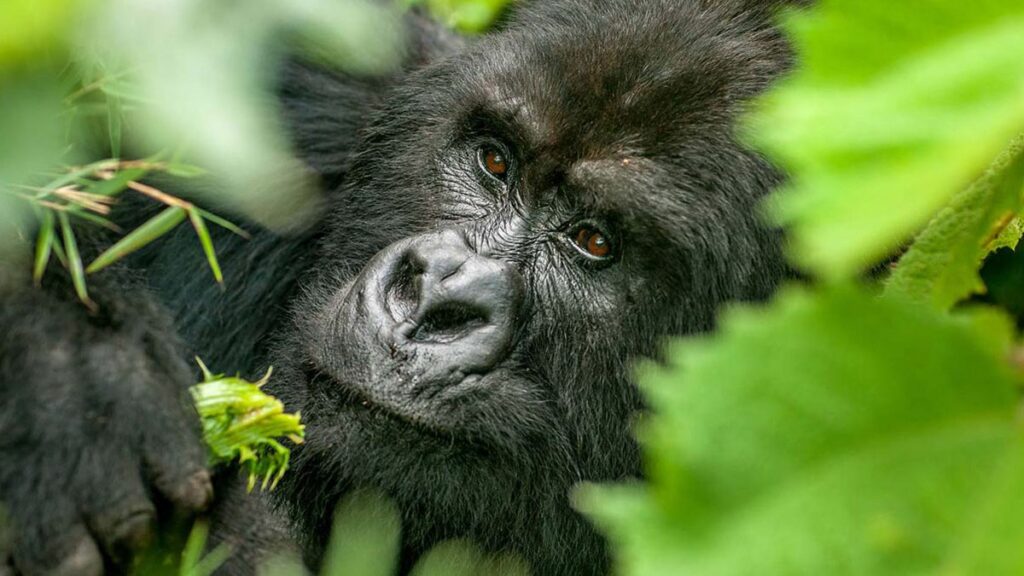
A close-up portrait of a silverback can be powerful because facial expression, eyes, wrinkles, and fur texture create a strong connection with the viewer. However, a photograph showing several gorillas interacting can sometimes tell a richer story because it captures social behavior.
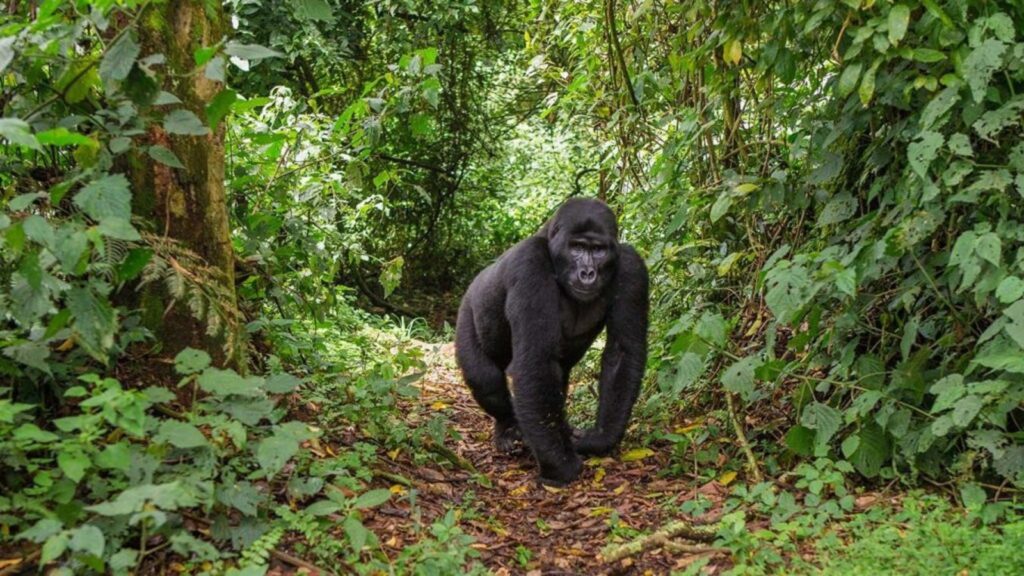
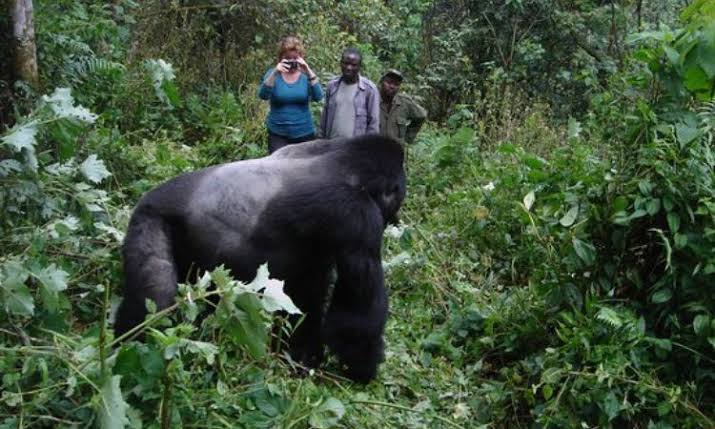
Environmental photographs can also make excellent competition entries. A gorilla partly surrounded by dense vegetation, for example, can communicate the connection between the animal and its forest habitat.
Before submitting a photograph, ask yourself what makes the image different from an ordinary gorilla snapshot. Does it show interesting behavior? Does it communicate emotion? Does the composition tell a story? Does the photograph reveal something about mountain gorillas that a viewer might not otherwise notice?
The strongest images usually have a clear reason for existing.
Focus on Gorilla Behavior
Wildlife photography becomes much more interesting when it captures behavior rather than simply showing an animal looking at the camera.
During a gorilla trek, photographers may encounter feeding, grooming, resting, playing, climbing, social interaction, and other natural behaviors. A photograph capturing one of these moments can communicate more information than a standard portrait.
For example, a photograph of a young gorilla playing beside an adult can communicate family relationships. A silverback watching other members of the group can create a sense of leadership and protection. Several gorillas grooming one another can illustrate the social nature of their family.
Patience is therefore one of the most valuable skills for a gorilla trekking photo contest. Instead of taking hundreds of photographs immediately after seeing the gorillas, observe what they are doing and anticipate interesting moments.
The best photograph may occur several minutes after the first sighting.
Capture the Eyes
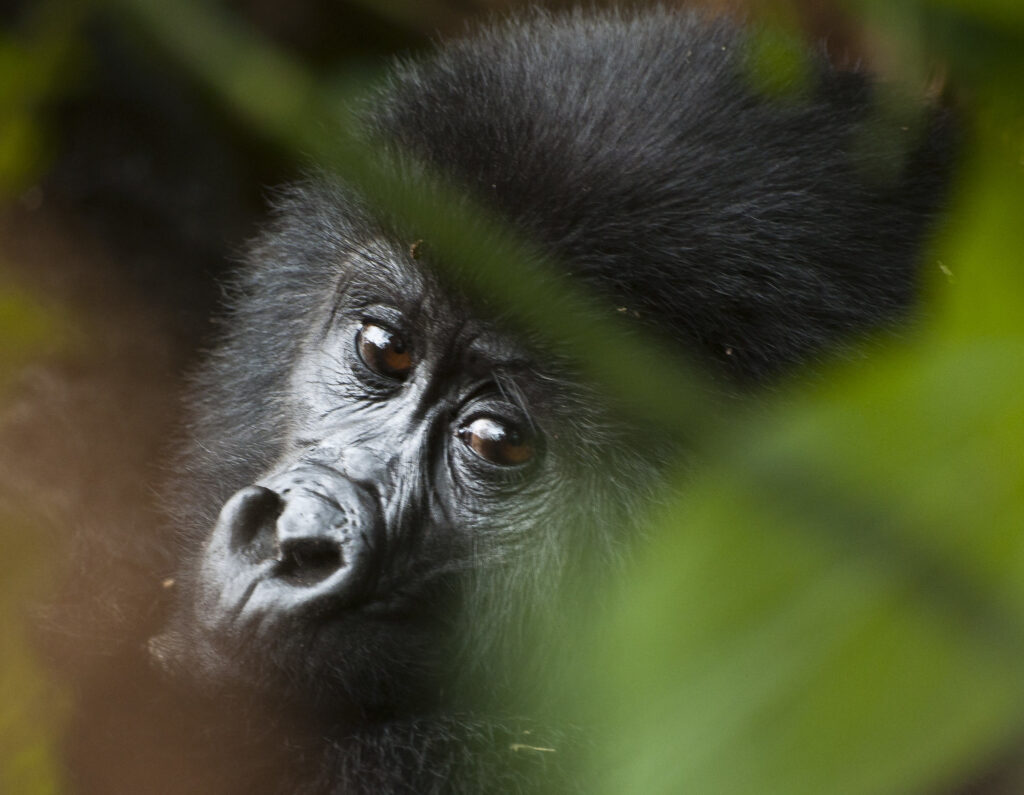
The eyes can transform an ordinary wildlife photograph into a powerful portrait. When a gorilla’s eyes are sharp and clearly visible, the viewer can feel a stronger connection with the animal.
When photographing a gorilla, place particular attention on focus. If the eyes are visible, they should generally be one of the sharpest areas of the image.
This becomes more challenging in dense vegetation because leaves, branches, and other objects can interfere with autofocus. Photographers should carefully monitor where the camera is focusing rather than assuming that automatic focus will always select the correct subject.
A photograph with beautiful fur detail but soft eyes may have less emotional impact than an image with slightly less technical perfection but exceptionally strong eye contact.
However, photographers must always follow the instructions of the trekking team and should never attempt to force a gorilla to look toward the camera.
Use Natural Light to Your Advantage
Forest photography often presents difficult lighting conditions. Dense vegetation can create deep shadows while small openings in the canopy can produce bright patches of sunlight.
Instead of treating these conditions only as problems, photographers can use them creatively.
Soft natural light can produce attractive portraits with gentle detail across the gorilla’s face and fur. Stronger directional light can create contrast and emphasize texture. A gorilla partially illuminated through vegetation can also create a dramatic environmental portrait.
Avoid relying on flash photography. Flash can disturb wildlife and may violate trekking regulations. Natural light is therefore the preferred approach.
Before entering the forest, understand how your camera performs at higher ISO settings and practice adjusting shutter speed and aperture quickly. These preparations can make it easier to react when a gorilla suddenly moves into a difficult lighting position.
Do Not Forget the Forest
One of the biggest mistakes photographers make is concentrating so heavily on the gorilla that they completely remove the surrounding environment from the photograph.
A mountain gorilla does not exist separately from its habitat. The forest is an important part of its story.
Wide or environmental photographs can show gorillas surrounded by vegetation, vines, trees, and forest slopes. Such images can communicate the atmosphere of gorilla habitat and provide greater context than a tight portrait.
For a gorilla trekking photo contest, consider submitting a mixture of photographs if the competition allows multiple entries. A close-up portrait can demonstrate technical skill, while an environmental image can demonstrate storytelling.
The strongest environmental photographs often make the viewer feel as though they are standing inside the forest with the photographer.
Tell a Story With Composition
Good wildlife photographs often contain a visual story. Composition determines how the viewer moves through that story.
Use natural vegetation carefully. Leaves and branches can frame the gorilla and create depth, but excessive vegetation can also obscure the subject.
Look for leading lines, natural frames, layers, and moments of symmetry. Consider the direction in which the gorilla is looking and, when appropriate, leave space in front of its gaze.
A photograph can also become more powerful when the animal occupies only part of the frame. This allows the surrounding environment to contribute to the story.
Before pressing the shutter, quickly consider the background, subject position, light, and potential distractions. Small changes in your position can sometimes make a major difference.
However, never move into an inappropriate position simply to improve a photograph. Wildlife welfare and trekking regulations always take priority over composition.
Photograph More Than Silverbacks
Silverbacks naturally attract photographers because of their impressive size and distinctive appearance. Their facial expressions and physical presence can produce dramatic photographs.
However, don’t overlook females, juveniles, and other members of the gorilla family.
Young gorillas can produce particularly expressive photographs because of their playful behavior. Images of mothers with infants can communicate family relationships, while photographs of several group members can demonstrate the social structure of the family.
A photo contest may contain many conventional silverback portraits. A unique photograph of a juvenile interacting with another family member could therefore stand out more strongly.
Look at the entire group rather than immediately searching for the largest gorilla.
Be Ready for Fast-Moving Moments
Gorillas may remain still for long periods and then suddenly move. A feeding gorilla can quickly turn its head. A juvenile may begin playing without warning. A silverback may stand, walk, or interact with another group member.
Wildlife photographers therefore need to be ready.
Use camera settings that allow you to maintain a sufficiently fast shutter speed for moving subjects. Continuous shooting can also help capture a sequence when an interesting behavior occurs.
At the same time, avoid photographing continuously without thinking. Hundreds of nearly identical photographs make the selection process harder and do not necessarily increase the chance of obtaining a winning image.
Observe first, anticipate the behavior, and then photograph the moment that matters.
Choose the Right Camera Settings
There is no single camera setting that works for every gorilla trek. Forest lighting can change significantly throughout the day.
A photographer may need a relatively fast shutter speed when a gorilla is moving, while a slower shutter speed may work for a stationary subject under low light.
A moderate to high ISO may be necessary in darker forest conditions. Modern cameras can produce excellent results at higher ISO values, but photographers should still avoid using unnecessarily extreme settings when adequate light is available.
A wide aperture can help separate a gorilla from a distracting background, while a narrower aperture can keep more of a group in focus.
The most important principle is flexibility. Know your camera well enough to adjust settings quickly without missing an important behavior.
Keep Your Photography Equipment Manageable
A gorilla trek can involve significant physical effort, so photography equipment should be selected carefully.
A large camera body, multiple heavy lenses, a tripod, and extensive accessories can become tiring during a long hike through uneven terrain.
For many travelers, one versatile telephoto or zoom lens provides enough flexibility for portraits, behavioral photographs, and environmental images.
Extra batteries and memory cards are important because opportunities can be unpredictable. Waterproof protection is also valuable because forest weather can change quickly.
A lightweight setup allows you to concentrate on the wildlife experience instead of constantly managing equipment.
Follow Wildlife Photography Ethics
Responsible photography should always be part of a gorilla trekking photo contest strategy.
A competition photograph should never be created by disturbing, approaching, or manipulating wildlife. Photographers should not attempt to attract a gorilla’s attention, block its movement, or encourage a particular behavior for the sake of an image.
Never sacrifice the animal’s welfare for a photograph.
The trekking guides and trackers understand gorilla behavior and help visitors maintain appropriate conduct. Follow their instructions even when doing so means missing a potentially spectacular photograph.
An authentic photograph captured without disturbing the gorillas is more valuable than an artificially created moment.
Respect Gorilla Trekking Photography Rules
Gorilla trekking operates under conservation rules designed to protect both visitors and gorillas. Photographers must follow the instructions provided by park authorities and trekking staff.
Do not use photography as a reason to move closer to a gorilla than permitted. Do not ignore guide instructions because you believe you have found the perfect composition.
Photographers should also avoid blocking other trekkers from viewing the gorillas. Everyone in the trekking group deserves an opportunity to observe the animals.
The best approach is to work within the conditions provided by the guides. Wildlife photography is about responding creatively to reality rather than controlling the scene.
Select Your Best Photograph Carefully
After returning from the trek, you may have hundreds or even thousands of photographs. Selecting one for a gorilla trekking photo contest can therefore become surprisingly difficult.
Start by removing technically weak images. Eliminate photographs with poor focus, severe blur, distracting backgrounds, or accidental obstructions.
Then compare the remaining photographs based on emotional impact and storytelling.
Ask whether the image makes you stop and look. Does it communicate personality or behavior? Does it show the gorilla clearly? Does the composition feel intentional? Does the photograph create an emotional response?
Do not automatically choose the photograph with the largest gorilla face. Sometimes a wider photograph tells a much stronger story.
If the competition permits multiple entries, select photographs that complement each other rather than submitting several almost identical portraits.
Edit the Photograph Carefully
Post-processing can improve a wildlife photograph, but excessive editing can make the image look unnatural.
Adjustments to exposure, contrast, highlights, shadows, white balance, and cropping can help reveal details that were difficult to capture in challenging forest conditions.
However, avoid editing that changes the fundamental reality of the photograph unless the competition specifically permits such manipulation.
Do not add or remove major wildlife elements simply to create a more dramatic scene when the contest rules prohibit compositing or manipulation.
Always read the competition’s editing requirements before submitting your photograph. Different competitions can have very different rules regarding cropping, cloning, artificial backgrounds, and other digital modifications.
Read the Photo Contest Rules.
One of the easiest ways to lose a competition opportunity is to ignore the submission requirements.
Before entering a gorilla trekking photo contest, carefully check the competition’s rules. Look at the required image dimensions, file format, maximum file size, deadline, entry fee if applicable, image ownership requirements, and editing restrictions.
Some competitions may require the original file or proof that you captured the photograph yourself. Others may impose restrictions on artificial manipulation.
Check whether the competition allows photographs taken during organized wildlife tourism activities and whether it has specific ethical requirements concerning animal welfare.
A technically excellent photograph can still be rejected if it does not meet the competition’s administrative requirements.
Write a Strong Photograph Caption
Some photo competitions request captions or descriptions alongside the image. A good caption can provide context without distracting from the photograph.
Explain where the photograph was taken, what the gorilla was doing, and why the moment was meaningful.
Avoid making unsupported claims about the animal’s emotions or intentions. Instead, describe what you actually observed.
For example, explaining that a young gorilla was playing near another family member provides useful context. A statement claiming that the gorilla was “feeling sad” would be much more speculative.
A strong caption can help judges understand the circumstances behind the photograph and reinforce the story already visible in the image.
Avoid Staged Wildlife Photographs
Authenticity matters greatly in wildlife photography.
Do not use bait, food, artificial sounds, or other methods to manipulate gorilla behavior. A photograph should represent a genuine moment observed during the trek.
If a competition requires disclosure of significant digital manipulation or staged content, provide the information honestly.
Responsible wildlife photography protects the credibility of both the photographer and the competition.
This is particularly important for endangered species. Gorilla photographs should contribute to appreciation and conservation rather than encouraging inappropriate wildlife interaction.
Use the Photograph to Promote Conservation
A powerful gorilla trekking photo contest entry can do more than win recognition. It can also encourage people to care about mountain gorilla conservation.
A photograph showing a gorilla within its natural habitat can remind viewers that these animals depend on protected forests. A family photograph can demonstrate the complexity and social nature of gorillas.
Photographers can use captions and accompanying stories to explain the importance of responsible tourism and habitat protection.
When people develop an emotional connection with wildlife through photography, they may become more interested in conservation.
This gives wildlife photography a purpose beyond social media likes and competition prizes.
Common Mistakes to Avoid
Many gorilla photographs fail to stand out because they contain avoidable problems.
A cluttered background can distract from the subject. Poor focus can reduce the impact of an otherwise beautiful portrait. Excessive cropping can reduce image quality. High ISO noise can become distracting when exposure is poor.
Other mistakes involve composition. A gorilla positioned awkwardly at the edge of the frame can make the photograph feel unbalanced. Cutting off important body parts unintentionally can also weaken the image.
The biggest mistake, however, is prioritizing the photograph over the wildlife experience.
Never ignore safety instructions, disturb the gorillas, or pressure the trekking team simply to obtain a competition photograph.
Best Types of Gorilla Photos to Consider for a Contest
Different types of photographs can work well in a wildlife photography competition. A dramatic silverback portrait can demonstrate technical quality and personality. A mother and infant photograph can communicate family relationships. A juvenile playing in the vegetation can provide energy and emotion.
Environmental portraits can demonstrate the relationship between gorillas and their habitat. Group photographs can show social behavior, while unusual moments can give your entry originality.
Rather than asking which type of photograph is universally best, consider which image tells the strongest story.
A technically perfect photograph may be less memorable than an imperfect but emotionally powerful moment.
Conclusion
Entering a gorilla trekking photo contest can be a rewarding way to share the beauty of mountain gorillas and the forests where they live. However, successful wildlife photography requires patience, preparation, technical skill, and respect for conservation rules.
Focus on authentic behavior rather than simply collecting close-up portraits. Pay attention to the eyes, natural light, composition, and surrounding forest. Keep your equipment manageable, follow the instructions of guides and trackers, and never disturb a gorilla to improve a photograph.
After the trek, carefully select and edit your strongest images while following the competition’s submission and manipulation rules. A compelling photograph should capture more than the appearance of a gorilla. It should communicate personality, behavior, habitat, or emotion while preserving the authenticity of the encounter.
The ultimate goal is not simply to win a competition. A powerful gorilla photograph can inspire people to appreciate mountain gorillas and understand why protecting their habitat matters.
Frequently Asked Questions
What makes a good gorilla trekking photo contest entry?
A strong entry usually combines good technical quality with compelling composition, interesting gorilla behavior, emotional impact, and a clear story. Authentic wildlife moments can be particularly powerful.
Can I use a smartphone for a gorilla photography contest?
Yes, if the competition allows smartphone photographs. Modern phones can produce high-quality images, particularly in good lighting. However, forest conditions and distance from the gorillas can make dedicated camera equipment more versatile.
Should I photograph silverbacks or baby gorillas?
Both can produce excellent photographs. Silverbacks offer dramatic portraits, while young gorillas can provide opportunities to capture playful and social behavior. Look for the strongest story rather than focusing on one type of gorilla.
Can I use flash while photographing gorillas?
You should follow the current rules and instructions provided by the relevant park authorities and trekking team. Avoid using flash unless explicitly permitted, as artificial flashes can disturb wildlife.
How should I edit my gorilla photograph?
Make natural adjustments to exposure, contrast, highlights, shadows, color, and cropping. Always check the competition rules before making significant alterations or removing elements from the photograph.
Can I enter a photograph taken during a commercial gorilla safari?
Generally, this depends on the specific competition’s rules and image ownership requirements. Check the contest terms before submitting the photograph.
What lens is best for gorilla trekking photography?
A versatile zoom or telephoto lens can be useful because it allows photographers to photograph both individual gorillas and group behavior without constantly changing equipment. The ideal lens depends on your camera system, shooting conditions, and competition requirements.