Gorilla Safari STEM Education: Using Gorilla Tourism to Inspire Science, Technology, Engineering, and Mathematics Learning
Science, Technology, Engineering, and Mathematics (STEM) education helps students develop critical thinking, problem-solving, and analytical skills that prepare them for future careers and lifelong learning. Educators constantly seek engaging ways to connect classroom concepts with real-world applications. One powerful and often overlooked educational tool is gorilla safari STEM education, which combines wildlife conservation, environmental science, technology, and data analysis through the fascinating world of mountain gorillas.
A gorilla safari offers far more than a wildlife viewing experience. It provides opportunities to explore biology, ecology, geography, environmental science, conservation technology, engineering solutions, and mathematical data collection. Students can learn how scientists monitor endangered species, how conservation programs use technology to protect wildlife, and how mathematical models help predict population growth.
By connecting STEM subjects to mountain gorilla conservation, educators can create meaningful learning experiences that inspire curiosity and environmental responsibility.
Understanding Gorilla Safari STEM Education
Gorilla safari STEM education refers to educational programs, resources, and learning activities that use mountain gorillas and conservation tourism as a foundation for teaching STEM concepts. These activities may take place in classrooms, conservation centers, museums, wildlife organizations, or through virtual learning platforms.
The approach combines scientific inquiry with real-world conservation challenges. Students examine how researchers study gorilla behavior, monitor populations, track environmental changes, and develop strategies to protect endangered species.
Unlike abstract textbook examples, gorilla conservation provides practical case studies that demonstrate how STEM disciplines work together to solve complex environmental problems. This connection helps students understand the relevance of STEM subjects in everyday life.
The result is a more engaging and meaningful educational experience.
Biology and the Study of Mountain Gorillas
Biology forms one of the most important components of gorilla safari STEM education. Mountain gorillas provide excellent examples for studying animal anatomy, genetics, behavior, reproduction, and adaptation.
Students can explore the similarities between gorillas and humans, including shared genetic traits and social structures. Lessons often examine gorilla diets, family relationships, communication methods, and life cycles.
Researchers use biological observations to understand how gorillas interact with their environment and respond to ecological changes. These studies help guide conservation strategies and habitat management decisions.
By studying mountain gorillas, students gain a deeper understanding of wildlife biology while developing an appreciation for biodiversity and conservation.
Environmental Science and Ecosystem Protection
Environmental science plays a central role in gorilla safari STEM education because mountain gorillas depend on healthy forest ecosystems for survival. Students learn how ecosystems function and why habitat protection remains essential for endangered species.
Lessons may focus on rainforest ecology, biodiversity, climate patterns, and the relationships between plants, animals, and environmental conditions. Students can examine how human activities affect ecosystems and explore solutions that support sustainable conservation.
Understanding ecosystem dynamics helps students recognize the importance of environmental stewardship and sustainable resource management.
These lessons also demonstrate how conservation efforts benefit both wildlife and local communities.
Technology in Gorilla Conservation
Modern conservation programs increasingly rely on technology, making it an important aspect of gorilla safari STEM education. Scientists use advanced tools to monitor wildlife populations, track habitat changes, and improve conservation outcomes.
GPS devices help researchers map gorilla movements and study habitat use. Camera traps capture images of wildlife without disturbing animals. Drones assist with forest monitoring and habitat assessment. Digital databases allow scientists to analyze large amounts of conservation data efficiently.
Students learn how technological innovation contributes to wildlife protection and environmental research. These examples help demonstrate the practical applications of technology in solving real-world challenges.
Technology-driven conservation projects often inspire interest in STEM careers.
Engineering Solutions for Conservation Challenges
Engineering contributes significantly to gorilla safari STEM education through the development of tools, infrastructure, and systems that support conservation efforts. Engineers design equipment that helps researchers work safely and effectively in remote forest environments.
Students can explore how engineering solutions improve transportation, communication, water management, and sustainable tourism facilities near protected areas. They may also study renewable energy systems used by eco-lodges and conservation centers.
Engineering projects encourage creative thinking and problem-solving while demonstrating how innovation can address environmental challenges.
These lessons help students understand the role of engineering in conservation and sustainable development.
Mathematics in Wildlife Research
Mathematics serves as a critical component of gorilla safari STEM education because conservation programs depend heavily on data collection and analysis. Scientists use mathematical methods to estimate gorilla populations, monitor trends, and evaluate conservation outcomes.
Students can learn how researchers calculate population growth rates, analyze habitat data, and interpret scientific findings. Activities may involve graphing population changes, comparing conservation statistics, or examining tourism revenue data.
Mathematics becomes more meaningful when students apply it to real conservation scenarios rather than abstract exercises.
The use of authentic data helps strengthen analytical thinking and quantitative reasoning skills.
Geography and Gorilla Habitats
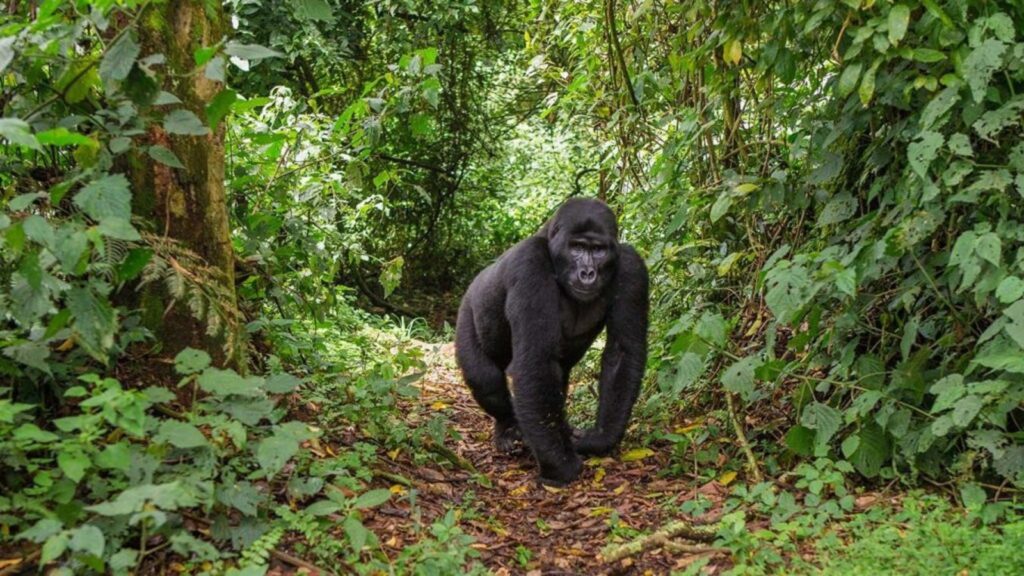
Geography provides another valuable dimension of gorilla safari STEM education. Mountain gorillas live in a limited region spanning Uganda, Rwanda, and the Democratic Republic of Congo.
Students can study maps, elevation patterns, climate zones, and protected areas to understand why gorillas inhabit specific environments. Lessons may also explore how geography influences tourism, conservation planning, and community development.
Understanding the physical and human geography of gorilla habitats helps students appreciate the interconnected nature of environmental and social systems.
Geographic learning adds important context to broader conservation discussions.
Virtual Learning Opportunities
Advances in technology have expanded access to gorilla safari STEM education through virtual learning experiences. Students can now explore gorilla habitats and conservation projects without traveling to Africa.
Virtual field trips, online wildlife cameras, interactive maps, and educational videos allow learners to engage with conservation topics from anywhere in the world. Many organizations provide digital resources that connect classroom learning with real-world conservation efforts.
Virtual learning experiences increase accessibility and allow schools with limited resources to participate in wildlife education programs.
These tools help bring mountain gorilla conservation into classrooms worldwide.
Career Inspiration Through Conservation Science
One of the most valuable outcomes of gorilla safari STEM education is its ability to inspire future careers. Students often become interested in wildlife biology, environmental science, veterinary medicine, engineering, data analysis, and conservation management after learning about gorilla protection efforts.
Conservation projects demonstrate how STEM professionals work together to address environmental challenges. Students see examples of researchers, veterinarians, engineers, geographers, and technology specialists collaborating toward common goals.
This exposure helps learners understand the wide range of career opportunities available within STEM fields.
Real-world examples often motivate students to pursue further education and training.
Benefits for Schools and Educators
Schools and educators increasingly recognize the value of gorilla safari STEM education because it supports interdisciplinary learning. Gorilla conservation naturally connects science, technology, engineering, mathematics, geography, and environmental studies.
The topic encourages inquiry-based learning and helps students develop observation, analysis, and critical thinking skills. It also promotes environmental awareness and global citizenship.
Educators can adapt gorilla-themed STEM activities for different age groups and learning levels, making the subject suitable for a wide range of educational settings.
The flexibility and relevance of the topic contribute to its growing popularity.
Conclusion
Gorilla safari STEM education provides an engaging and meaningful way to teach science, technology, engineering, and mathematics through the real-world context of mountain gorilla conservation. By connecting classroom concepts to wildlife research, environmental protection, and sustainable tourism, educators create learning experiences that inspire curiosity and critical thinking.
Students gain valuable knowledge about biology, ecology, technology, engineering, mathematics, and geography while developing a deeper appreciation for conservation. These lessons demonstrate how STEM disciplines work together to solve complex environmental challenges and protect endangered species.
As interest in conservation and sustainability continues growing, gorilla safari STEM education offers a powerful tool for preparing the next generation of scientists, innovators, and environmental leaders.