Gorilla Groups in Virunga DRC: Complete Family Profiles and Trekking Guide
The gorilla groups in Virunga, DRC, are among the most fascinating mountain gorilla families in Africa. Located in the Democratic Republic of Congo, Virunga National Park protects part of the Virunga Massif, one of the most important habitats for the world’s endangered mountain gorillas.
Virunga’s mountain gorilla families live mainly in the Mikeno sector, where dedicated rangers, trackers, researchers, and veterinarians monitor their health and social development. The groups are not static. Families change naturally as gorillas are born, mature, transfer between groups, establish new families, or die.
Virunga’s official monitoring records currently identify 11 habituated mountain gorilla families in the Mikeno sector: Bageni, Kabirizi, Masibo, Mapuwa, Wilungula, Rugendo, Humba, Nyakamwe, Lulengo, Munyaga, and Baraka. Some families have long histories, while others have emerged more recently through natural group divisions.
For travelers, learning about these families adds another dimension to gorilla trekking. Each group has its own history, leadership structure, individual personalities, and social relationships.
Where are the gorilla groups in Virunga, DRC?
Virunga’s mountain gorillas live in the Mikeno sector of Virunga National Park in the eastern Democratic Republic of Congo.
The area forms part of the wider Virunga Massif, which extends across the borders of the Democratic Republic of Congo, Rwanda, and Uganda.
The mountain gorillas depend on the forest for food, shelter, reproduction, and movement.
The landscape includes steep volcanic slopes, bamboo vegetation, dense montane forest, and areas of thick vegetation.
Because gorillas move naturally through their habitat, each family can occupy different areas from one day to another.
The trekking route therefore depends on the location of the assigned family and the conditions encountered by trackers.
How many gorilla groups are in Virunga, DRC?
Virunga’s current monitoring information identifies 11 habituated mountain gorilla families in the Mikeno sector. These are Bageni, Kabirizi, Masibo, Mapuwa, Wilungula, Rugendo, Humba, Nyakamwe, Lulengo, Munyaga, and Baraka.
Virunga’s family structure continues to change.
For example, the Masibo family was identified as a distinct group following a split from the Kabirizi family in August 2025. Monitoring conducted in October 2025 counted 14 members in Masibo’s new group.
This demonstrates why travelers should use current information rather than relying on old lists of Virunga gorilla families.
Bageni Gorilla Family
The Bageni family is currently the largest habituated mountain gorilla group in Virunga.
The family was established in January 2013 when silverback Bageni left his father, Kabirizi, after repeated confrontations. He departed with 20 individuals, including females, another silverback, and a subadult male.
The group continued to expand through interactions with other gorilla families.
Virunga’s recent monitoring has recorded continued growth in the Bageni family. In 2026, the group recorded several births, including rare twins born in January. Virunga reported that the family reached 60 individuals later in the year.
Bageni therefore provides an excellent example of how a relatively new gorilla family can develop into one of the largest groups in the park.
Kabirizi Gorilla Family
The Kabirizi family has one of the longest and most complicated histories among Virunga’s gorilla groups.
Many members originally came from the Zunguruka troop, which became habituated in 1994.
Kabirizi eventually became the dominant silverback after several leadership struggles.
The family grew considerably over the following years.
Kabirizi’s history became closely connected with his son Bageni, whose departure in 2013 created a new family.
Another major division occurred in August 2025 when silverback Masibo challenged his father and left with a group of gorillas.
Current monitoring following the split identified Kabirizi’s remaining family with 12 individuals, including three silverbacks.
Masibo Gorilla Family
The Masibo family is one of the newest recognized gorilla families in Virunga.
It emerged from the Kabirizi family following a major leadership conflict in August 2025.
Silverback Masibo separated from his father Kabirizi and established a distinct social unit.
Monitoring between October 20 and 23, 2025, identified 14 individuals in the new Masibo family.
The group included four silverbacks and a young female who had recently transferred from the Nyakamwe family.
Masibo demonstrates how natural social divisions can create new gorilla families.
It also shows why gorilla family profiles require regular updates.
Mapuwa Gorilla Family
The Mapuwa family is another recognized mountain gorilla group in Virunga’s Mikeno sector.
The family has developed through the movement and interactions of individual gorillas between different social groups.
Mapuwa’s history reflects the fluid nature of mountain gorilla society.
Females can transfer between families, while mature males may establish new groups or compete for access to females.
Virunga’s monitoring program continues to follow the family’s members and reproductive developments.
In 2026, the Mapuwa family recorded a new birth, with a female named Sebutimbiri giving birth to a male infant.
Wilungula Gorilla Family
The Wilungula family is another important group in Virunga.
The family has been undergoing habituation and has become increasingly accustomed to human presence.
Virunga reported that the family contained 37 individuals following a birth recorded in May 2025.
The group also demonstrates how gorilla families can interact with one another.
For example, a female from the Kabirizi family was observed moving into the Wilungula group following a family interaction.
Such transfers are an important part of gorilla social and reproductive dynamics.
Rugendo Gorilla Family
The Rugendo family has a particularly important place in Virunga’s conservation history.
The family was established after an earlier split involving silverback Humba and his father Rugendo.
Rugendo’s history also includes the death of its leader during conflict in the region.
The group later became associated with the Senkwekwe story after the 2007 massacre in which silverback Senkwekwe and other gorillas were killed.
Despite this tragic history, the family survived and continued through successive leadership changes.
Virunga’s current monitoring continues to document births and changes within the Rugendo family. In 2026, births brought the group to around 20 individuals.
Humba Gorilla Family
The Humba family was formed in December 1998 following a conflict between silverback Humba and his father Rugendo.
Humba left the original group with his brother Nyakamwe.
The family subsequently developed through births and immigration.
In 2014, further social tensions caused Nyakamwe to leave with several members, creating another important branch in the family’s history.
The current Humba family continues to be monitored by Virunga’s trackers.
Recent monitoring has recorded continued reproduction within the group, including a birth in July 2026 that brought the family to 21 individuals.
Nyakamwe Gorilla Family
The Nyakamwe family developed from the Humba lineage.
Nyakamwe separated from Humba in 2014 after tensions within the family.
He established his own group with several members.
The family subsequently developed its own social structure.
Nyakamwe’s history illustrates how a single leadership dispute can eventually create a completely distinct gorilla family.
The group also continues to interact with neighboring families through the movement of individual gorillas.
For example, a young female named Mvunabandi transferred from Nyakamwe into the newly formed Masibo family in 2025.
Lulengo Gorilla Family
The Lulengo family is another established group in Virunga’s Mikeno sector.
Its history includes interactions and conflicts with other silverbacks and neighboring families.
Silverback Lulengo has been an important figure within the group and has been monitored for many years.
Virunga reported that Lulengo remained one of the older dominant males in the Mikeno sector.
The family continues to experience natural demographic changes.
In March 2026, trackers recorded a newborn in the Lulengo family, bringing the number of infants recorded in Virunga that year to ten at that point.
Munyaga Gorilla Family
The Munyaga family is historically one of the smaller gorilla groups in the Mikeno sector.
Munyaga’s story began before the family was fully habituated.
He was known through interactions with other gorilla groups and eventually became associated with individuals from the Buhanga family.
One particularly unusual gorilla associated with the family was Kadogo, who was documented as the only known bald-headed gorilla in the Mikeno sector.
The family experienced several periods of conflict and decline.
Today, the group remains relatively small but continues to be monitored.
Recent births have also contributed to its continued development.
Baraka Gorilla Family
The Baraka family is another habituated group in Virunga’s Mikeno sector.
The family has recently received considerable attention because of its reproductive success.
In early 2026, a rare twin birth was recorded in the Baraka family.
Virunga reported that the twins were believed to be one female and one male and that the birth increased the family to 19 individuals.
Twin births are extremely rare among mountain gorillas, making the event particularly significant for conservation monitoring.
How Gorilla Families Are Organized
Mountain gorillas live in social groups led by a dominant silverback.
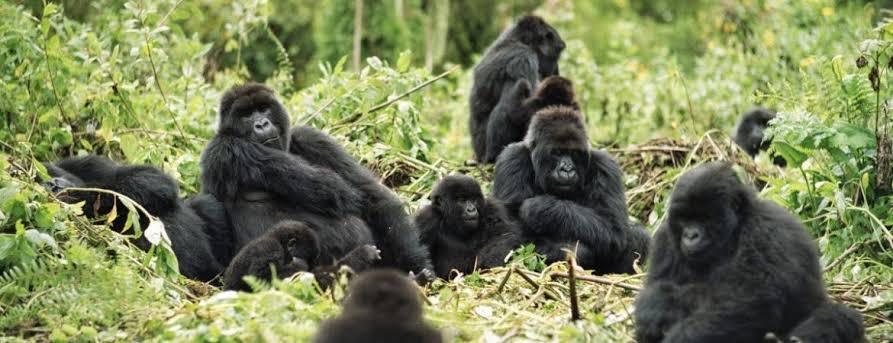
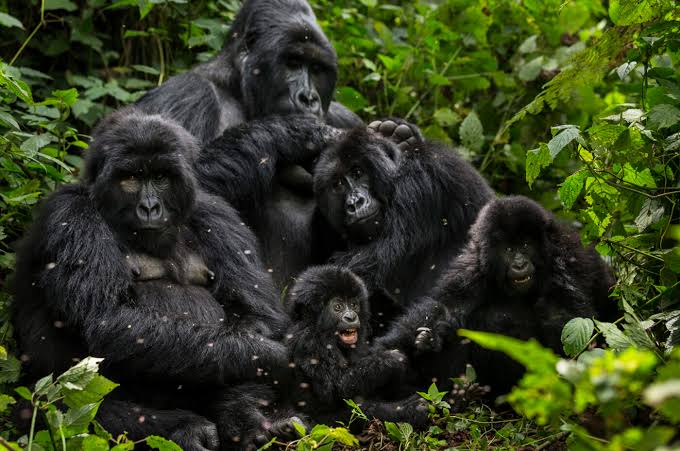
A family can contain several silverbacks, adult females, blackbacks, juveniles, and infants.
The dominant silverback generally controls group movements and protects the family.
Other males remain subordinate or may eventually leave.
Females can also move between groups.
These movements help reduce inbreeding and create opportunities for reproduction with unrelated males.
The result is a complex social system that changes continually.
Why Do Virunga Gorilla Groups Split?
Gorilla families can divide when social tensions develop between mature males.
As younger silverbacks mature, they may challenge an older dominant male.
If a younger male becomes sufficiently strong and socially influential, he may leave with females and other individuals to establish a new group.
The 2025 split between Kabirizi and Masibo provides a recent example.
Virunga’s researchers describe family fission as a natural phenomenon associated with leadership competition, generational change, and increasing social maturity.
Gorilla Trekking in Virunga, DRC
Mountain gorilla trekking in Virunga is led by Virunga Rangers and local trackers.
The trackers monitor the habituated families daily and use their knowledge of individual gorillas to locate the groups.
According to Virunga’s official visitor information, treks commonly involve approximately 1 to 2.5 hours of hiking each way, depending on the location of the gorilla family and the difficulty of the terrain.
The actual experience can vary considerably.
A group may be relatively close on one day and farther away on another.
Gorilla Trekking Age Requirement in Virunga
Visitors must meet the park’s minimum age requirement for mountain gorilla trekking.
Virunga’s current visitor information states that the minimum age for mountain gorilla trekking is 15 years.
Families traveling with younger children should therefore consider alternative activities within the region.
What to Expect During a Virunga Gorilla Trek
A typical trek begins with preparations and instructions before entering the forest.
Rangers and trackers lead visitors through the mountain habitat.
The trackers use signs such as nests, trails, feeding areas, and vegetation disturbance to determine where the gorillas have moved.
Once the family is located, visitors observe the gorillas under regulated conditions.
The experience allows travelers to watch feeding, grooming, resting, playing, communication, and interactions between different members.
What Should You Wear for Gorilla Trekking in Virunga?
The Virunga forest can be wet, muddy, and difficult to navigate.
Wear sturdy hiking boots with good traction.
Long trousers and long sleeves help protect against vegetation and insects.
Long socks can also provide protection against army ants.
Carry a rain jacket because mountain weather can change quickly.
A small backpack, drinking water, snacks, and a camera are also useful.
Virunga itself recommends trousers, long sleeves, long socks, good walking boots, a raincoat, water, snacks, and a camera for gorilla trekking.
Hiring a Porter in Virunga
A porter can make the trek more comfortable.
Porters can carry backpacks, water, cameras, and other equipment.
They can also provide physical assistance on steep or slippery trails.
Using local porters helps connect gorilla tourism with communities around the park.
Travelers should consider hiring one if they want additional support during the hike.
Health Rules for Virunga Gorilla Trekking
Mountain gorillas are vulnerable to human respiratory illnesses.
Virunga provides visitors with surgical masks to wear while they are in the presence of the gorillas.
The park also advises visitors who feel unwell at the time of their trek to cancel or rebook their visit.
These measures help reduce the risk of disease transmission between humans and gorillas.
Gorilla Conservation in Virunga, DRC
Gorilla tourism exists alongside an intensive conservation program.
Virunga Rangers, community trackers, researchers, and veterinarians monitor the gorilla families.
They record births, deaths, movements, health conditions, social relationships, and other important information.
Virunga’s conservation program also addresses threats such as illegal mining, logging, agricultural expansion, and habitat pressure.
The monitoring of gorilla families therefore serves both scientific and conservation purposes.
Why Gorilla Family Profiles Matter
Learning about individual gorilla families makes trekking more meaningful.
Instead of simply seeing a group of animals, visitors can understand that each family has its own history.
The Bageni family demonstrates rapid growth.
Kabirizi and Masibo illustrate leadership competition and family fission.
Humba and Nyakamwe demonstrate how one family can divide into separate social groups.
Baraka highlights the importance of reproductive success.
Rugendo demonstrates the resilience of gorilla families after severe threats.
These stories provide a deeper understanding of mountain gorilla conservation.
Frequently Asked Questions
How many gorilla groups are in Virunga, DRC?
Virunga’s current monitoring information identifies 11 habituated mountain gorilla families in the Mikeno sector.
What are the main gorilla groups in Virunga?
The current habituated families include Bageni, Kabirizi, Masibo, Mapuwa, Wilungula, Rugendo, Humba, Nyakamwe, Lulengo, Munyaga, and Baraka.
Which is the largest gorilla group in Virunga?
The Bageni family is currently the largest habituated group in Virunga. Virunga’s 2026 monitoring reported the group reaching 60 individuals.
Which is the newest Virunga gorilla family?
Masibo is one of the newest recognized families. It separated from the Kabirizi group in August 2025 and was documented as a distinct family in October 2025.
Can gorilla groups split?
Yes. Family splits can occur when mature males compete for leadership and social control.
Can female gorillas change families?
Yes. Mature females can move between families, which helps improve reproductive opportunities and reduce inbreeding.
How long does a Virunga gorilla trek take?
Virunga states that treks usually involve approximately 1–2 hours. 5 hours of hiking each way, depending on the group’s location and terrain.
At what age can children trek gorillas in Virunga?
Virunga’s current visitor information states that visitors must be at least 15 years old.
Do visitors wear masks during gorilla trekking?
Yes. Virunga provides surgical masks for visitors to wear while they are in the presence of the gorillas.
Can I choose a particular gorilla family?
You can communicate a preferred family when arranging your trek, but family allocation depends on current park arrangements and conservation considerations. A particular family should not be treated as guaranteed.
Conclusion
The gorilla groups of Virunga, DRC, represent some of the most fascinating mountain gorilla societies in Africa. Each family has its own history, leadership structure, individual personalities, and social relationships.
The current Virunga monitoring program recognizes 11 habituated families in the Mikeno sector, including Bageni, Kabirizi, Masibo, Mapuwa, Wilungula, Rugendo, Humba, Nyakamwe, Lulengo, Munyaga, and Baraka.
These families demonstrate the constantly changing nature of gorilla society. Newborns increase family populations, females move between groups, young males mature, leaders change, and established families can divide into new social units.
For travelers, understanding these family histories can make a Virunga gorilla trek much more rewarding. However, current group composition and trekking arrangements should always be confirmed before travel because the families continue to change.
Gorilla trekking also contributes to the wider conservation effort. The work of rangers, trackers, researchers, and veterinarians helps protect individual gorillas while monitoring the health and development of the wider population.
A visit to Virunga therefore offers more than a wildlife encounter. It provides an opportunity to learn about one of the world’s most remarkable great apes while supporting the continued protection of mountain gorillas and their forest habitat.