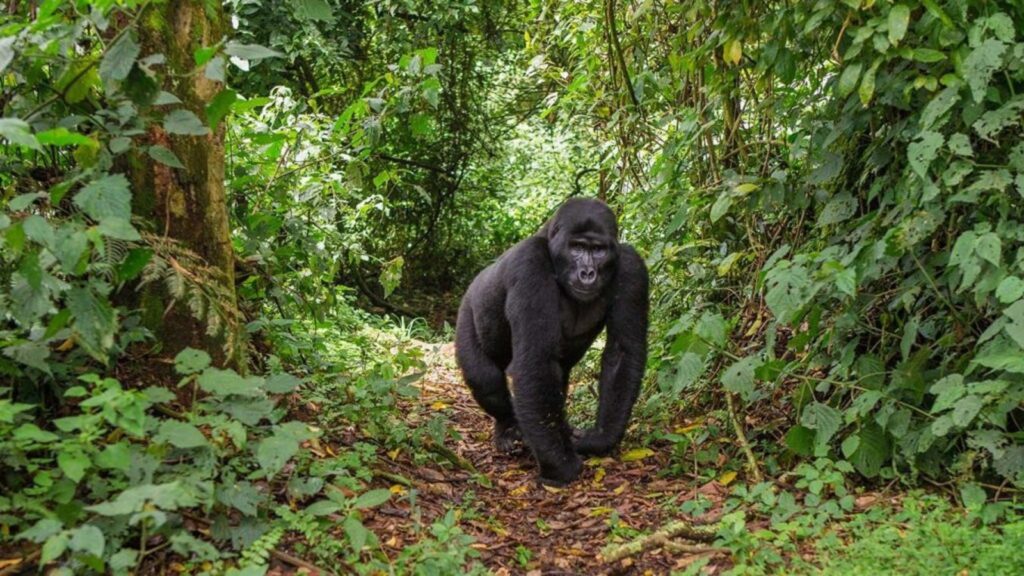

Eco-Friendly Gorilla Tours: Minimizing Your Footprint
Eco-friendly gorilla tours are not a trend. They are a necessity. Mountain gorillas live in fragile forest ecosystems where even small disturbances can have lasting effects. Every footstep, every interaction, and every decision made by visitors shapes the future of these endangered primates. Choosing to minimize your footprint is not about sacrificing experience; it is about protecting the very reason the journey exists. Responsible gorilla tourism proves that unforgettable wildlife encounters and conservation can move forward together.

What Eco-Friendly Gorilla Tourism Really Means
Eco-friendly gorilla tourism focuses on protection before access. It limits visitor numbers, controls behavior in the forest, and ensures that tourism revenue directly supports conservation and surrounding communities. The goal is not to bring as many people as possible to the gorillas, but to bring the right number, in the right way.
In regions such as Bwindi Impenetrable National Park, Volcanoes National Park, and Virunga National Park, this approach has allowed gorilla populations to stabilize and slowly grow. Eco-friendly tours place the gorillas’ wellbeing above visitor convenience.
This model works because it respects limits.
Small Groups, Big Impact Reduction
One of the most important eco-friendly practices in gorilla tourism is limiting group size. Only a small number of visitors are allowed to track each gorilla family per day. This reduces noise, stress, and disease transmission while preserving the natural behavior of the gorillas.
Smaller groups also create more meaningful encounters. Visitors move quietly, listen carefully, and observe without pressure. The experience becomes deeper rather than diluted.
Fewer people do not mean less impact. They mean better impact.
Following the Rules That Protect Gorillas
Eco-friendly gorilla tours rely heavily on strict trekking rules. Maintaining distance, avoiding sudden movement, and following ranger instructions protect both gorillas and people. These rules exist because gorillas share close genetic similarities with humans, making them vulnerable to human illness.
Wearing clean clothing, using masks when required, and staying away if you feel unwell are acts of conservation, not inconvenience. Respecting these guidelines helps ensure that tourism does not introduce long-term harm.
In responsible tourism, discipline equals protection.
Staying on Trails and Moving with Care
Forests that support gorillas regenerate slowly. Straying from trails damages vegetation, increases erosion, and disturbs smaller species that form the ecosystem’s foundation. Eco-friendly gorilla tours emphasize controlled movement and careful footing.
Rangers guide groups through routes that balance access with preservation. Visitors who move slowly and deliberately reduce pressure on the forest floor and surrounding habitat.
Every careful step matters more than people realize.
Choosing Eco-Conscious Lodges and Operators
Eco-friendly gorilla tours extend beyond the forest. Lodges and safari operators play a critical role in minimizing environmental impact. Sustainable lodges use solar power, manage waste responsibly, source food locally, and employ nearby communities.
Responsible operators also limit driving distances, reduce unnecessary transfers, and educate guests before trekking. When accommodation and logistics align with conservation values, the entire safari footprint shrinks.
Where you stay and who you travel with matters as much as the trek itself.
Supporting Communities Through Low-Impact Tourism
Eco-friendly gorilla tourism succeeds because communities benefit directly. Employment as guides, porters, lodge staff, and artisans creates alternatives to forest exploitation. Revenue-sharing programs fund schools, health centers, and clean water projects.
When communities see tangible benefits, they protect gorillas willingly. Conservation becomes shared responsibility rather than imposed restriction.
Minimizing your footprint includes maximizing positive social impact.
Waste Reduction in Gorilla Regions
Responsible travelers generate as little waste as possible. Eco-friendly tours encourage reusable water bottles, avoidance of single-use plastics, and proper disposal of all waste outside the forest.
Even biodegradable waste does not belong in gorilla habitat. Removing everything you bring into the forest protects animals from ingestion risks and keeps ecosystems intact.
Leave no trace is not a slogan here. It is a rule.
Travel Pace and Carbon Awareness
Rushing between destinations increases emissions and reduces connection. Eco-friendly gorilla tours favor slower travel, longer stays, and thoughtful routing. This approach reduces fuel use and allows deeper engagement with each region.
Some travelers choose to offset carbon emissions or support conservation projects linked to gorilla protection. While offsets do not replace reduction, they reinforce accountability.
Traveling slower often means traveling better.
The Role of the Visitor in Conservation
Eco-friendly gorilla tourism depends on visitor behavior. Respectful observation, compliance with rules, and conscious choices all influence conservation outcomes. Travelers become part of the protection system rather than passive participants.
Your behavior in one hour with gorillas carries consequences far beyond that moment.
Responsibility is not optional in these forests.
Plan Your Safari
Planning an eco-friendly gorilla tour starts with intention. Choosing licensed operators, securing permits early, and allowing enough time for careful travel reduce pressure on both people and ecosystems. Selecting lodges with clear sustainability practices and engaging with community experiences deepens the positive impact of your visit. A well-planned safari does not just minimize your footprint; it ensures that your presence contributes directly to the long-term survival of gorillas and the forests they depend on.
Final Reflection
Eco-friendly gorilla tours prove that conservation and tourism do not need to conflict. When travel respects limits, values communities, and prioritizes wildlife, it becomes a force for protection rather than pressure.
Minimizing your footprint does not make the experience smaller. It makes it last longer—for the gorillas, the forest, and future generations.