Daily Experiences at Ewaffe Cultural Village Uganda
Experiences at Ewaffe Cultural Village, Daily experiences at Ewaffe Cultural Village Uganda immerse visitors in the living traditions of the Buganda Kingdom and broader Ugandan heritage. Located in Mukono District overlooking Lake Victoria, this cultural village offers structured yet natural interactions that unfold throughout the day. Each activity connects history, identity, food, music, and indigenous knowledge into one coherent cultural journey.
Travelers visiting Uganda for gorilla trekking in Bwindi Impenetrable National Park or wildlife safaris in Queen Elizabeth National Park often seek meaningful cultural engagement. A day at Ewaffe provides that depth. The experience moves beyond performance and invites participation, conversation, and understanding.
Morning Welcome and Cultural Orientation
The day begins with a traditional welcome that introduces visitors to the meaning of “Ewaffe,” which translates to home. Guides explain the historical background of the Buganda Kingdom and the significance of clans within Ugandan society. This orientation session sets the tone for the rest of the visit. Guests gain insight into leadership structures, respect systems, and the cultural values that shape community life.
As the morning unfolds, visitors walk through the village layout. Guides describe how each structure represents a specific social function. The royal court area demonstrates authority and hierarchy, while homestead sections reveal how families organized their daily routines. The explanations connect architecture with belief systems, showing how design reflects identity.
Traditional Homestead Exploration
Mid-morning focuses on the detailed exploration of traditional homes. Visitors enter thatched huts built with clay walls and wooden poles. Inside, guides explain sleeping arrangements, food storage methods, and the symbolic meaning behind specific household objects.
This experience highlights sustainability practices that existed long before modern environmental movements. Natural materials regulate temperature, protect against heavy rain, and blend harmoniously with the surrounding landscape. Guests often recognize how traditional architecture aligns with contemporary eco-tourism principles.
The session creates practical cultural understanding. It allows travelers to visualize daily life in pre-colonial Buganda while recognizing its continued influence in rural Uganda today.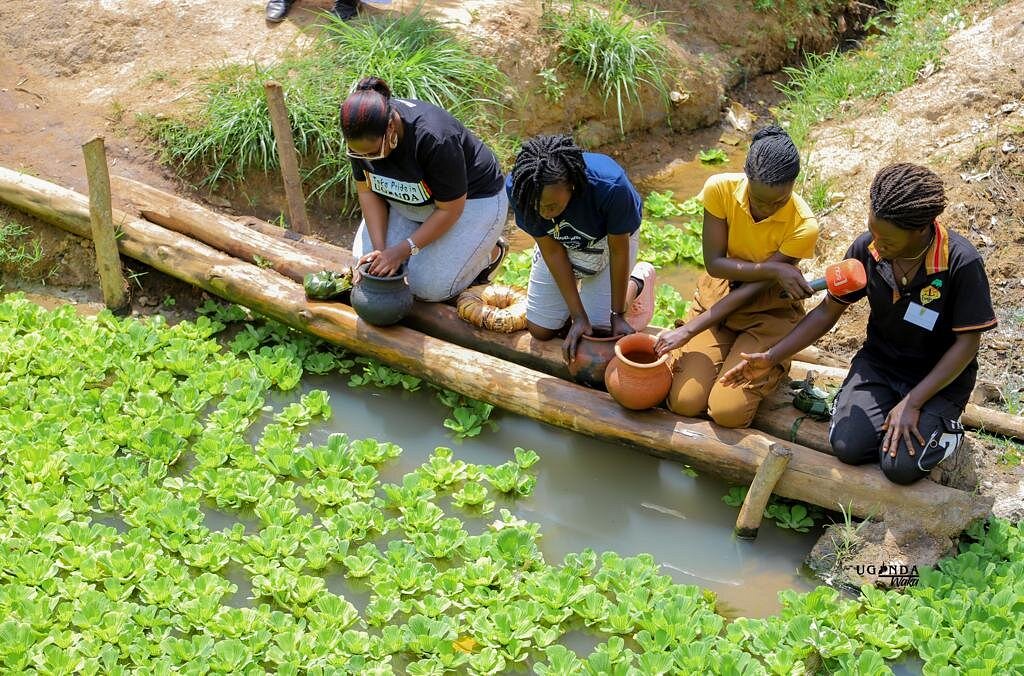
Indigenous Food Preparation and Culinary Traditions
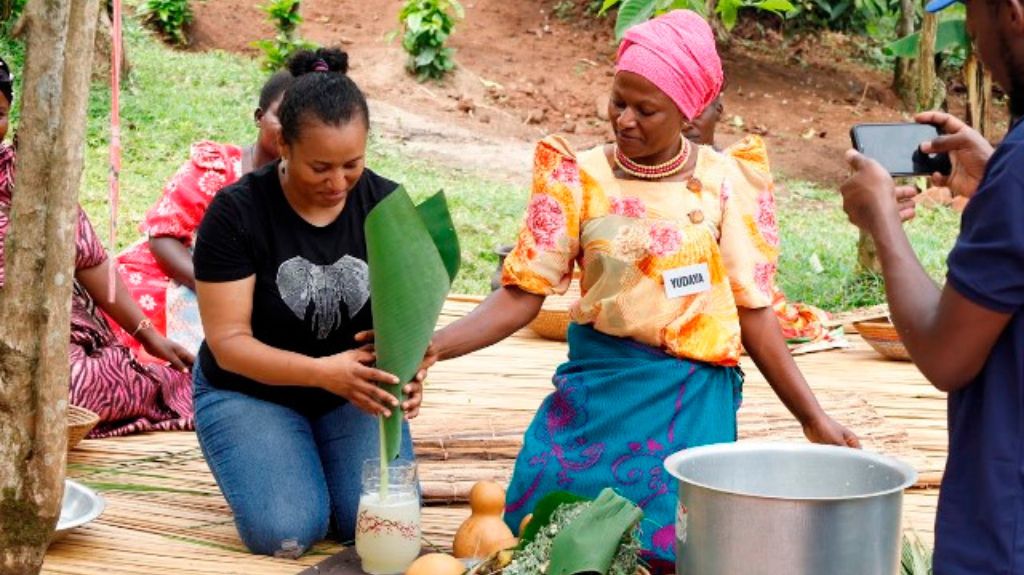
As midday approaches, attention shifts to traditional cooking techniques. Visitors observe the preparation of staple Ugandan dishes such as matooke, groundnut sauce, smoked fish, cassava, and seasonal vegetables. Food cooks slowly over firewood using clay pots, filling the air with rich aromas.
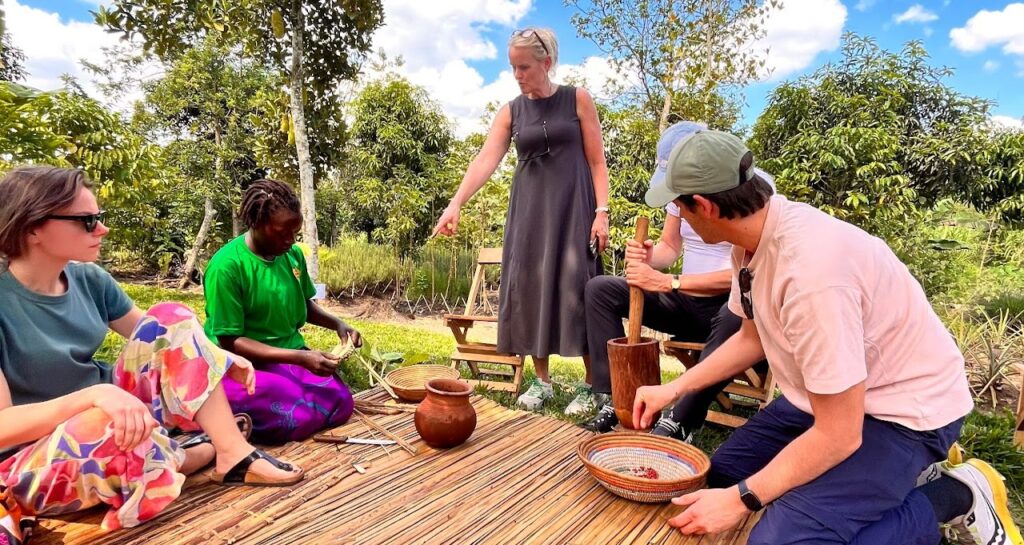
Guides explain the cultural importance of communal meals and the rituals surrounding hospitality. Food in Buganda culture represents unity and respect. Guests often participate in peeling, grinding, or stirring, which transforms lunch into an interactive learning experience rather than a simple meal.
The tasting session allows visitors to appreciate authentic flavors prepared using ancestral methods. For many travelers, this culinary segment becomes one of the most memorable parts of the day.
Herbal Medicine and Indigenous Knowledge
Early afternoon activities introduce guests to Uganda’s traditional healing practices. Guides demonstrate how local communities use plant leaves, roots, and tree bark to treat common illnesses. They explain preparation methods and describe how knowledge passes from one generation to the next.
This session highlights the deep relationship between people and nature. Visitors gain insight into how biodiversity supports both cultural and physical wellbeing. For travelers who explore conservation areas later in their journey, this understanding enriches their appreciation of protected landscapes.
Clan System, Storytelling, and Social Structure
Later in the afternoon, storytelling takes center stage. Guides share folktales, proverbs, and historical narratives that illustrate the clan system within the Buganda Kingdom. Uganda recognizes more than fifty clans, each identified by a totem and specific responsibilities.
Understanding clan identity helps visitors interpret broader cultural landmarks such as the Kasubi Tombs. The storytelling session connects heritage with present-day community life. Guests learn how names reflect clan lineage and how respect customs influence social interactions.
This segment often sparks engaging discussions. Visitors ask questions about marriage traditions, leadership succession, and the evolving role of culture in modern Uganda.
Traditional Music and Dance Performance
As the day moves toward late afternoon, the village comes alive with rhythmic drumming and dance. Performers present traditional Buganda dances along with selections from other regions of Uganda. Each performance carries symbolic meaning, whether celebrating harvest, courtship, or community unity.
Guests frequently join the dance circle under the guidance of experienced performers. The interaction breaks down barriers and creates shared energy between visitors and hosts. The powerful drumbeats echo across the hilltop, blending with panoramic views of Lake Victoria.
This vibrant finale leaves lasting impressions. It captures the spirit of Uganda’s cultural identity through movement, rhythm, and expression.
Sunset Reflections Over Lake Victoria
As activities conclude, visitors often take a quiet moment to absorb the scenic surroundings. The hilltop location provides sweeping views of Lake Victoria, especially during golden hour. The calm setting contrasts beautifully with the lively performances earlier in the day.
This reflective pause allows guests to process everything they have learned. They leave with deeper cultural awareness that enriches the rest of their Uganda itinerary.
Best Time for a Full-Day Cultural Experience
Daily experiences at Ewaffe Cultural Village operate year-round. Dry seasons from June to September and December to February provide comfortable walking conditions and clear lake views. Morning visits feel cooler, while afternoon sessions deliver dramatic light ideal for photography.
The structure of the day remains flexible. Travelers can book half-day or full-day programs depending on their schedule.
Integrating Ewaffe into Your Uganda Safari
Many travelers include this cultural immersion before heading to national parks or after returning from wildlife experiences. It pairs naturally with city tours in Kampala or departures toward western Uganda.
For safari planners seeking balance between wildlife and heritage, Ewaffe Cultural Village offers an essential cultural layer. It ensures that Uganda’s story unfolds through both its landscapes and its people.