Canoeing and Nature Walks Around Lake Mutanda
Canoeing and nature walks around Lake Mutanda offer one of Uganda’s most peaceful eco-adventures. This experience focuses on slow travel, scenic exploration, and close interaction with local communities. Calm waters, volcanic backdrops, and rural footpaths create an ideal setting for travelers who want to connect deeply with nature.
Lake Mutanda sits quietly in southwestern Uganda. It lies between the Virunga volcanoes and the gorilla forests of Bwindi and Mgahinga. The area rewards visitors who appreciate silence, scenery, and meaningful outdoor activity.
Overview of Lake Mutanda’s Natural Setting
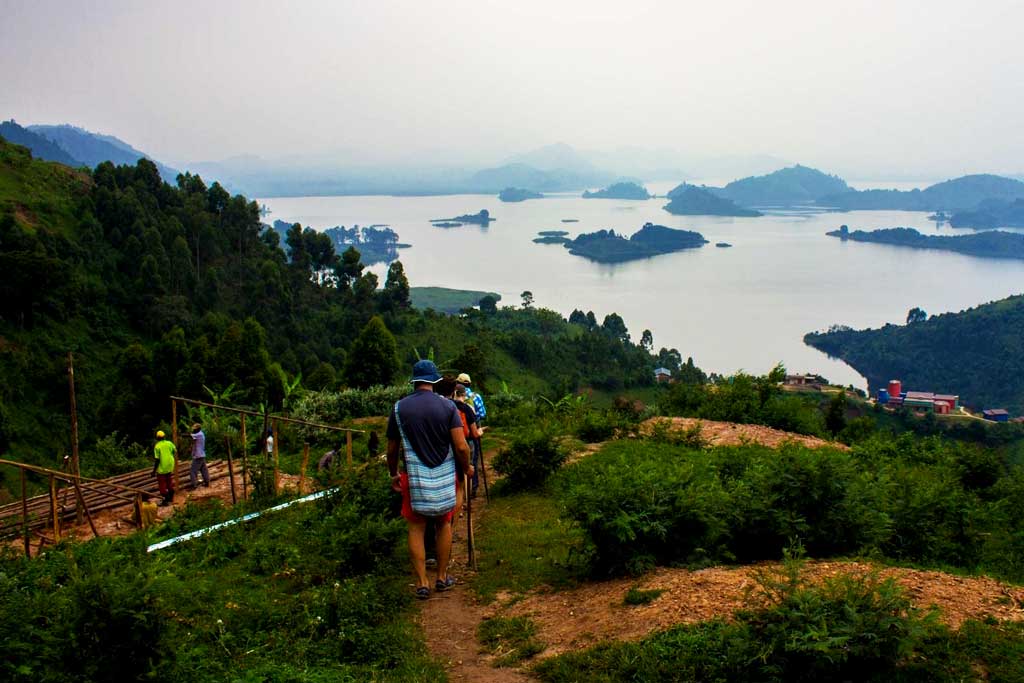
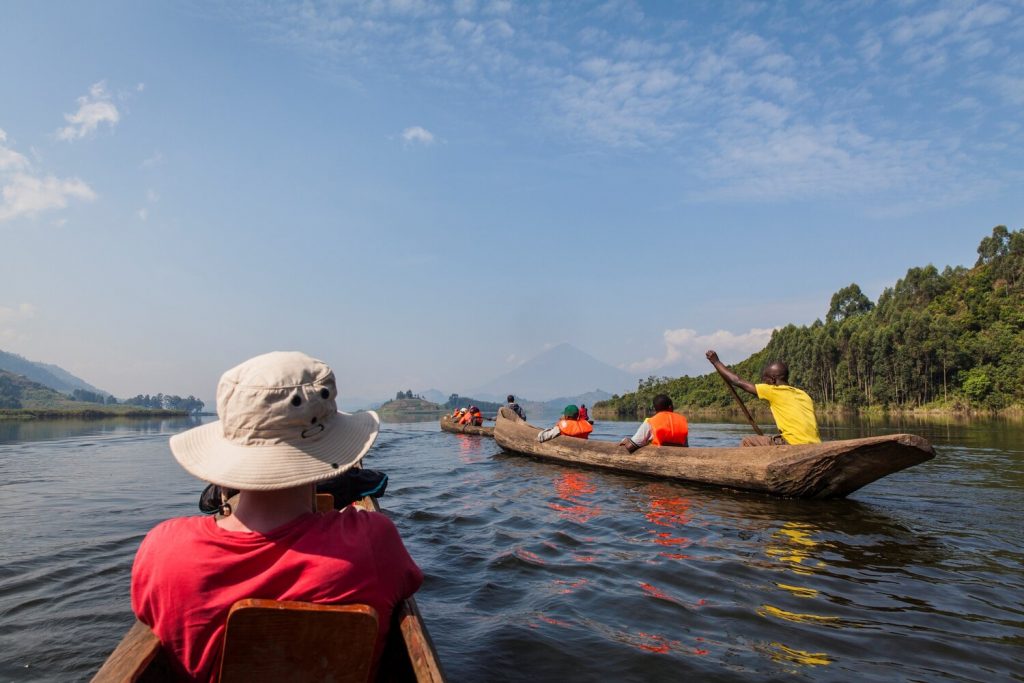
Lake Mutanda is a small freshwater lake dotted with lush green islands. Steep hills and terraced farms surround the shoreline. In the distance, volcanic peaks rise and reflect on the water during clear mornings.
The lake remains largely untouched by mass tourism. Fishing canoes glide slowly across the surface. Birds call from papyrus reeds and island forests. This environment supports relaxed exploration rather than fast-paced adventure.
Canoeing Experience on Lake Mutanda
Canoeing on Lake Mutanda uses traditional wooden dugout canoes. Local guides paddle steadily across the calm waters, allowing you to absorb the scenery at a gentle pace.
The experience feels safe and unhurried. The lake rarely experiences strong winds or currents. Canoes move close to the shoreline and between islands, offering excellent photography opportunities.
As you glide across the water, you pass fishing villages, floating vegetation, and bird nesting areas. Early mornings and late afternoons provide the best light and the quietest conditions.
Exploring Lake Mutanda’s Islands by Canoe
Lake Mutanda features more than a dozen small islands, each with its own character. Some islands host small farming communities. Others remain forested and quiet.
Canoe trips often include stops on selected islands. You step ashore to stretch your legs and explore on foot. Local guides explain how island communities farm, fish, and live with the lake as their main resource.
These short visits add cultural depth to the canoeing experience and strengthen connections between visitors and residents.
Nature Walks Along the Lake Shore
Nature walks around Lake Mutanda follow village paths, lakeside trails, and hillside tracks. These walks feel gentle and immersive rather than demanding.
You pass banana plantations, sorghum fields, and small homesteads. Children often greet visitors with curiosity and smiles. Guides explain traditional farming methods and local plant uses.
Birdlife remains a highlight. Kingfishers, herons, and weaver birds appear frequently along the water’s edge. The pace allows time for observation and conversation.
Community-Guided Village Walks
Many nature walks operate through community tourism initiatives. Local guides lead these walks and share personal stories about life around the lake.
You may visit fishing landing sites, small schools, or craft groups. These interactions feel natural and respectful. Tourism income supports education, healthcare, and conservation awareness in the area.
This community focus gives the experience depth and purpose beyond sightseeing.
Views of the Virunga Volcanoes
On clear days, canoeing and walking routes reveal sweeping views of the Virunga volcanoes. The peaks form a dramatic backdrop to the lake.
These volcanoes link the region to nearby protected areas such as Mgahinga Gorilla National Park and Bwindi Impenetrable National Park. The scenery constantly reminds visitors of the region’s ecological importance.
Sunrise and sunset bring the most striking views, with soft light reflecting across the water.
Best Time for Canoeing and Nature Walks
Dry seasons provide the best conditions. From June to September and December to February, trails remain firm and canoeing conditions stay calm.
Rainy seasons still offer rewarding experiences. The landscape turns lush and green, and bird activity increases. Light rain rarely disrupts canoe trips due to the lake’s sheltered setting.
Who Should Do This Experience
Canoeing and nature walks around Lake Mutanda suit travelers who value calm, scenery, and cultural connection. The activity works well for couples, families, photographers, and older travelers.
It also pairs perfectly with gorilla trekking itineraries. The relaxed pace helps visitors unwind before or after forest hikes.
Conservation and Responsible Travel
Tourism around Lake Mutanda supports low-impact travel. Canoeing produces no noise or pollution. Walking trails follow existing village paths.
Community-led tourism ensures that local people benefit directly from visitor activity. This approach encourages environmental protection and long-term sustainability.
Choosing this experience supports conservation while preserving the lake’s peaceful character.
Planning Your Visit to Lake Mutanda
Most visitors reach Lake Mutanda from Kisoro or Bwindi. Road access remains scenic but slow, so planning transfers carefully matters.
Accommodation ranges from eco-lodges to community-run camps. Many lodges arrange canoeing and guided walks directly.
Adding Lake Mutanda to your itinerary creates balance. It slows the journey and deepens your connection to southwestern Uganda.