Albertine Rift Endemic Birds Bwindi: Complete Guide to Uganda’s Rarest Forest Birds
The Albertine Rift endemic birds of Bwindi are among the greatest attractions for birdwatchers visiting Uganda. While Bwindi Impenetrable National Park is globally celebrated for its mountain gorillas, it is equally important as one of Africa’s finest birdwatching destinations. The park lies within the Albertine Rift, a globally recognized biodiversity hotspot that supports numerous bird species found nowhere else on Earth.
Bwindi Impenetrable National Park protects one of the largest remaining tracts of montane rainforest in East Africa and provides ideal habitat for many endemic birds. More than 350 bird species have been recorded in the park, including over 23 Albertine Rift endemic species, making it one of the most rewarding destinations for bird enthusiasts, wildlife photographers, and ornithologists.
Whether you are planning a dedicated birding safari or combining birdwatching with gorilla trekking, Bwindi offers exceptional opportunities to observe these rare forest birds in their natural habitat.
What Are Albertine Rift Endemic Birds?
Albertine Rift endemic birds are species whose natural distribution is largely restricted to the Albertine Rift.
The Albertine Rift forms the western branch of the East African Rift Valley and stretches across Uganda, Rwanda, Burundi, the Democratic Republic of the Congo, and parts of Tanzania. The region’s ancient mountains, volcanic landscapes, and montane rainforests have allowed many bird species to evolve in isolation over thousands of years.
Because these birds occur within such a limited geographic range, they are highly sought after by birdwatchers from around the world.
Why Bwindi Is Important for Endemic Birds
Bwindi provides one of the richest habitats for Albertine Rift endemics.
Its altitude ranges from approximately 1,160 to 2,607 meters above sea level, creating diverse ecosystems that include lowland rainforest, bamboo forest, swamp vegetation, and montane woodland. These habitats support a remarkable diversity of insects, fruits, flowers, and nesting sites that endemic birds depend upon.
As a result, the Albertine Rift endemic birds of Bwindi attract international birding tours throughout the year.
African Green Broadbill
The African Green Broadbill is arguably Bwindi’s most famous endemic bird.
Its bright emerald-green plumage, broad pale bill, and secretive behavior make it one of Africa’s most desirable birding species. The famous Mubwindi Swamp Trail in the Ruhija sector offers one of the world’s best opportunities to observe this elusive bird.
Many birdwatchers consider seeing the African green broadbill the highlight of their Uganda safari.
Shelley’s Crimsonwing
Shelley’s Crimsonwing ranks among the rarest endemic birds in Bwindi.
This beautiful finch displays crimson underparts with olive-green upperparts and usually remains hidden within dense forest undergrowth. Although sightings require patience, experienced local bird guides regularly locate the species along productive birding trails.
Its rarity makes every observation particularly memorable.
Regal Sunbird
The Regal Sunbird adds brilliant color to Bwindi’s rainforest.
Male birds display shimmering metallic green, crimson, blue, and yellow plumage while feeding on flowering plants throughout the forest. This spectacular species remains one of the most photographed Albertine Rift endemics.
Visitors frequently encounter it in forest clearings and along flowering vegetation.
Handsome Francolin
The Handsome Francolin inhabits Bwindi’s dense montane forests.
Its richly patterned plumage and cautious behavior make it one of the park’s most rewarding ground birds. Early morning birdwatching often provides the best opportunity to observe this elusive endemic.
It remains a favorite species among experienced birders.
Strange Weaver
Despite its unusual name, the Strange Weaver is an important Albertine Rift endemic.
The species occupies mature montane forests where it builds intricate woven nests high in the canopy. Its specialized habitat requirements and restricted range make it a highly desirable bird for visiting ornithologists.
Professional guides often identify it by both appearance and vocalizations.
Purple-breasted Sunbird
The purple-breasted sunbird is another colorful endemic species.
Its striking iridescent purple breast and energetic feeding behavior attract bird photographers exploring Bwindi’s forest trails. It frequently visits flowering shrubs and trees throughout the park.
Its beauty contributes significantly to the appeal of the Albertine Rift endemic birds’ Bwindi experience.
Other Endemic Birds of Bwindi
Beyond the best-known species, Bwindi supports many additional Albertine Rift endemics.
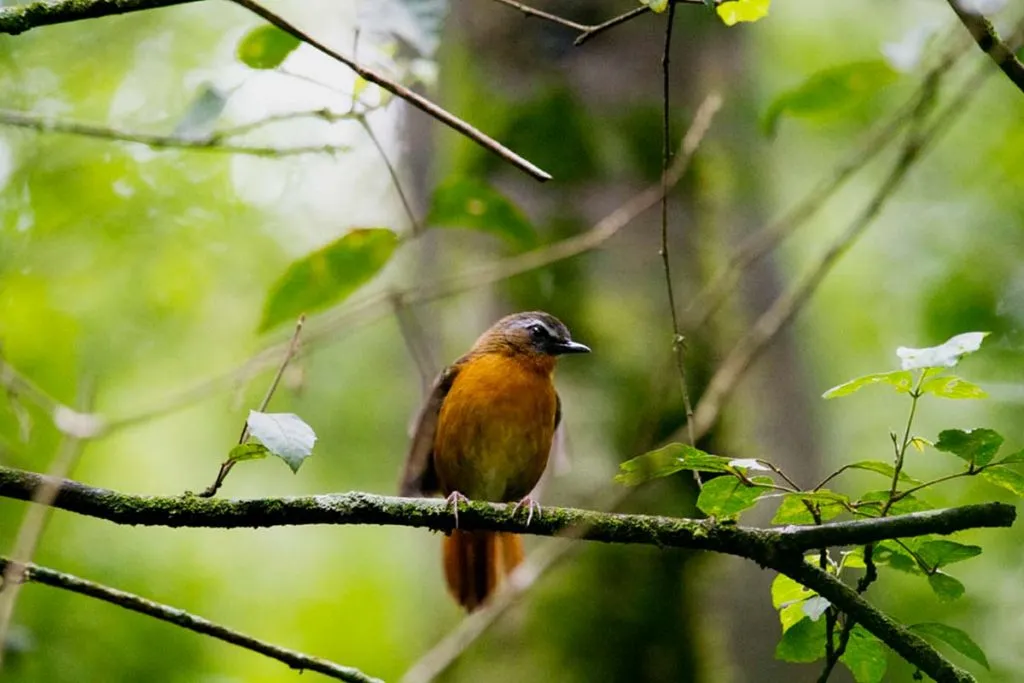
Visitors may encounter Archer’s Robin-Chat, Rwenzori Batis, Red-throated Alethe, Grauer’s Rush Warbler, Mountain Masked Apalis, Grauer’s Warbler, Kivu Ground Thrush, Rwenzori Nightjar, Collared Apalis, and Dusky Crimsonwing, depending on the season and birding location.
Together, these species make Bwindi one of Africa’s richest endemic bird habitats.
Best Birding Locations
Several sectors within Bwindi provide outstanding birdwatching.
The Ruhija sector, particularly the Mubwindi Swamp Trail, remains the premier location for endemic birds. Buhoma offers excellent forest birding along the Waterfall Trail, Ivy River Trail, and Munyanga River Trail. Rushaga and Nkuringo provide quieter birding routes through diverse montane habitats where numerous endemic species also occur.
Exploring multiple sectors increases the variety of birds observed.
Best Time for Birdwatching
Birdwatching remains productive throughout the year.
The drier seasons from June to August and December to February provide easier hiking conditions, while wetter months often coincide with breeding activity and increased bird vocalization. Regardless of the season, early morning delivers the highest level of bird activity.
Allowing several days for birdwatching significantly improves your chances of recording numerous endemic species.
Birding with Local Guides
Hiring an experienced bird guide greatly increases your success.
Local guides recognize bird calls, preferred habitats, nesting areas, and seasonal movements that casual visitors might miss. Their expertise often results in sightings of rare endemic species hidden deep within the rainforest.
Professional guidance transforms a birding excursion into a much richer wildlife experience.
Conservation of Endemic Birds
Protecting Bwindi’s rainforest safeguards these unique birds.
Tourism revenue from birdwatching and gorilla trekking supports ranger patrols, habitat conservation, scientific research, community development, and environmental education. Responsible birdwatching also encourages sustainable tourism while minimizing disturbance to sensitive wildlife.
Conservation ensures that future generations will continue to enjoy the extraordinary biodiversity of Bwindi.
Conclusion
The Albertine Rift endemic birds of Bwindi make Bwindi Impenetrable National Park one of Africa’s most valuable birdwatching destinations. From the spectacular African Green Broadbill and Regal Sunbird to the elusive Shelley’s Crimsonwing and Strange Weaver, the park offers exceptional opportunities to observe birds found in very few places on Earth.
Combined with mountain gorilla trekking, magnificent rainforest scenery, and expert local guides, Bwindi delivers one of the world’s finest wildlife experiences for bird enthusiasts and nature lovers alike.