Gorilla Trekking LGBTQ+ Travel Guide: Planning a Safe and Respectful Gorilla Safari
Gorilla trekking is one of Africa’s most remarkable wildlife experiences, offering travelers the opportunity to observe mountain gorillas in their natural forest habitat. For LGBTQ+ travelers, however, planning the journey requires more than choosing a gorilla trekking destination and booking a permit. It is also important to understand local laws, social attitudes, accommodation arrangements, transportation, privacy, and current travel conditions.
A gorilla trekking LGBTQ travel guide can help travelers approach the experience with realistic expectations and make informed decisions before departure. Uganda, Rwanda, and the Democratic Republic of Congo have different legal, political, and social environments, so LGBTQ+ travelers should research the destination carefully rather than assuming that experiences will be the same across the region.
Gorilla trekking itself is an organized wildlife activity. Visitors normally trek with guides and trackers and interact with other travelers during the experience. However, the wider journey involves transportation, accommodation, restaurants, towns, airports, and other public spaces where local laws and cultural expectations apply.
The most important principle is to plan according to the current situation rather than relying on outdated travel blogs or assumptions.
Understanding LGBTQ+ Travel and Gorilla Trekking
LGBTQ+ travelers can have different concerns when planning an international wildlife safari. Some may travel openly with a same-sex partner, while others may prefer greater privacy. Some may be concerned about public displays of affection, accommodation arrangements, social interactions, or how personal information is handled.
These concerns deserve careful consideration before booking a gorilla safari.
Gorilla trekking takes place within a broader tourism environment. Although the actual forest experience is guided, travelers still need to move between airports, cities, lodges, park headquarters, and other destinations.
For this reason, LGBTQ+ travelers should evaluate the entire itinerary rather than focusing only on the gorilla trekking permit.
Research the laws and customs of every country included in the itinerary. If your safari crosses borders, check each country separately because legal protections and social attitudes can differ considerably.
Choosing the Right Gorilla Trekking Destination
Destination selection is particularly important for an LGBTQ+ traveler. Uganda, Rwanda, and the Democratic Republic of Congo have different legal and social environments, and those conditions can change.
Uganda offers gorilla trekking in Bwindi Impenetrable National Park and Mgahinga Gorilla National Park. Rwanda offers gorilla trekking in Volcanoes National Park. Virunga National Park in the Democratic Republic of Congo has also offered mountain gorilla trekking when tourism operations are active.
Do not choose a destination solely because it offers a lower permit price or a particular type of accommodation. Consider the legal environment, current travel advisory information, transportation arrangements, accommodation options, and the level of support available to international visitors.
For LGBTQ+ travelers, this research becomes especially important because the experience of traveling openly can differ substantially between destinations.
Before booking, consult your government’s current travel advisory and official information from the destination country. Conditions can change after travel guides and older online articles have been published.
LGBTQ+ Travelers Considering Uganda
Uganda requires particularly careful consideration for LGBTQ+ travelers because its current legal environment presents significant risks.
Travelers should not rely on older tourism articles that describe Uganda’s LGBTQ+ environment as though conditions have remained unchanged. The country’s legal framework has changed substantially, and current travel advice specifically warns LGBTQ+ travelers about laws targeting people based on sexual orientation.
This does not mean that every LGBTQ+ traveler will have the same experience. However, it does mean that travelers should understand the potential consequences of local laws before deciding whether Uganda is appropriate for their trip.
Anyone considering gorilla trekking in Uganda should obtain current legal and travel information before departure and consider discussing their individual circumstances with a qualified travel professional or consular service.
If you decide to travel, avoid assuming that behavior that is ordinary or legally protected at home will receive the same treatment in Uganda.
The decision should ultimately be based on your personal circumstances, risk tolerance, and the most recent official information available at the time of travel.
LGBTQ+ Travelers Considering Rwanda
Rwanda presents a different legal environment. Current U.S. travel guidance states that Rwanda does not impose legal restrictions on consensual same-sex sexual relations or on providing services based on actual or perceived sexual orientation. However, the same guidance notes that gay and lesbian people may still face societal discrimination and harassment.
This distinction is important. A country can have a different legal environment from another destination while still having social attitudes that LGBTQ+ travelers should consider.
Rwanda’s Volcanoes National Park is the country’s main gorilla trekking destination. The park is near Musanze and is connected to Kigali by road, making it possible to organize a relatively focused gorilla itinerary.
Travelers should still review current travel advisories, particularly because security conditions can vary in the wider region. Current U.S. guidance advises against travel within 10 kilometers of Rwanda’s border with the Democratic Republic of Congo because of unrest.
As with any international trip, LGBTQ+ travelers should make decisions based on current information rather than assuming that conditions remain unchanged.
Should You Tell Your Tour Operator That You Are LGBTQ+?
This is a personal decision. You do not have to disclose your sexual orientation simply because you are booking a gorilla safari.
However, if you are traveling with a same-sex partner and need specific arrangements, communicating relevant practical information can help your operator organize the trip appropriately.
For example, you may want to clarify whether you require a double room, twin beds, private transportation, or particular accommodation arrangements.
The focus should remain on the information necessary to provide the service you need. You should not feel pressured to disclose personal details that are irrelevant to your booking.
If you are concerned about privacy, ask the tour operator how your personal information is handled and who will have access to it.
Research the company before providing passport information, payment details, or other sensitive documents.
Choosing LGBTQ-Friendly Accommodation
Accommodation can be one of the most important parts of planning an LGBTQ+ safari.
Travelers should research individual lodges rather than assuming that every property in a destination offers the same experience. Reviews from recent international travelers can sometimes provide useful information about customer service and privacy.
When booking as a couple, communicate your room requirements clearly. If you prefer additional privacy, a private room or private accommodation arrangement may be appropriate.
You can also ask your tour operator to recommend properties based on your practical requirements rather than expecting them to make assumptions about your identity.
Remember that accommodation standards and social attitudes can differ significantly between properties. Recent reviews are therefore more useful than relying on an old recommendation from several years ago.
Traveling With a Same-Sex Partner
Traveling with a same-sex partner can make the gorilla trekking experience especially memorable, but couples should consider local customs when deciding how openly to display affection.
Public displays of affection that are completely ordinary in your home country may attract unwanted attention in some destinations.
The decision about how openly to express affection should be based on the local environment and your own comfort and safety.
You can still enjoy the safari together without making your relationship the focus of interactions with strangers.
During the actual gorilla trek, the attention naturally shifts toward the forest and wildlife. Following the instructions of your guides and concentrating on responsible wildlife observation should remain the priority.
Privacy During Your Gorilla Safari
Privacy can be especially important for LGBTQ+ travelers who do not want to disclose their identity during their trip.
Be thoughtful about the information you share with drivers, guides, hotel staff, and other travelers. You can maintain friendly relationships without discussing personal matters that you would rather keep private.
Consider your social media activity as well. Posting photographs that identify your partner, accommodation, location, or travel plans can reveal more information than you intended.
If privacy is important to you, review your social media settings before traveling and think carefully before publicly sharing your itinerary.
You should also keep important travel documents secure and avoid giving unnecessary copies of personal information to people who do not need it.
Working With a Reputable Tour Operator
A reputable tour operator can make the logistics of a gorilla safari much easier. This can be particularly useful when a traveler has concerns about accommodation, transportation, border crossings, or itinerary planning.
Before booking, research the operator’s reputation and ask clear questions about the services included.
A good operator should be able to explain how transportation works, where you will stay, how the gorilla permit is handled, and what happens if the itinerary changes.
If you have specific privacy or accommodation requirements, ask whether the company can accommodate them before making payment.
Do not assume that an operator is suitable simply because its website looks professional. Look for independent reviews and verifiable business information.
For LGBTQ+ travelers, discretion and professional communication can be particularly important when selecting a company.
Transportation for LGBTQ+ Travelers
Transportation is another part of the safari that deserves attention.
A gorilla trekking itinerary may involve international flights, airport transfers, long road journeys, domestic travel, and transfers between lodges and park headquarters.
Ask your tour operator exactly how these transfers will work.
If you are traveling as a couple, clarify whether you will have private transportation or share a vehicle with other travelers. Both options can work well, but knowing what to expect reduces uncertainty.
Keep important contact numbers accessible throughout the journey. You should know how to reach your accommodation, tour operator, driver, and relevant emergency services.
If traveling independently, research transportation providers carefully and avoid accepting unexpected offers from strangers.
Respecting Local Culture Without Hiding Who You Are
Traveling responsibly involves respecting local customs, but respect does not mean that travelers need to feel ashamed of who they are.
LGBTQ+ visitors should understand the cultural environment they are entering and make informed choices about personal disclosure and public behavior.
Cultural awareness can help reduce misunderstandings. Dress appropriately for the setting, communicate respectfully, and follow the instructions of local guides and park authorities.
At the same time, you should not tolerate harassment or abuse simply because you are visiting another country. If a serious problem occurs, seek help from your tour operator, accommodation management, relevant authorities, or your embassy or consular service where appropriate.
The goal is to balance cultural awareness with personal dignity and sensible risk management.
LGBTQ+ Safety Planning Before the Trip
A good safety plan should begin before you leave home.
Save copies of your passport, insurance information, accommodation details, flight information, and important contacts. Keep copies securely stored separately from your original documents.
Share your general itinerary with someone you trust. Establish a simple communication routine so someone knows that you are safe during your trip.
Travel insurance should also be considered carefully. Check whether the policy provides appropriate medical, evacuation, cancellation, and other coverage for your itinerary.
Most importantly, research current laws before departure. Laws can change, and information published several years ago may no longer be reliable.
This is particularly important for LGBTQ+ travelers because legal changes can directly affect personal risk.
What to Expect During the Gorilla Trek
Once you begin the actual trek, the focus shifts toward wildlife.
You will normally meet your guides and trackers before entering the forest. They explain the rules and help the group locate the gorilla family.
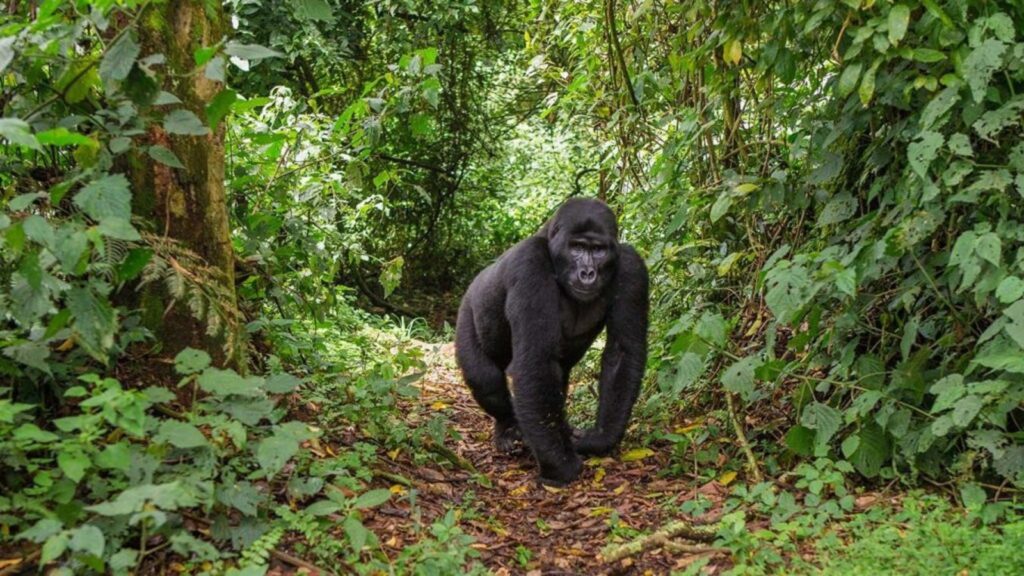
The hike can involve steep, muddy, or uneven terrain. Gorilla locations change naturally, so the duration of the trek can vary.
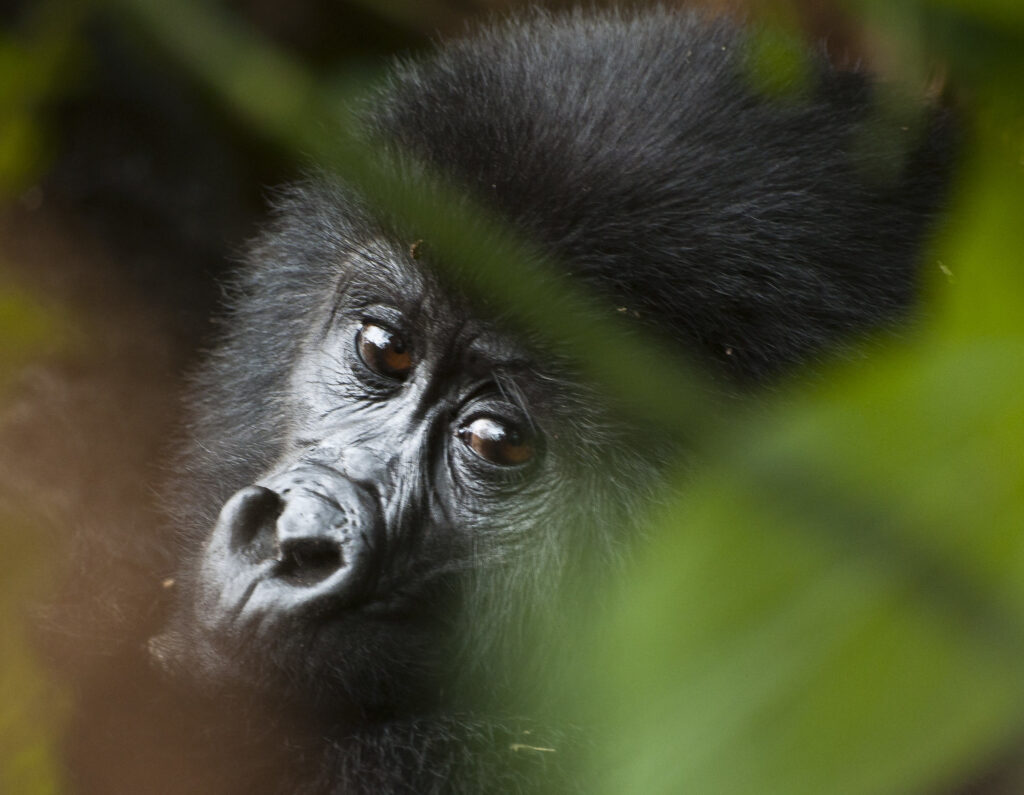
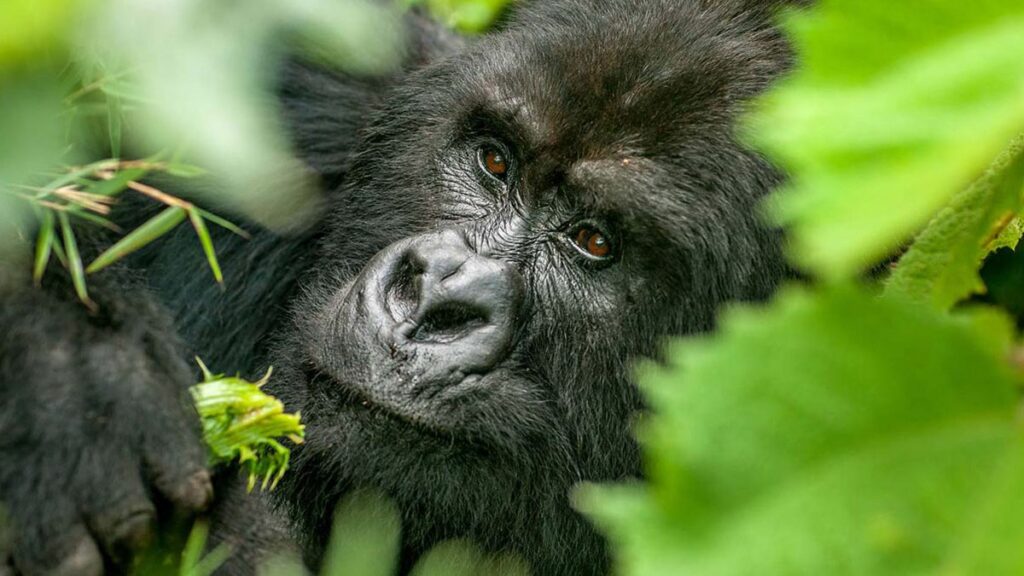
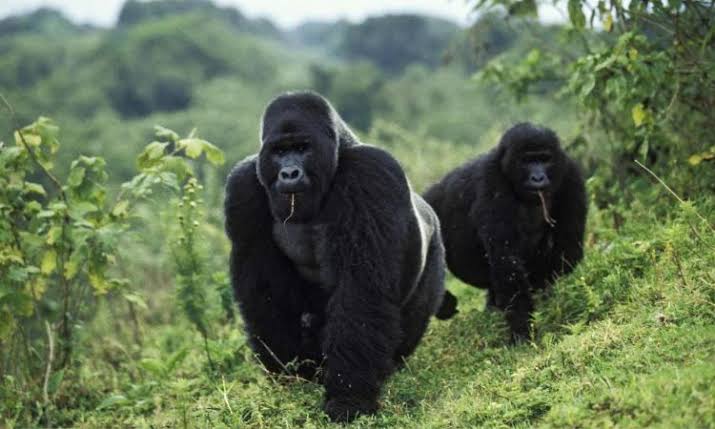
When the gorillas are located, visitors observe them under the guidance of the trekking team. You may see silverbacks, mothers, infants, juveniles, and other members of the family.
The forest environment itself can become an important part of the experience. Birds, vegetation, insects, changing weather, and the anticipation of finding the gorillas all contribute to the adventure.
During the encounter, follow all instructions from your guide and maintain respectful behavior around the animals.
Photography and Social Media
Photography is a major part of many gorilla trekking experiences, but LGBTQ+ travelers may want to think carefully about social media privacy.
If you are traveling with a partner, decide before the trip whether you want photographs of the two of you publicly shared.
Also consider location information. A photograph posted in real time may reveal where you are staying or traveling.
The same applies to photographs taken inside accommodation properties or with local staff. Ask permission before photographing people and think carefully before posting images publicly.
For wildlife photography, focus on responsible observation rather than getting the perfect photograph.
Your best memories do not necessarily have to become public content.
What LGBTQ+ Travelers Should Pack
Packing for gorilla trekking is similar for most travelers. Practical clothing should take priority over fashion.
Sturdy hiking boots are important because trails can become muddy and uneven. Long trousers and long-sleeved clothing can provide useful protection from vegetation and insects.
Rain protection is also essential because mountain forest weather can change quickly.
Carry sufficient drinking water and protect cameras, phones, passports, and other sensitive items from moisture.
You should also bring any personal medications and essential travel documents.
The most important LGBTQ+-specific preparation is not a particular item of clothing. It is having your important documents, emergency contacts, insurance details, and itinerary information organized before you travel.
What If You Experience Discrimination?
Unfortunately, travelers cannot assume that discrimination will never occur.
If you experience an uncomfortable interaction, consider your immediate safety first. You do not need to argue with strangers or publicly challenge someone if doing so could increase the risk to you.
Move to a safer environment and contact your tour operator or accommodation management if appropriate.
If you experience a serious incident, document relevant details when it is safe to do so and consider contacting your embassy or consular service.
Travel insurance providers may also offer assistance depending on the circumstances.
The most important principle is to avoid escalating a situation simply to prove a point. Your personal safety should come first.
Combining Gorilla Trekking With Other LGBTQ-Friendly Travel Experiences
Gorilla trekking can be part of a wider East African itinerary.
Travelers may combine the experience with wildlife safaris, cultural activities, nature walks, or city stays.
However, LGBTQ+ travelers should evaluate each destination separately rather than assuming that the legal and social environment is identical throughout the region.
If your itinerary crosses several countries, research the laws and current travel guidance for every country.
This is particularly important when crossing borders because your legal situation can change as soon as you enter another jurisdiction.
A slower itinerary can also make the journey more comfortable. Instead of rushing from one destination to another, allow enough time to understand each location and respond to unexpected changes.
Common Mistakes LGBTQ+ Gorilla Trekkers Should Avoid
One common mistake is relying on outdated LGBTQ+ travel information. Laws and political environments can change, so always check recent sources.
Another mistake is assuming that a destination’s general reputation tells you everything you need to know. Conditions can differ between cities, rural areas, accommodation properties, and tourism facilities.
Travelers should also avoid sharing sensitive personal information unnecessarily.
Another mistake is ignoring regional security conditions because the safari itself is highly organized. The journey to and from the park remains part of the trip.
Finally, do not allow fear to prevent you from researching your options properly. Good preparation gives you the information needed to make your own travel decision.
A Practical Checklist Before Booking
Before booking a gorilla trekking trip, research the current laws and travel advisories for your chosen destination.
Confirm that your passport and visa arrangements are valid and check whether any additional entry requirements apply.
Research your tour operator and accommodation carefully. Confirm transportation arrangements and make sure you understand what your safari package includes.
Check your travel insurance and ensure that it provides appropriate coverage for the activities and destinations on your itinerary.
Save emergency contacts and share your general travel plans with someone you trust.
Finally, have a backup plan in case security conditions, transportation, health issues, or other circumstances require changes to your itinerary.
Frequently Asked Questions About LGBTQ+ Gorilla Trekking
Can LGBTQ+ travelers go gorilla trekking?
LGBTQ+ travelers can research and consider gorilla trekking, but the suitability of a particular destination depends on current laws, social conditions, and the traveler’s individual circumstances.
Is Uganda suitable for LGBTQ+ travelers?
Uganda currently has serious legal and safety concerns for LGBTQ+ people. Current official travel guidance warns about laws targeting people based on sexual orientation, while human-rights reporting documents continuing discrimination and abuse. Travelers should carefully review current information before considering a trip.
Is Rwanda more suitable for LGBTQ+ travelers?
Rwanda’s legal environment differs from Uganda’s. Current U.S. travel guidance states that consensual same-sex sexual relations are not legally restricted, although societal discrimination and harassment can still occur. Travelers should review current conditions before departure.
Can a same-sex couple share a hotel room?
Accommodation policies can vary. Couples should confirm arrangements directly with the property or tour operator before booking, particularly when traveling in destinations where social attitudes may be less accepting.
Should I travel openly as an LGBTQ+ person?
There is no single answer. Your decision should take into account local laws, social conditions, your personal circumstances, and current travel advice. Privacy and personal safety should remain priorities.
Should I tell my safari operator that I am LGBTQ+?
You are not required to disclose your sexual orientation simply to book a safari. However, if you have specific accommodation, privacy, or transportation requirements, sharing the necessary practical information can help the operator organize your trip.
Conclusion
A gorilla trekking LGBTQ travel guide should go beyond describing gorilla permits and forest trails. LGBTQ+ travelers need to consider the complete journey, including local laws, social attitudes, accommodation, transportation, privacy, travel insurance, and current security conditions.
The legal and social environment differs considerably between gorilla trekking destinations. Uganda currently presents serious legal and safety concerns for LGBTQ+ travelers, while Rwanda has a different legal framework but still requires awareness of possible discrimination and regional security conditions.
The most responsible approach is to research current information before booking, choose tourism providers carefully, protect personal information, and maintain a practical safety plan.
Gorilla trekking itself remains a guided wildlife experience in which travelers can focus on observing mountain gorillas and appreciating their forest habitat. With careful preparation and an honest understanding of the destination, travelers can make informed decisions about whether and how to include gorilla trekking in their African adventure.
Suggested Internal Links
This article can naturally link to the Gorilla Trekking Solo Female Traveler Guide, Gorilla Trekking Tips from Experienced Trekkers, Gorilla Trekking What I Wish I Knew, Gorilla Trekking Mistakes First Time, Gorilla Trekking Packing List 2026, and Gorilla Trekking Briefing. What to Expect, Gorilla Trekking Testimonials, Real Stories, and Gorilla Trekking Accessibility Audit.