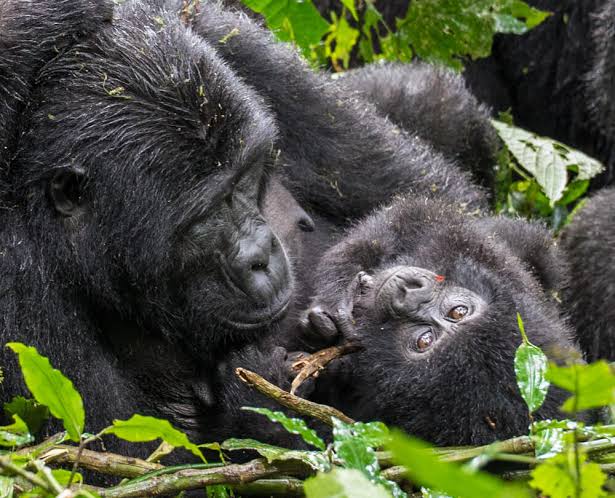
Rwigi Gorilla Group Bwindi: History, Members, Location and Trekking Experience
The Rwigi gorilla group Bwindi profile explores one of the mountain gorilla families associated with Bwindi Impenetrable National Park in southwestern Uganda. Rwigi is particularly interesting because its history reflects the changing social structure of mountain gorilla families and the importance of long-term conservation monitoring.
Bwindi is home to a significant population of endangered mountain gorillas, with habituated families distributed across several trekking sectors. Each family has its own history, leadership structure, members, and social relationships.
The Rwigi name has also appeared in connection with individual gorillas and gorilla family histories in Bwindi. Because gorilla groups can change through births, deaths, transfers, group splits, and leadership changes, travelers should distinguish historical records from current tourism information.
Before planning a trek specifically around a family called Rwigi, confirm its current status and location with the Uganda Wildlife Authority or a reputable local tour operator.
Where Is the Rwigi Gorilla Group Located?
The Rwigi gorilla name is associated with the Bwindi Impenetrable National Park ecosystem in southwestern Uganda.
Bwindi contains several trekking sectors, including Buhoma, Ruhija, Rushaga, and Nkuringo.
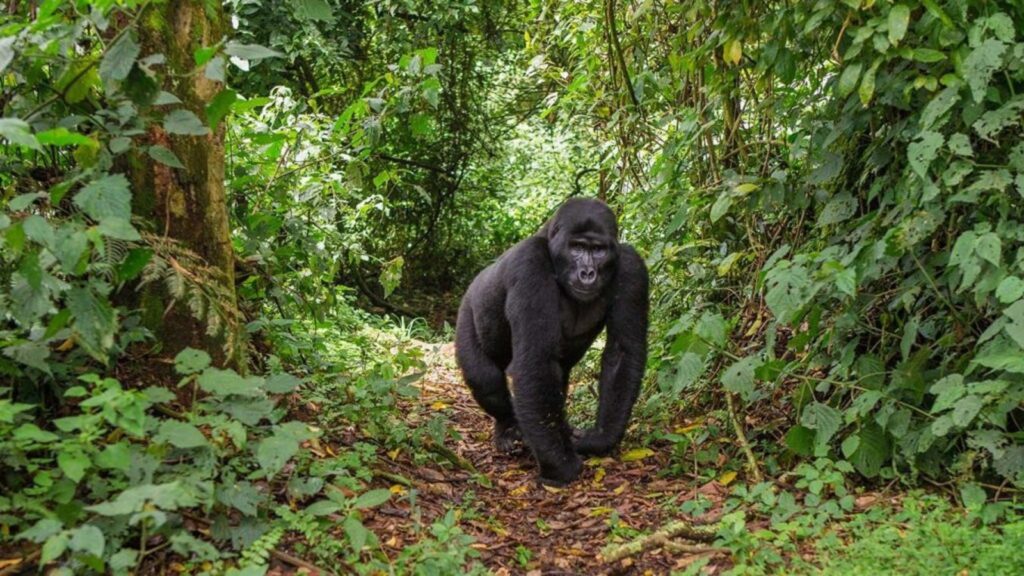
The park’s mountainous terrain consists of dense rainforest, steep slopes, valleys, streams, and thick vegetation.
Mountain gorillas move naturally through this habitat while feeding, resting, socializing, and traveling between feeding areas.
Consequently, a gorilla family’s location is not permanent.
Visitors should confirm the current sector and trekking arrangements before assuming that a historical gorilla group remains in a particular location.
History of Rwigi in Bwindi Gorilla Conservation
The history associated with Rwigi illustrates the importance of identifying individual gorillas and understanding their relationships within mountain gorilla societies.
Mountain gorilla researchers and trackers often recognize individual animals by names based on distinctive characteristics, locations, events, or other observations.
These individual identities help conservation teams monitor gorilla movements, reproduction, health, social relationships, and changes in group composition.
As a result, a gorilla name can sometimes appear in historical records without necessarily representing a currently active tourist family.
This distinction is important when researching Rwigi and other Bwindi gorilla groups.
What Does the Name Rwigi Mean?
“Rwigi” is a name associated with the local naming of a gorilla or gorilla family.
Gorilla names help researchers, guides, and conservationists distinguish individuals and social groups.
Names can originate from local words, physical characteristics, geographical references, behavior, or significant events.
The meaning and historical use of individual gorilla names may differ from the name of an officially recognized tourist group.
Travelers should therefore rely on current conservation information when identifying the status of Rwigi.
Rwigi and Mountain Gorilla Leadership
Leadership is one of the most important aspects of mountain gorilla social organization.
A gorilla family usually contains one or more mature males, including silverbacks.
The dominant silverback often protects the group, responds to threats, manages conflicts, and influences movements through the forest.
Other males may also contribute to the group’s security and social stability.
Leadership can change when a dominant male dies, ages, or loses status or when another male becomes stronger or more socially influential.
These changes can lead to major changes within a gorilla family.
Rwigi and Silverback Gorillas
Silverbacks are mature male mountain gorillas with characteristic silver-colored hair across their backs and shoulders.
They play important roles in gorilla social organization.
A dominant silverback may protect females and young gorillas, lead movements, monitor the surroundings, and intervene in disputes.
Visitors observing a silverback should pay attention to the guide’s instructions.
Chest beating, vocalizations, vegetation displays, and changes in posture can form part of normal gorilla communication and do not automatically indicate an intention to attack.
Rwigi and Blackback Gorillas
Blackbacks are younger males that have not yet developed the silver coloration of mature silverbacks.
They can participate in play, wrestling, chasing, climbing, and other social activities.
As they mature, they may become important members of their family or eventually leave to establish new social units.
The development of young males is therefore an important part of the long-term evolution of mountain gorilla families.
Rwigi and Adult Females
Adult females play an essential role in gorilla families.
They contribute to reproduction and care for infants and juveniles.
Visitors may observe females feeding, resting, grooming, carrying infants, and interacting with other members.
Female gorillas can transfer between social groups.
Such movements contribute to the complex social and genetic relationships that connect different gorilla families.
Rwigi and Young Gorillas
Young gorillas are among the most fascinating animals to observe in Bwindi.
Infants normally remain close to their mothers during early development.
As they grow, juveniles become more independent and active.
They may climb, wrestle, chase one another, and imitate adult behaviors.
Play helps young gorillas develop physical coordination and social skills.
Visitors should watch these activities quietly and avoid attempting to attract the attention of the animals.
How Large Is the Rwigi Gorilla Group?
There is no reliable permanent number that can be used to describe a gorilla group over its entire history.
Mountain gorilla families change naturally through births, deaths, transfers, and group splits.
Historical records can therefore show different numbers at different periods.
If Rwigi is being discussed as an individual gorilla rather than a currently recognized tourist family, published group-size figures may refer to the wider family with which the individual was associated.
Travelers should confirm current family information before planning their trek.
Is Rwigi Open for Gorilla Trekking?
Travelers should verify the current status of Rwigi before planning a trek specifically around this name.
Bwindi has a number of habituated gorilla families available for tourism, but historical family names and individual gorilla names do not necessarily represent current trekking groups.
Wildlife authorities can change family allocation and tourism arrangements according to conservation and management requirements.
A reputable tour operator can help determine the current family assigned to a particular trekking sector.
Can You Request the Rwigi Gorilla Group?
If “Rwigi” appears as a preferred family name in historical or tourism information, travelers should first confirm whether it represents a currently available habituated family.
Visitors can communicate a preferred gorilla family to their tour operator when possible.
However, family allocation is controlled by wildlife authorities, and a specific family cannot necessarily be guaranteed.
The safest approach is to confirm current availability before paying for a trek based on a particular group name.
Rwigi Gorilla Trekking Experience
A typical Bwindi gorilla trek begins at the relevant trekking headquarters.
Visitors register and attend a briefing before entering the forest.
Guides explain safety procedures, conservation rules, and appropriate behavior around the gorillas.
Trackers then lead visitors through the forest to locate the assigned habituated family.
The hiking distance depends on the location of the gorillas on the day of the trek.
Every trek therefore provides a different experience.
How Difficult Is Gorilla Trekking in Bwindi?
Gorilla trekking in Bwindi can be physically demanding.
The park contains steep hills, uneven ground, dense vegetation, muddy paths, and slippery sections.
Rain can make trails more difficult to navigate.
Travelers should prepare physically by walking regularly before their trip and practicing on uneven or hilly terrain.
A local porter can also provide valuable assistance during challenging sections.
How Long Does a Bwindi Gorilla Trek Take?
There is no fixed trekking duration.
The time required to locate the gorillas depends on their movements and the terrain.
Trackers use signs such as feeding areas, trails, nests, and other evidence to locate the assigned family.
Once the gorillas are found, visitors spend a regulated period observing them.
The trekking team then returns to the headquarters.
Best Time for Gorilla Trekking in Bwindi
Gorilla trekking takes place throughout the year.
Many visitors prefer relatively drier periods because forest trails can be easier to navigate.
However, Bwindi is a rainforest, and rainfall can occur during any month.
Wet conditions can create muddy trails but also produce lush vegetation and beautiful forest scenery.
Your ideal travel period depends on your budget, weather preferences, accommodation availability, and wider Uganda itinerary.
What Makes Rwigi Interesting?
The Rwigi name is particularly interesting because it highlights the importance of individual identification in gorilla conservation.
Researchers and trackers monitor individual gorillas over time to understand their behavior, relationships, movements, and reproductive history.
This detailed monitoring helps conservation teams understand how gorilla families change.
For visitors, learning about individual gorillas can make a trekking experience more meaningful.
Instead of simply seeing a group of animals, travelers can begin to understand the personalities, relationships, and histories that make up a gorilla family.
Rwigi and Gorilla Conservation
Long-term monitoring is central to mountain gorilla conservation.
Researchers and trackers collect information about family composition, births, deaths, movements, behavior, and social relationships.
This information supports conservation decisions and helps identify changes within the population.
Gorilla tourism also contributes to conservation through permit revenue and tourism-related employment.
The combination of scientific monitoring and responsible tourism supports the long-term protection of Bwindi’s mountain gorillas.
Rwigi and Local Communities
Communities around Bwindi benefit from tourism through employment and tourism-related businesses.
Visitors contribute to local economies by staying in lodges, hiring porters, using local transportation, purchasing crafts, and participating in community activities.
Hiring a porter is particularly useful because it provides direct income while making the trek easier.
Supporting responsible local businesses helps spread tourism benefits beyond the protected forest.
Gorilla Trekking Rules in Bwindi
Visitors must follow the instructions provided during the pre-trekking briefing.
Maintain the required distance from the gorillas.
Never touch or feed the animals.
Keep voices low and avoid sudden movements.
Do not use flash photography.
Visitors showing signs of potentially infectious illness should not enter the gorilla habitat.
These rules help protect both visitors and mountain gorillas.
Can You Photograph Gorillas in Bwindi?
Photography is permitted during authorized gorilla encounters.
Visitors should avoid flash photography.
Do not move closer to the animals simply to obtain a better photograph.
A camera with an appropriate zoom lens can help capture detailed images while maintaining a safe and respectful distance.
Always follow the guide’s instructions when photographing gorillas.
Gorilla Habituation in Bwindi
Habituation is the gradual process through which wild gorillas become accustomed to controlled human presence.
The process requires careful monitoring by researchers, trackers, and conservation authorities.
Habituated gorillas remain wild animals.
They are not domesticated, and their behavior can change according to social and environmental circumstances.
Visitors must therefore respect the animals throughout the encounter.
Rwigi Compared With Other Bwindi Gorilla Groups
Bwindi contains several habituated gorilla families distributed across different sectors.
Each family has its own history, leadership structure, membership, and social relationships.
Some groups have become particularly famous because of their large size, unusual histories, or well-known silverbacks.
The Rwigi name is more closely associated with the historical identification of gorillas and conservation records than with a permanently fixed tourist experience.
Travelers should therefore confirm the current family list when planning a trek.
Can Children Trek in Bwindi?
Gorilla trekking is subject to a minimum age requirement established by wildlife authorities.
Travelers should confirm the current requirement before booking.
Children who meet the official requirement must also be physically prepared for the challenging terrain.
Parents should discuss the demands of the trek with their tour operator before confirming the safari.
Hiring a Porter for a Bwindi Trek
Hiring a porter can make gorilla trekking more manageable.
Porters can carry water, backpacks, cameras, and other personal belongings.
They can also provide physical assistance on steep or slippery trails.
Porter services create direct economic opportunities for people living around Bwindi.
Agree on the porter fee before starting the trek.
What Should You Pack for Bwindi Gorilla Trekking?
Prepare for wet and muddy rainforest conditions.
Wear sturdy hiking boots with good grip.
Long trousers and long-sleeved clothing can protect your skin from vegetation and insects.
Carry a waterproof jacket, drinking water, a small backpack, and camera equipment.
Use waterproof protection for phones, cameras, and other electronics.
Gardening gloves can also be useful when moving through dense vegetation.
When Should You Arrive at the Trekking Headquarters?
Arrive at the designated trekking headquarters early enough for registration and briefing.
Your tour operator should provide the exact reporting time.
Arriving early gives you time to organize your equipment, meet your guide, and prepare for the trek.
It also helps prevent delays before entering the forest.
Gorilla Trekking Cost in Bwindi
The cost of gorilla trekking depends on the current permit price and the other components of your safari.
Travelers should budget for accommodation, transportation, meals, porter services, and additional activities.
The gorilla permit is the main mandatory expense.
Because permit prices and other tourism charges can change, confirm current rates before booking.
A complete safari quotation provides a clearer estimate of your total travel costs.
How to Book a Bwindi Gorilla Trek
Begin by choosing your preferred travel dates and trekking sector.
Ask a reputable tour operator to check current permit availability.
If you have a preferred gorilla family, communicate your request before the permit is secured.
Do not assume that a historical group name guarantees access to a specific family.
Once your permit is confirmed, arrange accommodation, transportation, and other activities around the trekking date.
Frequently Asked Questions
Where is the Rwigi gorilla group?
The Rwigi name is associated with Bwindi’s mountain gorilla conservation history. Travelers should confirm the current location and status before treating it as a current tourist family.
What is Rwigi known for?
Rwigi is associated with individual gorilla identification and the historical records used to monitor mountain gorillas in Bwindi.
Is Rwigi a current gorilla trekking group?
Travelers should verify this with current wildlife authorities or a reputable tour operator because historical individual or family names do not always correspond to current tourist groups.
Can I request Rwigi for my trek?
Confirm whether Rwigi currently represents an available habituated family before making a request. Family allocation is ultimately controlled by wildlife authorities.
How difficult is gorilla trekking in Bwindi?
The trek can be challenging because of steep slopes, dense vegetation, uneven terrain, and muddy trails.
How long does gorilla trekking take?
There is no fixed duration. Hiking time depends on the location and movements of the assigned gorilla family.
Can I photograph gorillas?
Yes. Photography is allowed during authorized encounters, but flash photography should be avoided.
Can I touch a gorilla?
No. Visitors should never intentionally touch the gorillas.
Should I hire a porter?
A porter can provide physical assistance, carry belongings, and support local livelihoods.
Can I trek if I am sick?
Visitors showing signs of potentially infectious illness should not enter the gorilla habitat. Inform your tour operator and follow current health procedures.
Conclusion
The Rwigi gorilla group Bwindi topic provides an opportunity to explore how individual gorilla identification and long-term monitoring contribute to mountain gorilla conservation.
Unlike a simple tourist attraction with a permanent list of animals, mountain gorilla societies change continuously. Births, deaths, transfers, leadership changes, and group splits can alter the composition and identity of families over time.
This makes accurate and current information especially important when researching a gorilla group such as Rwigi.
Travelers planning a Bwindi gorilla trek should confirm the current list of habituated families, trekking sector, permit availability, and family allocation arrangements before booking.
Regardless of which family they encounter, visitors can contribute to conservation by following trekking rules, respecting the gorillas’ space, hiring local porters, and supporting responsible tourism businesses.
The story of Rwigi ultimately illustrates an important part of gorilla conservation: protecting individual animals, their social groups, and the forest habitat that supports them.