Mountain Biking Uganda Safari: Complete Guide to Cycling Adventures in Uganda
A mountain biking Uganda safari offers travelers an exciting way to discover Uganda beyond traditional game drives and walking tours. With rolling hills, forest trails, rural roads, savannah landscapes, and mountain scenery, Uganda provides diverse environments for cycling adventures.
Mountain biking allows travelers to explore the countryside at a slower pace while remaining active and close to the surrounding environment. Instead of viewing landscapes through a vehicle window, cyclists can stop at viewpoints, interact with local communities, photograph wildlife from appropriate distances, and experience rural life more directly.
A mountain biking safari can also complement a Uganda wildlife or gorilla trekking itinerary. Travelers can combine cycling around Lake Bunyonyi, countryside rides near national parks, forest-edge cycling, and other outdoor activities with traditional safari experiences.
Why Choose a Mountain Biking Uganda Safari?
A mountain biking Uganda safari combines adventure, exercise, culture, and nature.
Cycling provides travelers with greater freedom to stop along the route and appreciate details that can easily be missed during a vehicle safari. Riders can pass through farming communities, climb scenic hills, visit viewpoints, and experience the changing landscapes of Uganda at their own pace.
The activity also provides an opportunity to support local guides, bicycle operators, accommodation providers, and community businesses.
Best Places for Mountain Biking in Uganda
Uganda offers several destinations suitable for cycling and mountain biking.
Lake Mburo National Park
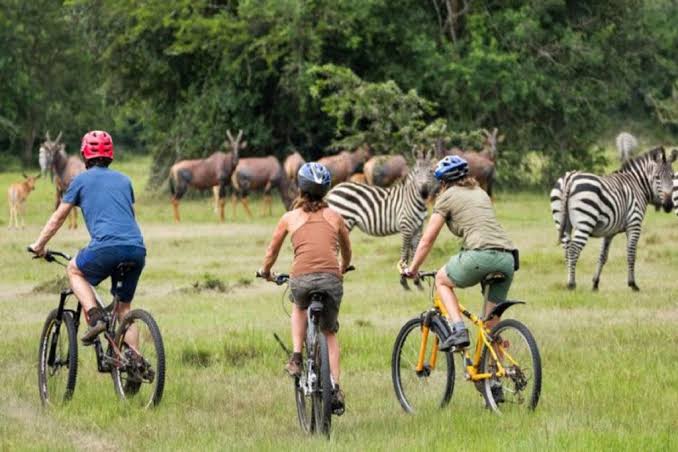
Lake Mburo is one of Uganda’s most accessible destinations for cycling safaris. The park and surrounding area offer opportunities to explore savannah landscapes by bicycle, accompanied by appropriate guides and following park regulations.
Cyclists may encounter zebras, impalas, warthogs, buffaloes, and numerous bird species. Wildlife sightings remain unpredictable, so riders should always follow guide instructions and maintain safe distances.
Lake Bunyonyi
Lake Bunyonyi provides a completely different cycling environment.
The area surrounding the lake contains steep green hills, terraced farms, villages, and scenic viewpoints. Mountain biking here combines physical activity with spectacular highland scenery.
Riders can choose shorter village routes or more demanding hill rides depending on their fitness level.
Jinja
Jinja is another popular destination for cycling adventures.
The countryside around Jinja contains quiet rural roads, farms, plantations, villages, and scenic landscapes. Cycling can be combined with other activities such as boat trips, cultural experiences, and adventure activities along the Nile.
Mount Elgon Region
The Mount Elgon region offers opportunities for experienced cyclists looking for more challenging terrain.
The area contains hills, rural roads, plantations, and mountain landscapes. Routes can involve significant elevation changes, making proper preparation important.
Fort Portal and Western Uganda
The Fort Portal region provides scenic cycling opportunities through rolling countryside, tea plantations, crater-lake landscapes, and rural communities.
The area’s combination of hills and agricultural scenery makes it attractive to travelers interested in active cultural and landscape experiences.
Mountain Biking and Wildlife Safaris
Cycling can complement traditional wildlife safaris.
A typical itinerary might combine mountain biking with game drives, boat cruises, nature walks, or cultural experiences. This allows travelers to experience Uganda’s landscapes from several different perspectives.
For example, visitors can cycle around Lake Mburo before continuing to Queen Elizabeth National Park for wildlife viewing and a Kazinga Channel boat cruise.
Mountain Biking and Gorilla Trekking
Travelers can also combine cycling with gorilla trekking.
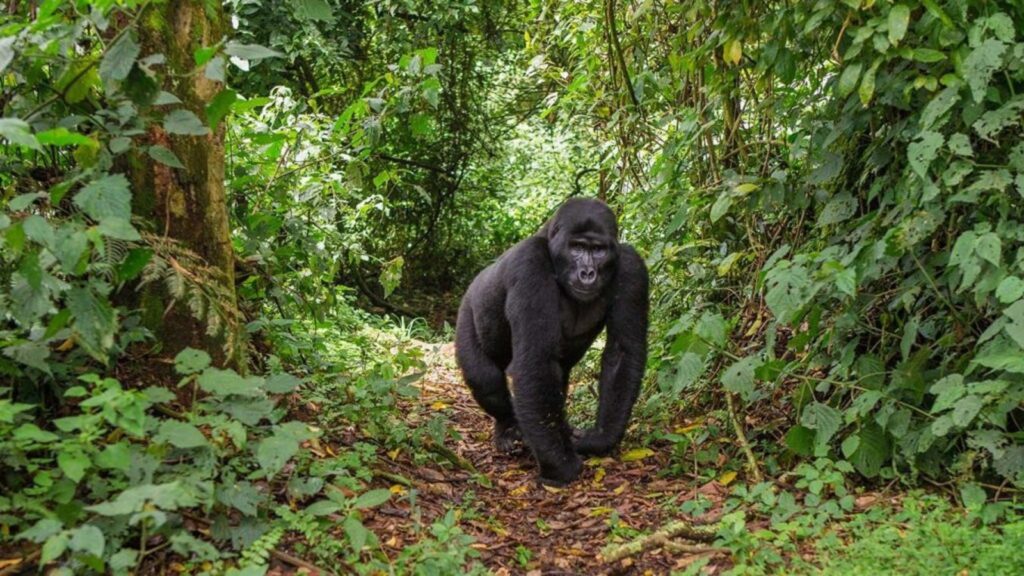
After visiting Bwindi Impenetrable National Park, travelers can continue toward Lake Bunyonyi for a cycling excursion through the surrounding highlands. This provides a contrast between demanding rainforest trekking and open countryside cycling.
Cycling can also be included before gorilla trekking for travelers who prefer to complete their active activities earlier in the itinerary.
Mountain Biking Around Lake Bunyonyi
Lake Bunyonyi is particularly attractive for cyclists because of its dramatic landscape.
The surrounding roads climb through terraced hills and rural communities. Riders can stop at viewpoints overlooking the lake and its numerous islands.
The terrain can be challenging, so travelers should choose routes according to their fitness level. Shorter rides are suitable for casual cyclists, while experienced mountain bikers can choose longer routes with steeper climbs.
Mountain Biking in Lake Mburo
Lake Mburo offers one of the most distinctive cycling safari experiences in Uganda.
The surrounding savannah landscape allows travelers to experience wildlife areas without relying entirely on vehicles. Cycling can provide close views of landscapes and, under appropriate guidance, wildlife.
Because animals are unpredictable, cyclists should never approach wildlife independently. Following park and guide instructions remains essential.
Mountain Biking Through Rural Communities
One of the most rewarding aspects of a mountain biking Uganda safari is the opportunity to pass through rural communities.
Cyclists may see farms, schools, markets, churches, trading centers, and traditional homes along their routes. Local guides can explain agricultural practices and the history of communities visited during the ride.
Visitors should ask permission before photographing people and respect local customs.
Birdwatching While Mountain Biking
Uganda is one of Africa’s leading birdwatching destinations, and cycling provides another way to explore bird habitats.
Riders may encounter kingfishers, hornbills, weavers, sunbirds, eagles, herons, and many other species depending on the destination.
Birdwatchers should carry compact binoculars and take breaks at suitable locations to observe birds without disturbing them.
How Difficult Is Mountain Biking in Uganda?
Difficulty varies significantly between destinations.
Some routes follow relatively flat rural roads and suit beginners, while others involve steep climbs, rough tracks, muddy sections, and technical terrain.
Travelers should inform their guide about their cycling experience before selecting a route. Experienced mountain bikers can request challenging routes, while beginners can choose shorter and less demanding rides.
Best Time for a Mountain Biking Safari
A mountain biking Uganda safari can take place throughout the year.
The relatively drier periods from June to September and December to February generally provide better conditions for cycling. However, Uganda’s climate varies by region, and rainfall can occur at any time.
Rain can make unpaved roads muddy and slippery, so cyclists should remain flexible with routes and schedules.
What to Wear
Comfortable cycling clothing is important.
Wear breathable clothing, comfortable cycling shoes or sports shoes, gloves, sunglasses, and a helmet. Long trousers or protective clothing may be useful on forest-edge and rural routes.
A lightweight rain jacket can provide protection when weather conditions change.
What to Bring
Travelers should carry drinking water, sunscreen, insect repellent, a small first-aid kit, snacks, a phone or camera, and waterproof protection for electronics.
For longer rides, additional repair equipment and spare supplies may be necessary. Tour operators should confirm what equipment they provide before the trip.
Bicycle and Equipment Requirements
Mountain bikes should be suitable for the selected terrain.
A reliable bicycle should have functioning brakes, appropriate tires, and gears capable of handling hills. Helmets should be available and worn throughout the ride.
Travelers bringing their own bicycles should confirm transportation arrangements and spare-parts availability before beginning the safari.
Safety During a Mountain Biking Safari
Safety should remain a priority throughout the experience.
Cyclists should follow their guide, maintain safe speeds, especially on descents, and avoid riding beyond their ability. Riders should also remain aware of vehicles, pedestrians, livestock, and changing road conditions.
When cycling near wildlife, never approach animals independently. Guides should determine safe distances and appropriate routes.
Mountain Biking for Families
Families can enjoy cycling in Uganda when routes match the abilities of younger riders.
Shorter rides on quieter roads can work well for families, while more demanding mountain routes are better suited to experienced cyclists.
Parents should ensure children have appropriately sized bicycles, helmets, water, and suitable clothing.
Combining Cycling With Cultural Experiences
Mountain biking can easily be combined with cultural tourism.
A ride through rural communities can include visits to local farms, markets, craft workshops, or cultural centers. These experiences allow visitors to learn more about Uganda while supporting local businesses.
A local guide can help create respectful interactions between cyclists and communities.
Responsible Mountain Biking
Travelers should practice responsible tourism during every cycling excursion.
Avoid littering, respect private property, remain on permitted routes, and avoid disturbing wildlife or livestock. Visitors should also support local businesses and guides where possible.
Responsible cycling helps preserve Uganda’s landscapes while ensuring local communities benefit from tourism.
Sample Mountain Biking Uganda Safari Itinerary
Day 1: Arrival in Entebbe
Arrive in Uganda and transfer to your accommodation. Spend the evening preparing for the safari.
Day 2: Jinja Cycling Adventure
Travel to Jinja and enjoy a guided countryside cycling experience. Explore rural landscapes and local communities.
Day 3: Continue to Lake Mburo
Travel toward Lake Mburo and enjoy the changing landscapes of central Uganda.
Day 4: Cycling and Wildlife at Lake Mburo
Take part in a guided cycling experience around the park or surrounding area before continuing with other wildlife activities.
Day 5: Transfer Toward Bwindi
Travel toward southwestern Uganda and enjoy the changing highland scenery.
Day 6: Gorilla Trekking
Enter Bwindi Impenetrable National Park for a gorilla trekking experience.
Day 7: Lake Bunyonyi Cycling
Relax around Lake Bunyonyi and enjoy a guided cycling excursion through the surrounding hills.
Day 8: Continue Your Safari
Continue toward another Uganda destination or return toward Kampala or Entebbe.
The itinerary can be adjusted according to cycling ability, safari interests, and available time.
Conservation and Community Benefits
Mountain biking can contribute to local tourism economies.
Guides, bicycle operators, accommodation providers, mechanics, restaurants, artisans, and community groups can all benefit from cycling tourism.
When visitors choose locally operated services, a greater share of tourism expenditure can remain within surrounding communities.
Conclusion
A mountain biking Uganda safari provides an exciting alternative to traditional safari travel. From the savannah landscapes of Lake Mburo to the hills surrounding Lake Bunyonyi, the countryside of Jinja, and the mountain landscapes of western Uganda, cyclists can experience the country from a unique perspective.
Mountain biking can also complement gorilla trekking, wildlife viewing, birdwatching, cultural tourism, and other outdoor activities. With suitable equipment, appropriate route selection, experienced guides, and responsible riding practices, cycling can become an unforgettable part of a Uganda safari.
For active travelers looking to combine adventure, scenery, wildlife, and local culture, Uganda offers a diverse range of mountain biking opportunities.