Gorilla Trekking Search Rescue Protocol: How Emergencies Are Managed in Gorilla Parks
Gorilla trekking ranks among the world’s most remarkable wildlife adventures, allowing visitors to observe endangered mountain gorillas in their natural habitat. Every year, thousands of travelers visit Uganda, Rwanda, and the Democratic Republic of Congo to trek through protected rainforests under the guidance of experienced park rangers. Although gorilla trekking is well organized and maintains an excellent safety record, the activity takes place in rugged mountain terrain where emergencies can occasionally occur. Understanding the gorilla trekking search rescue protocol helps visitors appreciate the comprehensive safety systems that protect both tourists and wildlife.
Wildlife authorities invest heavily in ranger training, communication equipment, emergency planning, and rescue coordination. These measures allow search and rescue teams to respond quickly whenever a visitor becomes injured, separated from the group, or experiences a medical emergency. Knowing how these procedures work can provide reassurance before beginning a gorilla trekking adventure.
What Is the Gorilla Trekking Search Rescue Protocol?
The gorilla trekking search rescue protocol is a coordinated emergency response system used by wildlife authorities to locate, assist, and safely evacuate visitors who experience difficulties during a gorilla trek. The protocol outlines clear procedures that guides, rangers, trackers, medical personnel, and park management follow whenever an emergency arises.
The system covers medical incidents, injuries, lost trekkers, severe weather events, and other situations that require immediate intervention. Every step focuses on protecting human life while minimizing disturbance to mountain gorillas and their fragile forest habitat.
Because gorilla trekking occurs in remote conservation areas, a structured rescue protocol ensures that emergencies receive a rapid and organized response.
Why Search and Rescue Protocols Are Important
The importance of the gorilla trekking search and rescue protocol becomes clear when considering the environment where gorilla trekking takes place. Visitors hike through steep valleys, dense forests, muddy trails, and mountainous terrain that can become challenging after rainfall.
Although guides carefully assess visitor fitness before each trek, accidents or medical emergencies can still occur. A well-developed search and rescue system allows trained personnel to respond efficiently without causing unnecessary delays.
The protocol also gives travelers confidence that experienced professionals are available if assistance becomes necessary during the trek.
Who Leads Search and Rescue Operations?
Wildlife authorities oversee the gorilla trekking search and rescue protocol in each destination. In Uganda, the Uganda Wildlife Authority coordinates rescue operations within Bwindi Impenetrable National Park and Mgahinga Gorilla National Park. In Rwanda, the Rwanda Development Board manages emergency responses in Volcanoes National Park, while park authorities in the Democratic Republic of Congo oversee rescue operations in Virunga National Park whenever tourism activities are active.
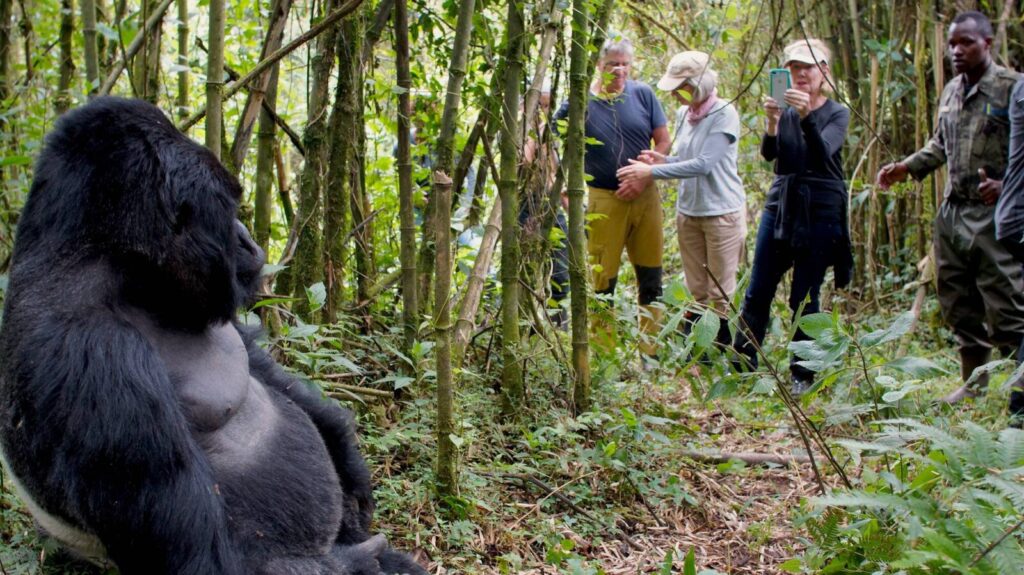
Each trekking group includes trained ranger guides who monitor visitors throughout the hike. Trackers, additional rangers, park wardens, and local support teams remain available to provide assistance if required.
This coordinated structure allows every emergency to receive an organized response.
Communication During an Emergency
Communication forms the foundation of every gorilla trekking search and rescue protocol. Ranger guides maintain regular contact with park headquarters using radios or other approved communication systems.
When an emergency occurs, guides immediately report the visitor’s location, condition, and the type of assistance required. Park headquarters then coordinate the deployment of additional rangers, rescue teams, medical personnel, or evacuation equipment depending on the circumstances.
Fast communication reduces response times and helps rescue teams prepare appropriate resources before reaching the affected location.
Reliable communication systems remain essential throughout every trekking operation.
Medical Emergencies on the Trail
Medical situations represent one of the most common reasons for activating the gorilla trekking search rescue protocol. Visitors may experience dehydration, exhaustion, allergic reactions, slips, sprains, fractures, or complications related to existing medical conditions.
Guides assess the situation immediately and provide initial assistance while requesting additional support if necessary. Depending on the severity of the condition, rescue personnel may escort the visitor back to the trailhead or carry them using specialized stretchers designed for difficult terrain.
Medical evacuation continues until the visitor reaches an appropriate healthcare facility for further treatment.
Search Procedures for Missing Visitors
Although rare, a visitor may occasionally become separated from the trekking group. The gorilla trekking search rescue protocol includes detailed procedures for locating missing trekkers as quickly as possible.
Guides first determine the visitor’s last known location and immediately notify park headquarters. Additional ranger teams, trackers, and experienced local staff then begin a systematic search using established routes and communication networks.
Search teams coordinate closely to avoid duplication of effort while covering likely locations efficiently. Visitors receive instructions during the pre-trek briefing that help reduce the likelihood of becoming separated from the group.
These preventive measures contribute to the strong safety record of gorilla trekking.
Rescue Equipment Used During Gorilla Trekking
Specialized equipment supports the gorilla trekking search rescue protocol in mountain forests. Rangers maintain emergency stretchers capable of transporting injured visitors across steep and uneven terrain.
Communication devices, first aid supplies, protective equipment, and navigation tools also form part of standard emergency resources. Depending on local conditions, rescue teams may use additional equipment to improve safety during difficult evacuations.
Well-maintained rescue equipment allows teams to respond effectively while minimizing delays during emergencies.
Continuous investment in equipment strengthens visitor safety throughout gorilla parks.
Visitor Responsibilities During Rescue Situations
Every traveler contributes to the effectiveness of the gorilla trekking search and rescue protocol by following park regulations and guide instructions.
Visitors should remain with their assigned group, communicate health concerns promptly, carry essential medications, and report any signs of fatigue before conditions worsen. Informing guides about pre-existing medical conditions before the trek begins also improves emergency preparedness.
If an emergency occurs, travelers should stay calm and cooperate fully with ranger instructions.
Responsible behavior supports faster and safer rescue operations.
Preventing Search and Rescue Incidents
Prevention remains the most effective aspect of the gorilla trekking search rescue protocol. Park authorities provide comprehensive safety briefings before every trek to explain trail conditions, visitor responsibilities, emergency procedures, and gorilla viewing rules.
Visitors can further reduce risks by wearing sturdy hiking boots, carrying sufficient drinking water, using walking sticks when necessary, and selecting trekking sectors that match their physical fitness.
Good preparation significantly lowers the likelihood of accidents and allows visitors to enjoy the experience safely.
Responsible planning benefits both travelers and conservation efforts.
The Role of Tour Operators
Licensed safari companies play an important role in supporting the gorilla trekking search and rescue protocol. Professional operators ensure that clients receive accurate pre-travel information, appropriate packing guidance, and assistance with travel insurance.
Operators also coordinate with wildlife authorities if emergencies affect scheduled itineraries. Their local knowledge and established relationships with park management allow them to support visitors efficiently during unexpected situations.
Choosing a reputable tour operator enhances both safety and overall travel quality.
Why Uganda’s Search and Rescue System Is Highly Regarded
Uganda has earned international recognition for maintaining a strong gorilla trekking search and rescue protocol through continuous ranger training, effective communication systems, and close cooperation between the Uganda Wildlife Authority, healthcare providers, and licensed tour operators.
The country’s investment in visitor safety complements its conservation mission by creating a secure environment for responsible wildlife tourism. These efforts help protect both travelers and the endangered mountain gorillas that attract visitors from around the world.
Strong emergency preparedness remains one of the reasons Uganda continues to rank among Africa’s leading gorilla trekking destinations.
Conclusion
The gorilla trekking search rescue protocol forms an essential part of every gorilla trekking operation in Uganda, Rwanda, and the Democratic Republic of Congo. Although emergencies occur infrequently, wildlife authorities maintain highly organized systems that allow trained professionals to respond quickly and effectively whenever assistance becomes necessary.
Visitors can contribute to their own safety by preparing properly, following guide instructions, purchasing comprehensive travel insurance, and trekking with licensed operators. Understanding the search and rescue protocol provides reassurance while highlighting the commitment that gorilla conservation authorities make toward protecting every visitor who enters these extraordinary forests.