Colobus Monkey Encounters in Nyungwe Forest.
Colobus monkey encounters in Nyungwe Forest feel very different from most primate experiences in Africa. They unfold above you, in motion, across layers of ancient canopy. Instead of silence or stillness, there is flow—bodies moving together, tails streaming, branches swaying as dozens of monkeys travel with coordinated ease. Nyungwe does not present a single animal moment. It offers a living spectacle of social movement and forest rhythm. This is primate viewing shaped by scale, elevation, and collective behavior.
Nyungwe Forest as a Colobus Stronghold
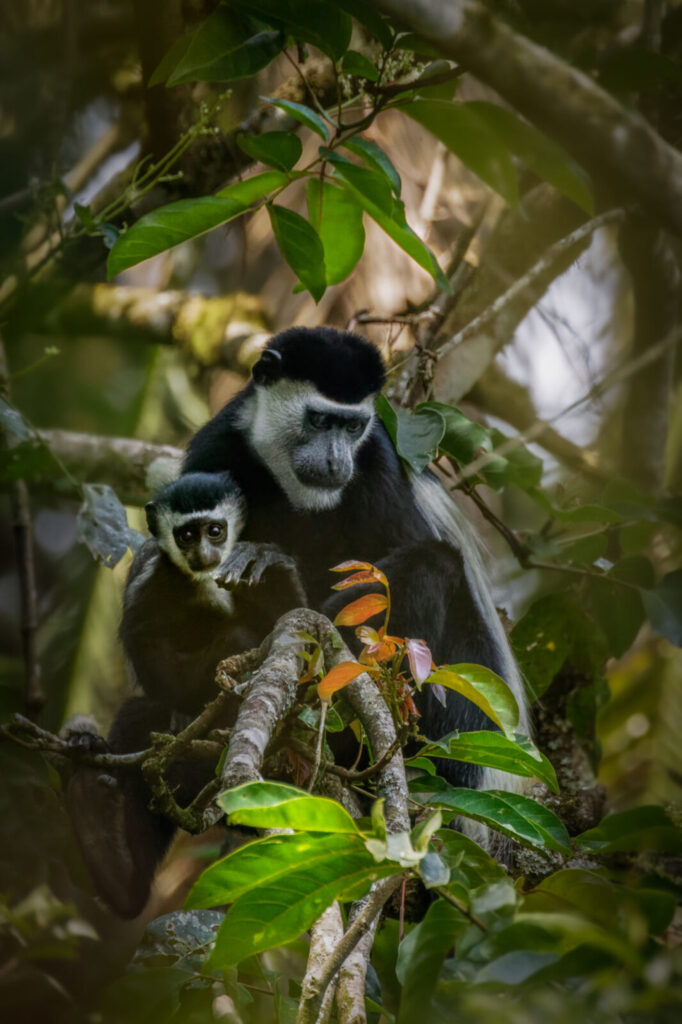
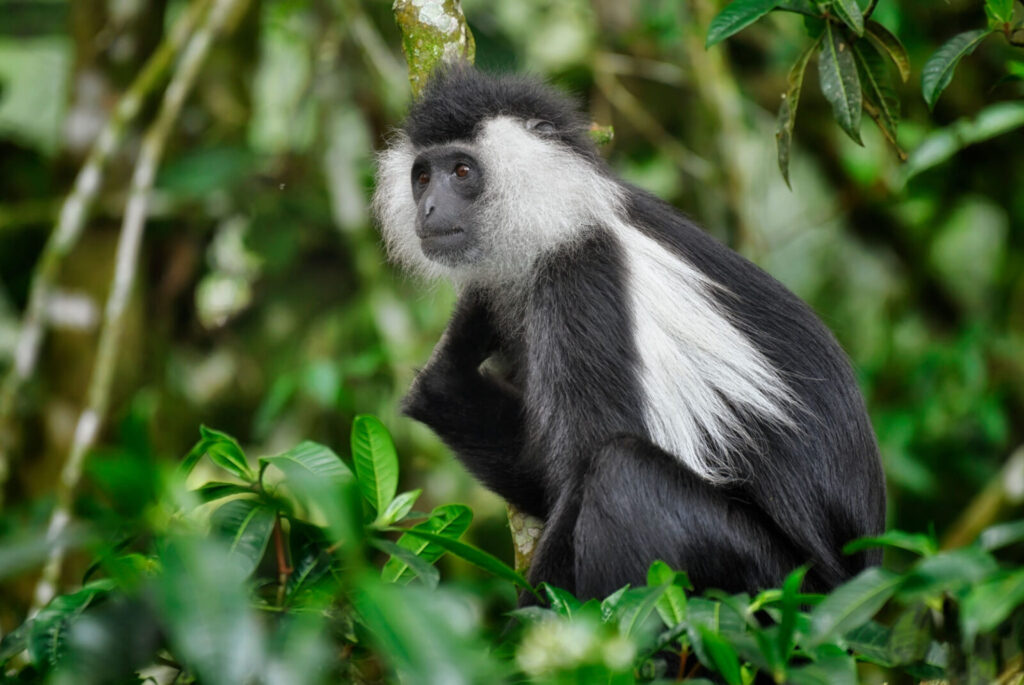
Nyungwe Forest National Park protects one of Africa’s oldest montane rainforests and supports one of the largest known troops of Angolan colobus monkeys on the continent. The forest’s height, density, and continuity allow these monkeys to thrive in unusually large numbers.
Nyungwe’s colobus troops can exceed several hundred individuals, a rarity in primate ecology. This abundance reflects long-term protection, minimal fragmentation, and stable food sources spread across the canopy.
Here, colobus monkeys do not survive in pockets. They dominate the treetops.
The First Encounter: Movement Before Detail
Most encounters begin with sound and motion rather than clear sight. Leaves rustle overhead. Branches flex. Then movement spreads across the canopy like a wave. Black-and-white forms appear in sequence, leaping effortlessly between trees.
At first, it feels overwhelming. There is no single focal point. The experience asks you to look up, then wider, then higher. Slowly, individual monkeys come into focus—juveniles following adults, mothers carrying young, sentinels pausing briefly before moving on.
The forest becomes a stage without a center.
Understanding Colobus Behavior in Nyungwe
Colobus monkeys differ from many other primates in both diet and movement. They rely heavily on leaves rather than fruit, which allows them to feed across wide areas without intense competition. Their specialized stomachs support this diet and reduce the need for constant foraging.
In Nyungwe, this translates into calm, coordinated group travel. Troops move with purpose but not urgency. There is little vocal aggression, fewer territorial disputes, and a strong sense of cohesion.
Watching them feels less like observing individuals and more like witnessing a living system in motion.
Viewing Colobus from the Forest Floor
Unlike chimpanzee or gorilla tracking, colobus encounters require patience and upward attention. Much of the experience happens above eye level, framed by branches and filtered light.
Guides help interpret movement patterns, pointing out social structure and group behavior. With time, the chaos resolves into order. You begin to anticipate movement, notice patterns, and appreciate the subtle intelligence behind the flow. The longer you watch, the more coherent the scene becomes.
The Canopy Walk Perspective
Nyungwe’s canopy walk adds a powerful dimension to colobus encounters. Suspended above the forest floor, the walkway places you closer to the monkeys’ natural level.
From this height, movement feels immersive rather than distant. You observe how colobus navigate gaps, communicate silently, and use tails for balance. The forest no longer feels vertical. It feels shared. This perspective often becomes a highlight for visitors seeking deeper forest connection.
Why Colobus Encounters Feel Different
Colobus monkeys do not invite emotional projection in the same way great apes do. Their power lies in collective presence rather than individual expression.
There is beauty in repetition, rhythm, and group intelligence. Watching hundreds of monkeys move as one challenges how we define wildlife encounters. It is less about closeness and more about scale. Nyungwe teaches you to observe systems, not moments.
Conservation Significance of Colobus Populations
The strength of Nyungwe’s colobus population reflects successful long-term conservation. Large troops require uninterrupted forest, stable food sources, and low human disturbance.
Tourism revenue supports forest protection, ranger patrols, and ecological research that benefits all primate species in the park. By valuing colobus encounters, conservation efforts extend beyond flagship species and protect entire ecosystems.
Healthy colobus populations signal a healthy forest.
Best Conditions for Colobus Viewing
Colobus monkeys remain active throughout the year. Morning walks often provide the clearest movement as troops begin daily travel. Weather influences visibility but not activity; misty conditions can even enhance the atmosphere.
Guides adjust routes based on troop movement patterns, ensuring encounters remain natural rather than forced. Nyungwe rewards flexibility and patience.
Who Will Appreciate This Experience Most
Colobus encounters suit travelers who enjoy observation, learning, and ecological depth. Photographers, birders, and forest enthusiasts find this experience particularly rewarding.
Those expecting dramatic interaction may need to adjust expectations. Nyungwe offers immersion, not performance. Curiosity transforms the experience.
Plan Your Safari
Planning a visit to see colobus monkeys in Nyungwe works best when combined with other forest activities such as chimpanzee tracking, guided nature walks, and the canopy experience. Allowing enough time in the park increases chances for unhurried observation and deeper understanding of forest dynamics. Choosing knowledgeable guides and visiting during quieter periods enhances the quality of encounters. A well-planned safari in Nyungwe shifts focus from ticking sightings to experiencing one of Africa’s most intact rainforest systems.