
Dress for protection, not fashion. Choose neutral colors, long layers, and sturdy footwear. Ensure clothing fits comfortably and allows free movement.
Proper clothing preparation turns a physically demanding hike into a manageable and enjoyable journey, allowing you to fully focus on the unforgettable moment of meeting mountain gorillas in the wild.
Best Clothing Colors for Gorilla Trekking
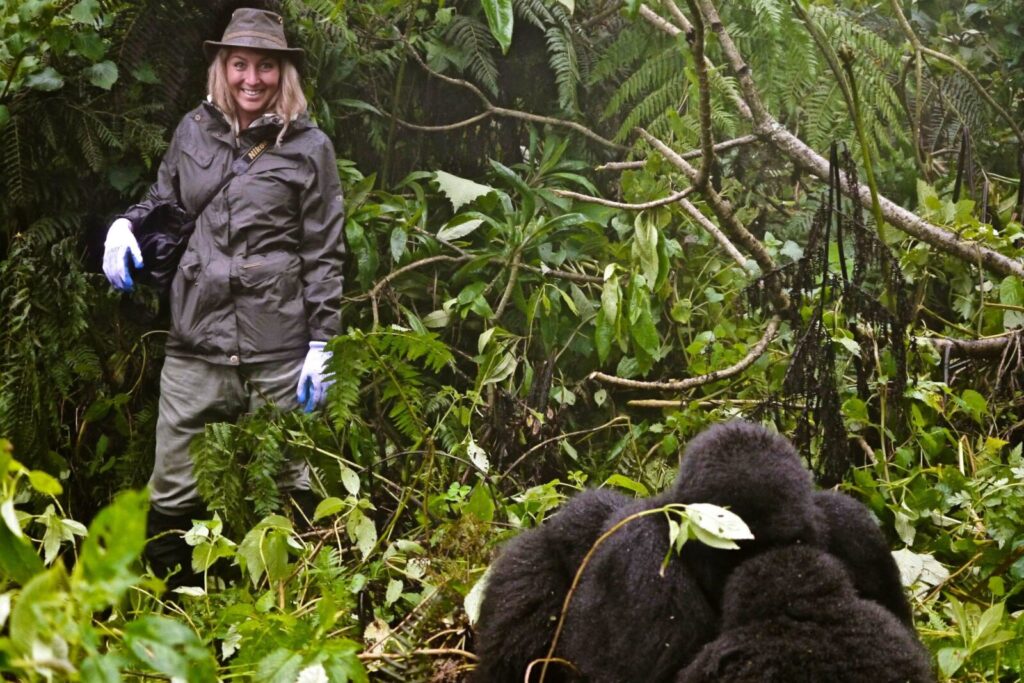
Neutral, natural colors work best for gorilla trekking. Shades of green, khaki, brown, and grey blend into the forest and reduce visual disturbance.
Bright colors, bold patterns, and reflective materials should be avoided. These can draw attention, distract wildlife, and feel out of place in a natural setting. Dark blue and black fabrics are also discouraged because they can attract insects.
Upper Body Clothing for Gorilla Trekking dress code.
Long-Sleeved Shirts
A long-sleeved shirt is essential for gorilla trekking. It protects your arms from scratches, thorny vines, nettles, and insect bites as you move through dense vegetation.
Choose lightweight, breathable, and quick-drying fabric. Even though the forest can feel warm during the hike, long sleeves provide far more comfort and protection than short sleeves.
Insulating Layer for Cool Mornings
Early mornings in gorilla habitats can feel cold, especially at higher altitudes. A light fleece or insulating layer helps maintain warmth during the briefing and early stages of the trek.
This layer should be easy to remove and pack away once the hike warms up.
Waterproof Rain Jacket or Poncho
Rain can fall at any time, regardless of season. A lightweight waterproof jacket or poncho is one of the most important items to wear or carry.
Choose a jacket that is breathable to prevent overheating. Heavy coats are unnecessary and uncomfortable in humid conditions.
Lower Body Clothing for Gorilla Trekking dress code.
Long Trousers
Long trousers protect your legs from scratches, insects, and stinging plants. They also reduce exposure to mud and moisture.
Choose durable, flexible hiking trousers that allow easy movement on steep terrain. Avoid jeans, as they absorb water, dry slowly, and restrict movement.
Gaiters or Tucked Trousers
Gaiters provide extra protection by preventing mud, ants, leeches, and debris from entering your boots. They also protect lower legs from thorns and nettles.
If gaiters are unavailable, tucking trousers into long socks offers basic protection.
Footwear for Gorilla Trekking
Hiking Boots
Sturdy hiking boots are essential. Boots should be waterproof, offer good ankle support, and have strong grip for muddy and uneven trails.
Boots must be broken in before the trek. New boots increase the risk of blisters and discomfort. Lightweight trail shoes are not recommended due to slippery terrain and lack of ankle support.
Trekking Socks
Thick hiking socks improve comfort and reduce friction. They also provide warmth during cool mornings and cushion during long walks.
Some trekkers wear two layers of socks to reduce blister risk.
Hand and Head Protection
Gloves
Gardening gloves or trekking gloves protect your hands when grabbing branches, vines, or tree trunks for balance. Gloves are especially helpful on steep or slippery sections of the trail.
Hat or Cap
A lightweight hat or cap protects against rain, sun, and dripping vegetation. It also keeps moisture off your face and improves visibility during forest movement.
Accessories That Improve Comfort
Face Mask
In some parks, visitors may be asked to wear a face mask near gorillas to reduce disease transmission. Carrying one ensures compliance if required.
Sunglasses
Sunglasses help during open sections of the trek or at park headquarters. They should be removed when close to gorillas to maintain clear eye awareness.
What Not to Wear on a Gorilla Trek
Avoid shorts, sleeveless tops, jeans, sandals, or open shoes. Strong perfumes, scented lotions, and heavy deodorants should also be avoided, as gorillas have a strong sense of smell.
Jewelry, dangling accessories, and noisy clothing should be left behind to reduce distraction and discomfort.
Dressing for Different Weather Conditions
During dry seasons, lightweight and breathable layers work best, but rain protection remains essential. During rainy seasons, waterproof clothing and gaiters become even more important due to muddy trails and wet vegetation.
Layering allows you to adapt quickly as conditions change throughout the trek.