
Pack light but pack smart. Focus on comfort, protection, and adaptability rather than excess gear. Break in boots well before arrival and test rain gear in advance.
Proper preparation allows you to move confidently through the forest and fully immerse yourself in one of the most powerful wildlife experiences on earth.
Essential Clothing for Gorilla Trekking
Long-Sleeved Shirts and Trousers
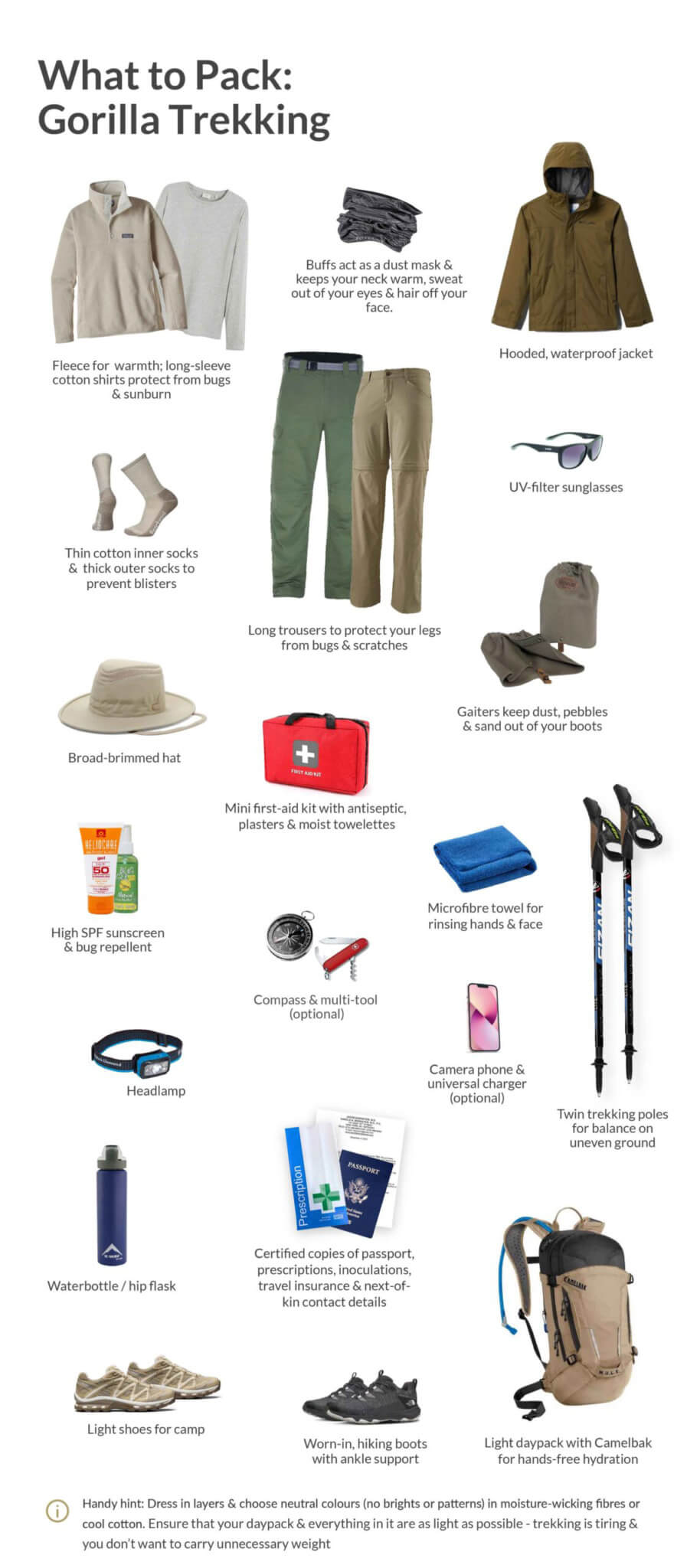
Long sleeves and long trousers protect your skin from scratches, nettles, insects, and thorny vegetation. Lightweight, breathable fabrics work best because trekking can become physically demanding. Neutral colors such as green, brown, or khaki blend into the forest and avoid startling wildlife.
Avoid bright colors and dark blue or black fabrics, which can attract insects.
Waterproof Rain Jacket or Poncho
Rain can fall at any time in gorilla habitats, even during dry seasons. A lightweight, waterproof rain jacket or poncho keeps you dry without causing overheating. Choose a compact option that fits easily into a daypack.
Waterproof layers help maintain body temperature during long forest hours.
Sturdy Hiking Boots
Proper hiking boots rank among the most important items. Boots should be waterproof, ankle-supporting, and well broken-in before the trek. Trails often involve mud, roots, rocks, and steep climbs, which require good grip and stability.
Avoid new or smooth-soled shoes, as they increase the risk of slipping.
Trekking Socks
Thick hiking socks reduce friction, prevent blisters, and improve comfort during long walks. Some trekkers prefer wearing two layers of socks for added protection.
Consider packing an extra pair in case your feet get wet.
Hand and Leg Protection
Gardening or Trekking Gloves
Gloves protect your hands when grabbing branches, vines, or tree trunks on steep or slippery sections. Thick gardening gloves or trekking gloves work well and add confidence when navigating dense forest terrain.
Gaiters or Long Socks
Gaiters prevent mud, water, ants, and insects from entering your boots. They also protect lower legs from scratches and stinging plants. If gaiters are unavailable, long socks pulled over trousers provide basic protection.
Daypack Essentials
Small Backpack
A small, lightweight daypack carries your essentials without adding unnecessary weight. Choose a comfortable backpack with padded straps and rain protection.
Drinking Water
Trekking can last several hours, and hydration remains critical. Carry enough water to last the entire trek, especially in warmer months. Dehydration increases fatigue and reduces focus.
Energy Snacks
Pack light snacks such as energy bars, nuts, or fruit. These provide quick energy during breaks and help maintain stamina during long treks.
Health and Personal Items
Insect Repellent
Rainforests host insects year-round. Insect repellent helps protect against bites and discomfort, especially around ankles and wrists.
Apply repellent before entering the forest and reapply when necessary.
Sunscreen and Lip Balm
Even under forest canopy, sun exposure can occur during open sections and briefing areas. Sunscreen and lip balm protect skin from sunburn and dryness.
Personal Medication
Carry any required medication, including inhalers or allergy treatments. Treks take place far from medical facilities, so preparation matters.
Photography and Electronics
Camera and Lenses
If you plan to photograph gorillas, bring a camera with good low-light performance. Forest conditions often involve shade and movement. A moderate zoom lens works well for capturing behavior without moving too close.
Flash photography remains strictly prohibited.
Extra Batteries and Memory Cards
Cold, damp conditions can drain batteries faster than expected. Carry spare batteries and enough memory storage to avoid missing key moments.
Waterproof Protection
Protect electronics using dry bags or waterproof covers. Rain, humidity, and mud pose constant risks inside the forest.
Optional but Helpful Items
Walking Stick
Rangers usually provide walking sticks at the trailhead. They help with balance on steep and slippery sections and reduce strain on knees during descents.
Camera Cleaning Cloth
Humidity and mist can fog lenses quickly. A microfiber cloth helps maintain clear shots throughout the trek.
Lightweight Hat or Cap
A hat protects against rain, sun, and dripping vegetation. Choose a soft, packable option that fits easily into your bag.
What Not to Pack for Gorilla Trekking
Avoid heavy backpacks, unnecessary valuables, and noisy items. Strong perfumes, bright clothing, and plastic bags are discouraged. Eating near gorillas remains prohibited, so snacks should stay sealed until breaks away from the group.
Large tripods and flash equipment are not allowed.
Hiring a Porter
Porters remain available at the park headquarters and provide valuable support by carrying bags and assisting on difficult terrain. Hiring a porter reduces physical strain and directly supports local communities.
Even fit travelers often benefit from porter assistance.